The dust has yet to fully settle from the nationwide E20 rollout in 2025, but elevated oil prices due to the West Asia conflict and surplus ethanol production have prompted the government to already consider increasing fuel blending levels to E21 or E22 in the short term. Tests are even underway at ARAI to assess the impact of E25 fuel on existing E10- and E20-compliant vehicles, indicating that ethanol blends beyond E20 will come sooner rather than later.
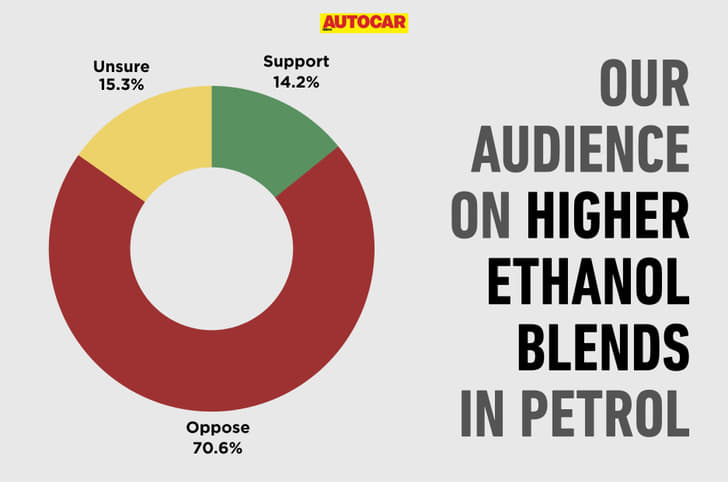
To see how our audience feels about the push towards increased ethanol blending in petrol, we put up a poll last month asking them the same. Over 3,450 voters participated, and listed below are the results, ranked by most to least voted answers.
1. I am concerned about damage to my vehicle: 47.52 percent
Nearly half of the voter pool expressed concern about the potential damage that ethanol can cause within their vehicles. Ethanol is hygroscopic, which means it can absorb moisture from the air and corrode rubber and plastic parts like fuel lines, gaskets, tanks, seals, and more over extended periods of time. E20-compliant vehicles feature upgraded materials to mitigate this phenomenon, but with higher ethanol levels in petrol, there’s greater reason for worry about vehicles that are E10-compliant and lower.
2. Not good; fuel efficiency will drop even further: 23.07 percent
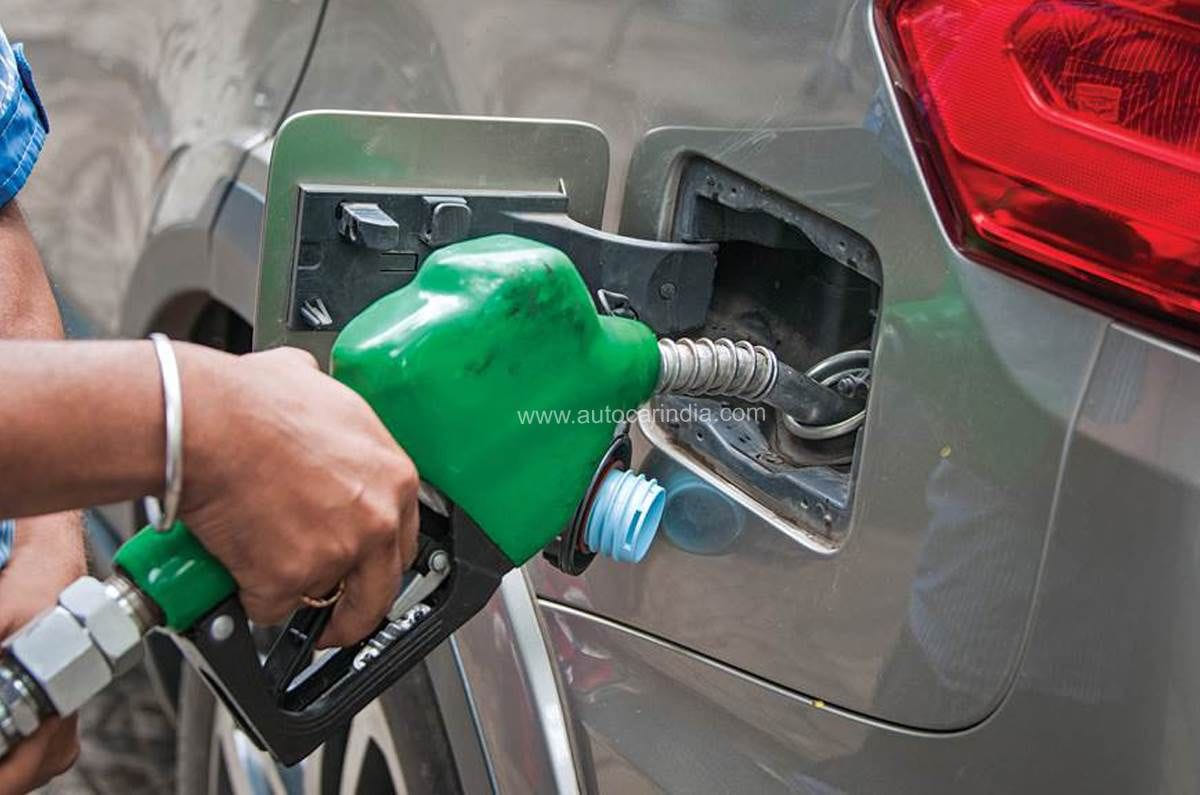
Among the most prominent downsides of ethanol is its energy density, which is lower than that of petrol and thereby translates to a measurable drop in fuel efficiency when blended. Our instrumented fuel efficiency testing of E20 petrol indicated drops of 4-12 percent across a range of BS4 and BS6 cars. With a higher ethanol blend, fuel efficiency is expected to drop further and pinch the common motorist’s pockets even more.
3. I’ll accept it only if it’s cheaper than E20 petrol: 15.21 percent
When E20 was introduced, many lambasted it for not being cheaper than E10 petrol, despite having twice the ethanol content. Petrol prices even underwent steep increases in recent memory, which exacerbated the issue. If ethanol blending were to increase beyond E20, this 15.21 percent chunk of voters will find it acceptable only if there was some relief in pricing.
4. Good move; it cuts dependence on crude oil imports: 11.49 percent
Since ethanol is produced in India, blending it in petrol cuts the country’s dependence on imported oil, and just under 11.5 percent of voters support it for that reason. The E20 programme has resulted in forex savings of around Rs 1.7 lakh crore for the government, which will increase if blending levels were to progress.
5. I support it as it’s a greener solution than pure petrol: 2.71 percent
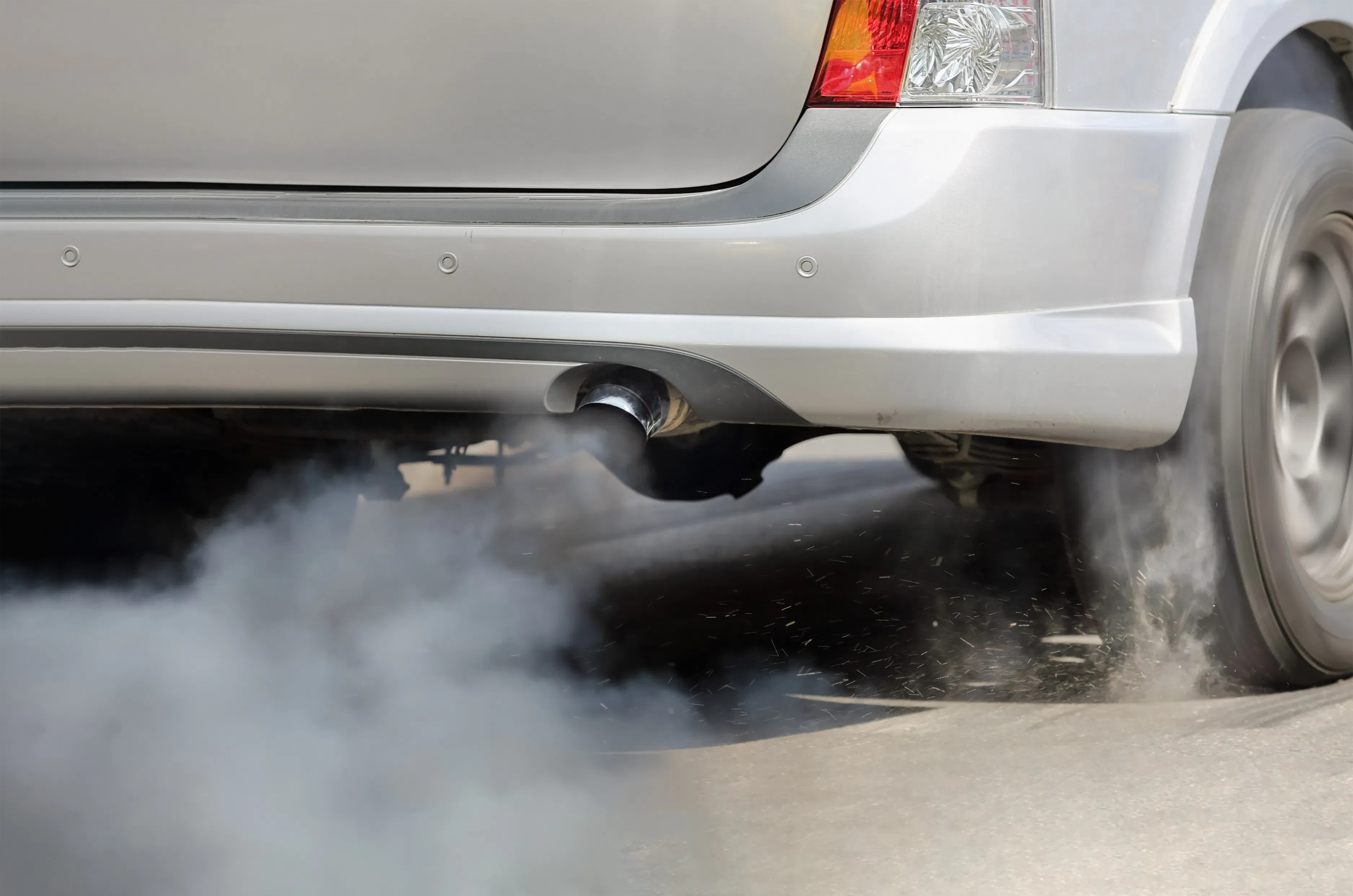
Air pollution is a major problem in many Indian cities, and since ethanol-blended petrol cuts vehicle tailpipe emissions, the smallest subset of voters expressed support for higher blending levels.
Looking over the results
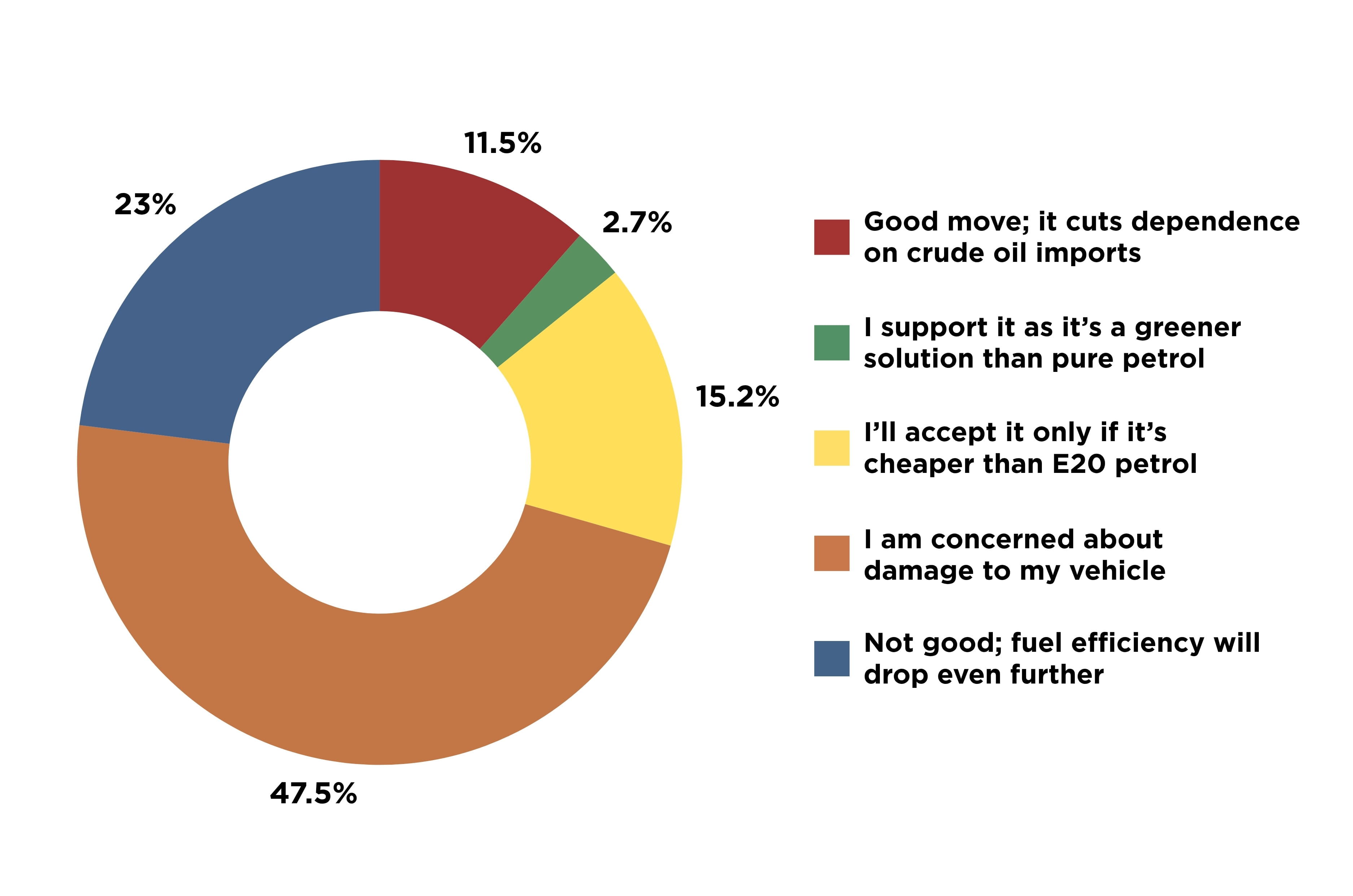
Looking at the above answers, 70.59 percent of poll voters – an overwhelming majority – are clearly not on board with ethanol blending beyond E20, with primary concerns being long-term vehicle damage and further drops in fuel efficiency. 15.21 percent would be willing to forgo those concerns and accept higher-ethanol petrol should it be more affordable.
However, only a meagre 14.2 percent of voters are supportive of increased ethanol blending for its national benefits and reduced emissions. According to our poll, then, people opposing higher ethanol blends outnumber those in support by a staggering 5-to-1 ratio.


 Uday Singh
 Dipan Sur
 Glenn Noronha