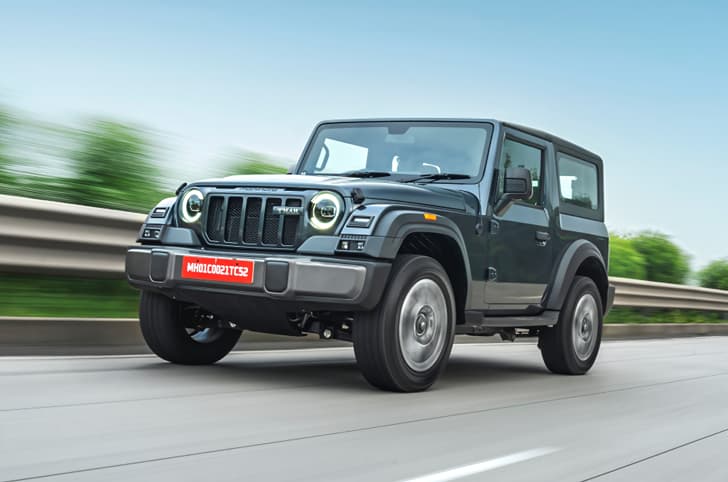

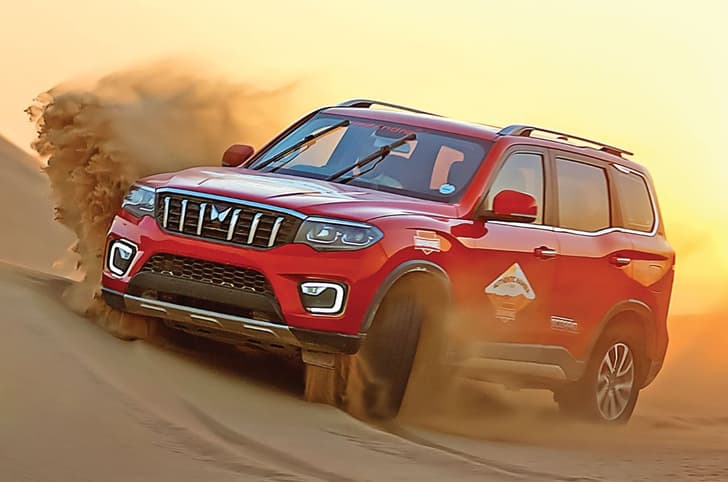
My red Scorpio-N blitzed across Damaraland’s scrub plains, leaving a billowing dust cloud in its wake. We had stopped to shoot photos and videos while the rest of the convoy had carried on at 90kph. Now, I was gunning Mahindra’s mHawk 2.2 litre CRDi engine to catch up. The convoy’s dust cloud in the distance, the striking landscape of Damaraland bordered by Brandberg (the fire mountain), and the Scorpio eagerly charging up the corrugated gravel road fuelled my imagination. At one moment, I was Lawrence of Arabia routing the Turks at Aqaba, and the next, I could be Erwin Rommel bearing down on the beleaguered British at Tobruk. My colleague, Mrityunjay (MJ), was momentarily struck with panic as I, caught up in my fantasies, bellowed war cries in Arabic and German.
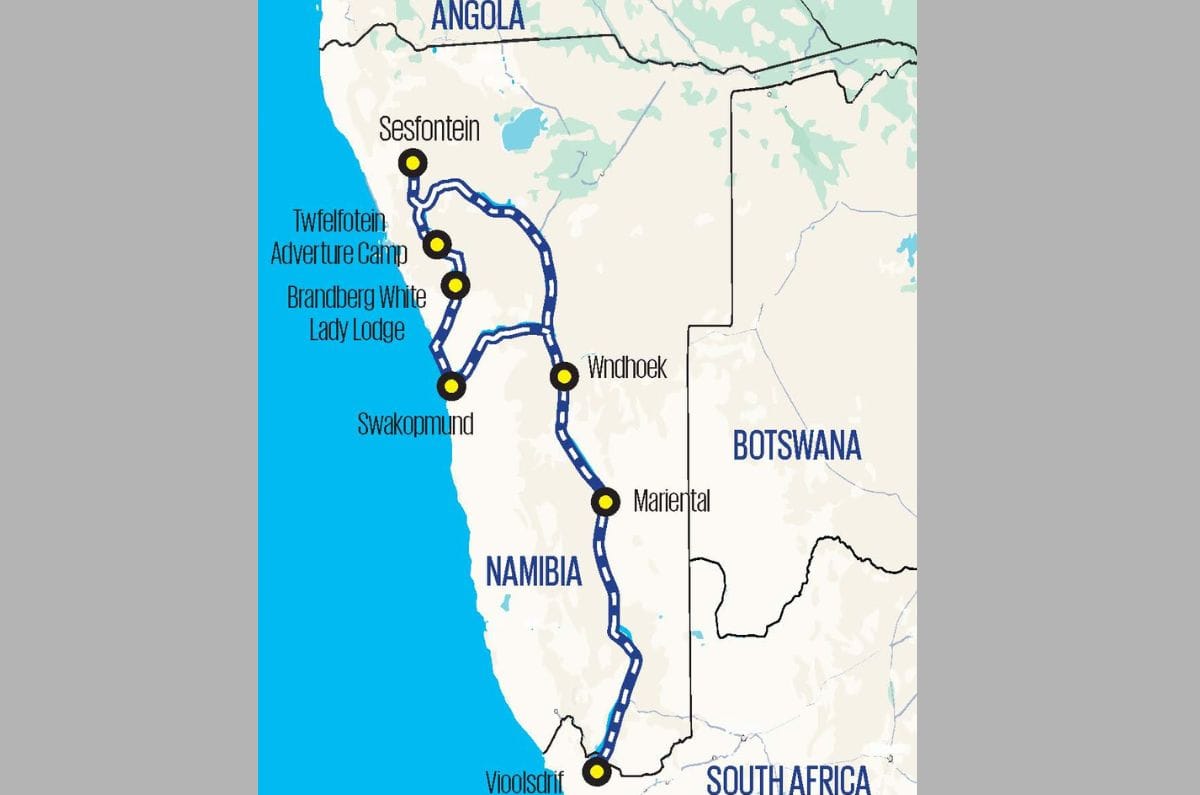
In reality, MJ and I were part of the Mahindra bandwagon that had rolled into Swakopmund two days ago—10 cars and 18 people, including guests and crew. This was Mahindra Adventure’s Authentic Namibia Expedition. A 5,500-kilometre road trip from Cape Town to Northern Namibia and back.
Up until Swakopmund, a coastal town with cool cafes, German architecture and a seaside promenade, we had driven mostly tarmac roads. A notable highlight had been crossing the border into Namibia from South Africa just before 6am. Hardy de Kock of Specialized Adventures, who was leading the expedition, believed that 6am was the sweet spot for a smooth and swift border crossing.

“The shift changes at 0600 hours,” he briefed us the previous evening as we dined on fall-off-the-bone tender pork ribs at the rustic Oewerbos River Camp on the banks of the Orange River in Vioolsdrif, South Africa. “And the officials don’t want to work a minute more than they have to. So if we arrive there just before 6am, they’ll probably be eager to process us as quickly as possible.”
Oewerbos River Camp is just 20 minutes from the border, so the next morning, we were on the road by 5:15am and at the border by a quarter to six. And true enough, all hardware and humans were wheels and boots on the ground, respectively, in the Namibian border town of Noordoewer by 6:30am!
Though we were now on Namibian soil, the adventure of driving on unsealed roads would start only three days later because we had 1,160km to drive north on tarmac B1 and B2 to Swakopmund.
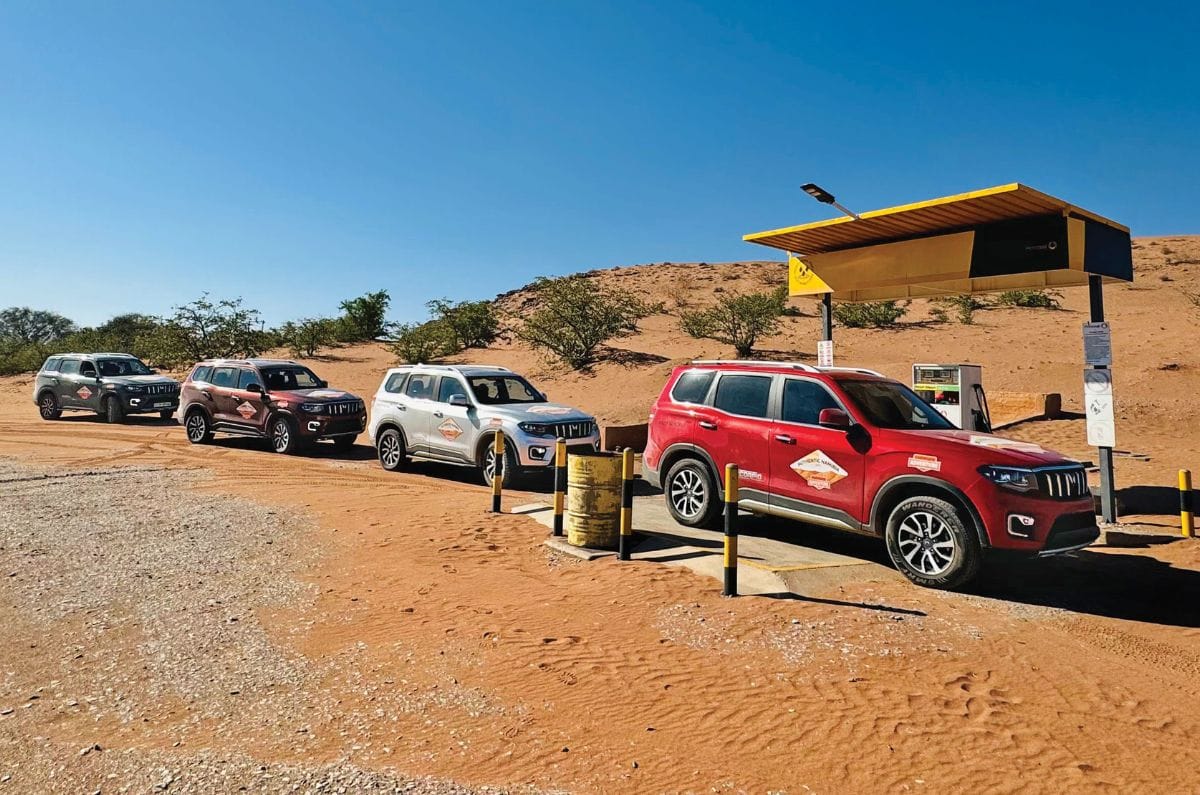
Whatever little traffic there is on the two-lane B1, it moves fast. At times, our convoy of nine Scorpio-Ns and the solitary Mahindra Karoo would be sitting at 120kph, which is the speed limit on Namibian roads, and sedans would blitz past us in an overtaking move.
We switched from the B1 to the B2 at Okahandja, which is 79km north of the capital city of Windhoek and also home to Savannah Biltong. Made from strips of meat that are seasoned and left to dry for days, weeks or months, Biltong is Southern Africa’s most ‘time pass’ snack. Afrikaners will reach for Biltong like how we reach for chivda and chakli. Of course, strips of game and cattle meat cooked only by the sun and spices didn’t find many takers in our bunch of merry road trippers, who were already overwhelmed by Namibia’s unfettered enthusiasm for the joy of eating meat.
Fortunately, to soothe their souls, right across the street from Savannah Biltong was a handicraft market. Unfortunately, Hardy didn’t know that letting my fellow Indians loose to go shopping is akin to sailors alighting at a port after many months at sea. That 15-minute halt stretched to 90 minutes, during which money spent on shopping by my fellow travellers spiked Namibia’s GDP.
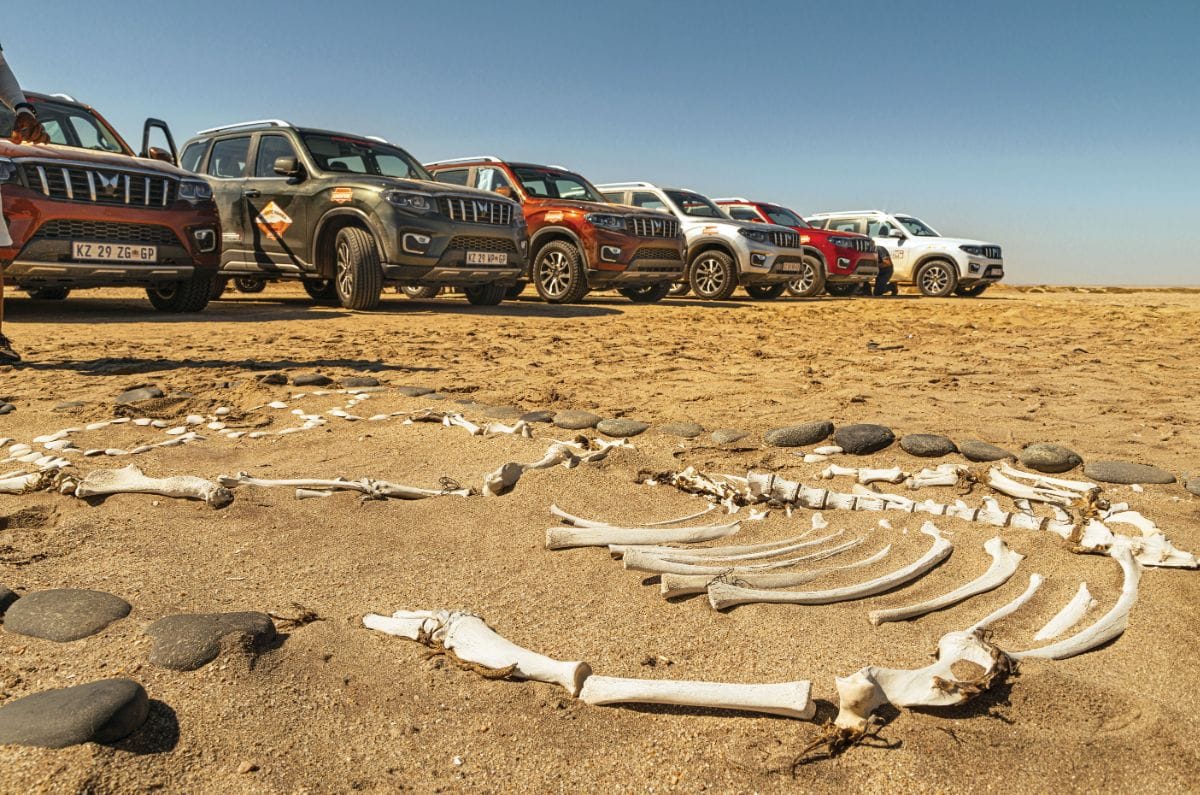
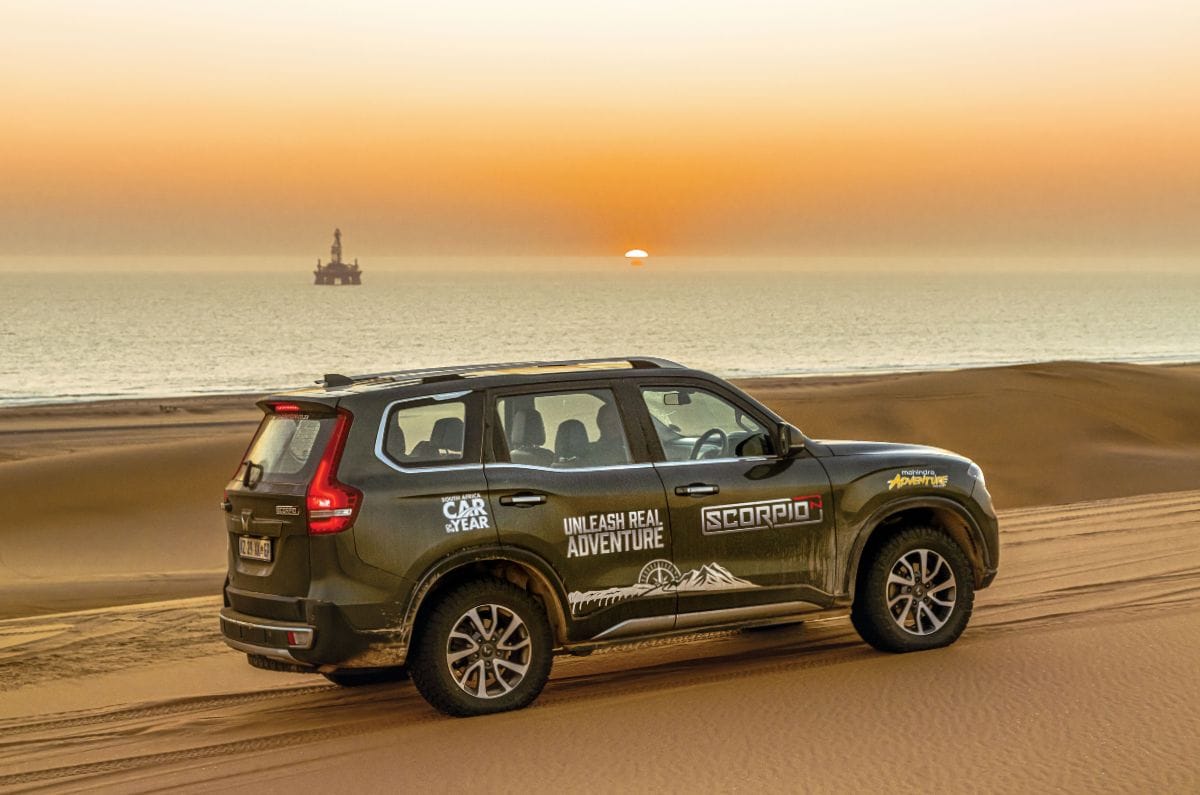
Swakopmund was our introduction to Namibia’s famed Skeleton Coast. Stretching north to the Angolan border, this beautiful yet treacherous coastline has long been the graveyard for incautious ships and sailors. The shipwrecks that litter the shore are a testament to that. We drove along the coast to Langstrand (18km south of Swakopmund), where the deep blue and boisterous Atlantic Ocean crashes into the serene and stately dunes of the Namib Desert.
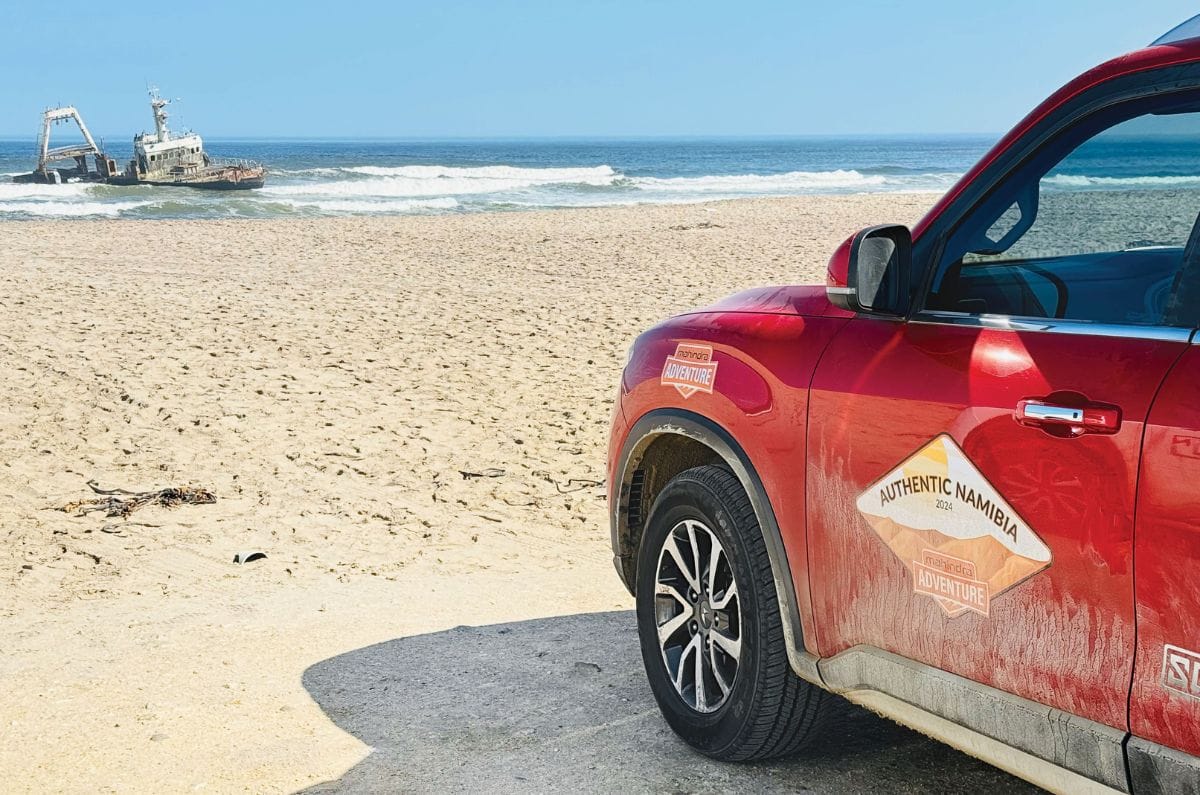
Most of the participants on this adventure were off-road enthusiasts and veterans of many a Mahindra Great Escape events in Rajasthan, and they were straining at the leash to have a go at the dunes that beckoned beguilingly. But first, we had to deflate our tyres so that increased contact patch area would result in extra grip.
Hardy had a simple deflation formula. “If your tyres are filled to the specified pressure, just push down on the valve pin for 70 seconds. That will be enough air out!” Rather than fiddling with a pressure gauge, all this took was one person per wheel poised to press down the valve pin and “Hey, Siri! Start timer for 70 seconds!”
That evening was an insight into the capricious character of the Namib Desert. Driving the dunes with a heavy foot was a disaster; torque had to be trickled to the wheels with the smoothness and consistency of 4K streaming. There was no allowance for impulsive bursts of power or sudden braking. The former dug the wheels in and the latter resulted in loss of momentum. Both cases led cars to be sucked into the sand to a standstill.
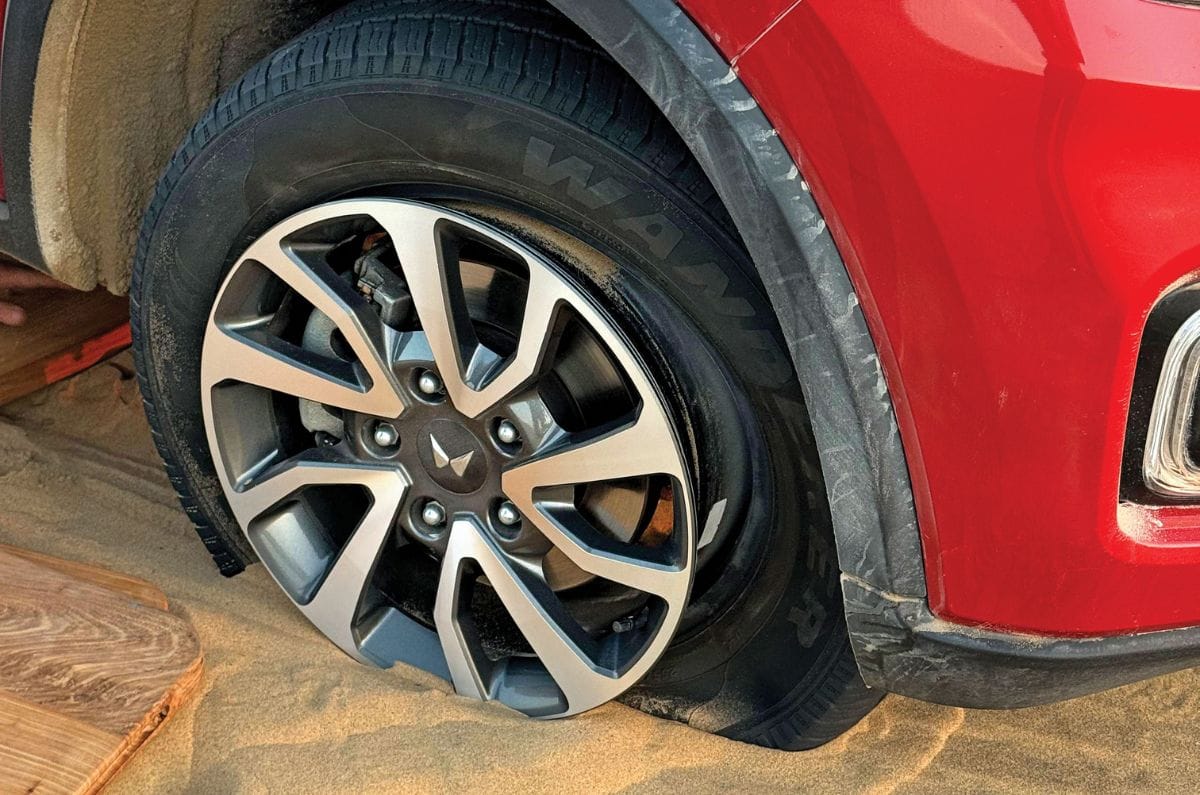
To create some drama for the cameras, I cornered the car a bit too hard. As a result, my Scorpio’s front right tyre came off the rim. As I stood red-faced and apologetic, the crew quickly replaced the wheel in 6 minutes flat—quite the feat in a sea of soft sand. The dune driving at Langstrand was a good refresher for off-road driving because from here on, it would be all kinds of terrain except tar.
The next day, we headed into what I consider home to Namibia’s most theatrical and enigmatic landscapes—Damaraland.
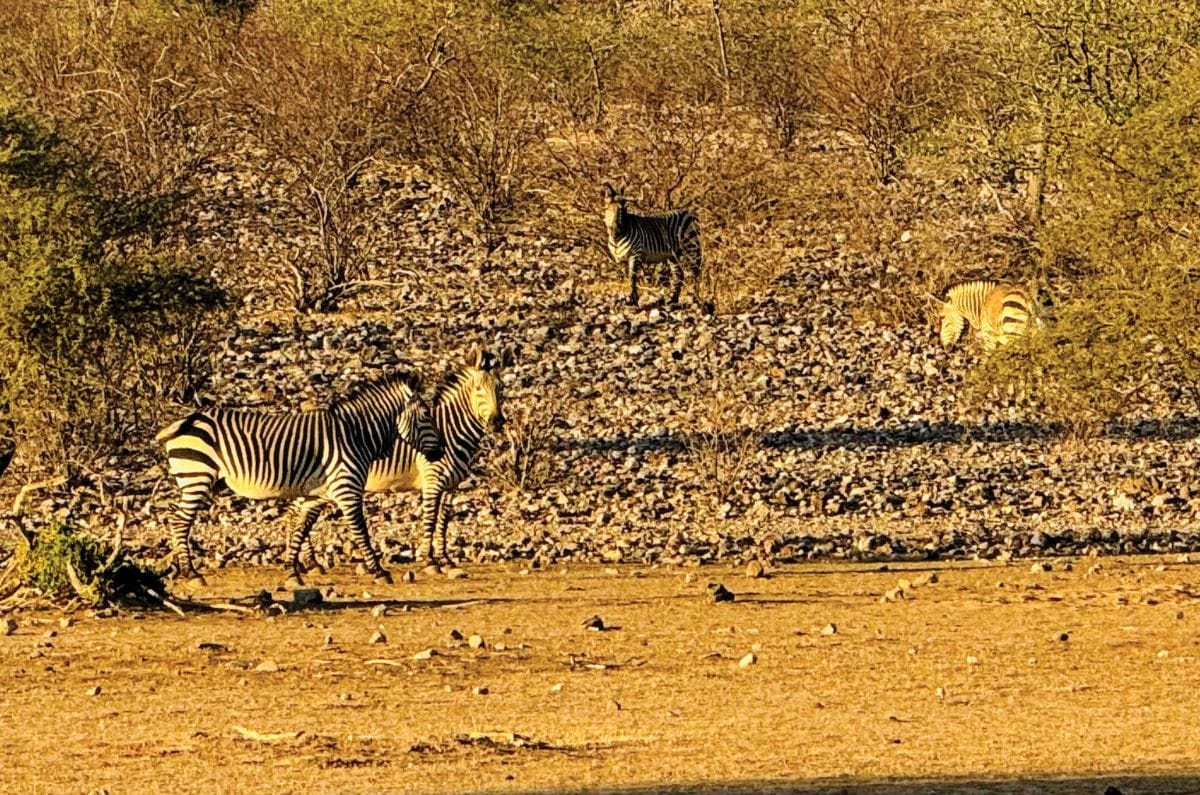
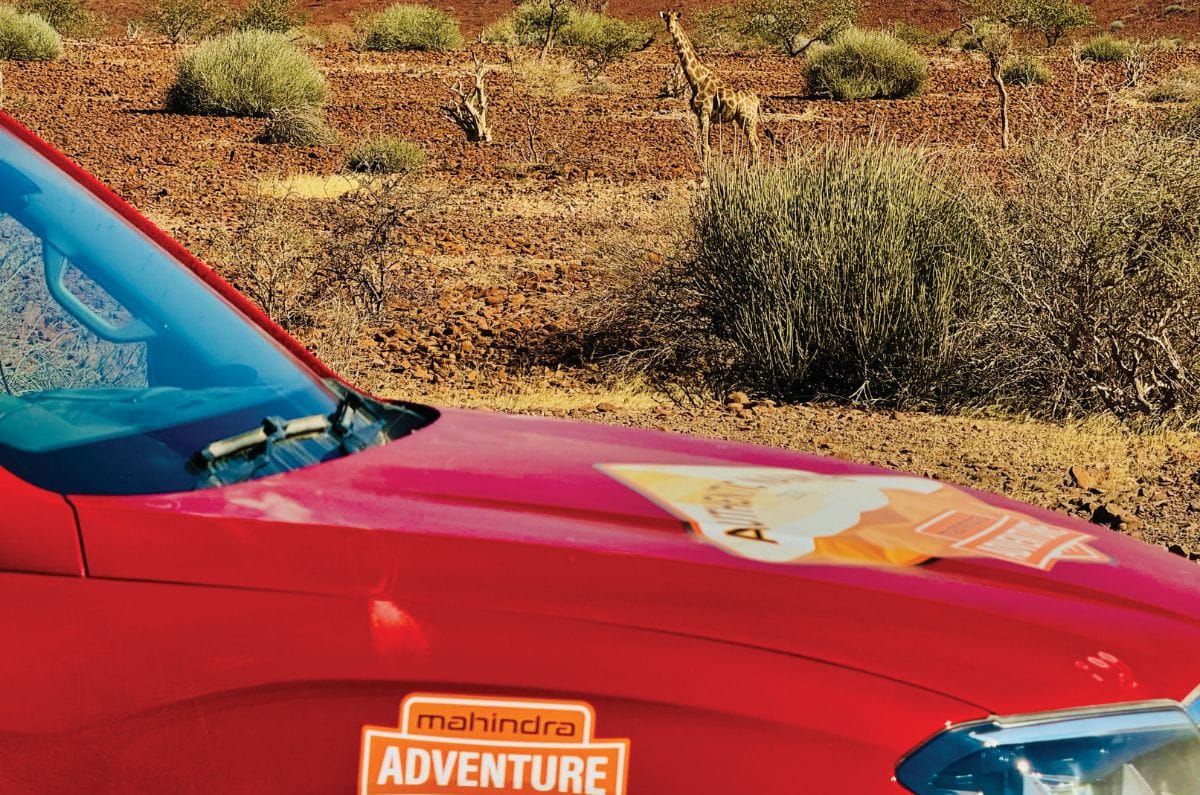
From the spectacular Brandberg Mountain in the south to Sesfontein in the north, we spent six days in this remarkable region that is one of the world’s last wildernesses and home to zebra, giraffe, elephant, lion, rhino and antelope. Viewing wildlife here is not as easy as it is in the game parks of Botswana, Kenya or South Africa. This is because, in Damaraland, animals are truly wild and free. So when wildlife is sighted, the experience is all the more rewarding.
As we neared the southern fringes of Damaraland, Brandberg seemed to hover over the horizon like a mirage. At 2,573m this granite monolith is Namibia’s highest peak and is called the Fire Mountain for the orange-red glow created on its flanks by the rising and setting sun.
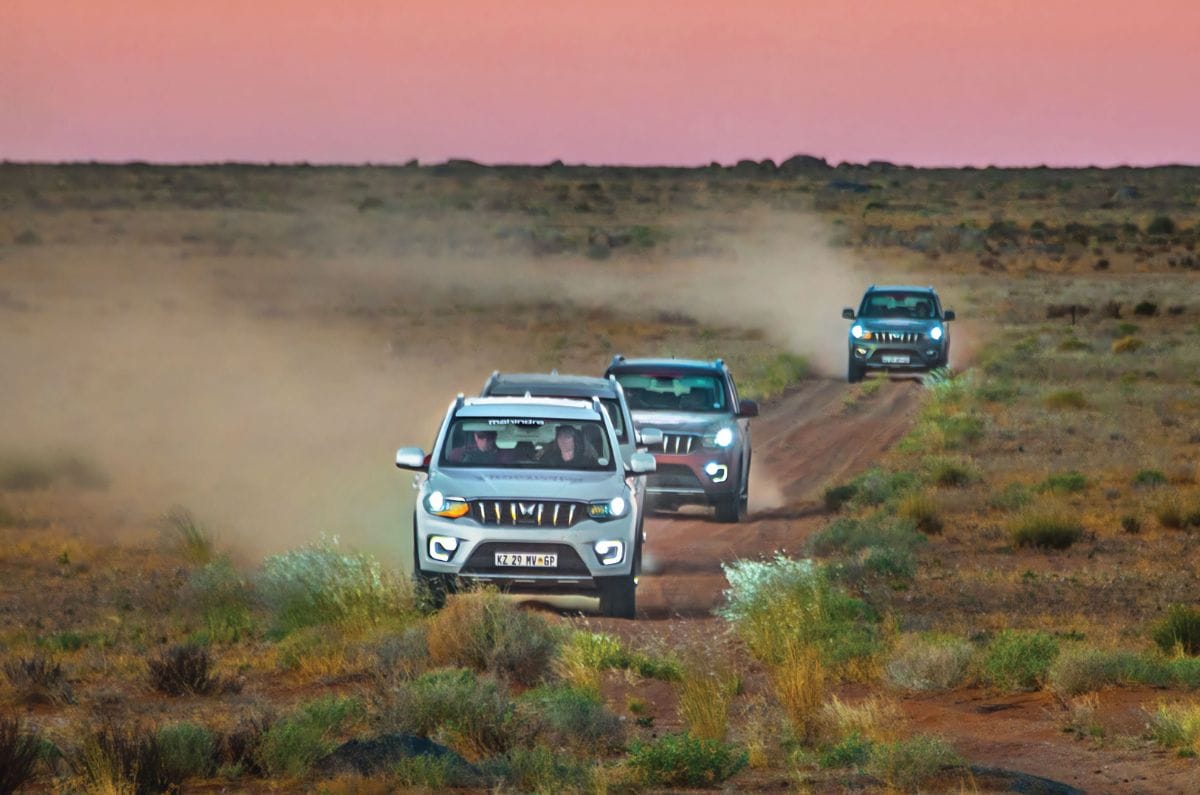
Imagine this sight: 10 Mahindra SUVs charging down a scrub plain, headlights turning wakes of dust into shifting luminesce and standing tall on the horizon is Brandberg, its southern side seeming to beckon and yet bewitch by changing colour to the arc of the sun, never getting closer.
There was something truly spiritual in that afternoon drive towards Brandberg, and it seemed that passengers in all cars were enveloped by the mountain’s spell. I say this because each car had a walkie, and during our drives, there was always a fair amount of chatter on the radio—general banter, jokes, games and questions to Hardy about the landscape and vegetation. That afternoon, there was radio silence, as if a sense of piety hung over our convoy of Scorpios as we skirted the mountain to arrive at the Brandberg White Lady Lodge at the northeast base of the mountain.
Piety turned to astonishment when we arrived at the lodge. Accommodations were another Namibian highlight. Delightful resorts and well-situated campgrounds seemed to appear in the middle of nowhere. The White Lady Lodge was a cocoon of comfort in the middle of the absolute wilderness with a fine-dining restaurant, spacious rooms, secluded chalets and a campground. And, among the tyre treads, there were pugmarks of elephants, rhinos and lions in the sand.
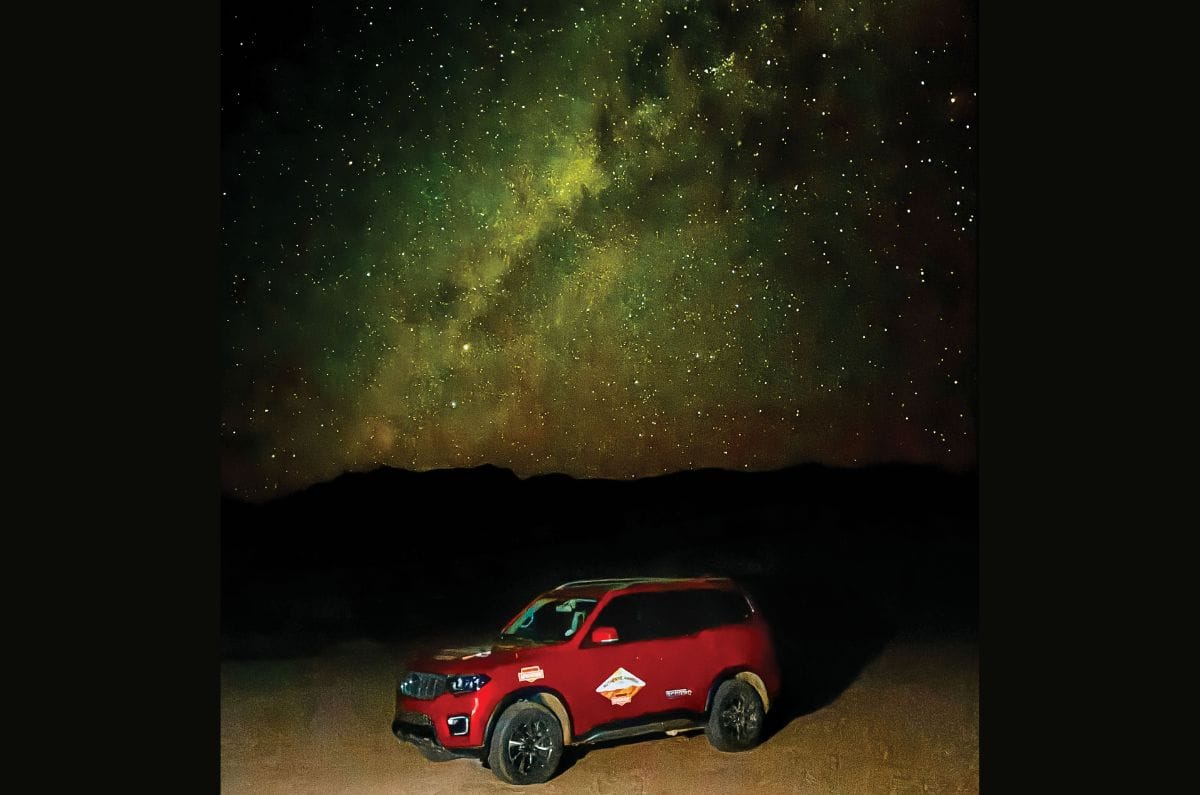
On that day, the new moon was just seven days young, and it set three hours after midnight. Following this, it was so dark that I couldn’t see my hand in front of my face. This is when I got a stunning picture of the Scorpio-N and the Milky Way with my iPhone mounted on a tripod. This astral photography did come with its share of apprehension because, at 3:30am, MJ and I heard a fair bit of grunting and shuffling. Thankfully, the pitch darkness was a comfort, albeit illusionary.
The next morning, we set off to track elephants. There were plenty of signs by way of elephant poo and pugmarks to suggest their presence. The trail suggested that the herd was moving along the Ugab riverbed. In Namibia, riverbeds are mostly dry. The rain isn’t enough to fill them. It is when rain falls in the Angolan Highlands in the north that flash floods happen and the rivers run full.
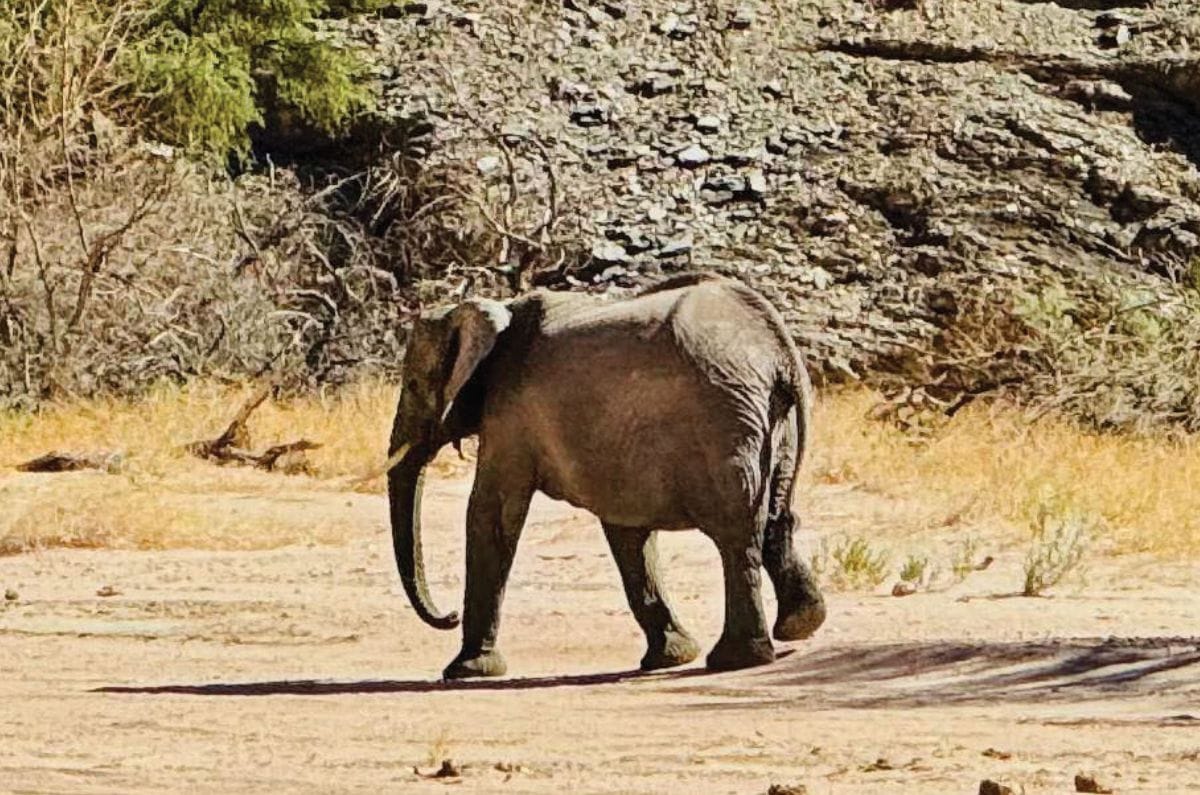
In June, the riverbed was a sandy affair, and we turned the ‘terrain’ mode to ‘Sand’, which effectively switched the car to 4WD high and turned off traction control, all on the fly. Even so, momentum had to be maintained. After driving for about two hours, the poo started to have a shinier appearance, indicating that it was recently ejected and that the herd could be up ahead. And sure enough, half an hour later, we caught up with them. There were bulls, matriarchs and calves moving along at a slow, regal pace.
Back at the lodge, while we spent the morning getting excited by excrement, the crew consisting of de Kock, Chantal and Murray had been busy setting up a ‘Braai’. Meaning barbeque in Afrikaans, to Braai is a cherished pastime in Africa, much like how sipping chai is in India. Wood is gathered and lit and burned down to glowing embers, only after which marinated meat is grilled on it. The crew had stocked up on lamb chops in Swakopmund that they had seasoned with a secret spice rub and grilled to succulent perfection.
That afternoon was spent under the shade of a Mopani tree—with Brandberg standing close—feasting on lamb chops with juices running down our chins and sipping on cold Windhoek lager. This was only enhanced by the fact that there was no cellular coverage, and that encouraged good banter.
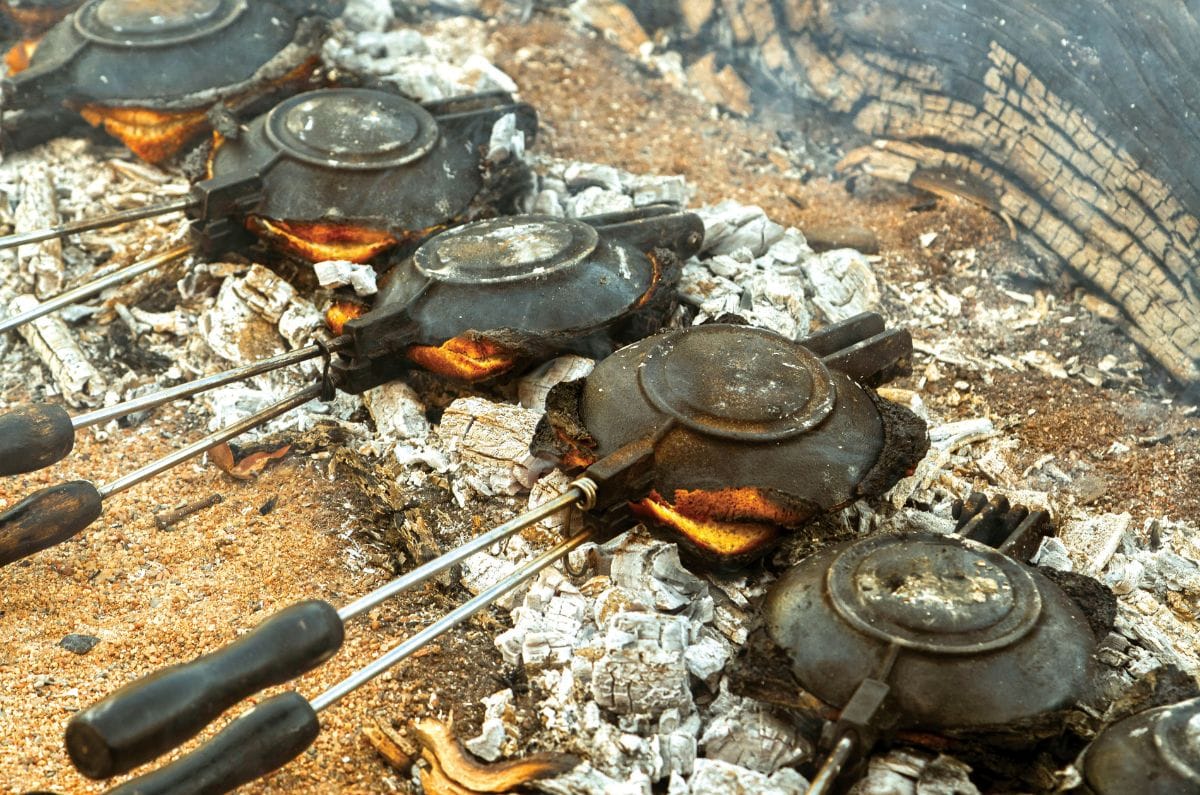
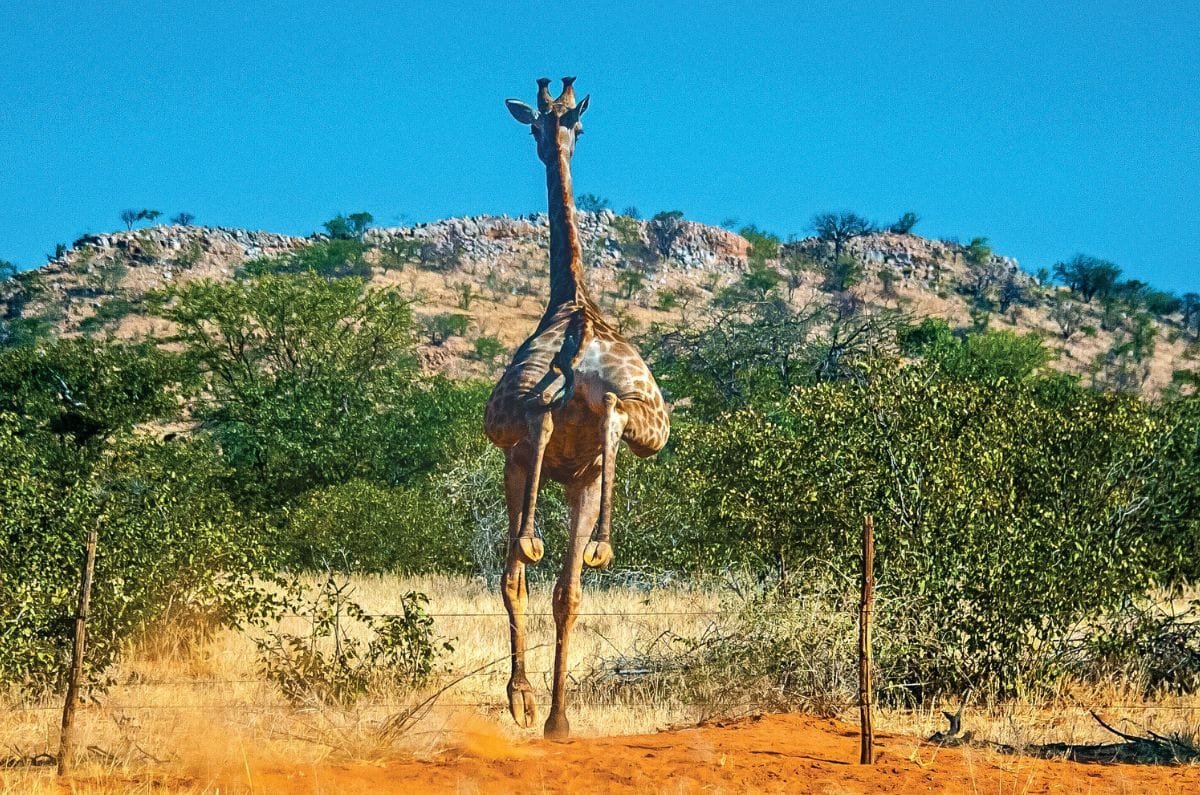
The next morning, our jolly jamboree rolled out of White Lady Lodge, heading north through the heart of Damaraland to Twyfelfontein. Along the way, we came across more giraffes leisurely sauntering through the scrub than people or cars. Lunch along the way were jaffles, which are essentially sandwiches stuffed with mince, tomato, cheese, onions and butter and toasted on a wood fire in a sandwich maker, much like how street-side sandwich-wallahs do in India.
We drove off the gravel road into a riverbed and set up camp chairs. To get the fire going, Yacobus, who’s very knowledgeable in bushcraft, tossed in some dried elephant dung that he’d collected during our riverbed drive the previous day. It worked as a fire starter, burning green as soon as a lit match was applied to it.
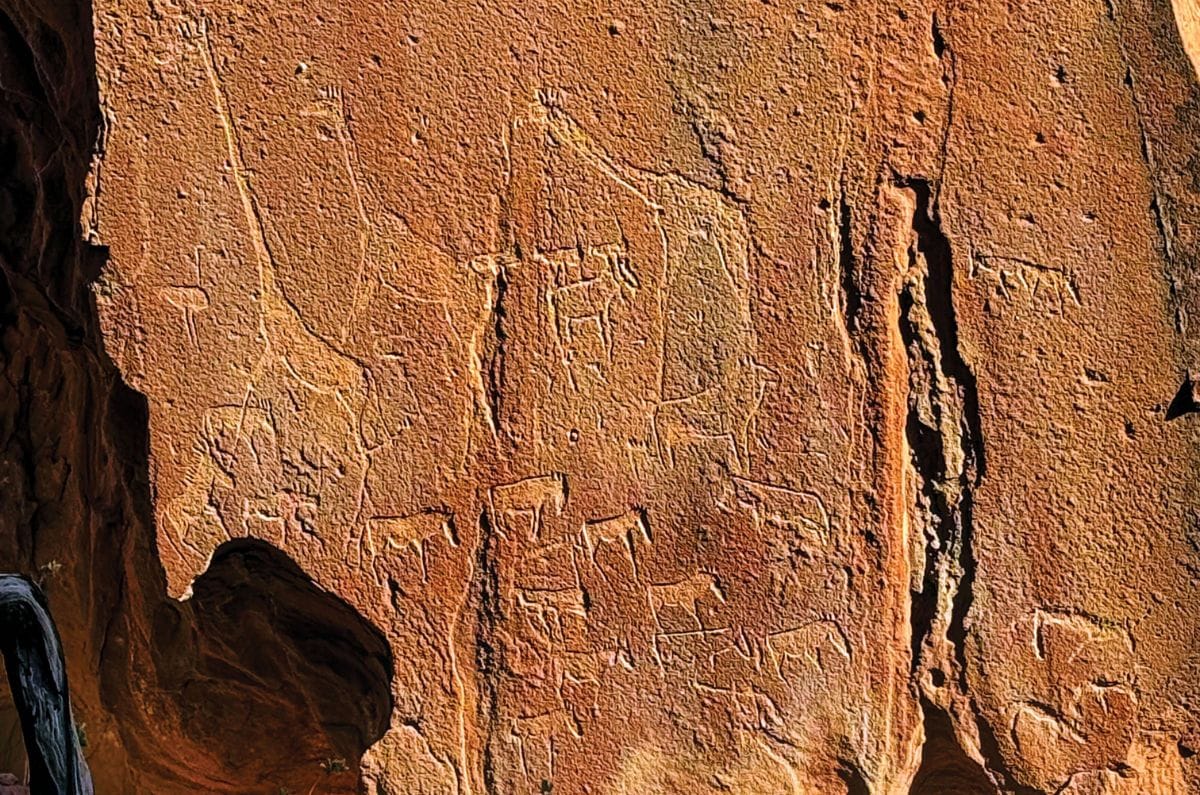
Twyfelfontein, or /Ui-//aes, which means Jumping Spring, came up after a 130km drive at the head of the grassy Aba Huab Valley. It is a UNESCO World Heritage site because it is one of the most extensive collections of rock engravings on the African continent.
This area was the San people’s Instagram from hallowed antiquity that survives to this day. Unfortunately, we were there for only a night and could only see a tiny fraction of these. But for the rock art enthusiasts, Twyfelfontein warrants more than just a day.

Our digs for the night left everyone struck with splendour and surprise. We’d driven for 3 hours through absolute desert wilderness that seemed uninhabited, and bang in the middle of nowhere was the Twyfelfontein Country Lodge, a luxurious resort with spacious rooms, a swimming pool, a fantastic restaurant and a fully stocked bar.
Mahindra’s Authentic Namibia Adventure forged ahead further north on the C43 gravel track for 190km into Kaokoland, which has always been the Wild West of Namibia and home to the strikingly beautiful Himba people and the robust welwitschia plant that is considered to be a living fossil and is the National Plant of Namibia. It is not much to look at, but it is fiercely protected.
What community is saying on the Scorpio N?
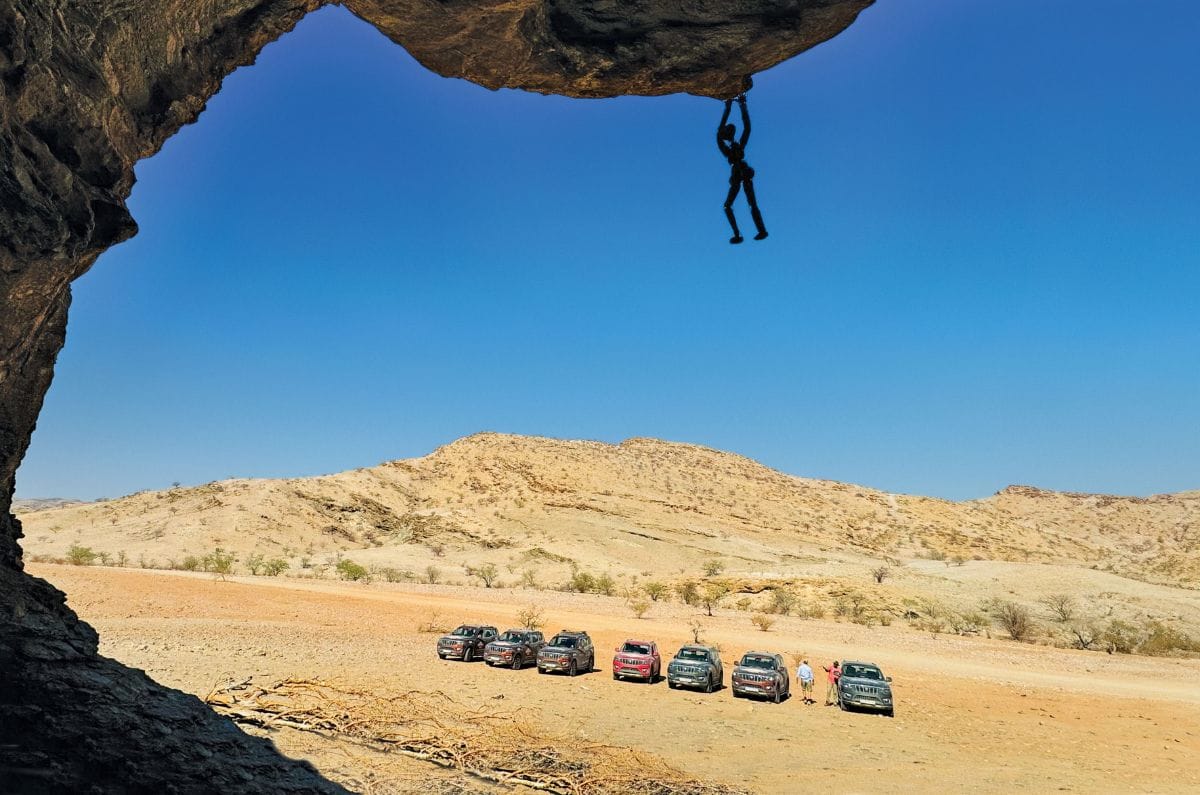
At Kaokoland, we also came across a modern mystery that has recently emerged in this enigmatic land—the Lone Men of Kaokoland. Over the past few years, there have been increased sightings of almost life-size rock sculptures created with deft artistry to appear as if they have arisen from the earth. Crafted from local rock, and in different poses, most of them blend in impeccably with their surroundings catching travellers by surprise with their lifelike gait or posture.
We spotted one at the place we stopped to make lunch, and the travel etiquette is to not reveal their whereabouts so that travellers can discover them on the way rather than as a point of interest.
From Kaokoland, we started the journey back to Cape Town via Windhoek and Vioolsdrif, stopping at the stunning Fish River Canyon in South Namibia. The second largest canyon on earth after the Grand Canyon, it is one of Africa’s most impressive geological wonders. We only experienced it from the viewpoint at the top of the canyon, but adventurous travellers can explore the bowels of the canyon by doing the 75km (5-day) trek through it.
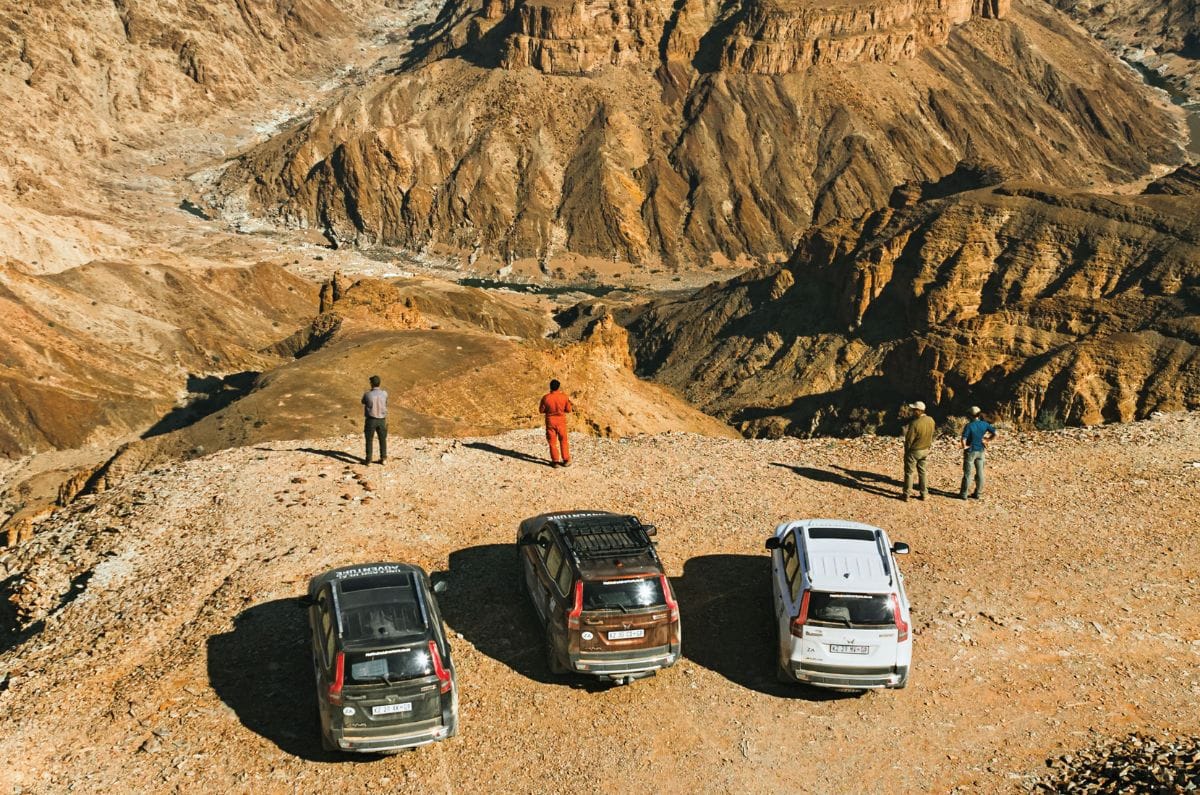
Standing by my Mahindra at the very edge of the canyon and looking out at the result of millions of years of erosion and continental grind, I felt a tinge of sadness that my time in this land of dramatic landscapes and fascinating contrasts was coming to an end. Thirteen days had just whetted my appetite to explore this red-hued land with star-studded night skies a little more. I will have to come back.
Getting nomenclature right
While South Africa is a country, as are Namibia, Botswana and Angola, the southern part of the continent of Africa is often referred to as Southern Africa. While there is no universally agreed-upon grouping, other countries commonly included in this region in addition to the above are Zimbabwe, Zambia, Lesotho, Malawi and Mozambique.
Namibia
Full name: Republic of Namibia
Area: 8,24,300 square kilometres (approx.)
Population density: 3.7 persons per sq.km
Official Language: English
Currency: Namibian dollar (1 NAD = 4.6 INR)
Price of diesel: 22.6 NAD per litre
Food in Namibia
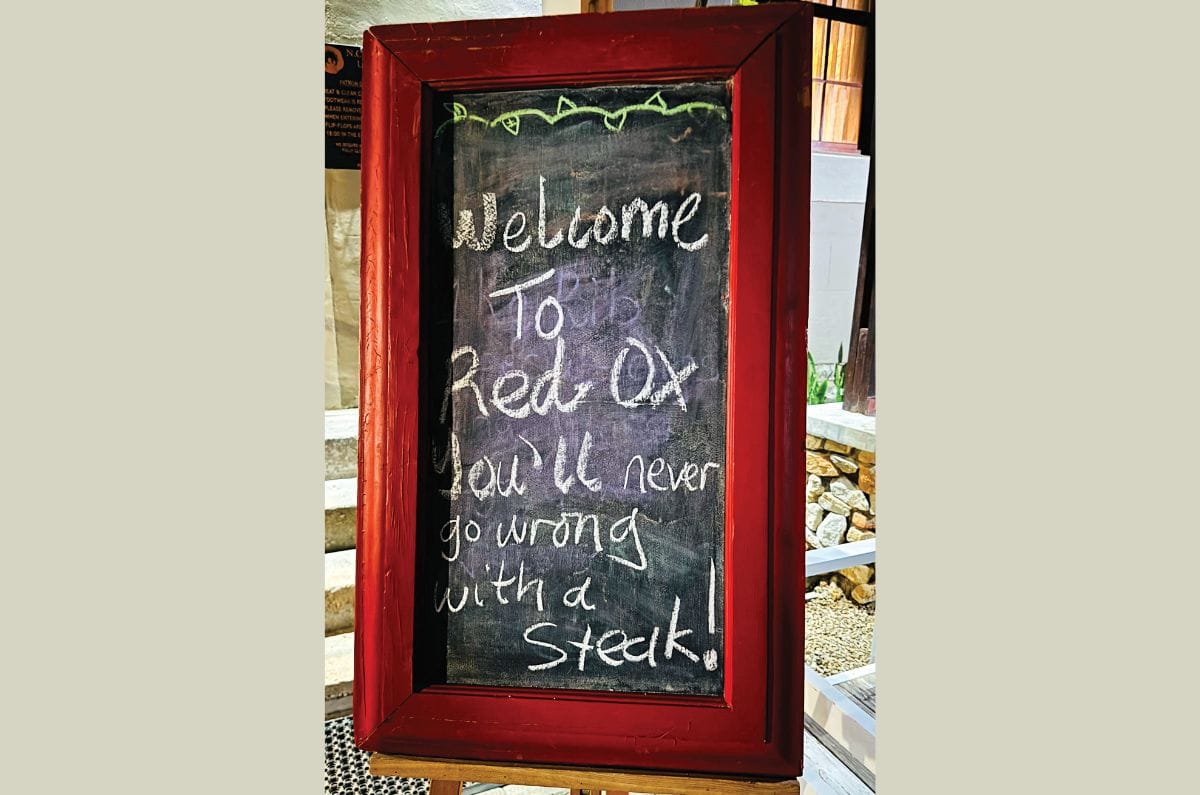
Namibia proudly proclaims itself as a meat-loving nation. And the cuisine reflects this. Juicy beefsteaks feature on every menu, as does game meat. Kapana is grilled meat that is a street-side snack. Potjiekos is a stew made with meat and vegetables, typically cooked for three hours in a pot over an open fire. Fried mopani worms are a delicacy. Swakopmund has lovely seafood and even an Indian restaurant called Garnish, with a chef from Hyderabad who serves up a smashing Nihari. There is a branch in Windhoek, too.
Mahindra Adventure’s Authentic Namibia Road Trip
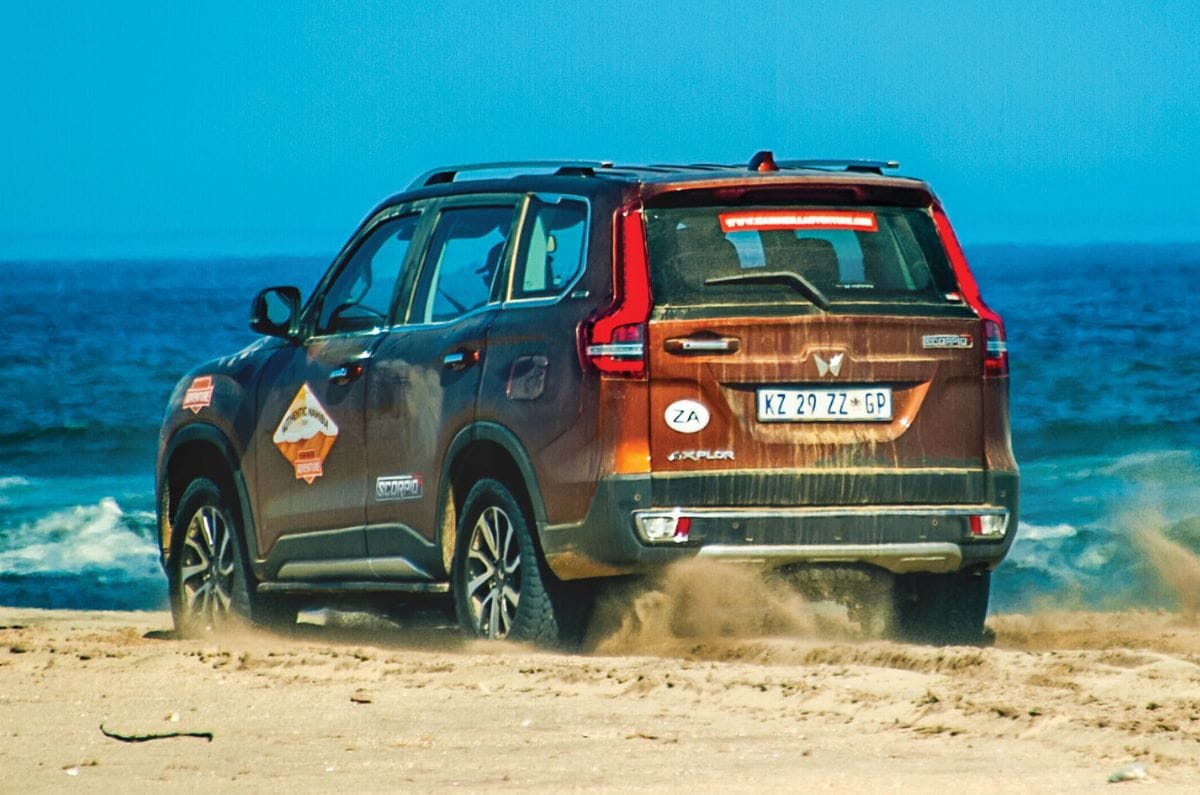
A part of Mahindra’s ‘arrive and drive’ road trips, the Namibian Adventure cost Rs 3,80,000. This included the stay, an adventure-ready Mahindra Scorpio-N per two guests, fuel for the cars and all meals. What I liked is that there was no concept of set menus for the group, and guests could order anything they fancied off the menu. The places we stayed at varied from comfortable to luxurious.
Road-tripping in Namibia
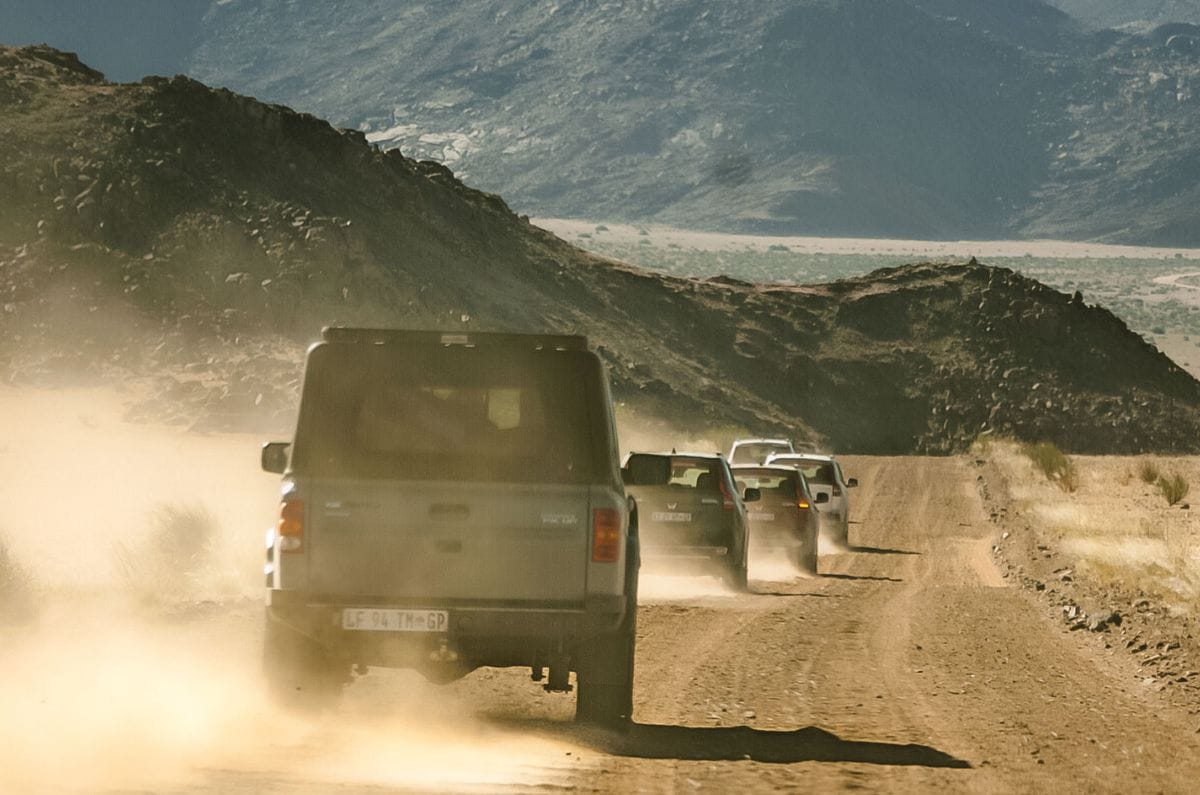
Traffic drives on the left in South Africa and Namibia. Beyond Swakopmund, there are myriad gravel trails that branch off from the main tar arterial roads like fibrous routes. These gravel tracks are well numbered, will show up on Google Maps and often lead to delightfully desolate wilderness locations.
While there are fancy lodges in the middle of nowhere, the true adventure is camping out, so most rental SUVs come with roof-top tents. It is not uncommon for elephants, rhinos or lions to nonchalantly stroll through campsites. Dust clouds often obscure vision on gravel roads, and oncoming cars throw up rocks and pebbles that crack windshields. We had three cracked windscreens on our trip.
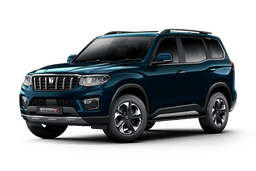
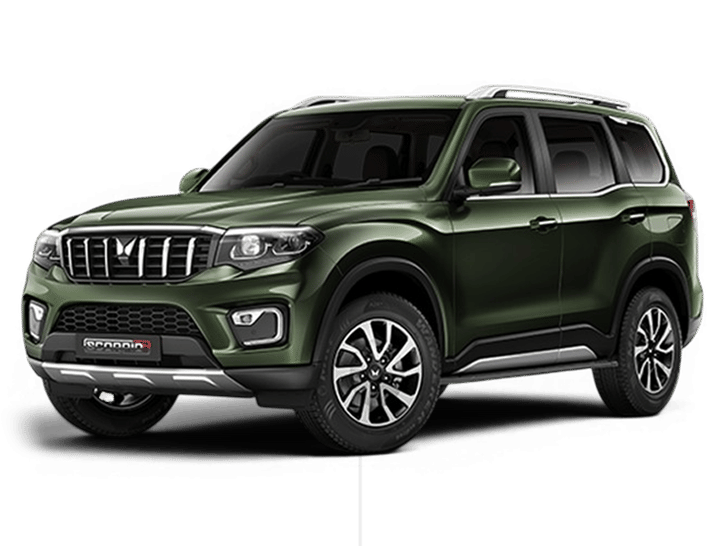
The Scorpio N
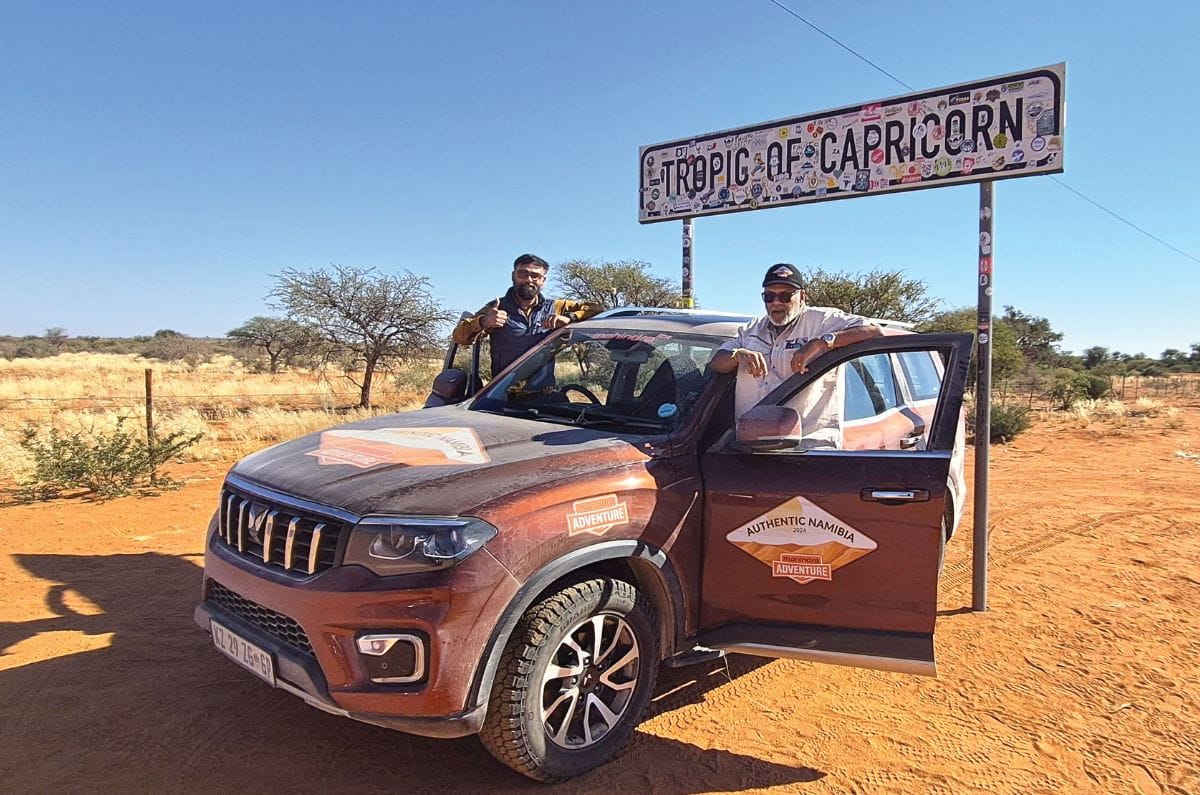
I can’t help but feel admiration for the Scorpio’s capability and reliability, and pride that it is an Indian product.
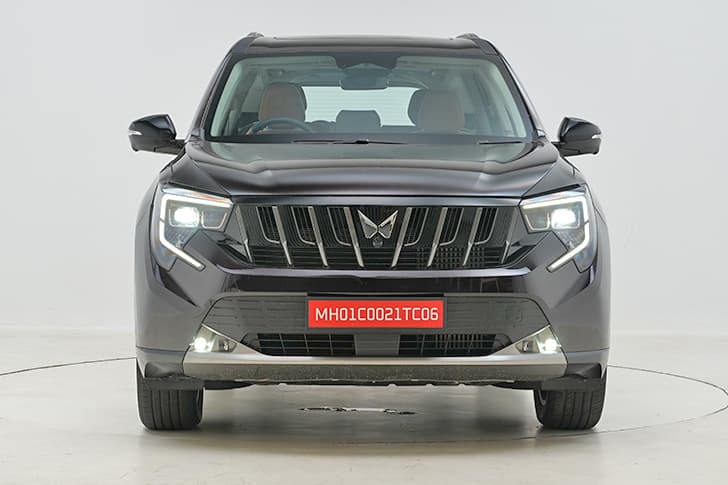
A road trip in Namibia is a boot camp for cars with its often-corrugated gravel roads, rocky trails and fesh-fesh sand. And all nine Scorpio-Ns and the solitary Karoo—the Scorpio Classic-based pickup—performed almost flawlessly. They were never short of grunt or grip. The air conditioning worked admirably even in 37-deg C. The ground clearance meant peace of mind over boulder trails and the suspension eased out irregularities with aplomb. There were two things that I didn’t like. First was the fact that dust was filtering through the air conditioning (though it was in recirculation mode) and through the door panels. The other was the fact that the Apple CarPlay was whimsical at times.
Ninety-eight percent of the cars that we came across in the wilderness of Damaraland and Kaokoland were Toyata Hiluxes. It seems to be an unwritten rule that if you want to do a road trip in Namibia, then do so in an ‘unbreakable’ car. Well, 10 Mahindra motorcars took up the gauntlet and all of them came through with flying colours.

 Uday Singh

 Dipan Sur
 Glenn Noronha