

In 1886, when Carl Benz patented the world’s first motor car, I doubt he could ever have imagined how far and wide the cars bearing his name would travel. In the 140 years since, Mercedes-Benz has been on a journey of incredible highs, and Autocar has been following that story for 131 of those years. So, when it came to celebrating Mercedes-Benz’s 140th anniversary, we had to come up with something rather special.

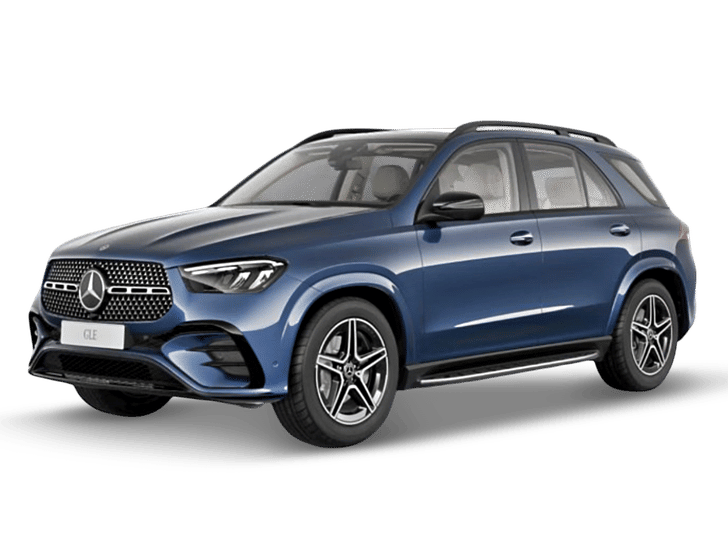
The idea was to condense 140 years into 140 hours and set off on our own journey of highs. And where better to do it than Ladakh – the land of high passes. The objective? Cross as many of them as possible within a 140-hour period, and while that sounds straightforward on paper, no journey to Ladakh ever is. Unpredictable weather, rough roads, altitude sickness and, not to mention, a ticking clock were just some of our adversaries. Thankfully, we had a Mercedes-Benz GLE 450 on our side. Cherry-picked by us from the Mercedes-Benz SUV line-up, the GLE is quick on the road, adept off it and comfortable inside without being ginormous outside – in other words, the Goldilocks zone for our particular challenge.
The Countdown Begins: 140hrs Left
Behind the wheel of the lead GLE was Rahul Kakar, the man we call upon when a clock must be beaten – or Manager, Special Projects, as his business card reads – while I follow closely behind in a support GLE.


La, if you didn’t know already, translates to ‘pass’ in Tibetan and Ladakhi, and our first would be Zoji La at 11,649ft. Driving from Srinagar, this is your gateway into Ladakh, but steep climbs, sharp hairpins, slow-moving trucks and falling rocks mean it isn’t always a pleasant welcome. It’s also known as the Mountain Pass of Blizzards, but thankfully, the weather is only mildly chilly, as the droves of tourists at the top would attest. Here, we started our 140-hour countdown, got our shots and set off towards Kargil. We elected to take it easy on the first day and acclimatise to the high altitude. It’s a warm-up for the crew – the following days will take us well beyond the familiar tourist trail.
The Road Less Travelled: 125hrs Left

Ladakh is a place that rewards repeat visits and has a way of revealing something new each time. Even after a dozen trips to the region, Rahul had never been to Hamboting La, the first pass on the second day. It requires you to head off the beaten path that is NH1, the Kargil-Leh highway and climb a narrow road to its peak at 13,380 feet. At the top, there wasn’t a soul – a stark contrast to Zoji La and a reminder that there is more to Ladakh than what Instagram will show you.
From there, the route continued to Shashi La, at 14,045 feet, followed by Kaldang Kildang La. The latter had no signboard to indicate its altitude, but we didn’t need one, as the GLE gets its own altimeter, which told us we were at 4,091 metres, or 13,425 feet. Roadworks and narrow village lanes slowed progress in places, but the GLE, with 500Nm of torque on tap, made light work of the steep climbs.

The schedule, however, was less forgiving. With several more passes to cover, lunch was the easiest sacrifice to make up time. The irony of having growling bellies in a hushed Mercedes cabin, though, was lost on the crew. Returning from our detour to the Kargil-Leh highway, Namik La, at 12,189 feet, was next, followed by the final pass of the day, Fotu La, at 13,479 feet.
By the end of the day, five passes had been covered, bringing the running total to six. The landscape had also begun to change, with the barren, almost lunar terrain around our night halt at Lamayuru serving as a constant reminder of how far we had come and how much further we had to go.
Zanskar Calling: 101hrs Left

Lamayuru is usually a quick photo op on the way to Leh, but we chose to stay the night here for strategic reasons. To cross as many passes as possible, we would head south from here to the Zanskar Valley. The road was narrow but well-paved, snaking through the valley with steep cliffs on either side – they made for quite a sight through the sunroof. Closer to our first pass of the day, Sirsir La, the valley started to widen, and we began a steep climb to the top at around 15,700 feet. Historically, crossing this terrain would have meant travelling on foot with pack animals, but today we had 381 horses under our right foot.
The next stretch, through Bumiktse La at 13,780 feet, was breathtaking, both figuratively and literally, as the altitude began to take its toll on the crew. At Singe La, around 16,590 feet, temperatures had fallen to 3.5°C. The combination of winding roads, dizzying heights and having to constantly jump in and out of the car to shoot was taking a toll on the camera crew. When one of the crew members began feeling light-headed, the GLE’s back seat was a refuge where he could recline in comfort, take in some oxygen from a portable canister and rest his throbbing head. Staying hydrated and avoiding unnecessary exertion were as important as keeping the GLE moving at this point.

Kiupa La and Murgum La, both just over 14,400 feet, were so far off the beaten path that Google Maps was stumped. The good old tradition of stopping to ask locals for directions was our only way to find the passes and, importantly, return to the main road. Smooth tarmac gave way to broken surfaces, dirt and mud, making it an ideal opportunity to engage the GLE’s off-road mode. Its 4MATIC all-wheel drive helped find traction on loose gravel, while its air suspension could be called upon to raise the ride height in a pinch. It was the sort of terrain that few owners would ever subject a luxury SUV to, but the GLE took it in its stride. We made a few wrong turns, but eventually we were back on smooth blacktop, making our way to Padum for the night. Eleven passes down, many more to go.
The Long Haul: 77hrs Left

Since local knowledge had worked out for us the previous day, we turned to our hotel manager in Padum to find the best route to Shinku La and onwards towards Leh. He looked puzzled as to why we’d want to take a 15-hour route when the new highway could have us in Leh before lunch. We explained, and he reluctantly pointed us in the right direction, through some stunning and nearly deserted roads towards the Manali-Leh highway. En route was Shinku La, at around 16,580 feet, with snow-covered terrain providing a dramatic change of scenery. There was little time for snowball fights, though; more serious stuff awaited ahead.

Baralacha La, at 15,912 feet, was dispatched with ease as we made our way to the Gata Loops. This was among the most nerve-racking sections thus far. You gain altitude quickly through a series of 21 hairpin bends, when you’re moving, that is. More often than not, you find yourself stopped to let a truck pass. The road is so narrow that trucks regularly graze one another as they cross paths. The 360-degree camera was our saviour, helping us get close to the edge of the road without going too far.

Beyond the Gata Loops was Nakee La, our third pass of the day, at 15,547 feet. The road from here onwards has undergone a remarkable transformation over the years. Once considered among the world’s most treacherous routes, the highway now offers long stretches of smooth, well-engineered tarmac, even as it crosses some of the highest and most inhospitable terrain in the country – a testament to the work of the Border Roads Organisation.

At Lachung La, another major pass on the highway, we found ourselves at 16,616 feet, where atmospheric pressure is roughly half that at sea level. The cold was intense, and there was little incentive to spend more time outside than necessary. Up ahead lay the vast expanse of Morey Plains. This enormous high-altitude plateau is so flat and open that it can distort one’s sense of perspective, making distant mountains appear deceptively close. It is tempting to speed up, but sudden dips and undulations can catch you off guard.

As daylight faded, we made it to Taglang La at a lofty 17,482 feet, the highest we’d been until that point. We still had a long drive to Leh, our night stop, and after 15 hours on the road in the mountains, fatigue was setting in. Nevertheless, we had a comfortable stay, a hot meal and a special guest waiting to welcome us in Leh.
Boss’ Day Out: 53hrs Left
When our editor, Hormazd Sorabjee, initially heard our plans, he immediately said, “I’ll be there.” How someone with a packed schedule like his made the time is beyond explanation, but he stuck to his word and showed up in Leh straight from an event in Saudi Arabia. I guess the allure of a Merc in the mountains was too hard to resist.

For Rahul, the next day would mean surrendering the driver’s seat and becoming a passenger. It was a role he was less enthusiastic about, but the challenge was far from over. Hormazd has a long history with Ladakh. Having first visited in 1987, he had seen the region transform from a place with barely any roads to one with some of the best driving roads in the country.
Back then, roads were little more than dirt tracks, and crossing Morey Plains involved navigating by instinct rather than following a clearly defined route. As we ascended Khardung La, our first pass of the day, he explained it used to be among the toughest things you could do. It was, after all, the highest motorable road in the world back then, at 17,982 feet. Now, it is so easy to get to that thousands of tourists flock there each day, making it the world’s highest traffic jam.

Our next pass, Wari La, is a much better bet if tranquillity is what you seek. At 17,429 feet, though, it falls just short of Khardung La when it comes to altitude bragging rights. From here, we made our way to Chang La at 17,688 feet, reached via a steep but beautifully paved climb. The GLE surged up the mountain, its effortless performance making light work of the ascent. The altitude was still palpable, though, and the crew did not linger for long before beginning the descent.
What community is saying on the GLE?

For Hormazd, the drive was a welcome reminder of how enjoyable mountain roads can be when the vehicle is up to the task. He recalled visiting the region in 2001 in the Mercedes-Benz E-Class, at the time the only true luxury car on sale in India. Twenty-five years later, the luxury car market has evolved, and so has Ladakh, but being back here behind the wheel of a Merc still felt very special indeed.

As Hormazd headed back to Leh, we headed towards Nyoma to continue our journey. Nineteen passes down, and the clock now felt like it was ticking faster than ever.
Into The High Country: 29hrs Left

The night at our humble homestay in Nyoma was colder than any other. Operating on minimal sleep, you’d imagine we’d welcome a day to lie in, but instead, we couldn’t wait to get back in the GLE – its cabin felt more like home now. We kept the cabin cool, so our bodies weren’t going through dramatic temperature changes as we jumped in and out. Instead, we used the heated seats to keep warm. Pro tip: the heated cupholders and storage bin are great places to stash your gloves and cap so they are warm for when you step out into the cold.

We started the day at Pologongka La, at 16,240 feet. Slightly off our route, but worth getting crossed off the list. From here, we doubled back towards Kaksang La, 17,851 feet, and Thato La, 16,669 feet, beyond it. The road to these two passes has sharp hairpins, but if you’re feeling adventurous, there are off-road shortcuts that let you bypass some of them.

The GLE was equally at home here. Its suspension absorbed the broken patches without unsettling the cabin, and the all-wheel-drive system offered ample traction. Despite sporting 20-inch wheels, we never hesitated to drop a wheel into the dirt, and that itself is saying something. A quick stop at Tsaga La, 15,260 feet, marked our twenty-third pass thus far, a mighty number, but we weren’t done yet.
The Final Push: 5hrs Left

We spent the night in Hanle, India’s highest dark-sky reserve. But the only stars we’d be gazing at were three-pointed ones. We started the morning with just five hours remaining. A frantic sprint up Fotu La, at an altitude of 18,124 feet, ensued. Once across and near Chisumle, we had a decision to make: head straight to Umling La or try to hit Nurbu La and risk running out of time.
We decided to take our chances at Nurbu La, which was certainly worth the risk for the views alone. As we stopped at the top to catch our breath, snow started to fall. Our climb up Umling La was now in jeopardy. The roads were familiar in character by now – long climbs, sweeping bends and undulations waiting to catch you out – but Umling La added the element of black ice. With off-road mode engaged and the 9G-Tronic in manual mode, the GLE made a steady but swift climb towards the world’s highest motorable road. The temperature display was now reading -7°C, but thankfully, it wasn’t as windy as usual.

With just a few minutes left on the clock, the yellow stone plinth came into view, in stark contrast to snow-covered peaks all around. We’d made it to Umling La top with some 22 minutes left. The scene was anything but quiet, though. Dozens of motorcyclists had made the pilgrimage up, some slipping and falling on the ice, while others gasped for air. Some even asked to take refuge in the Merc, which we gladly obliged. Our crew, on the other hand, had already crossed 25 passes and had acclimatised well, feeling better than ever.

Objective achieved! In 140 hours, the crew and the GLE had crossed 26 passes, beginning at Zoji La and ending at Umling La. The journey tested the team’s endurance, demanded careful planning and required the GLE to deal with everything from smooth highways to dusty tracks and snow-covered roads. It was a demanding assignment, but the GLE never flinched.

Carl Benz’s first motor car and the GLE 450 that reached Umling La could hardly be more different. Yet both are part of the same journey, one that began with the birth of the automobile in 1886 and shows no sign of slowing down as it conquers the top of the world. Where better, then, to celebrate Mercedes-Benz’s 140th anniversary than at 19,024 feet?



 Rishaad Sam Mehta

 Vishal Venugopal