Autocar India
Introducing Badges

Every helpful action can earn a badge.

•7w

Sir, I am planning to purchase a new car with a budget of Rs. 13 lakh. My major running is within the city, accounting for around 90% of my usage, with a daily drive of approximately 20 km. I am confused about whether to go for an automatic or manual transmission. My preferred car brands, in order, are Skoda, Volkswagen, Toyota, Kia, MG, and lastly, Maruti Suzuki. Please suggest which brand and car would be the best choice for me.

Verified
•6w

With a budget of Rs 13 lakh, 90% city usage and 20 km daily, the decision is straightforward: go for an automatic. Modern automatics are far more reliable and efficient than they used to be, and in stop-start city traffic they make a huge difference to comfort and fatigue. At your running, the slight premium over a manual is justified by the ease of ownership.

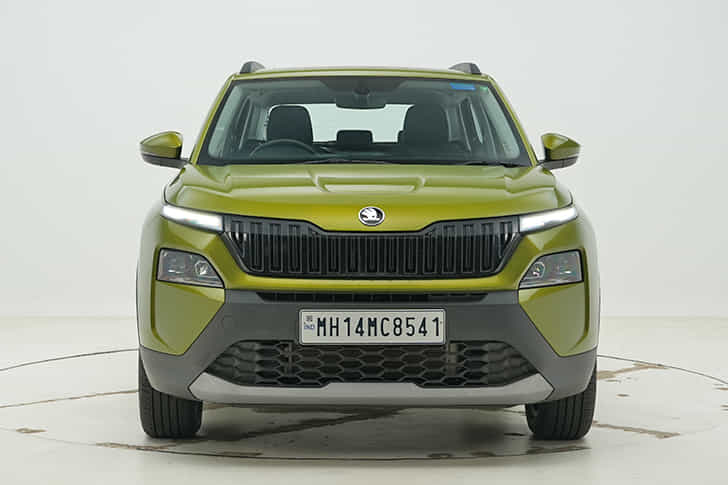
Given your brand preferences, the Skoda Kylaq 1.0 TSI automatic is the best fit. This Skoda car uses a 6-speed torque converter automatic, which is smooth and well suited to city driving. The Kylaq is also one of the most fun-to-drive cars in the segment, with strong performance and good handling. The only drawback is that the rear seat is not the most spacious in the segment, but it is adequate for most families.

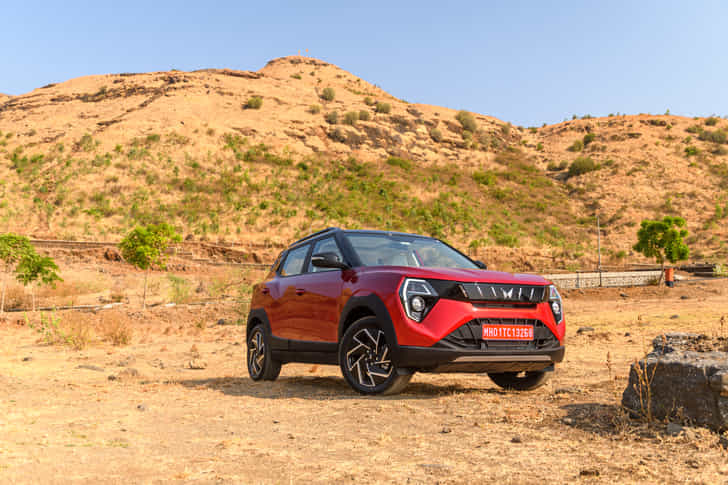
If rear seat space is a priority, the Mahindra XUV 3XO automatic is worth considering. This Mahindra car is one of the most spacious compact SUVs, with a wide cabin and comfortable rear seat. The only compromise is that the boot is on the smaller side.

Overall, the Kylaq 1.0 TSI automatic is the recommendation. 
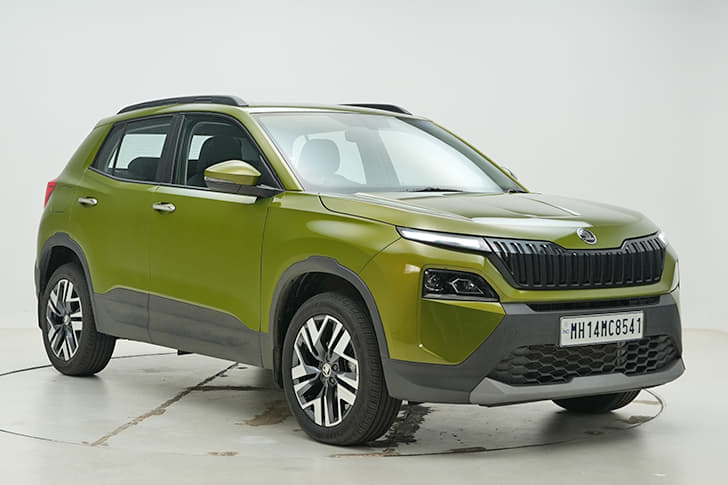
Skoda Kylaq

Skoda Kylaq

More posts on similar cars

•1d

Why would anyone pay Rs 3-5 lakh more for a 1.5-litre naturally aspirated petrol SUV like the Honda Elevate over a 1.0-litre turbo-petrol car like the Skoda Kylaq, especially when the Kylaq offers more torque and a torque-converter automatic? The turbo produces around 178Nm from 1,800rpm, while the naturally aspirated engine makes about 145Nm at around 4,300rpm. The turbo should also lose less power at altitude, and the torque-converter automatic avoids the concerns associated with a dry-clutch DCT. Is the Elevate really worth the premium for long-term reliability and refinement?

Verified
•3h

Whether it is worth paying the premium for a Honda Elevate over the Skoda Kylaq purely depends on your use case.The Skoda Kylaq will appeal to those buyers who want a (relatively) compact car that's enjoyable to drive. It is well-built and has a strong 1.0-litre turbo-petrol engine with a responsive 6-speed torque converter automatic that complements its taut chassis and excellent ride-handling balance. Being a sub-4-meter offering, it also falls in a lower tax bracket compared to the Elevate; hence it is more affordable too.The Honda Elevate, on the other hand, is a larger car with more rear seat space and a bigger boot, which makes a difference for buyers who regularly travel with family and/or luggage. The price difference is not just for the engine; it is for the overall package, including space, comfort, higher ground clearance and Honda’s reputation for long-term reliability.Also, do keep in mind that the Elevate's 1.5-litre naturally aspirated engine is a proven, reliable unit, and the CVT makes the drive experience very seamless. The 1.5 NA engine's low-end pulling power is also stronger. Sure, at higher altitudes, the Kylaq's turbo-petrol engine is likely to lose less power than the Elevate's NA engine, but off-boost responses will feel noticeably duller because turbo lag in small-capacity turbo engines usually feels more pronounced. So both cars have their pros and cons while driving in hilly regions.You're also getting more features with the Elevate, like ADAS, a 360-degree camera and front and rear seat ventilation, which the Kylaq doesn't get.Lastly, as you go to higher-end segments, even though these might not offer outright value-for-money as offerings from lower segments, buyers are happy to pay the 'prestige' premium for driving a bigger car or a more luxurious car.

VehicleSkoda Kylaq
VehicleHonda Elevate
•4d

I recently bought a Tata Safari Stealth Black Accomplished+ and am very happy with its performance. It returns around 13kpl in the city and 14-15kpl on the highway. I also own a Maruti Suzuki Ritz diesel VDi, which I have used for 10 years and driven 2.3 lakh km with regular servicing and genuine synthetic oil. Is it time to replace the Ritz? If so, what would be a good diesel or petrol car around Rs 15 lakh? My usage is a mix of city and highway driving, around 75-100 km a day. I also have three older family members above 60 who will use the car occasionally. I am considering the 1.0-litre Skoda, the new Thar 1.5-litre and other options. I am not interested in a sunroof or other fancy features. I do track racing, so strong performance, suspension, stability and an engaging driving experience are important to me.

Verified
•2d

Yes, it's time to retire the Ritz. Of the two cars you're considering, the Skoda 1.0 TSI is the right one. Both the Kylaq and the Kushaq use it, and either suits an enthusiast far better than the Thar. The engine is eager, the steering is sharp, and the chassis feels planted when you push it. Those are the things you'll value as someone who drives on track.The catch is your mileage. At 75-100 km a day, you'll cover close to 30,000km a year, and the petrol Skoda will cost noticeably more to run than a diesel. If that bothers you, test-drive the Mahindra XUV 3XO diesel. Its 1.5 diesel is one of the punchiest in its class; it has a roomy rear seat for your parents, and it'll be much cheaper to run, though it isn't as sharp to drive as the Skoda.The new Mahindra Thar isn't a good fit. It's tall to climb into for older passengers, the rear is cramped, and it isn't as settled as a regular SUV over 100km a day.Your Ritz has done well. Its 1.3 diesel runs a timing chain rather than a belt, which is why it's lasted. Drive the Skoda car and the 3XO back to back, and decide how much the extra fun is worth to you.

VehicleSkoda Kylaq
VehicleSkoda Kushaq
VehicleMahindra Thar OG
VehicleMahindra XUV 3XO

Has E20 fuel affected your mileage?
Is ADAS worth paying extra for in a car?

Popular discussions right now

•3d

I am a 6 ft driver who loves driving. I've driven the Swift 2013 petrol, Creta 1.6 Diesel Auto and the XUV500 the most on long trips. Now that I am planning to buy a car with a strict budget, do you think the 3XO AX5 TCMPFI petrol variant will be a wise decision to make, as I will be travelling once a month for short trips from Bangalore to Coorg, Pondicherry, GOA, and Mangalore? Which other car can be a perfect match for me, keeping a budget of 12 lakhs max? Also, the 3XO AX5 I'm getting from a friend who has hardly driven 6k km for 10 lakhs.

Verified
•2d

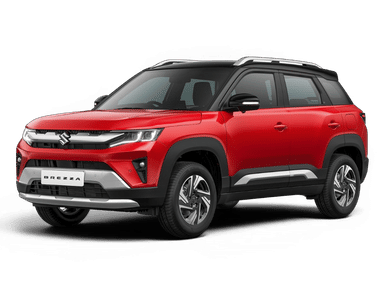
Go for the Mahindra XUV 3XO AX5 TCMPFI petrol from your friend for Rs 10 lakh. At that price, it is a very good deal and a sensible upgrade from your Creta 1.6 diesel automatic. The 3XO is one of the most spacious compact SUVs in the segment, with a wide cabin and good rear seat comfort, which will make your long drives to Coorg, Pondicherry, Goa and Mangalore more comfortable. The turbo petrol engine is smooth and is well suited to both city driving and highway cruising. At Rs 10 lakh for a car with only 6,000 km on the clock, you are getting a nearly new car at a significant discount, which makes it a far better value proposition than buying new.If you are looking for alternatives under Rs 12 lakh, the Skoda Kylaq 1.0 TSI manual is the best option for an enthusiast driver. The new Brezza turbo-petrol could also be a good choice. Overall, the 3XO from your friend is the most sensible choice. It offers a good balance of comfort, reliability and value, and will serve you well on your monthly road trips.

VehicleMahindra XUV 3XO
VehicleHyundai Creta
VehicleSkoda Kylaq
VehicleMaruti Suzuki Brezza

Upcoming launch buzz

Community discussions on upcoming launches
Posted on: 24 Aug 2026