Autocar India
5w

I bought a pre-owned Hyundai Elantra 2018 SX (o) vtvt petrol variant in March 2025 with an odometer reading of 64k km for 8.5Lakh. I've clocked it to 84k km currently, and the car is in very good condition. However, the mileage is very low (around 6-7 city and 14-15 highway) because of which I'm thinking of upgrading to an EV. Should I upgrade now, or should I wait for some time to get the most use out of the car, and what would be the optimum selling price of the car?

Verified
5w

Considering you bought the car for Rs. 8.5 lakh and have added another 20,000km to the odometer, a realistic selling price today would be slightly below what you paid for it, assuming the car remains in excellent condition.

One reason for this is that resale values of older used cars have softened in recent years, partly because lower GST rates and aggressive discounts on new cars have narrowed the price gap between new and used vehicles. As a result, buyers today are less willing to pay a premium for older used cars than they were a few years ago.

Unless the fuel bills are becoming a major concern, it would make sense to continue using the Elantra for a while longer. It is already through its steepest depreciation phase, remains a comfortable long-distance car and appears to be in good mechanical condition.

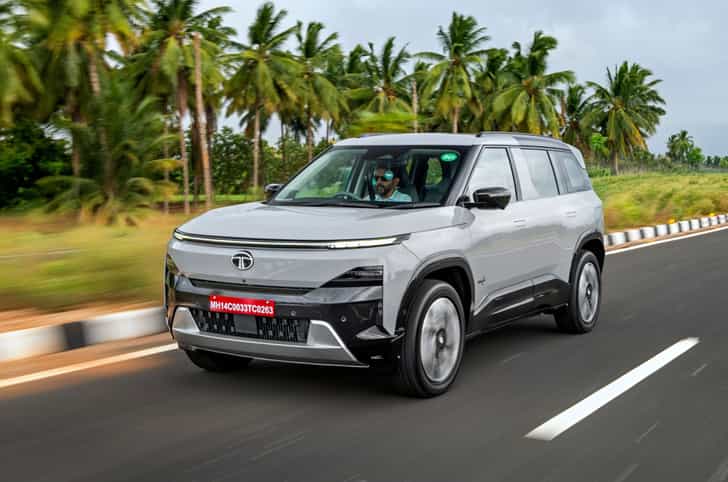
If you're considering a move to a midsize EV, it may be worth waiting for the Tata Sierra EV, which is expected to be unveiled on June 30. It has the potential to be one of the most compelling options in the segment and could be worth evaluating before making a final decision.
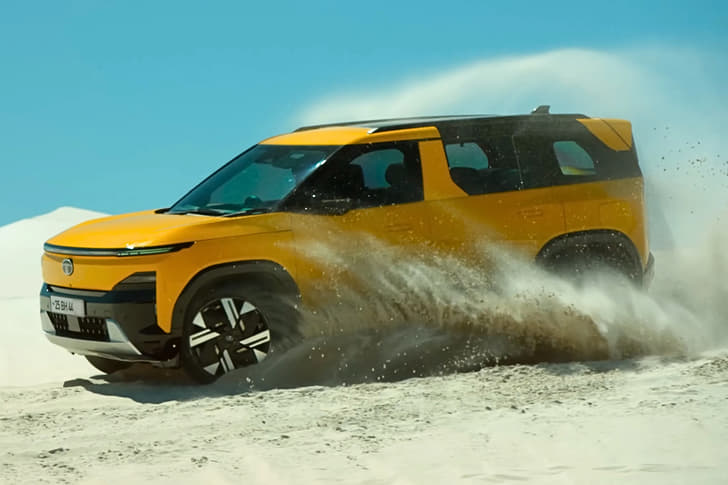
Tata Sierra EV

Tata Sierra EV

Explore cars mentioned
Want to sell your car?

Sell your car at the right price, without the stress.

More questions on similar cars

12h

I am planning to buy an electric car with a budget of around Rs. 30L as a family car. Which EV offers the best value for money in this price range? I also want to consider its resale value after 5-6 years. Which model would you recommend?

Verified
2h

The best all-rounder when it comes to EVs at the Rs 30 lakh price range is the Mahindra XEV 9S. For one, it's a large vehicle with three rows of seats, giving you maximum space at this price. You also get plenty of choice in the form of three battery pack options, depending on your requirement, and on top of it all, it's loaded with features. For Cars Under 30 lakhs, you could get one of the top two variants - Pack Three or Pack Three Above - with all the bells and whistles and the largest battery pack. It also packs in strong performance, with a 286hp motor mounted on the rear axle, as well as good range from the large battery - around 480km in real-world usage. Another strong option is the newly launched Tata Sierra EV. While not as large as the XEV 9S and without the third row of seats, its front and second row are incredibly spacious and comfortable, and it has a large boot too. The better news is that you get the top variant at around Rs 28 lakh, on road, and this not only gets you a similar feature set to the Mahindra, but also a battery and range figure that's almost as good. Moreover, this also gets you a dual-motor AWD setup with even greater performance. In outright terms, the seven-seat XEV is a better value, but if you have no need for the third row, the Sierra might work better for you.Resale value on any EV at present is not going to be as good as an equivalent petrol car, due to various factors, such as uncertainty around the condition and quality of the battery after several years of use. With that in mind, a strong brand and popular model are likely to give a better resale value, and both these are popular models from popular brands, so they should be as good as it can get.

VehicleMahindra XEV 9S
VehicleTata Sierra EV
4d

We are a family of two, and 95% of the time, the car will be used by just the two of us. We take trips with our extended family of 7 once or twice a year. My driving is split 50:50 between city and highway, and I also do leisure tours of at least 800 km every month as I enjoy driving and travelling. My overall monthly usage is between 2,500 and 3,000 km. My priorities are a car that is fun to drive, loaded with features, has low maintenance costs, makes a statement, is comfortable, and is practical for daily use. My budget is Rs. 27 lakh, and I have shortlisted the Sierra EV AWD and the XEV 9S Pack Two with the 79 kWh battery. Which one would you recommend?

Verified
2d

Given your usage pattern of 2,500-3,000 km per month, with a 50:50 city-highway split and a strong touring habit, the Mahindra XEV 9S Pack 2 is the better fit. The larger 79kWh battery gives you a more comfortable real-world range buffer for your 800 km leisure trips, reducing charging anxiety. This Mahindra car also offers a third-row seat, which will come in handy when you travel with your extended family. The Tata Sierra EV AWD is more stylish and eye-catching, and it is thrillingly quick too. The AWD system adds an extra level of safety in poor weather and also gives the Sierra a better off-road capability. This Tata car also packs in plenty of cool features and has a strong wow factor. However, its two-row seating layout will not work for you when you have seven passengers.Go for the XEV 9S, as it is the more practical and well-rounded choice for your requirements.

VehicleMahindra XEV 9S
VehicleTata Sierra EV
1w

I currently own a Maruti Ignis, which I have had for approximately nine years, and I am considering upgrading to the Sierra EV. I recently test-drove a demonstration model and found it to be quite heavy. This made me question whether such a robust build is truly necessary for vehicles. While I acknowledge that safety is paramount, I believe there may be opportunities to optimize the weight of the vehicle. The increased weight inherently affects the performance and power consumption of petrol, CNG, and electric vehicles. Modern safety features, such as ADAS, offer alternative approaches to improving vehicle safety.

Verified
2d

The Tata Sierra EV is a very different proposition from your Ignis, and the weight you felt is a natural consequence of both its size and its construction. This Tata car is a significantly larger and more premium vehicle, and the battery pack itself adds considerable weight. That said, the Sierra EV is on the heavier side but is not unusually heavy for its class.On the question of whether such a robust build is necessary, it is important to understand that safety is not just about ADAS. While ADAS systems can help avoid accidents, it is the fundamental structure of the car that protects occupants when an accident does occur. A strong body shell, well-engineered crumple zones, and a rigid passenger cell are still critical elements of crash safety. That said, there is a trade-off. Heavier cars do consume more energy, whether petrol, CNG or electricity. Manufacturers are constantly working to optimise weight, but safety standards and battery technology set certain minimums. The Sierra EV is a safe, comfortable, and premium family electric car, but if you are particularly sensitive to weight and efficiency, you may want to consider slightly smaller EVs as well. Ultimately, the Sierra EV’s weight is not a flaw; it is a reflection of its priorities and its segment.

VehicleTata Sierra EV

Popular discussions right now

Posted on: 12 Jun 2026