Autocar India
6w

I currently own a Maruti Ignis, which I have had for approximately nine years, and I am considering upgrading to the Sierra EV. I recently test-drove a demonstration model and found it to be quite heavy. This made me question whether such a robust build is truly necessary for vehicles. While I acknowledge that safety is paramount, I believe there may be opportunities to optimize the weight of the vehicle. The increased weight inherently affects the performance and power consumption of petrol, CNG, and electric vehicles. Modern safety features, such as ADAS, offer alternative approaches to improving vehicle safety.

Verified
6w

The Tata Sierra EV is a very different proposition from your Ignis, and the weight you felt is a natural consequence of both its size and its construction. This Tata car is a significantly larger and more premium vehicle, and the battery pack itself adds considerable weight. That said, the Sierra EV is on the heavier side but is not unusually heavy for its class.

On the question of whether such a robust build is necessary, it is important to understand that safety is not just about ADAS. While ADAS systems can help avoid accidents, it is the fundamental structure of the car that protects occupants when an accident does occur. A strong body shell, well-engineered crumple zones, and a rigid passenger cell are still critical elements of crash safety. 

That said, there is a trade-off. Heavier cars do consume more energy, whether petrol, CNG or electricity. Manufacturers are constantly working to optimise weight, but safety standards and battery technology set certain minimums. The Sierra EV is a safe, comfortable, and premium family electric car, but if you are particularly sensitive to weight and efficiency, you may want to consider slightly smaller EVs as well. Ultimately, the Sierra EV’s weight is not a flaw; it is a reflection of its priorities and its segment.
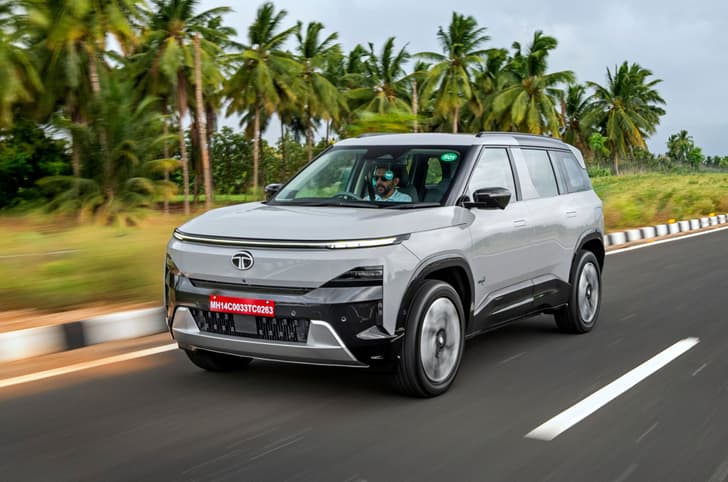
Tata Sierra EV

Tata Sierra EV

Explore cars mentioned
Help Srikrishna with similar question

More posts on similar cars

6d

Hi, I want to upgrade from my 9 year old Honda WR-V to an electric SUV. My driving is mostly in the city, with only occasional highway trips, and the total monthly running does not exceed 1,000km. I like the Mahindra BE 6 Sporteq, but it seems impractical from a utility perspective once the excitement of owning a new car wears off. I am therefore looking for an EV SUV in the Rs 20-22 lakh range with good second-row space, strong design appeal and plenty of features. I would prefer something new on the block, as models like the Creta have become extremely common and feel less fresh. I also like the Harrier EV, but the features I want are available only in variants priced above Rs 25 lakh. Please suggest something new and worthwhile. I can stretch the budget to Rs 24 lakh if most of these requirements are met.

Verified
1d

Based on your requirements, the Tata Sierra EV is the recommendation. It offers a genuinely fresh design, a spacious and comfortable second row, and a premium cabin experience that feels new and different from the usual options. The Sierra EV also delivers a good balance of range and practicality for your predominantly city usage with occasional highway trips. The Tata Harrier EV is a strong product, but as you rightly pointed out, the feature-rich variants start to push well beyond your budget. The Sierra EV, on the other hand, gives you a more distinctive ownership experience with added practicality. The 63kWh version should be adequate for your usage, but if you want a bit more buffer in terms of range for your highway trips, then stretch for the 75kWh version.

VehicleTata Harrier EV
VehicleTata Sierra EV
3d

Planning to buy a Mercedes GLE and currently getting a Rs 4 lakh discount on the current model. I read online that the new-generation GLE has already been launched abroad. Should I wait for the new model or buy the current one with the discount? I expect the new GLE to be more expensive and unlikely to have such discounts when it launches in India. If the new model is significantly better and worth the extra money, I’m willing to wait. So, should I buy the current GLE now or wait for the new one?

Verified
41m

If you are getting a Rs 4 lakh discount on the current Mercedes-Benz GLE, we would recommend going ahead with the purchase rather than waiting for the new model. The new GLE has indeed been revealed internationally, but there is no confirmed India launch timeline yet, and when it does arrive, it will almost certainly be significantly more expensive and unlikely to attract any meaningful discounts initially. The current Mercedes-Benz remains a very strong product with a well-appointed cabin, excellent ride comfort and a proven ownership experience, so you are not missing out on a major generational leap. The newer GLE is merely a facelift, and will come with the same mechanical setup, engines and cabin. The only real differences are the exterior design, which features a more prominent grille and headlamps, connected tail-lamps and on the inside a new screen-heavy dashboard with Mercedes' newest MB.OS hardware and software. If you are happy with the car as it stands today, the discount makes it a far more compelling proposition than waiting and paying a premium for the new model.

VehicleMercedes-Benz GLE
4d

I’m planning to buy a new car in a budget of Rs. 22-24 lakh. I currently own a Ciaz petrol that I am planning to retain. My shortlisted cars include Tata Sierra (EV/petrol), Kia Seltos, and am also considering whether I should wait for the next-gen Creta. My daily running is around 18-30 km, mostly within the city, with occasional long trips. Since I’ll be keeping the Ciaz, I’m also considering an EV. What would make more sense in my situation amongst Sierra EV, Sierra petrol, Seltos, or waiting for the new Creta?

Verified
3d

Given your usage and the fact that you are retaining the Ciaz, the Tata Sierra EV is a sensible choice. Your daily running is well within the comfort zone of an EV and the Sierra EV offers a genuinely premium cabin, excellent ride comfort and a spacious, lounge-like rear seat, making it a very different ownership proposition from the Ciaz.The Seltos is a strong all-rounder, but it does not offer a fundamentally different experience from the Ciaz, and you are essentially buying another petrol car for city use. Waiting for the next-generation Creta is a valid option, and if you can comfortably wait, go ahead and do so as the Creta is also expected to offer a hybrid, but it is still some time away. The Sierra EV, on the other hand, gives you a clear use-case advantage today. The only caveat with the Sierra EV is Tata's long-term reliability track record, which is still evolving. If that is a concern, the Seltos remains the safer ownership bet. But given your usage pattern and the fact that you are keeping the Ciaz, the Sierra EV is a logical and differentiated choice.

VehicleTata Sierra EV
VehicleKia Seltos
VehicleHyundai Creta

Popular discussions right now

Want to sell your car?

Sell your car at the right price, without the stress.

Posted on: 18 Jul 2026