I'm 6'3" tall and have never owned a car before. I learned to drive at a driving school several years ago, but haven't driven on public roads since then. As a first-time car buyer, would it be better to buy a second-hand automatic car to learn and gain confidence, or should I invest in a brand-new automatic car from the start? Also, which cars would you recommend that offer excellent front and rear legroom and headroom (comfortable for someone my height), a spacious boot, modern features and technology, strong safety ratings, good fuel efficiency (mileage), easy-to-drive automatic transmission in a budget of 8-12 lakhs.

I'm planning to buy a new car with a budget of Rs. 8-10 lakh. I currently own a Hyundai Santro Xing and am looking to upgrade. I have shortlisted the Hyundai i20 Magna and the Maruti Suzuki Brezza LXi Turbo. We are a family of five, and my average monthly running is around 1,500 km. My priorities are comfort and good fuel efficiency. Which of these would you recommend, or is there a better option within my budget?
 Hyundai i20Maruti Suzuki Brezza
I want to buy my first car, and I have a strict budget of Rs. 10 lakh. I live in Bengaluru, and I will not be using the car daily-it will be driven only occasionally. I prefer an automatic transmission and am not interested in a manual. Could you please suggest the best options within my budget?
Maruti Suzuki SwiftMaruti Suzuki FronxI currently own a 2022 Kia Seltos that has covered 35,000 km. My wife and I are the primary occupants, and we usually take one or two road trips every six months, covering up to 300 km in a day on highways. We are both 66 years old. I plan to continue driving myself for the next five years, after which I expect to hire a chauffeur. I have been considering replacing the Seltos with the MG Hector Savvy CVT 6-seater. Given my usage and future plans, would it be better to make the change now or wait?
Kia SeltosMG Hector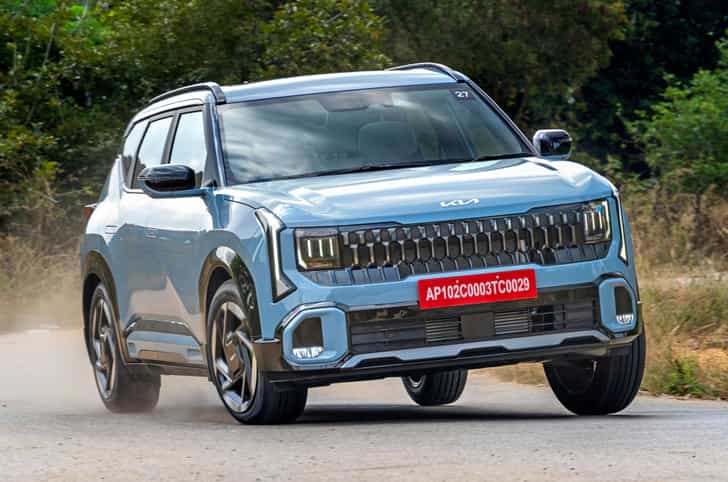
Is it considered normal for a premium 900cc adventure motorcycle to require a complete cylinder head and valve assembly replacement at around 18,000 km, followed by another major repair or replacement of the valve or cylinder head assembly just 6,500 km later, with the motorcycle having covered only 24,500 km in total? If this is not considered normal, what are the most likely technical reasons for such a recurring failure? From an engineering perspective, would it be advisable to continue with another component-level repair, or does a case like this warrant a more comprehensive solution, such as a complete engine replacement?
My monthly running is approximately 1,200 km, mostly within the Delhi-NCR region. My family includes my wife, my 11-year-old son, and my mother. I had to sell my beautifully maintained third-generation Honda City V MT because of the 15-year NGT rule in Delhi. In October 2024, I bought a Tata Punch EV S Long Range, which has proven to be tech-loaded, extremely economical to run, comfortable, and very convenient for navigating Delhi's congested roads. However, I still miss having an all-rounder with the character of the third-generation City, especially on highway drives. I have shortlisted two options: the Maruti Suzuki Swift MT and the Maruti Suzuki Jimny AT. I enjoy driving briskly, while staying within legal limits, on highways, which is why the Swift appeals to me. At the same time, my heart is set on Jimny for its classic looks and abilities. I plan to undertake long road trips to destinations such as Keran in Kashmir, Leh-Ladakh, Goa, Arunachal Pradesh, and other parts of the country. Considering my current usage, I may keep just one car in the garage, although I am also open to owning both an EV for city driving and an ICE car for highway trips. With this in mind, I would appreciate your expert advice on the best long-term choice.
Maruti Suzuki JimnyTata Punch EVMaruti Suzuki SwiftHi Autocar India, I recently booked the Maruti Suzuki Brezza LXi Turbo. With a budget of ₹Rs 8–9 lakh, I chose the base variant and plan to add a music system and rear camera later. This is my first new car, and my monthly running will be around 1,000–1,200 km, mostly highway commuting. I chose the Brezza Turbo over the Hyundai Exter HX4 because it offers better value, is a segment above, and suits my highway usage and preference for a higher seating position. I have two questions: First, should I be concerned about the turbo engine with increasing ethanol blending, as some reviewers advise against it? Second, I prefer a simple, low-maintenance car and only need a music system and rear camera apart from the standard LXi features. Can these be installed after a few months in the aftermarket without affecting the warranty, assuming the factory wiring and connectors are already provided? I am open to any other car suggestions that suit my needs if Brezza is not advisable.
Maruti Suzuki BrezzaI’m planning to buy the Kia Seltos GTXO and am confused between the Turbo Petrol Automatic and the Diesel Automatic. My driving is a mix of city commutes and highway trips, although the majority of it is in the city. My annual running is around 10,000 km. I currently drive a diesel-manual Maruti Dzire, so I’m accustomed to the strong mileage of a diesel car. Initially, I was inclined towards the petrol Seltos, but I’m concerned about its lower fuel mileage compared to the diesel. At the same time, while the diesel offers better mileage, it comes with a DPF system that may require additional attention, especially with predominantly city driving. Considering my driving pattern, annual running, and the mix of city and highway usage, which would be the better choice for me: the Kia Seltos GTXO Turbo Petrol Automatic or the Diesel Automatic?
Kia Seltos