Autocar India
•17w

I have been driving a Hyundai Santro Xing for the past 21 years and am now looking to replace it with a similarly sized petrol hatchback. I need an automatic car that will be used mainly for city driving in Bangalore. My budget is around Rs. 10 - 12 lakh. Which cars currently available in India would you recommend?

Verified
•17w

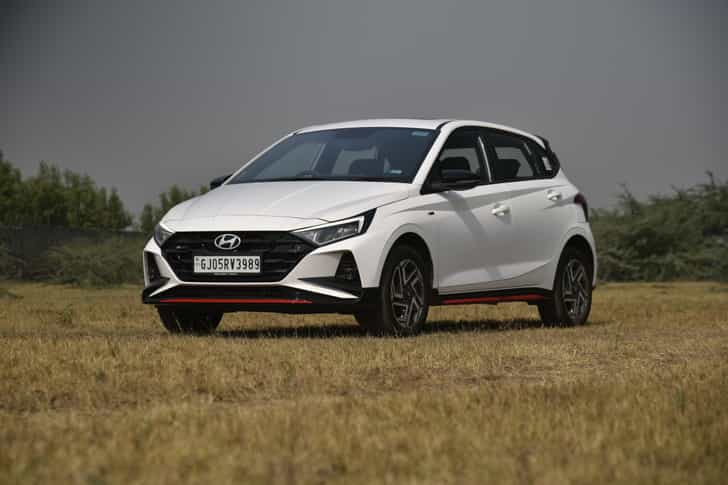
An ideal upgrade from your Santro is the Hyundai i20 IVT, which is powered by a refined 1.2-litre petrol engine that's mated to a smooth and seamless automatic transmission. This Hyundai car is spacious, feature-rich and feels like a huge step up over your outgoing hatchback car. And it will easily fit your Rs 10-12 lakh budget.

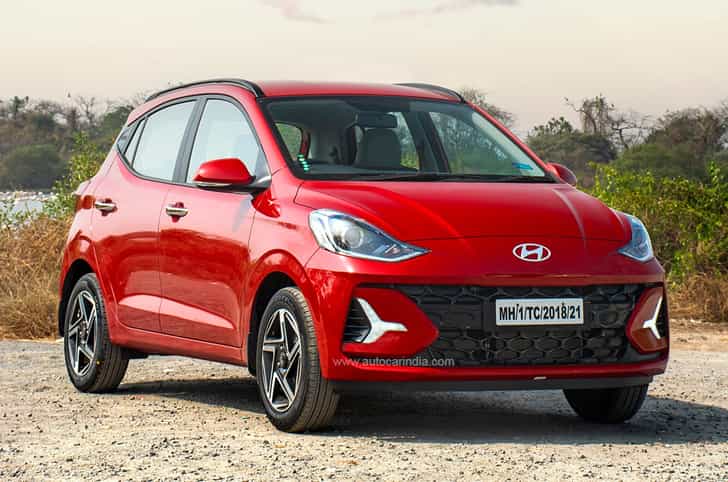
However, since you've mentioned that you want a car of a similar size to the Santro, we'd advise you to opt for the Grand i10 Nios instead. It is more compact in size than an i20, which makes it easier to drive and manage. It is powered by the same engine as the i20, although it's mated to an AMT, which gets you the convenience of an automatic, but is not as smooth as the i20's transmission. Also, the Grand i10 is much more affordable than the i20, and even though it has fewer features, it has almost all the features that you'd use daily.

In summary, the Nios is a sophisticated, compact replacement for the Santro that'll cost you between Rs 8-9.5 lakhs, but if you're looking to upgrade, then the i20 IVT is the one to go for, that's priced between Rs 10-12 lakh (on-road).
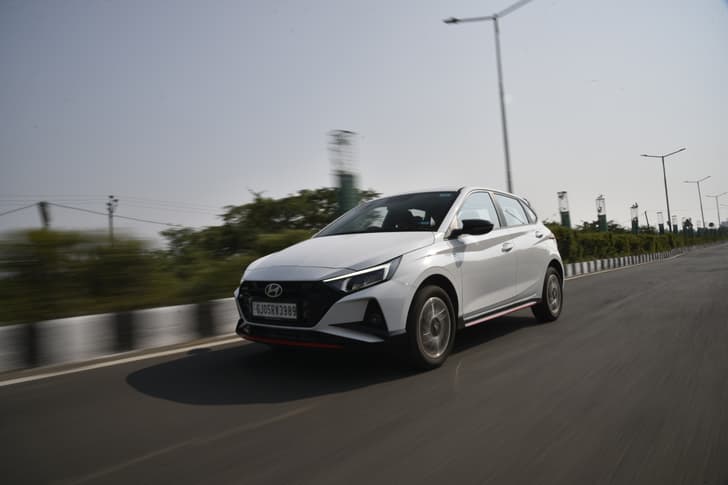
 

Hyundai i20

Hyundai i20

More posts on similar cars

•4d

I currently drive a Ford EcoSport 1.0 EcoBoost and am planning to replace it with a new car. I am considering two options: the Hyundai i20 N Line N8 DCT and the Mahindra XUV 3XO RevX A. We are a young family of three, with a toddler, and the car will primarily be used for 70% city driving and 30% highway driving. We are based in a relatively remote part of the country, where road conditions, service accessibility and long-distance usability are important considerations. My priorities are safety, driving engagement, rear-seat comfort and ease of long-term ownership. Considering these requirements, which car would you recommend and why? In particular, does the XUV 3XO's larger boot and higher ground clearance make it a more practical family choice? Is the i20 N Line significantly more engaging to drive and better suited to everyday city use? How do the two compare in terms of rear-seat comfort, ride quality and highway stability? Which offers a more dependable ownership experience, especially considering the DCT versus a torque-converter automatic? If you had to choose one for the next seven to nine years, which would it be?

Verified
•1d

Between the two, the Mahindra XUV 3XO is a better choice for a growing family. As you mentioned, road conditions where you live aren't ideal, so the 3XO's added ground clearance and superior ride quality give it an edge over the i20 N Line. The N Line is more engaging to drive, but its ride has a firm edge to it, which can get a bit jarring. The 3XO RevX A rides on 16-inch wheels with tall-sidewall tyres that do a remarkable job of rounding off sharp edges. It is also a surprisingly tidy handler, with slightly numb steering being the only real complaint. The 3XO offers very good performance too, while its torque converter automatic is smoother in traffic than the i20 N Line's DCT. In terms of practicality, the 3XO's wider cabin, roomier rear seat and larger boot give it another advantage over the i20.Overall, while the Hyundai i20 N Line is certainly a more entertaining car to drive, it can't match the 3XO's practicality, which matters more when you have a young family. If you'd like an alternative, consider the Hyundai Venue N Line, which is a more direct rival to the 3XO.

VehicleMahindra XUV 3XO
VehicleHyundai i20
VehicleHyundai Venue

Has E20 fuel affected your mileage?
Is ADAS worth paying extra for in a car?

Popular discussions right now

Upcoming launch buzz

Community discussions on upcoming launches
Want to sell your car?

Sell your car at the right price, without the stress.

Posted on: 15 Jul 2026