The government of India has announced a new PM Electric Drive Revolution in Innovative Vehicle Enhancement (PM E-Drive) scheme. This new scheme will supersede the Faster Adoption and Manufacturing of (Hybrid and) Electric Vehicle (FAME II) scheme, which expired in March this year, but with a smaller outlay.
- PM E-Drive has an outlay of Rs 10,900 crore for two years
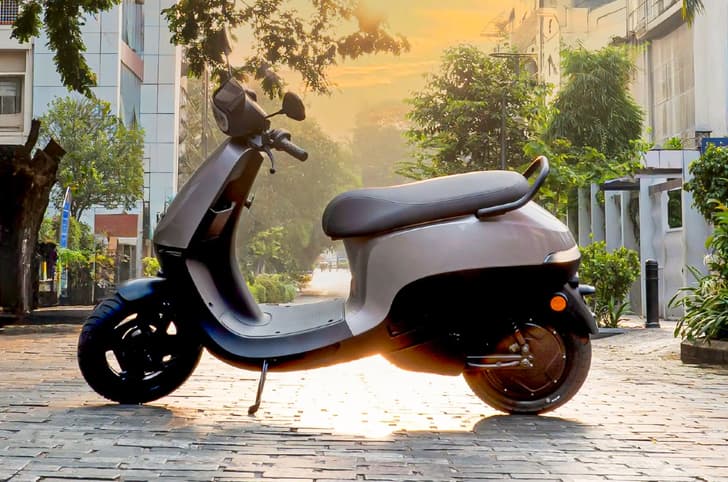
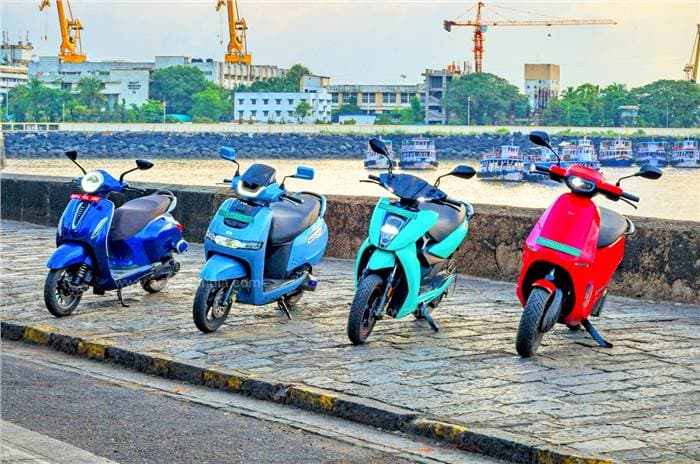
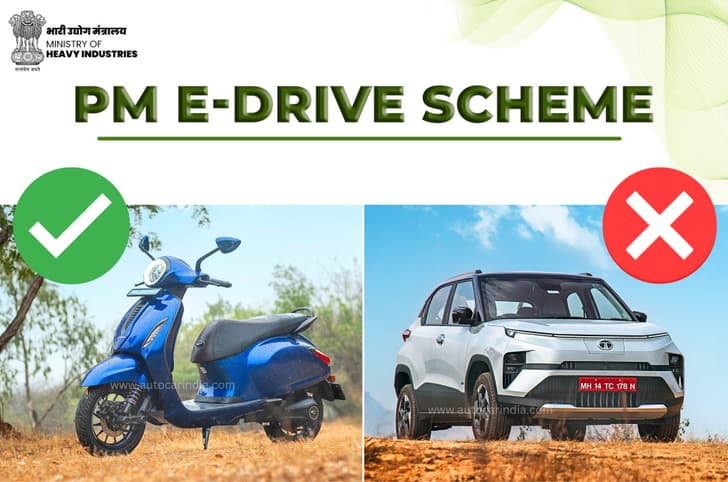
- Scheme covers electric two-wheelers and three-wheelers
- Electric, hybrid cars not part of PM E-Drive scheme
PM E-Drive: what does it offer?
The PM E-Drive, under the Ministry of Heavy Industries, is a two year scheme that has a total budgetary outlay of Rs 10,900 crore. This scheme will provide subsidies on the purchase of electric two-wheelers, electric three-wheelers, electric trucks and buses as well as electric ambulances. Apart from these, the scheme will also support 88,500 electric vehicle charging sites.
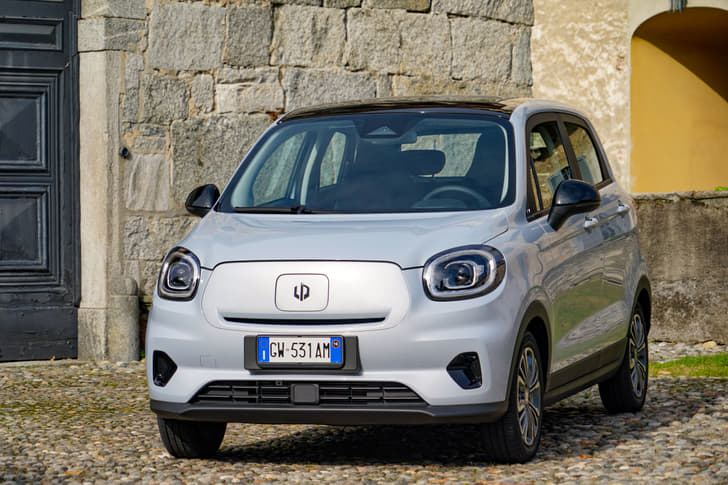
Unlike the previous schemes, however, the new PM E-Drive scheme however does not provide subsidies on the purchase of electric or hybrid cars and SUVs.
“Subsidies/demand incentives worth Rs 3,679 crore have been provided to incentivize e-2Ws, e-3Ws, e-ambulances, e-trucks and other emerging EVs. The scheme will support 24.79 lakh e-2Ws, 3.16 lakh e-3Ws, and 14,028 e-buses,” the government said.
The scheme comes with a provision for procuring 14,028 electric buses by state transport units and other public transport agencies, for which Rs 4,391 crore has been set aside. PM E-Drive qlwo proposes the installation of 22,100 fast chargers for electric four-wheelers, 1,800 fast chargers for electric buses and 48,400 fast chargers for electric two- and three-wheelers with an outlay of Rs 2,000 crore.
Further details regarding the quantum of subsidies per vehicle and the localization level required will be available once the government comes out with a notification on the scheme.
Two-wheelers accounted for 56 percent of the electric vehicle sales in the last financial year, while three-wheelers constituted 38 percent. Affordability and limited charging infrastructure have been major hurdles in the faster adoption of electric vehicles.
The subsidies given on the purchase of electric vehicles are instrumental in driving the early-stage adoption of electric vehicles as incentives help in reducing the upfront cost of the vehicle. Most of the electric vehicle OEMs have been advocating the need for subsidies to continue till the market matures.
FAME Schemes: a backgorund
The first phase of the FAME scheme, which had an outlay of Rs 895 crore, was introduced in 2015 for five years ending in 2018. It was followed by FAME II, rolled out in 2019 with an initial outlay of Rs 10,000 crore for three years ending in 2022. The scheme was later extended to March 2024 with an additional outlay of Rs 1,500 crore.
FAME 2 had a target to support 10 lakh electric two-wheelers, 5 lakh electric three-wheelers, 55,000 electric four-wheelers and 7,000 electric buses. The scheme supported 11.70 lakh two-wheelers, 1.30 lakh three-wheelers, 16,631 four-wheelers and 4,766 buses.
After the expiry of FAME 2 in March, the government launched a temporary EMPS 2024 with an outlay of Rs 500 crore. The EMPS was initially valid for four months till July 31 but was extended till September end. The outlay was also boosted to Rs 778 crore.
Unlike the FAME 2 scheme, EMPS provides incentives only to electric two- and three-wheelers, that too at a reduced level. Electric four-wheelers were not included in it. The scheme had a target of 5.61 lakh electric vehicles, comprising 5 lakh electric two-wheelers and 60,709 electric three-wheelers.
With inputs from Kiran Murali
 Dhruv Dhaka
 Dipan Sur