India’s mandatory rollout of E20 petrol has come under renewed scrutiny after a series of public complaints, political criticism and viral social media posts incited fresh debate over the ethanol blending programme. Meanwhile, manufacturers such as Toyota, Maruti Suzuki and Hero MotoCorp have publicly defended the E20 policy.
The controversy heightened early last week after reports emerged that Attorney General for India, R Venkataramani, had described the country’s ethanol blending programme as an “experiment” during a court hearing, saying its results would only be known next year. Though the government later denied that the remark referred to the E20 policy and Venkataramani clarified that he was speaking about ethanol supply volumes rather than the fuel itself, the comments have intensified an already growing backlash.
Auto manufacturers express support for India’s ethanol blending programme
No E20-related issues recorded in non-compliant vehicles so far, claim manufacturers
At a government briefing held on July 4, several automotive manufacturers and industry representatives mounted a coordinated defence of the ethanol blending programme. Maruti Suzuki’s senior executive officer for corporate affairs, Rahul Bharti, acknowledged the key concern surrounding E20’s impact on E10-compliant and older vehicles.
“India mandated E20 from 2023 for material compliance, and before that, it was E10. Obviously, after 2023, both the cars and the fuel are mandated for E20,” he said. For context, E20 compliance was mandated as part of Bharat Stage 6 Phase 2 regulations, which came into effect in April 2023.
However, Bharti claimed that Maruti Suzuki had tested older E10-compatible vehicles on E20 and found no significant concerns related to wear, corrosion or component durability. “As a manufacturer, we have tested E10 cars, which were prevalent before 2023, on E20 fuel for all parameters, and we have not found anything of concern.”
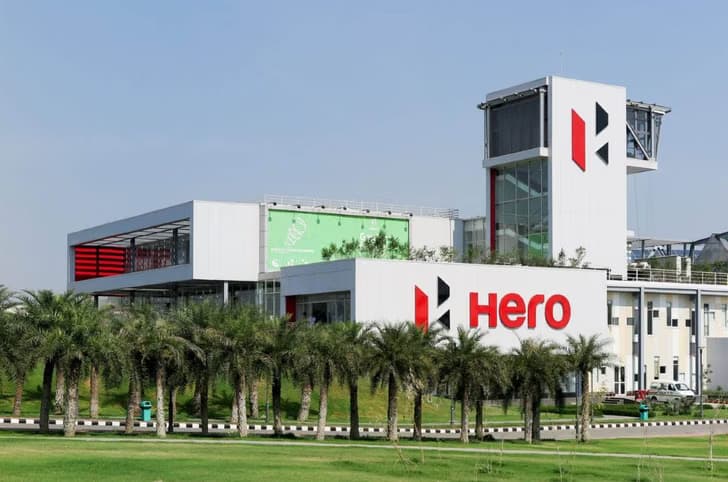
Hero MotoCorp’s chief business officer, Ashutosh Varma, concurred. He mentioned that analysis of crores of service records had not found a higher incidence of damage in vehicles running on E20 compared to earlier fuel blends.
The country head and executive vice president at Toyota Kirloskar Motor, Vikram Gulati, added that the auto industry has highly stringent regulations and that vehicles and fuels undergo extensive testing, certification and homologation before reaching customers.
Gulati also said that ethanol is a cleaner, high-performance fuel that helps cut vehicle emissions and reduce India’s dependence on crude oil imports. On the recently reported viral clip of an Innova Hycross breaking down, Gulati replied that the engine trouble was “not related to E20 fuel usage but caused by contaminated fuel.”
At a separate briefing on July 2, petroleum minister Hardeep Singh Puri remarked, “They use it [ethanol] in racing cars also; the acceleration increases. Mileage – yes, it may drop a little.” Puri’s comments are not germane to public concerns at all, as race cars use ethanol solely for performance, and the drop in mileage is the central pain point for the overwhelming majority of vehicle owners. Race car engines are also designed to take full advantage of ethanol and are frequently rebuilt, which is completely impractical for the average motorist.
SIAM’s previous stand on E20
Manufacturers’ association had advocated for keeping E10 available
While the industry now says there should be no concerns about E20 fuel usage, it had previously pushed back and recommended to the government that “E10 should be made available on a pan-India basis as a protection-grade fuel for the existing pool of vehicles”, as published in a 2021 Niti Aayog report.
The Society of Indian Automobile Manufacturers (SIAM) even went on to say that E10 fuel availability would avoid the “mammoth task of developing parts with upgraded material for a large number of vintage variants with a wide range of fuel system component designs and then getting customers to get their vehicles upgraded”.
These recommendations, however, were overruled, and E20 became the base fuel; its national rollout was also brought forward from the earlier planned date of 2030.
No clear answer on availability of E20 upgrade kits
As for E20 upgrade kits, while a few manufacturers, including Maruti Suzuki, had mentioned them earlier, they don’t have much to say for now. Bharti said that Maruti has “several possible solutions, but as of now, we don’t feel the need, and there is no such kit we are offering in the market. They are only for R&D purposes”.
Opposition voices disapproval of E20 policy implementation
Hundreds showed up to an anti-E20 protest in Delhi
Despite the industry’s defence, criticism surrounding the ethanol blending policy continues to grow in the political arena. Opposition leader Priyank Kharge argued that the rollout lacked adequate consultation and that the government could not dismiss consumer concerns while its own assessment remained pending. Political analyst Tehseen Poonawalla staged a protest against the mandatory E20 rollout at Jantar Mantar in New Delhi on July 5, which was attended by hundreds of aggrieved motorists.
The government, meanwhile, has continued to back E20, saying the fuel reduces carbon emissions, cuts crude oil imports, saves foreign exchange and supports farmers by increasing demand for ethanol feedstocks. In fact, the government has signalled an impending increase in baseline ethanol blending beyond E20, with standards notified for E22, E25, E27 and E30. The Automotive Research Association of India (ARAI) has also been tasked with carrying out a study on the impact of E25 on existing E20- and E10-compliant vehicles.
In this regard, most manufacturers have stated that higher blends for E20 cars should not pose too much of a material compliance issue, though they have not touched upon performance or emissions.
Bharti said Maruti Suzuki’s E20 cars should be safe as far as material compliance is concerned. “There is a higher factor of safety. We are absolutely comfortable if the blending goes up by some points,” he stated, without divulging what that threshold is. “There are many factors involved, like material factor of safety, production factor of safety and usage factor of safety. So we will select that point and then give a statement.”
Isobutanol-diesel blending under serious consideration
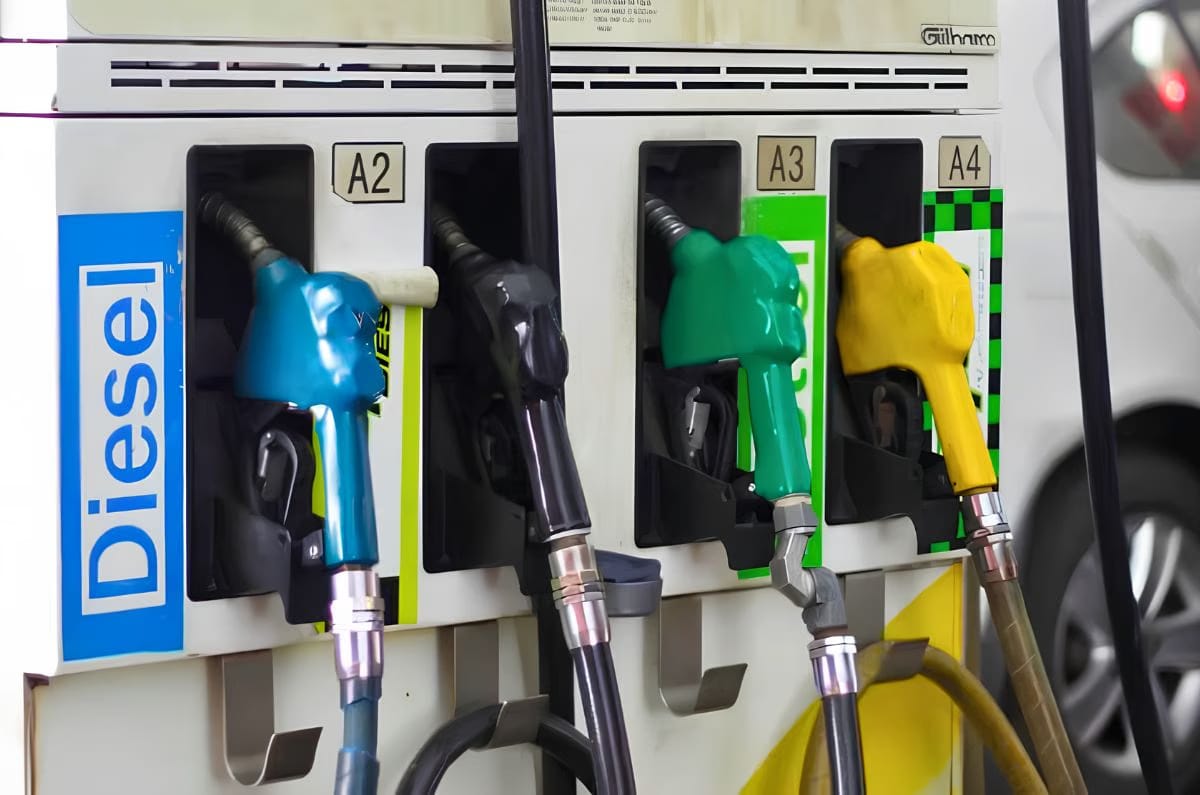
Diesel could be next, as plans to introduce isobutanol blending in diesel this year are under consideration – isobutanol is an ethanol-derived compound but is more energy-dense, less corrosive and has a lower tendency to absorb water (hygroscopicity). This is despite the fact that none of the diesel cars currently sold in India are compliant with isobutanol-blended fuel.
What does this mean for the consumer?
Greater emphasis on preventive maintenance
While the industry has now put on a brave face, E20-related damage could surface later, given ethanol’s corrosive properties. The damage, though, would be limited to the engine’s fuel system and vary widely based on climate and humidity, the vehicle’s usage pattern, its upkeep and so on.
Thus, there is a way to mitigate this with periodic injector cleaning and quicker inspection of fuel hoses and lines, along with the use of conversion kits, if and when they do appear. Clearly, then, while the issue can be managed, it’s the motorist who is left to foot the bill – quite literally – due to loss in fuel efficiency and potentially higher maintenance costs.
With inputs from Sergius Barretto
 Autocar India News Desk
 Dhruv Dhaka

 Uday Singh