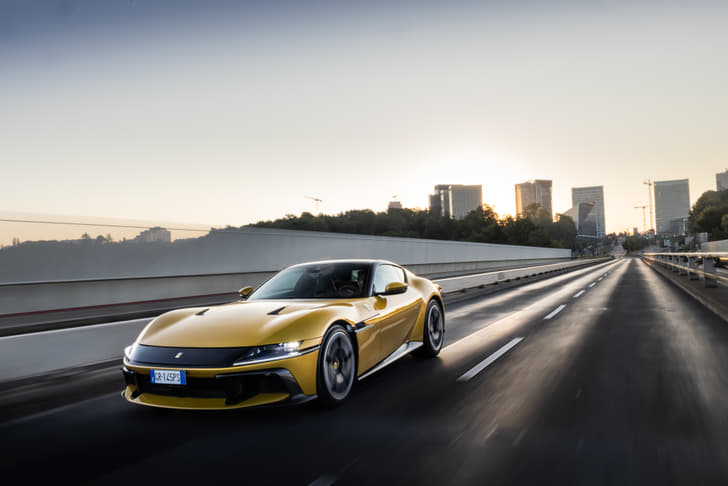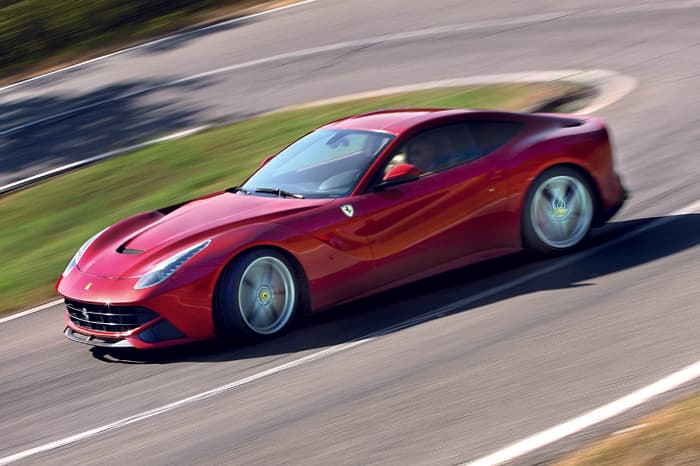
Ferrari’s new supercar, the F12, looks to blend the comfort of a GT with the mind-numbing speed of a supercar. And, I’m here in Maranello to try and tame the 730 horses under the hood of Ferrari’s F12.
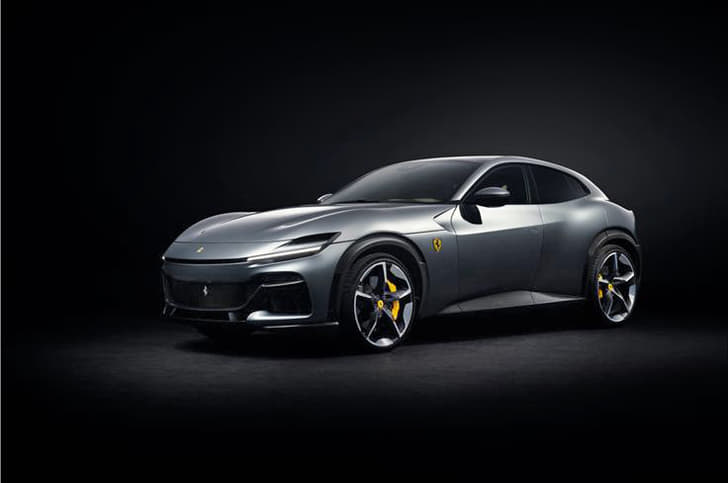
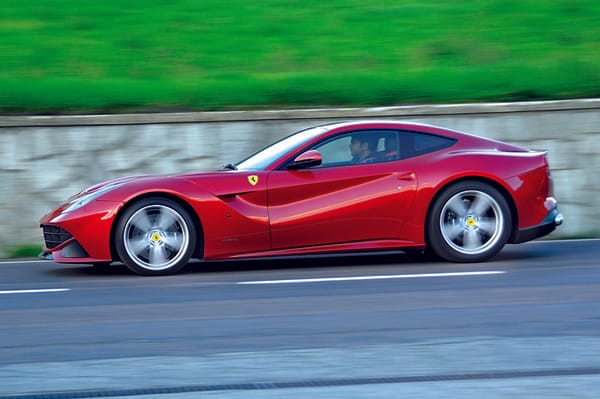
The F12’s hunkered down shape gets your attention immediately, it looks very purposeful in profile and there are some genuinely unique bits like the ‘Aero Bridge’ that tunnels through the fender for greater aerodynamic stability. What’s missing, however, is that supermodel-like, long-limbed elegance that earlier Ferraris like the Daytona, Dino, 308 or even the F40 possessed; Ferraris from an era when designer Leonardo Fioravanti was at Pininfarina. The F12, to me, seems almost too aggressive, large-mouthed and a bit overdone.
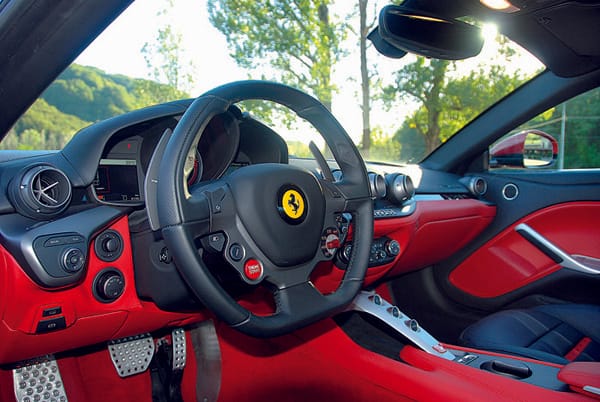
This car may be lower than the preceding 599 for greater stability, and have a shorter wheelbase for increased agility, but it’s easily as plush and as comfortable in here as in a Bentley. The large, leather-lined seats may look like racing buckets, but they’re very supportive when the g’s build up.
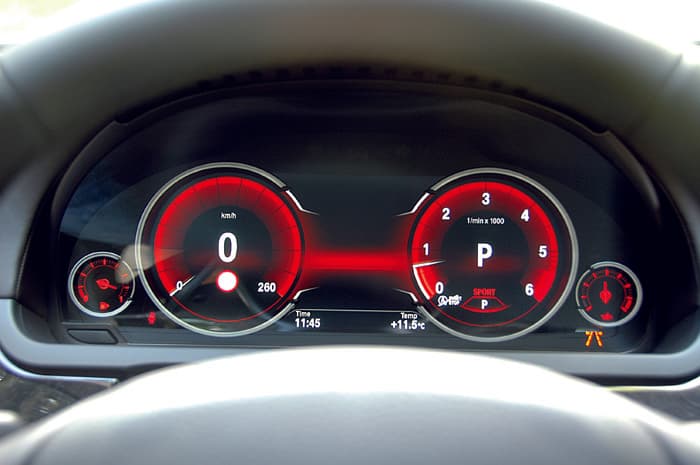
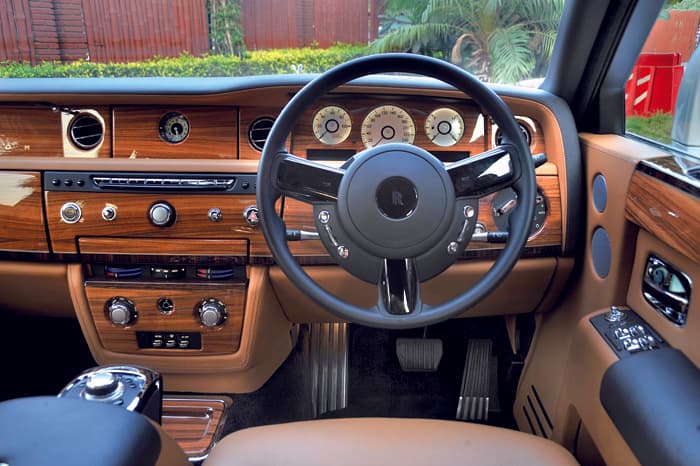
As with many modern Ferraris, a large central tachometer takes pride of place; as it should. It’s redlined at 8700rpm – incredibly high for a large-capacity V12 – and the column-mounted gearshift paddles are big too. Ferrari has also made sure nothing obstructs the steering wheel and paddles. The turn indicator switches are mounted on the steering wheel to reduce clutter and there is no gear lever either.
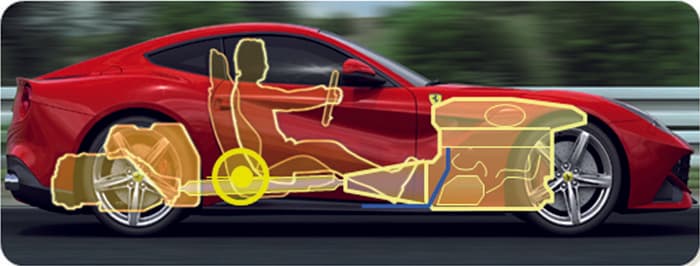
Technical secrets behind the Ferrari F12
Setting out onto the narrow streets of Maranello is quite intimidating. The F12 feels super wide, the steering is too quick, and there is so much urge from the motor, even from just beyond tick-over, you can breach the national speed limit without even properly getting on the throttle. The roads in Maranello, contrary to what you might expect, are as bad as some of those here. So I expect a bone-jarring ride every time we cross over a bad patch. But that just never happens – which, frankly, boggles the mind. The suspension of this car has to be stiff enough to deal with more than 700bhp, and the 35-profile tyres aren’t much help either. But the F12 is nowhere near uncomfortable. There’s a layer of stiffness, sure, but there’s also a suppleness that’s just beggars belief. The suspension doesn’t thud through bumps and this is largely down to the adjustable ‘Magneride’ dampers that react in milliseconds.
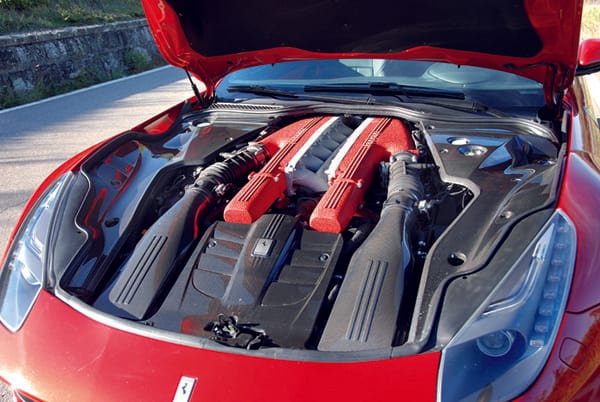
Going to maximum attack, as expected, is a full-on sensory overload. Even without engaging launch control, the pace is drag-racer quick. The rear-wheel drive layout means the initial hit off the blocks isn’t as strong as a Lamborghini Aventador. It doesn’t daze you like the Lambo, but as soon as the rear tyres hook up all 730bhp, you are yanked forward on an unforgettable ride as the tachometer needle flick-flick-flicks you up to 200 in seconds. Ferrari says the F12 takes only 8.5 seconds for 0-200.
The F12 has a level of feel and sensitivity that something like the ham-fisted Aventador just can’t match, and this allows you to explore more of the potential of this car. Flick the Mannetino dial into Race mode and loosen up the programmable ESP, and the car becomes even more alive. You can feel the weight transfer to the rear, you can feel the back tyres fighting for grip as they slip and wiggle around, juggling torque between them, and you can even feel them hook up and shove you forward. It’s not just the steering, it’s like the whole car is talking to you. Of course, with 730bhp, you have to drive like there’s an egg under the accelerator pedal, but it’s surprising just how much of the power you can use exiting corners, and a lot of that is down to the amazing e-diff.
 Lenny D'sa
 Sergius Barretto
 Saumil Shah
 Soham Thakur
 Nikhil Bhatia