



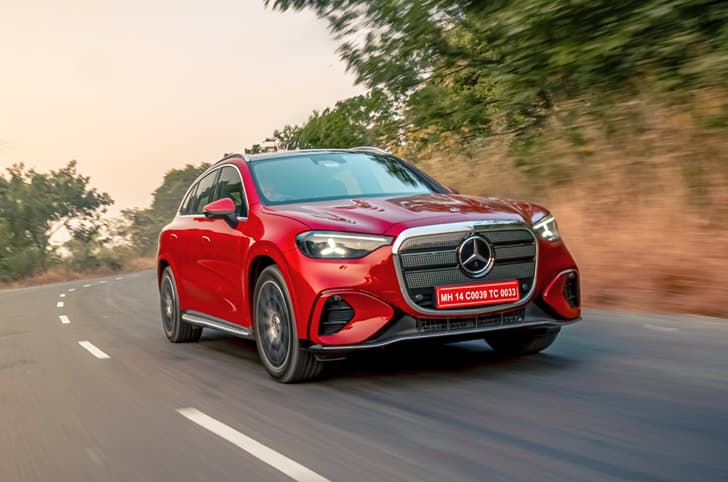
If you want an indication of just how fast things move in the world of EVs, look no further than this car right here. Its predecessor was the EQC – the first of Merc’s modern EVs – and it came into this world just seven years ago. And yet, compared to that, this new GLC Electric feels like a two- or even three-generational leap forward. Where the EQC used a converted ICE platform, the GLC's is born electric, and where that one was compromised by its underpinnings, this one is liberated by its own.
Every measurable metric has seen a dramatic increase, every function a broader scope, and the icing on the cake is that where the EQC bowed out in 2023 with a price tag of around Rs 1 crore, ex-showroom, the GLC Electric costs just Rs 78.5 lakh, thanks to local assembly. What's more, Mercedes has managed to update its plant, build the car and put it on sale within just six months of it going on sale in Europe, which should give you a clue about how important this model is.
2026 Mercedes GLC Electric Exterior Design and Engineering
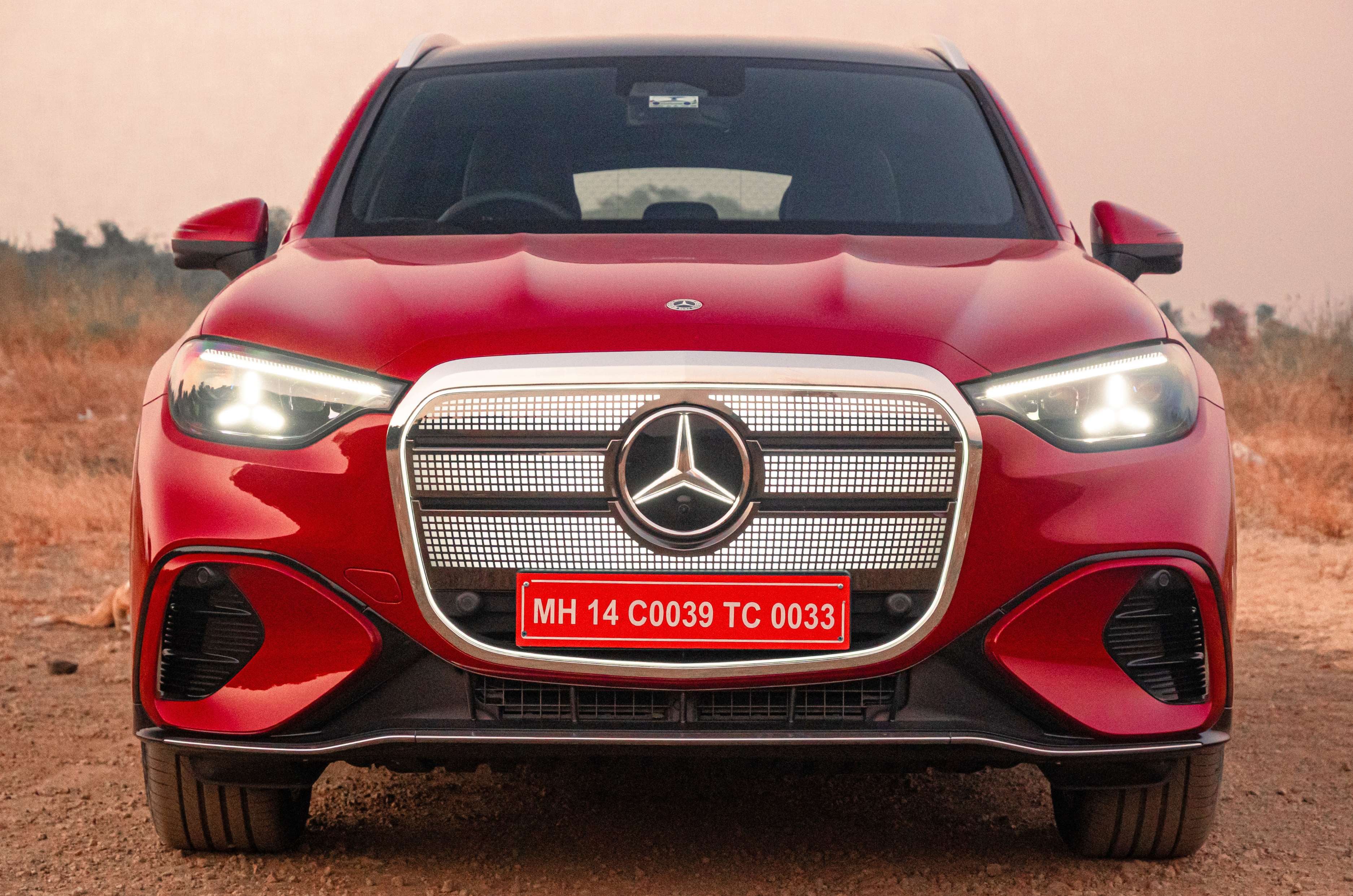
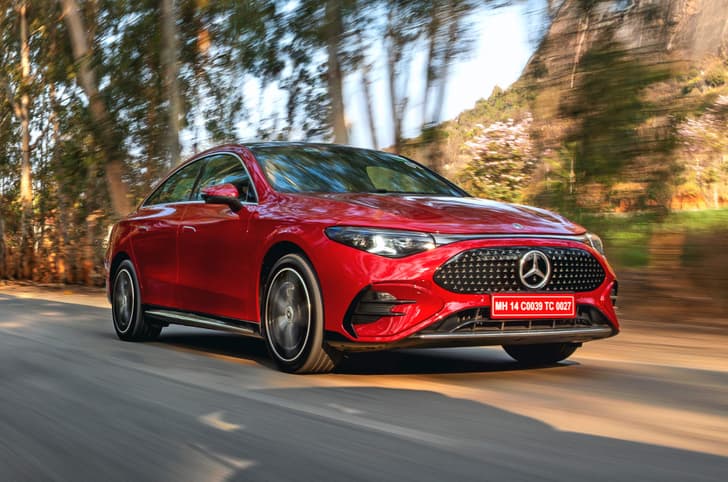
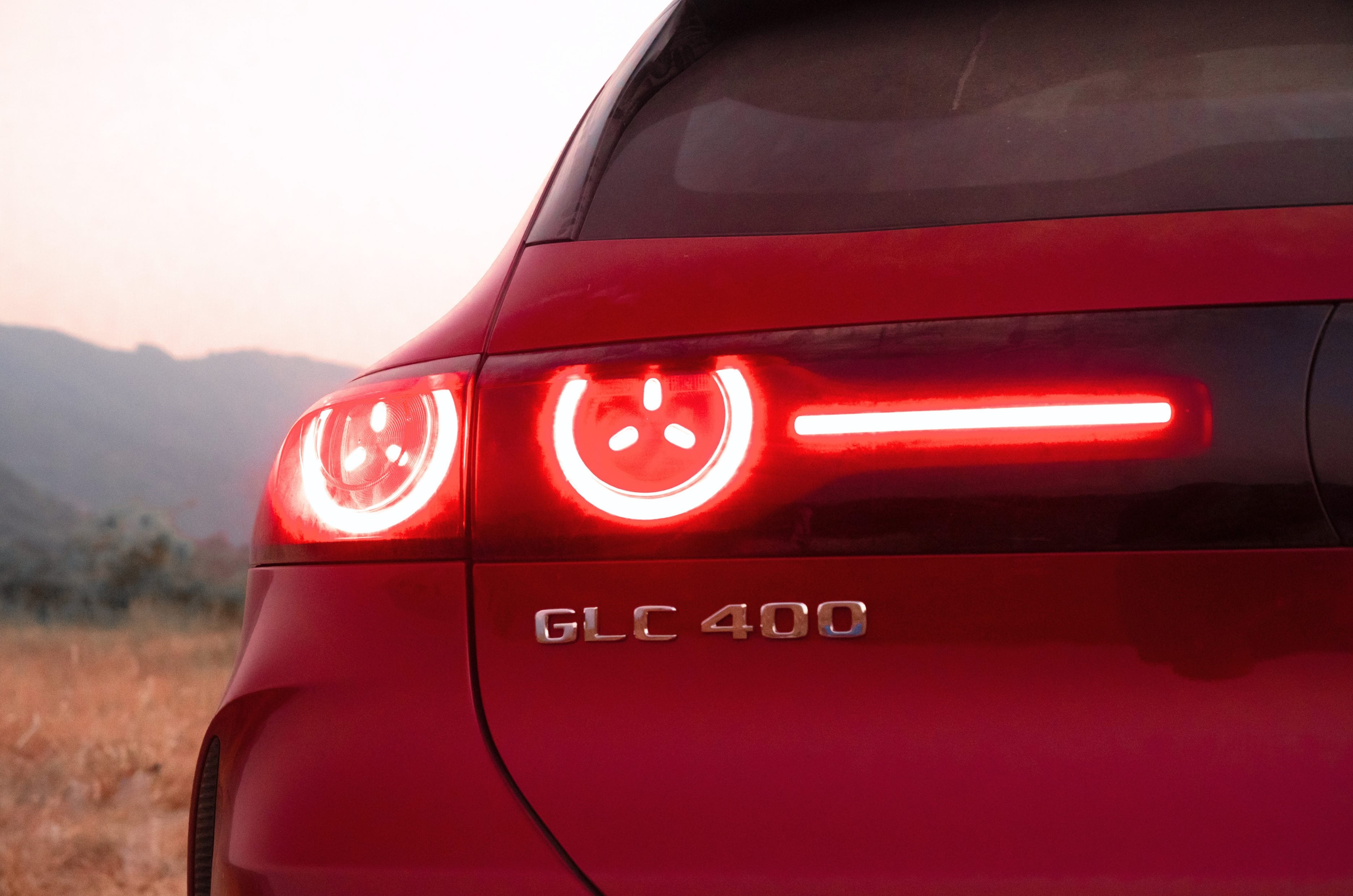
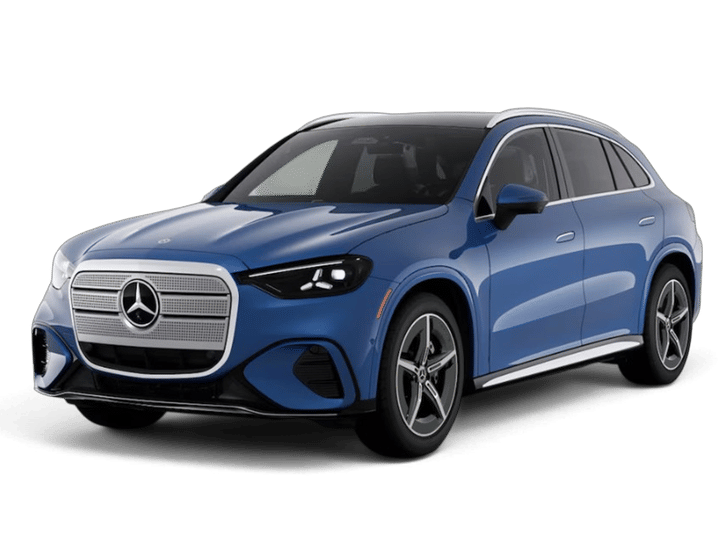
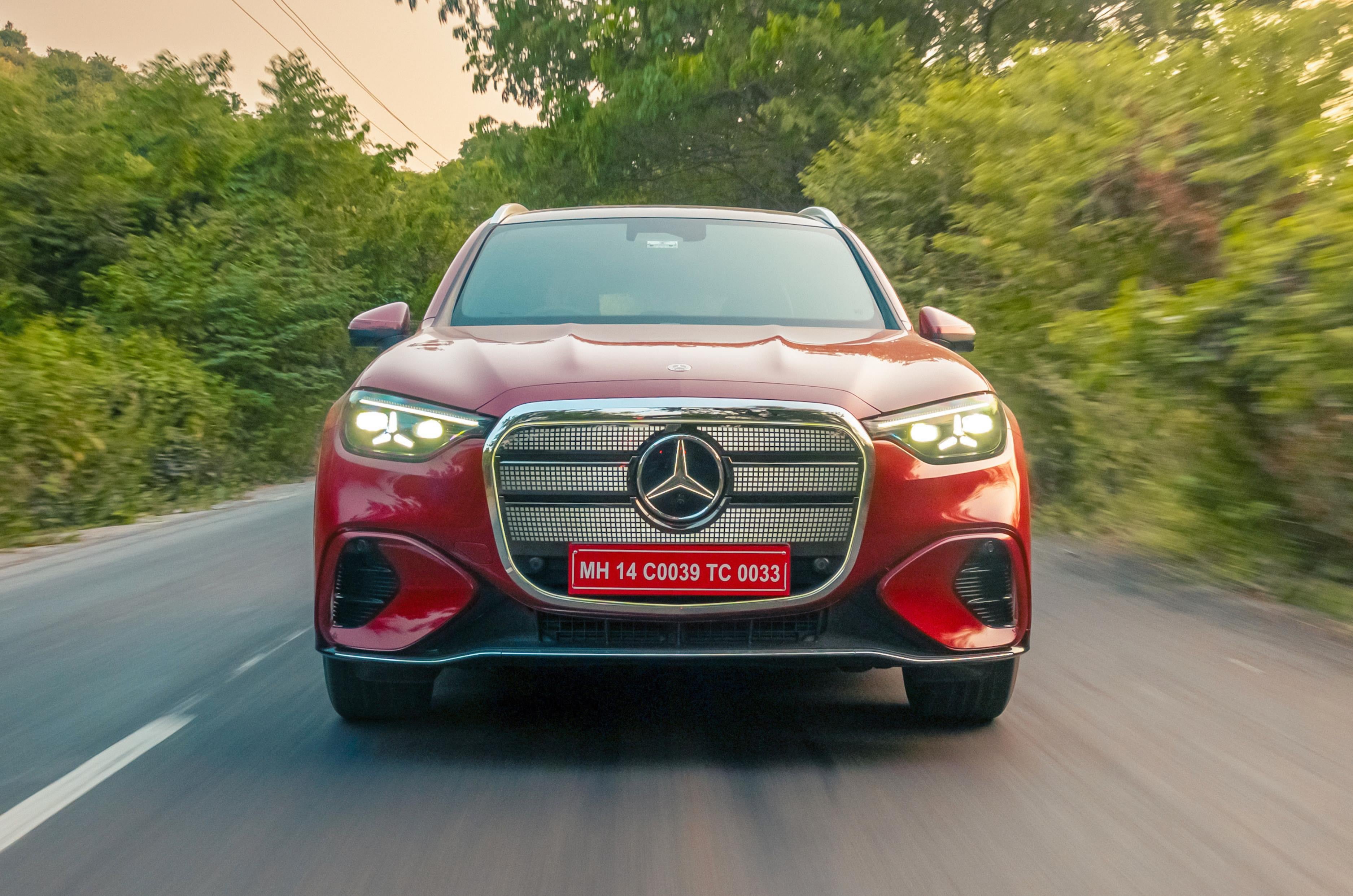
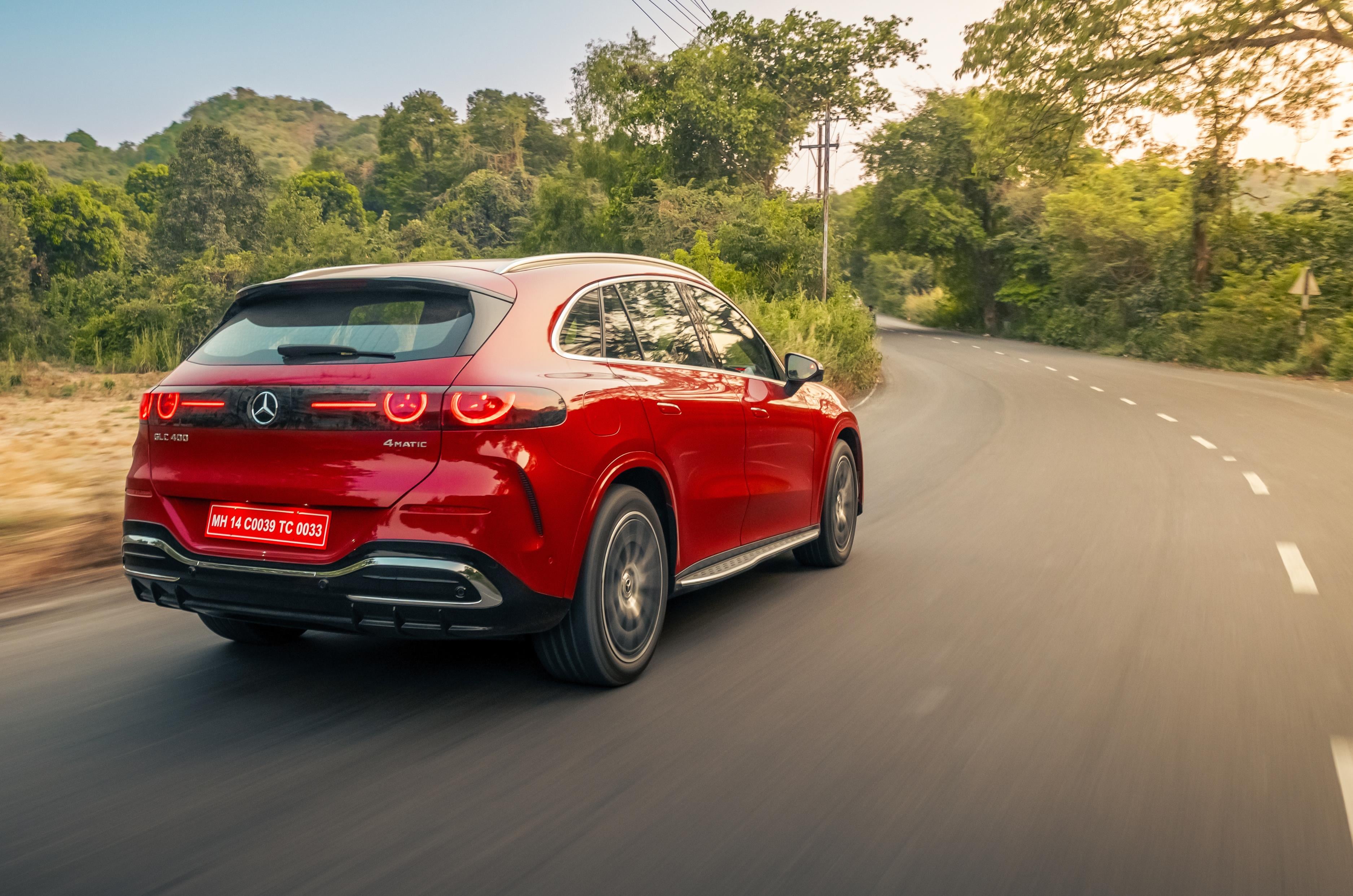
There’s no better place to witness Mercedes’s change in EV philosophy than the exterior design. Gone is the ‘EQ’ branding and with it the polarising ‘EQ’ design language, which leaned heavily into monovolume, amorphous, extremely aero-efficient designs. The GLC Electric uses more of a conventional upright, two-box SUV shape, and even has some retro callbacks like the tall rectangular ‘grille’ finished in chrome, and rounded tail-light graphics. That said though, it’s doubled down on the LED lighting, with three-pointed star logos in the headlamps and tail-lamps, as well as 914 micro-LED elements that light up in sequence on that grille.
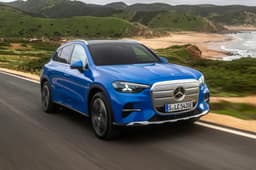
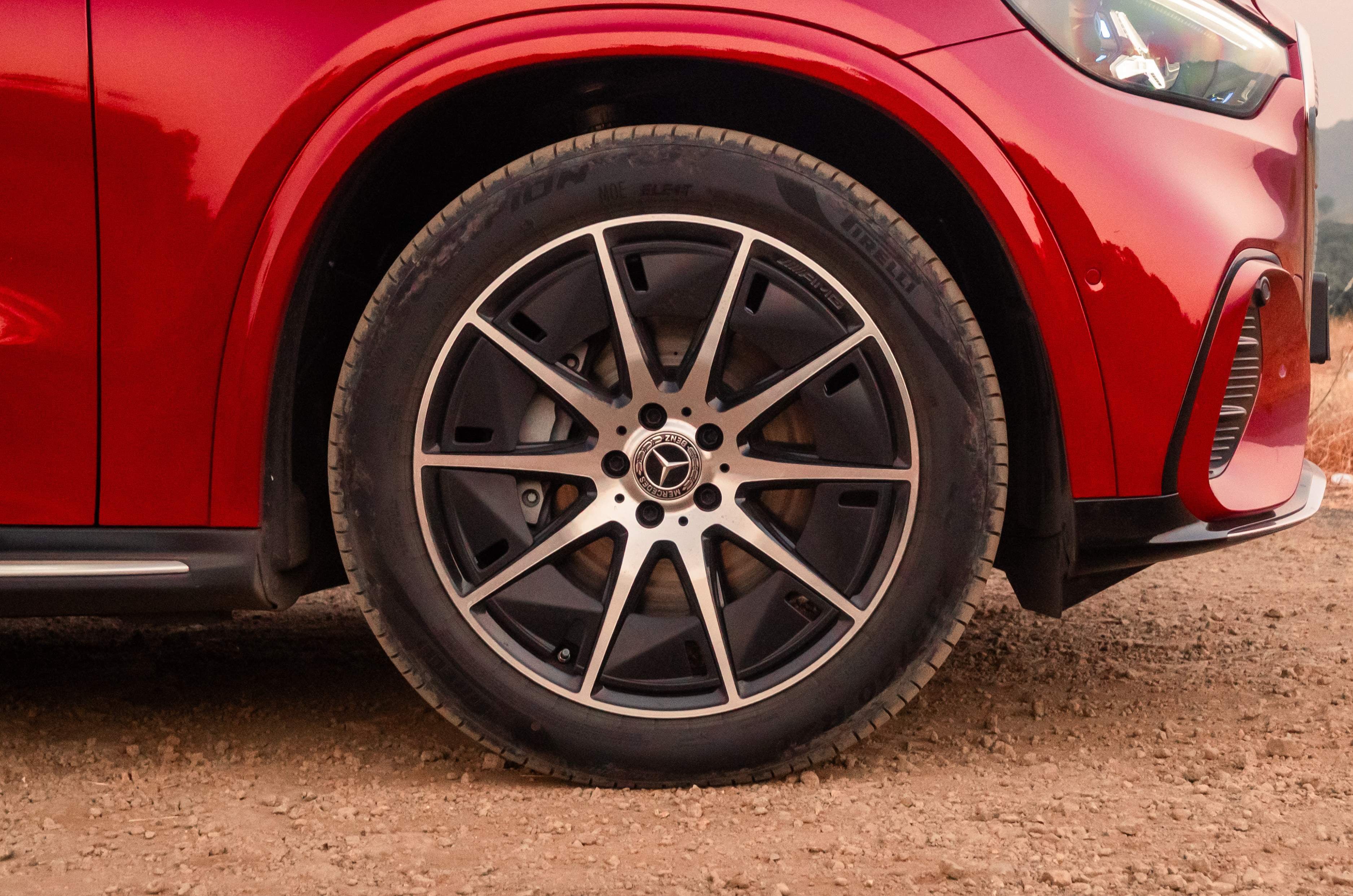
There are still some concessions to aerodynamics; they’re just not as obvious this time. It may be more upright but the edges are smoothed out, channels in the front bumpers allow air through to the wheel arches, the 20-inch wheels have a part-covered design to improve air flow, the door handles are of the flush, pop-out type and the roof curves downward at the end. The result is a drag coefficient of 0.26, which betters even the old EQC's 0.27 figure.
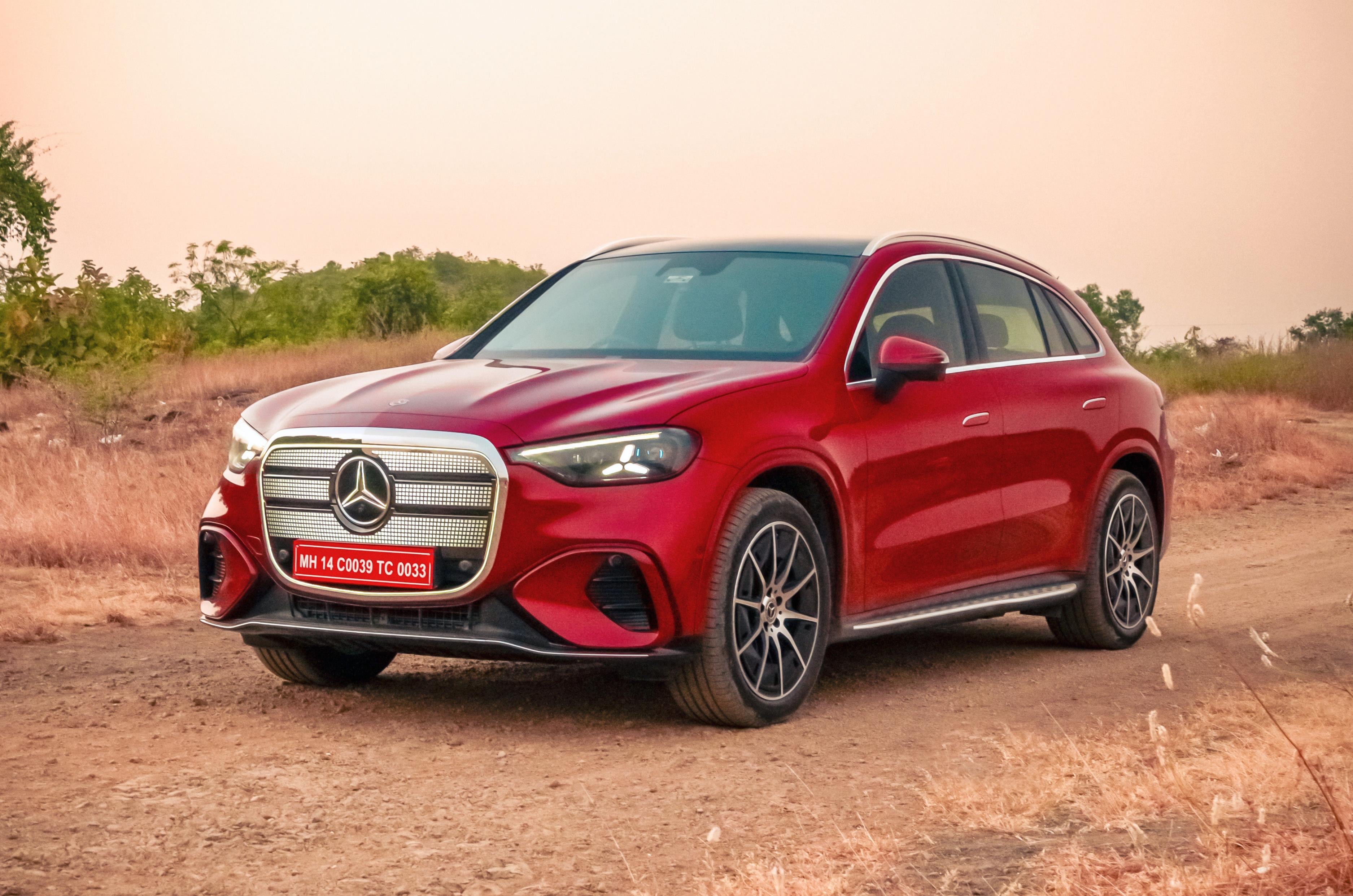
It may be GLC in name, but it shares little with its ICE counterpart. As alluded to before, it isn’t derived from the MRA2 ICE platform but instead uses Merc’s new-gen MB.EA-M pure electric architecture. The EV is larger overall, most notably by 140mm in length and 84mm in wheelbase, though there is an even-longer, three-row ‘L’ version available in China.
2026 Mercedes GLC Electric Interior Space and Comfort
The larger dimensions translate to more rear-seat space than the ICE GLC, and that’s particularly true of leg room which is close to GLE levels. There’s also plenty of room under the front seats to tuck your feet, which you’ll find yourself doing as the seat squab is still a bit short, which robs you of thigh support. You also sit quite upright, and though the floor is flat, the central console protrudes a fair bit from between the front seats.
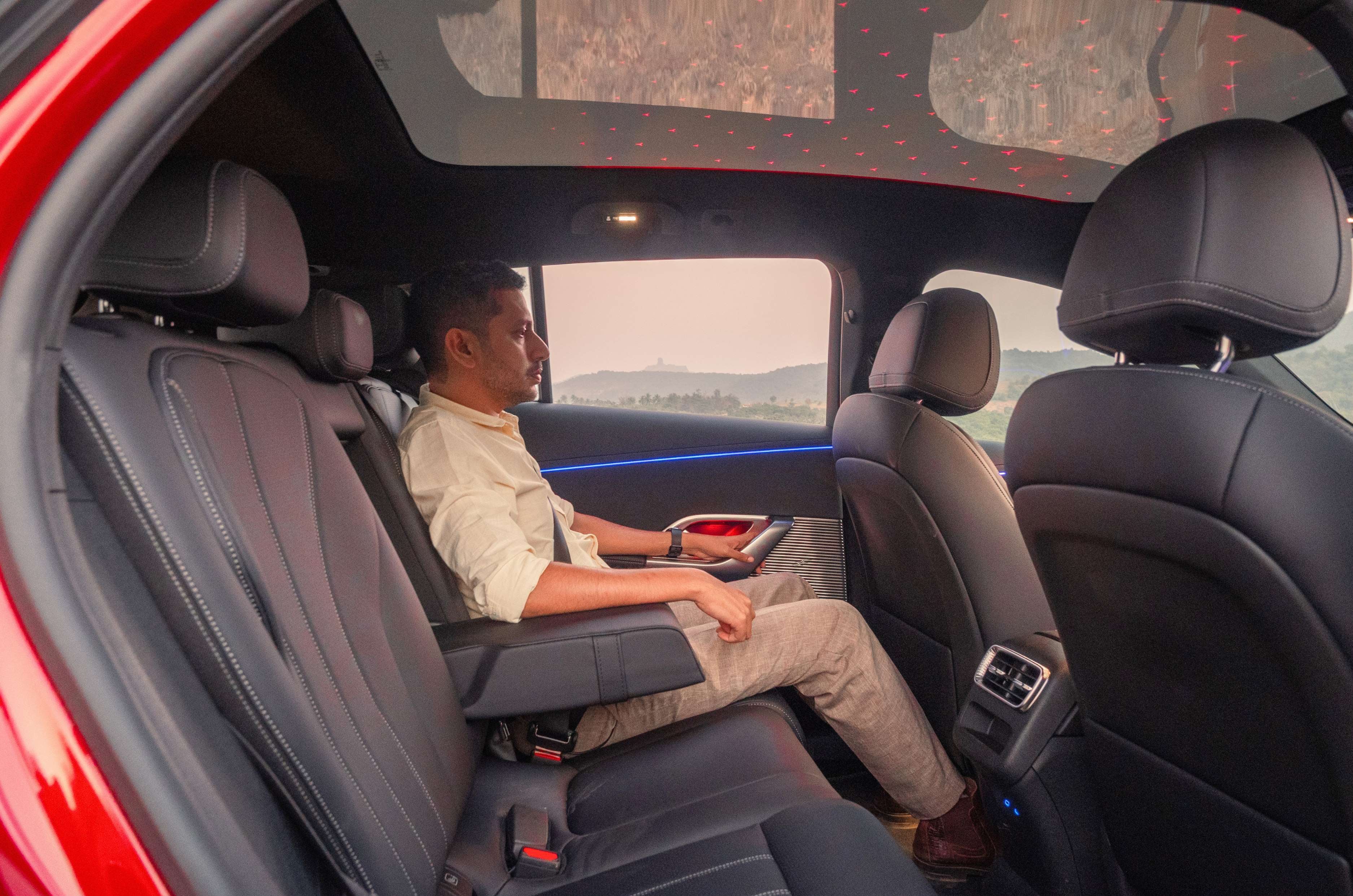
Unfortunately, there are no rear window blinds and no roller-blind for the fixed-glass sunroof either. What you get instead is electrochromic opacity adjustment that can be activated in 9 segments, letting you ‘open’ or ‘close’ the virtual sunshade, which does a decent job of keeping the heat out.
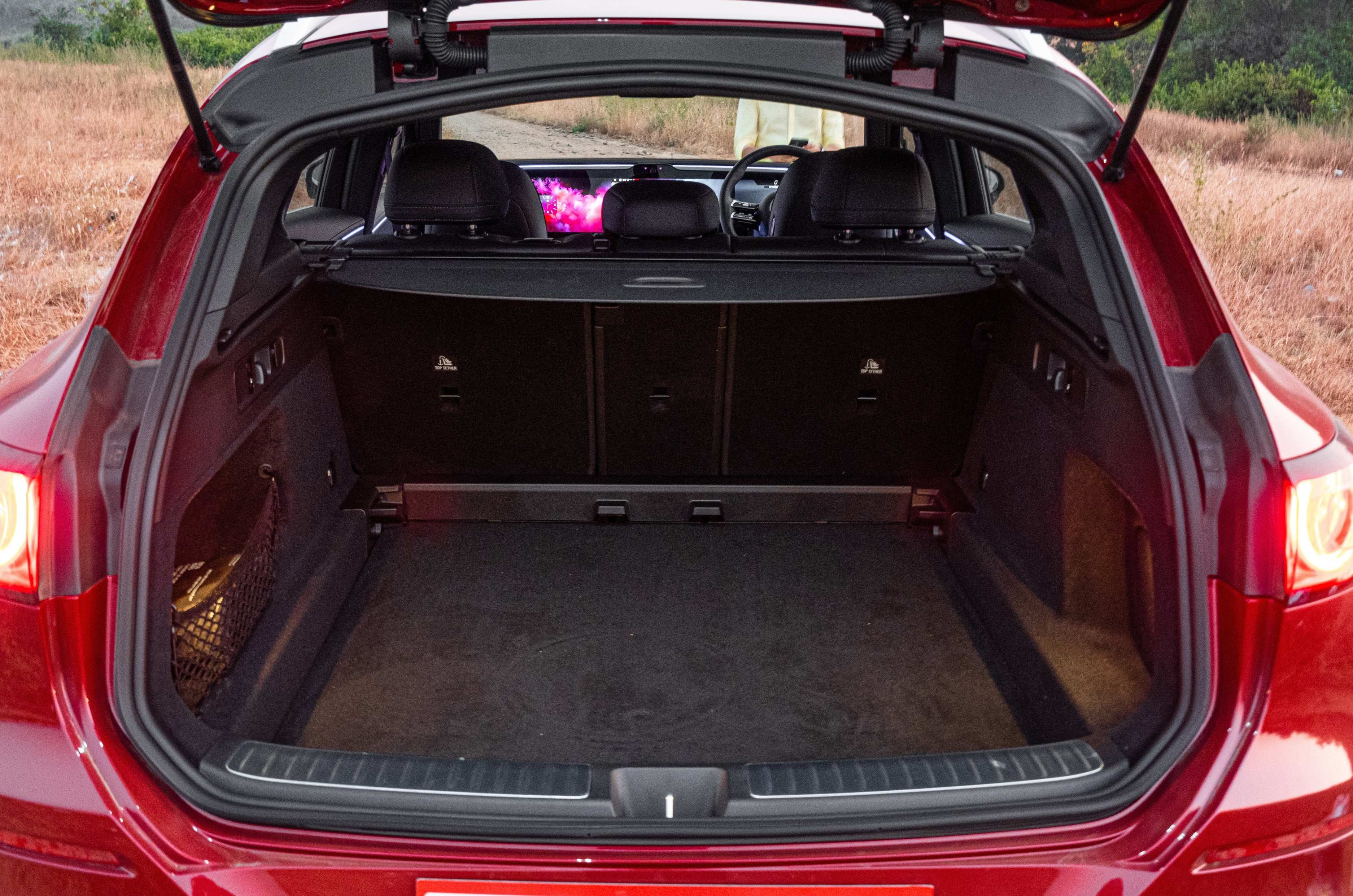
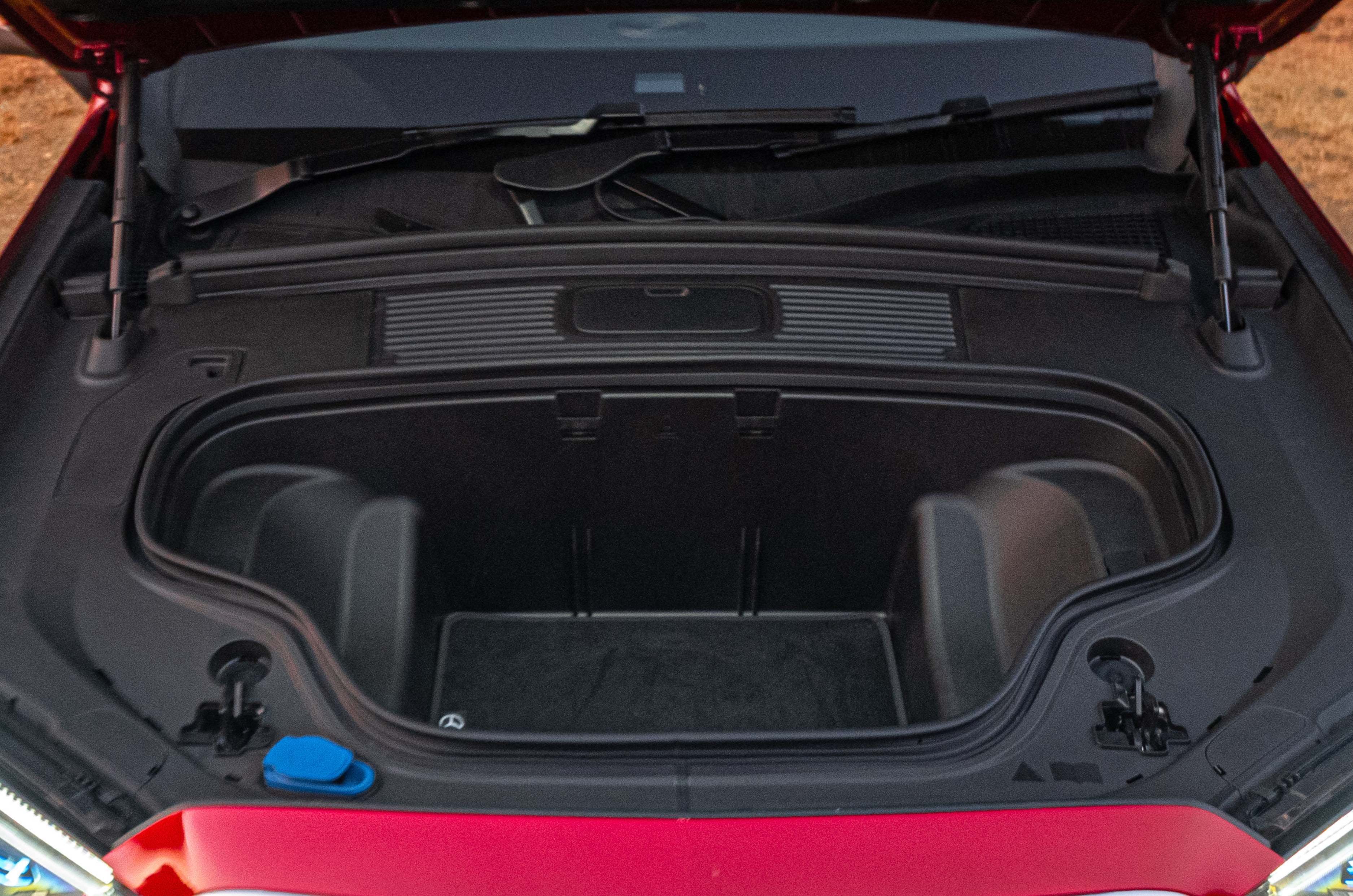
The boot isn’t quite as big as the ICE GLC’s but is still a substantial 570 litres, is well shaped, and is supplemented by a large, 100-litre frunk, which is something previous Mercedes EVs didn’t get. There is no spare tyre, however.
Undoubtedly the biggest talking point of this new GLC EV has been its 39.1-inch ‘Hyperscreen’ infotainment system, which combines the central, driver and passenger-side screens into a single, seamless unit. The effect is breathtaking, with a selection of ultra-wide, high-resolution wallpapers turning the dashboard into a digital art piece.
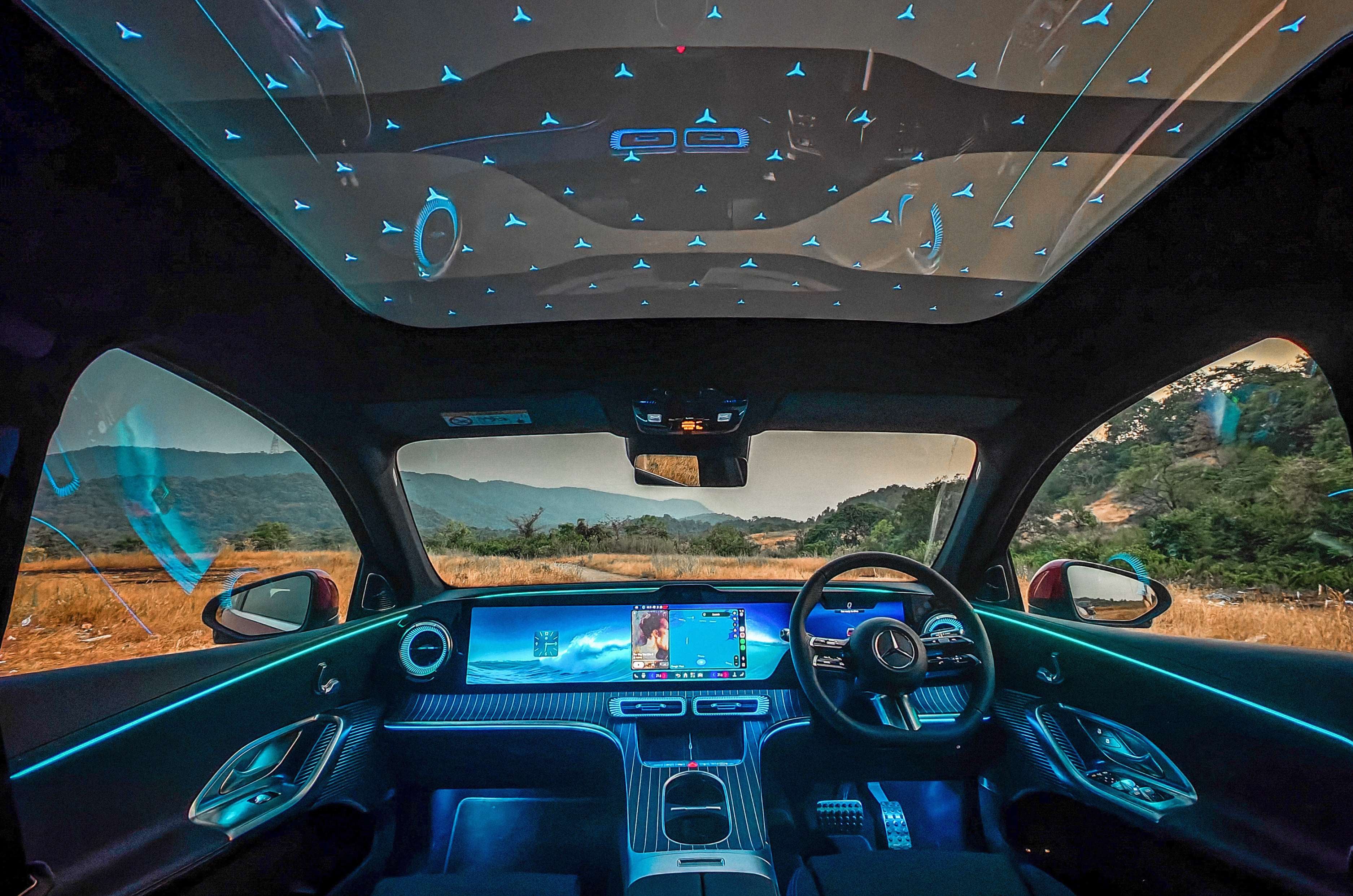
Perhaps a bit over-the-top is the complementary ambient lighting, which pours out of not just the dashboard and doors, but also the AC vents, door handles and even the sunroof. Still, it’s nice to see Mercedes has brought back more prominent implementation of traditional luxury materials, like wood and brushed metal, which are of very high quality.
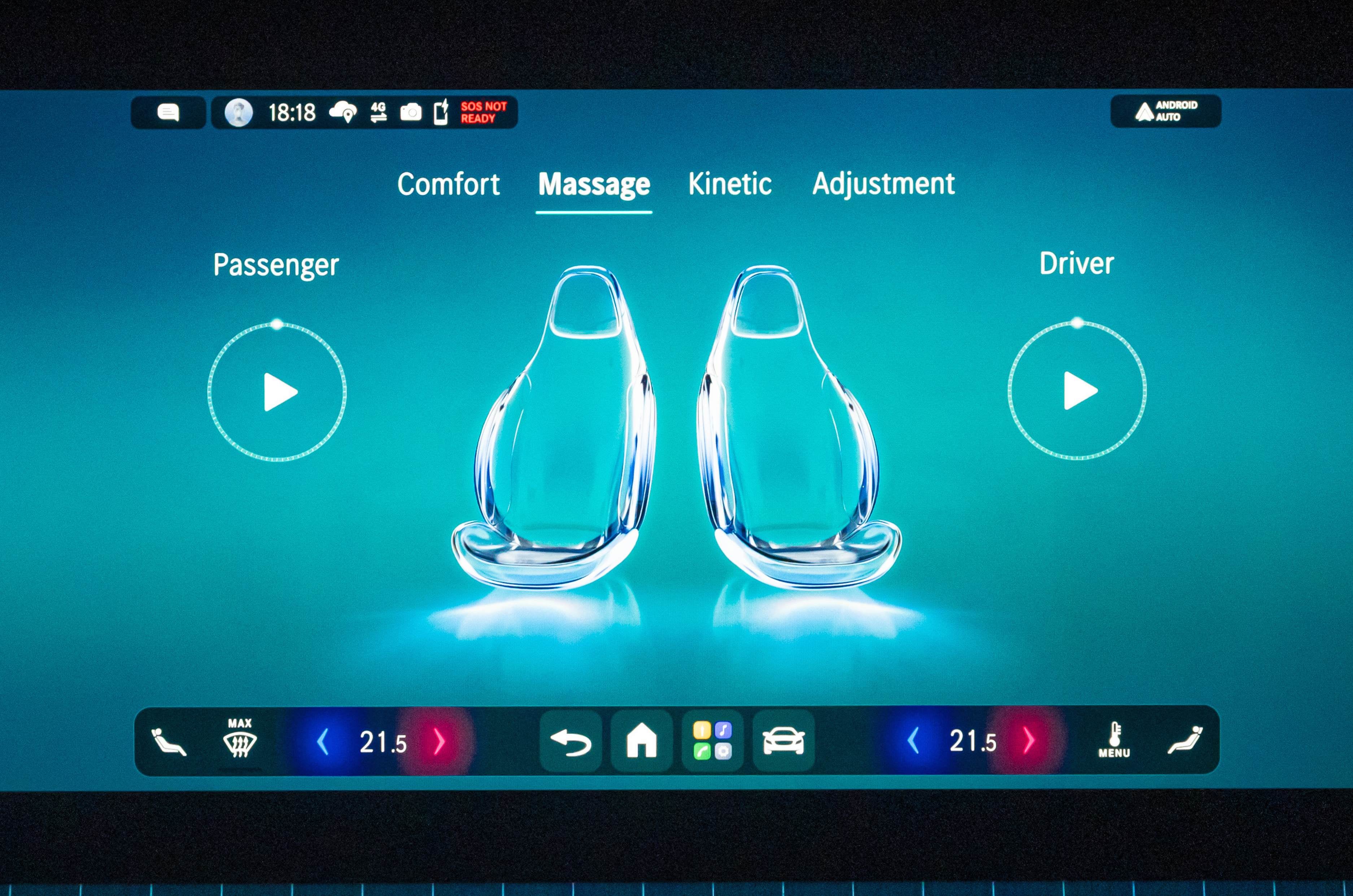
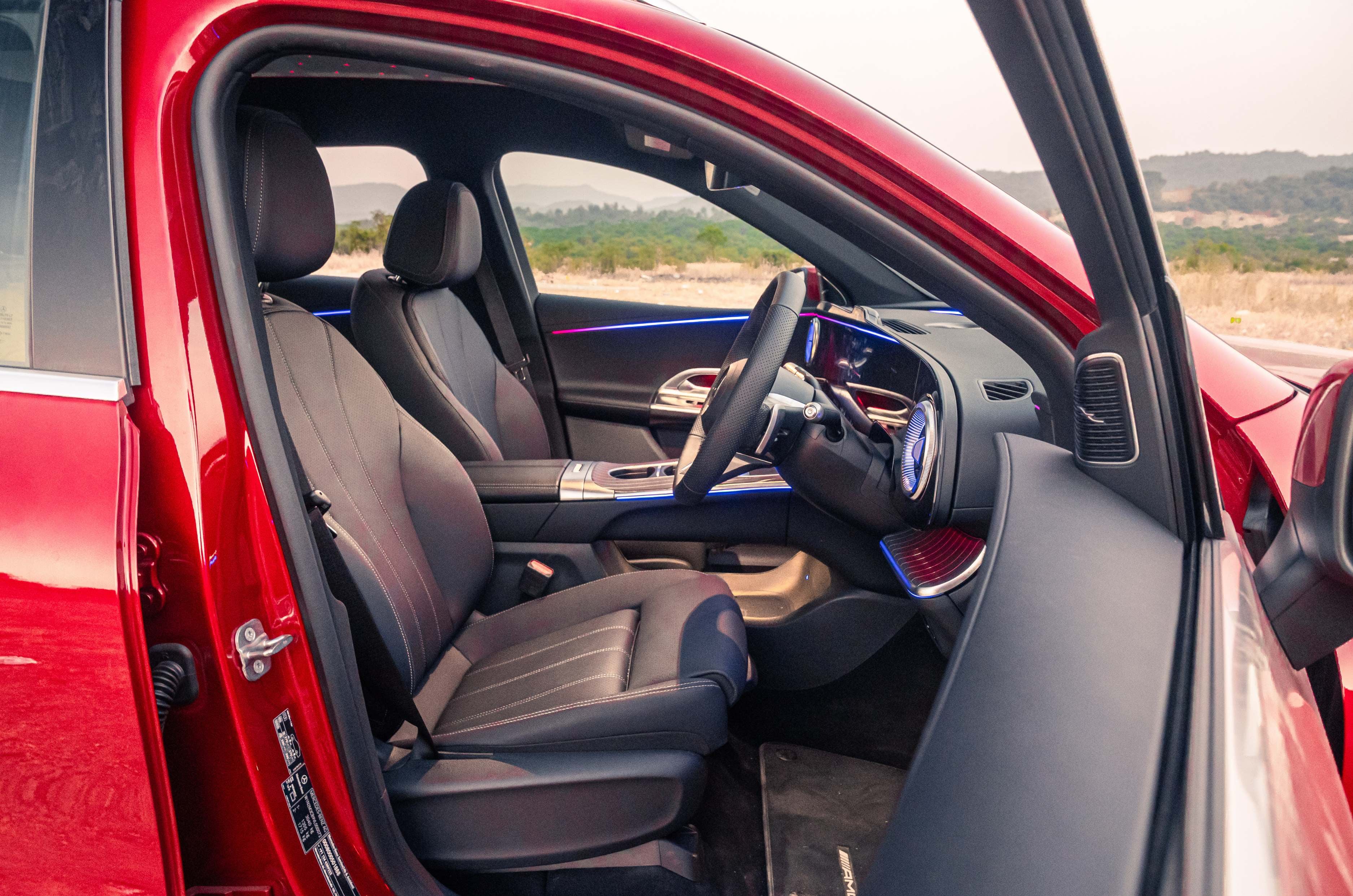
The front seats are large, comfortable and widely power adjustable, and even get a basic lumbar massage function, although no ventilation.
2026 Mercedes GLC Electric Features and Safety
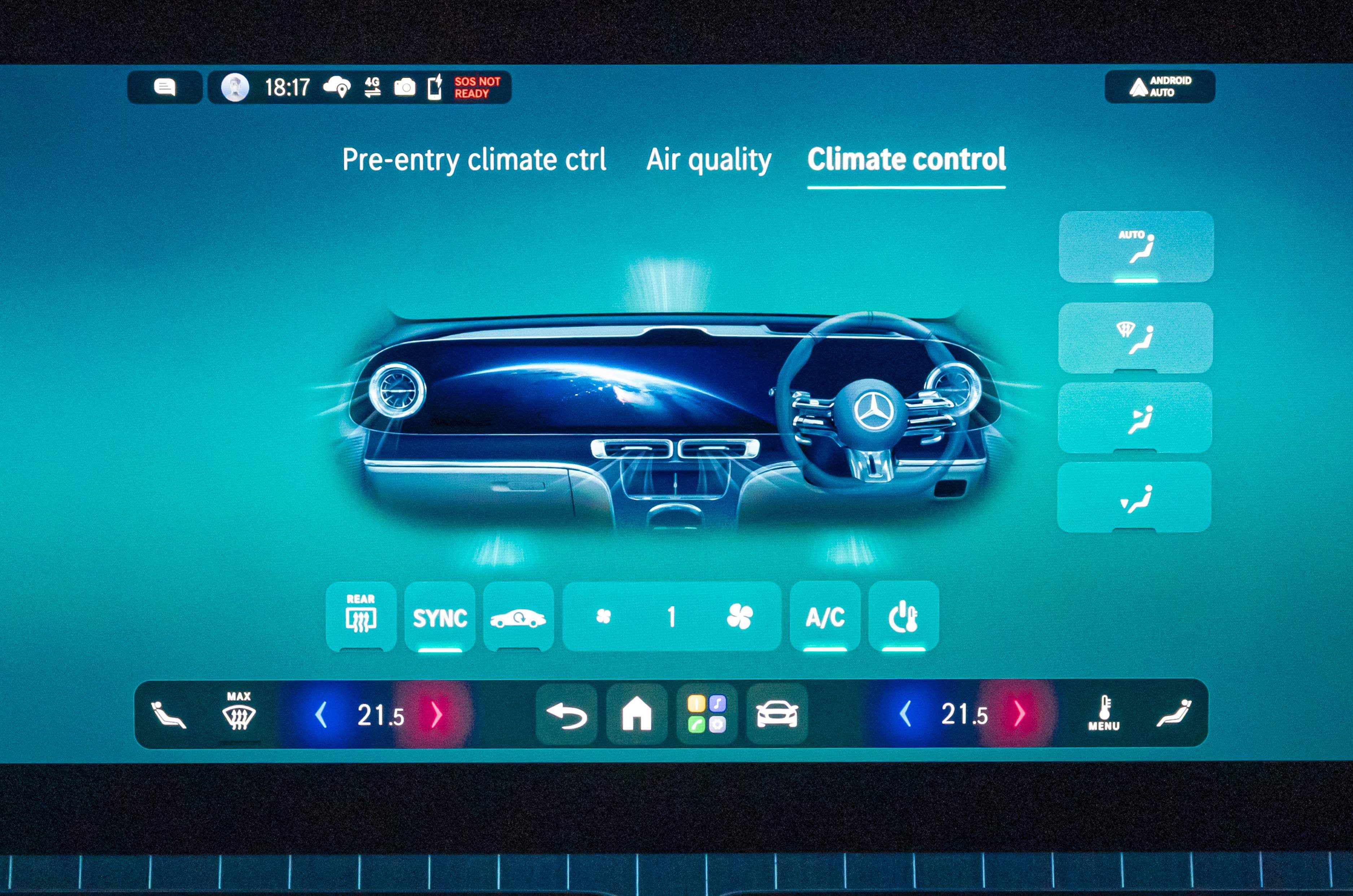
On the features front, Mercedes has been sure to spec this locally assembled GLC 400 very well. Stunning as the Hyperscreen is to look at, it’s what it packs inside that’s even more impressive, and a lot of that has to do with the latest-generation MB.OS software that’s run by an AI-driven ‘supercomputer’ that is capable of cloud-based OTA updates. In practise it works seamlessly, with silky smooth animations and a conversational AI assistant that can be very helpful once you learn how to use it. There are still very few physical buttons, but Mercedes has improved the interface by placing various shortcuts on a ‘zero layer’ screen that’s easily accessible. AC vents, thankfully, are manually adjustable this time around.

What's your first reaction to GLC Electric?
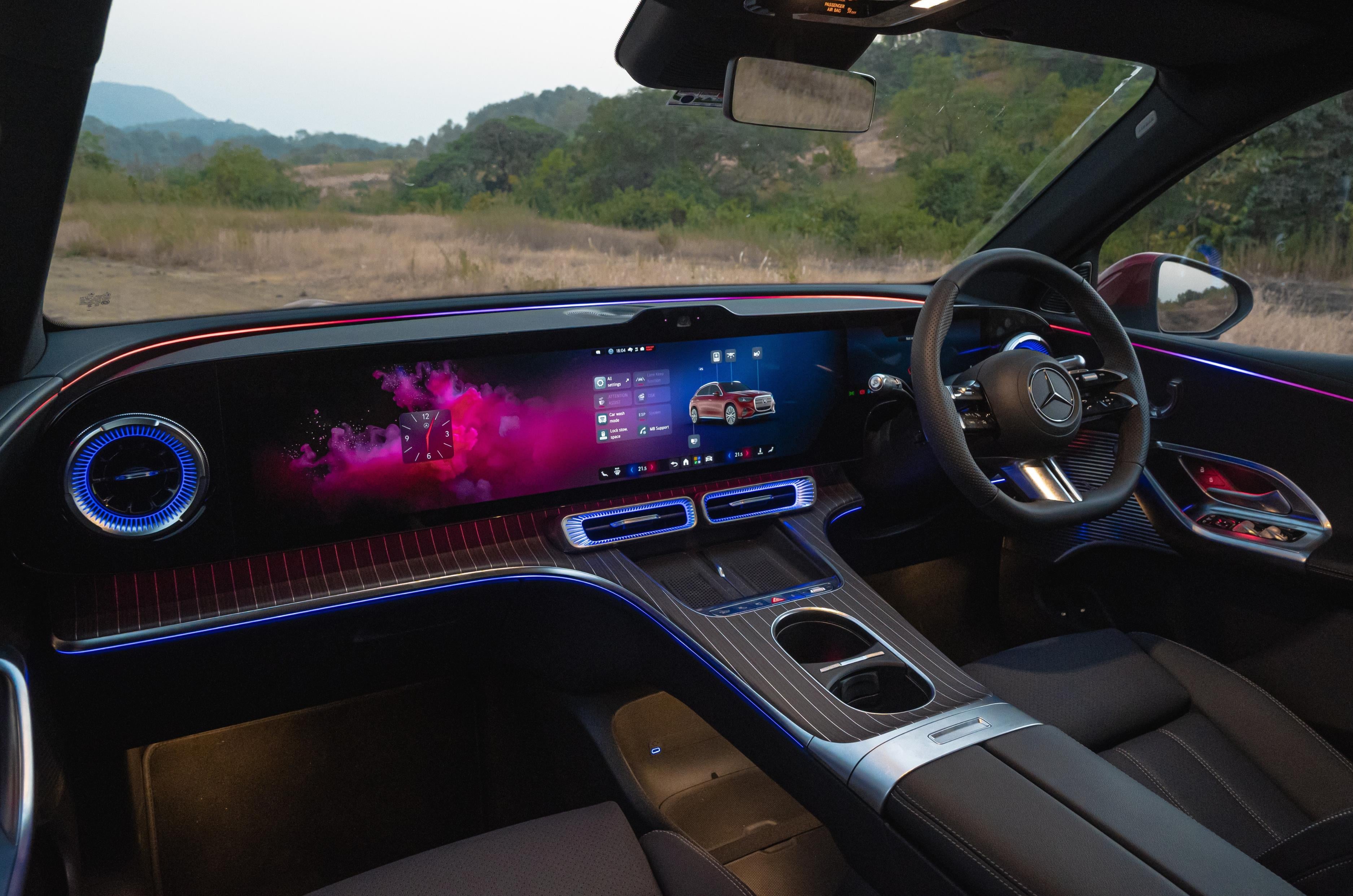
Because the passenger screen is an extension of the main screen, it can’t be turned off, nor does it have a privacy filter to avoid distracting the driver. Instead, it simply turns off any video playback or game interface the moment the car starts rolling, but curiously, leaves the audio on. For all practical purposes, you can use this side of the screen only when stationary, and with almost no other car controls or displays at your disposal, it feels particularly redundant.
There's a camera atop the central screen that lets you, apart from taking selfies, hold video conferences too. There is also an incredibly sharp 360-degree camera feed (including an ‘invisible bonnet’ function), and one of the best auto parking systems we've tested, capable of identifying even poorly marked spots at various angles and manoeuvring itself into them with superb accuracy. The 15-speaker, 670W Burmester 3D sound system is excellent and special mention must go to its stunning, metallic speaker grilles.
On the safety front, there is, of course, ADAS with Level 2 autonomous driving, and this includes the likes of lane-keep assist, blind-spot assist and adaptive cruise control right down to crawling speeds. There is auto emergency braking too, but thankfully, once turned off, it stays off. It is worth noting that some of these features are ‘Digital Extras’ or subscription-based features that could require payments to keep active.
2026 Mercedes GLC Electric Range and Efficiency
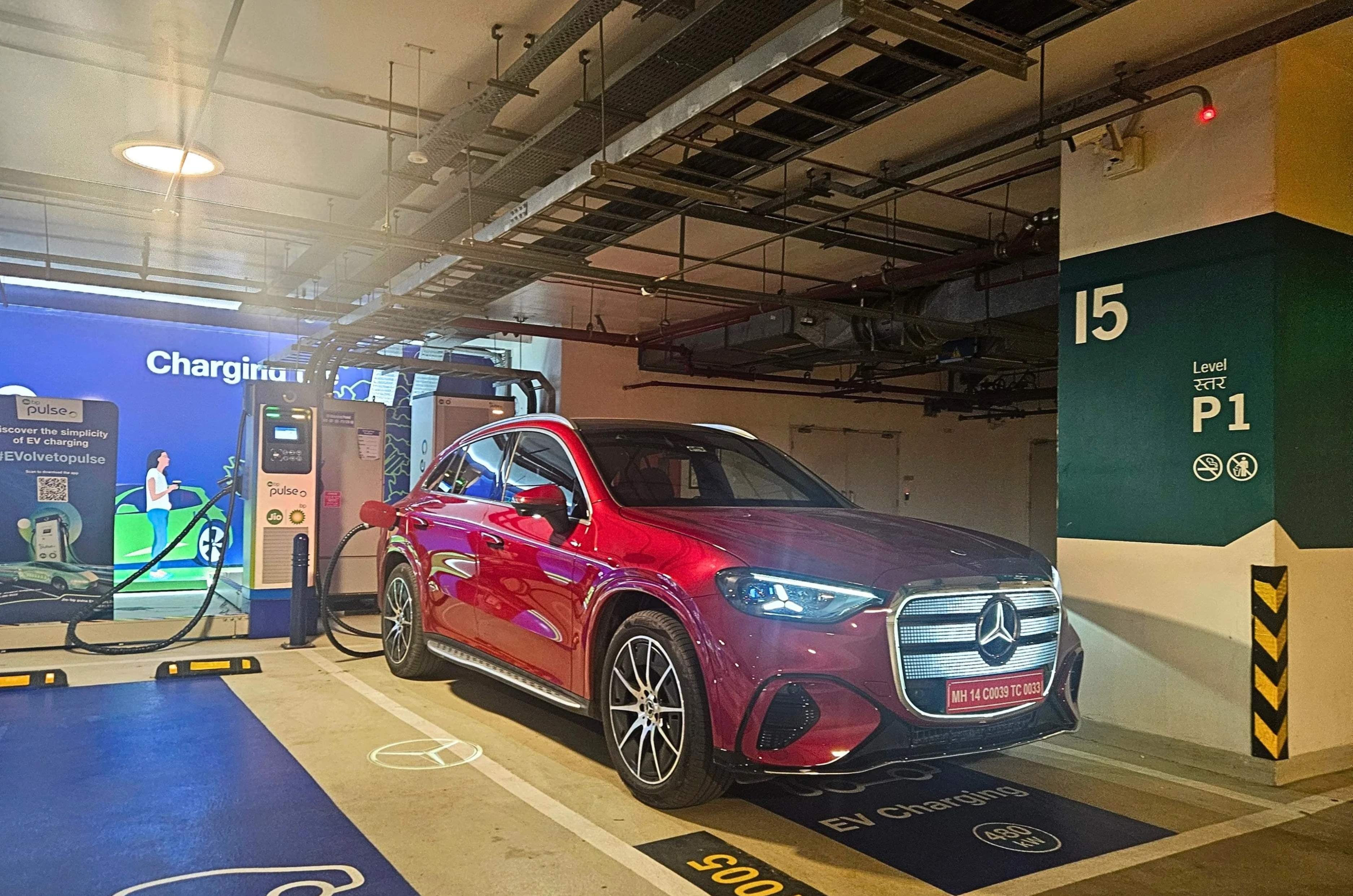
The 800V MB.EA architecture underpinning the GLC is Mercedes’s latest, and a development of even the EVA architecture of the EQS models. It allows, among other things, for fast charging at up to 330kW fast charging, and at these speeds it can go from 10-80 percent SOC in 22 minutes. In our tests on a 480kW DC fast charger, it did 20-80 percent in just 23 minutes, peaking at a speed of 251kW. The remaining 20 percent took 29 minutes, however. For more commonly used home charging, the car is capable of up to 22kW AC speeds.
And you’ll need a fast charger, because this GLC 400 uses a large 94kWh NMC-chemistry lithium-ion battery – a sizeable step up from the old EQC 400’s 80kWh. On the WLTP cycle, the GLC 400 is rated at an astonishing 711km of range, and the good news is the real-world range is not too far behind.
What community is saying on the GLC Electric?
In our tests, the GLC 400 Electric did 652km on the city cycle and 683km on the highway cycle, averaging out to an astonishing 668km, which is the longest real-world range we’ve ever tested on any EV. It’s not just the large battery, but also the high efficiency of 7.1km/kWh that contributes to this. Our highway figure was higher, likely down to the GLC’s excellent coefficient of drag and the fact it has a 2-speed gearbox for greater efficiency at highway speeds.
2026 Mercedes GLC Electric Performance and Refinement
It’s not just efficiency, though; the GLC 400 is potent too. In the parlance of Mercedes’s ICE vehicles, ‘400’ usually corresponds to an entry-level six-cylinder engine, but with 489hp and 800Nm, this GLC 400 has outputs close to that of the brand’s V8s or even some AMGs. It’s a dual permanent magnet synchronous motor powertrain, which gives it all-wheel drive and a 0-100kph time rated at 4.3sec. In our performance tests, we managed to duck slightly under that mark with a 4.26sec sprint, which is mighty impressive. Contrary to the notion that EV powertrains plateau early, the GLC pulls even stronger past 100kph, and crosses 200kph in under 15sec. What you’re more likely to feel in real-world usage, however, is the rolling acceleration of 2.36sec from 20-80kph and 2.74sec from 40-100kph.
And ‘feel’ is a crucial part of this new powertrain. We’ve said in the past the mark of a truly modern EV is the shift from a one-note, on-or-off power delivery to something that’s more progressive and natural feeling, and the GLC absolutely nails that. Irrespective of the mode, the power builds gently with a light accelerator pedal input, and even if you floor it, it’s quick but smooth and not overwhelming. Speaking of the modes, such is the calibration of the power delivery that you rarely feel the need to switch between Eco, Normal and Sport, as it’s easier to modulate the power delivery simply with the accelerator.
Modes that do make a difference are the regen modes, which are activated by the paddles behind the steering wheel, and can even go down to a one-pedal driving mode, which feels incredibly strong. To put it into perspective, in the standard regen mode, upon lifting off, it slowed from 80-20kph in 23sec, whereas in one-pedal mode, it did it in just 5.9sec. There’s also a clever ‘auto’ regen mode that uses the ADAS sensors to predict how much regen you need based on your speed and surroundings, and it works rather well. Conventional braking feels good enough for everyday scenarios, but could have been stronger still, given the amount of performance on offer.
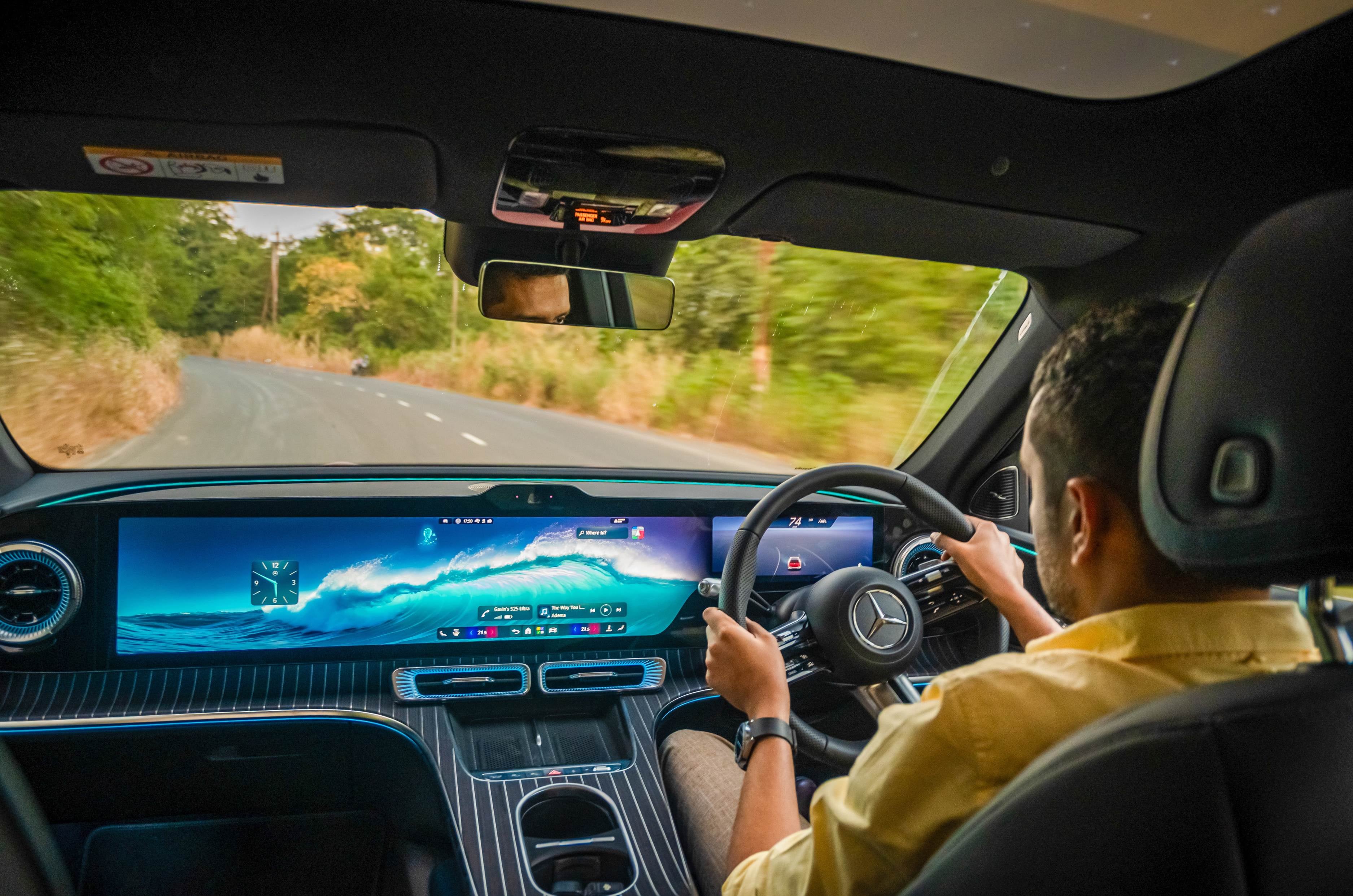
Other notes from the driver’s seat: the wing mirrors seem tiny at first but actually provide a good enough view rearward. They’ve removed the start button so you start the GLC by pressing the brake and selecting D or R, but it gets confusing if you want to leave the car on after selecting P and exiting the vehicle, as it will shut off automatically. By default, the car makes the usual quiet hum inside the cabin to attune you to the acceleration, but you can choose from several ‘sound profiles’ that ramp the volume up and range from sporty to outright bizarre. And on that note, refinement is excellent, with very little road noise entering the cabin, but the serenity is broken by ever-present squeaks and rattles from the interior trim.
2026 Mercedes GLC Electric Ride Comfort and Handling
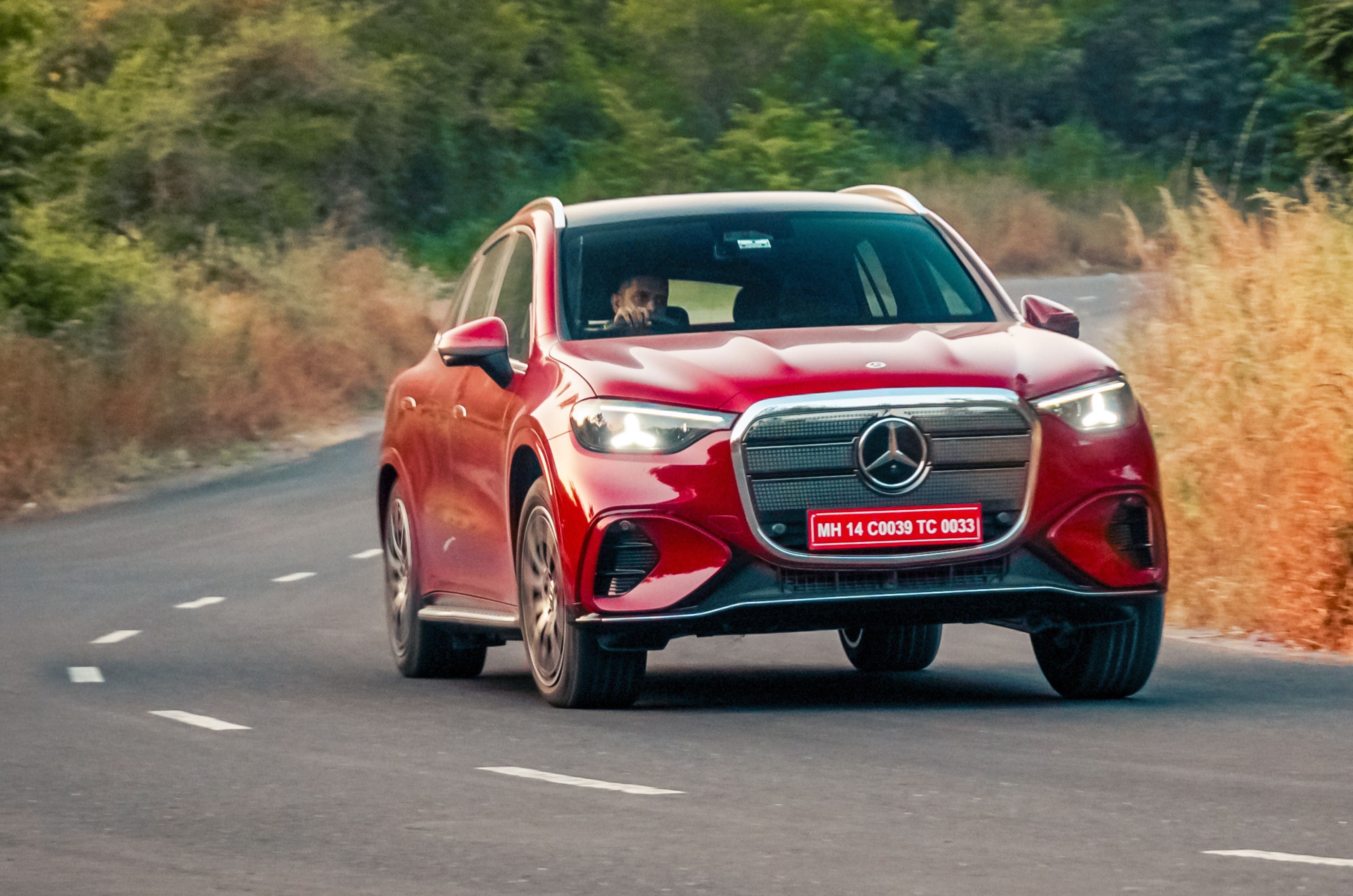
The GLC Electric rides on steel springs all around with passive dampers, and Mercedes has tuned the suspension to be soft and plush. As such, on a smooth surface, it delivers that luxurious limo-like feel with gentle movements over undulations. However, show it an uneven surface or a sharp speed breaker and that composure gets disrupted very quickly. There’s lots of lateral movement that rocks passengers around in the cabin, and it takes a while to settle. Moreover, if you accelerate a bit briskly or brake firmly, you’ll experience considerable squat and pitch, respectively. Thankfully, once at highway speeds, it settles into a controlled gait and it’s here that it dismisses smaller disturbances, like expansion joints, with refined authority.
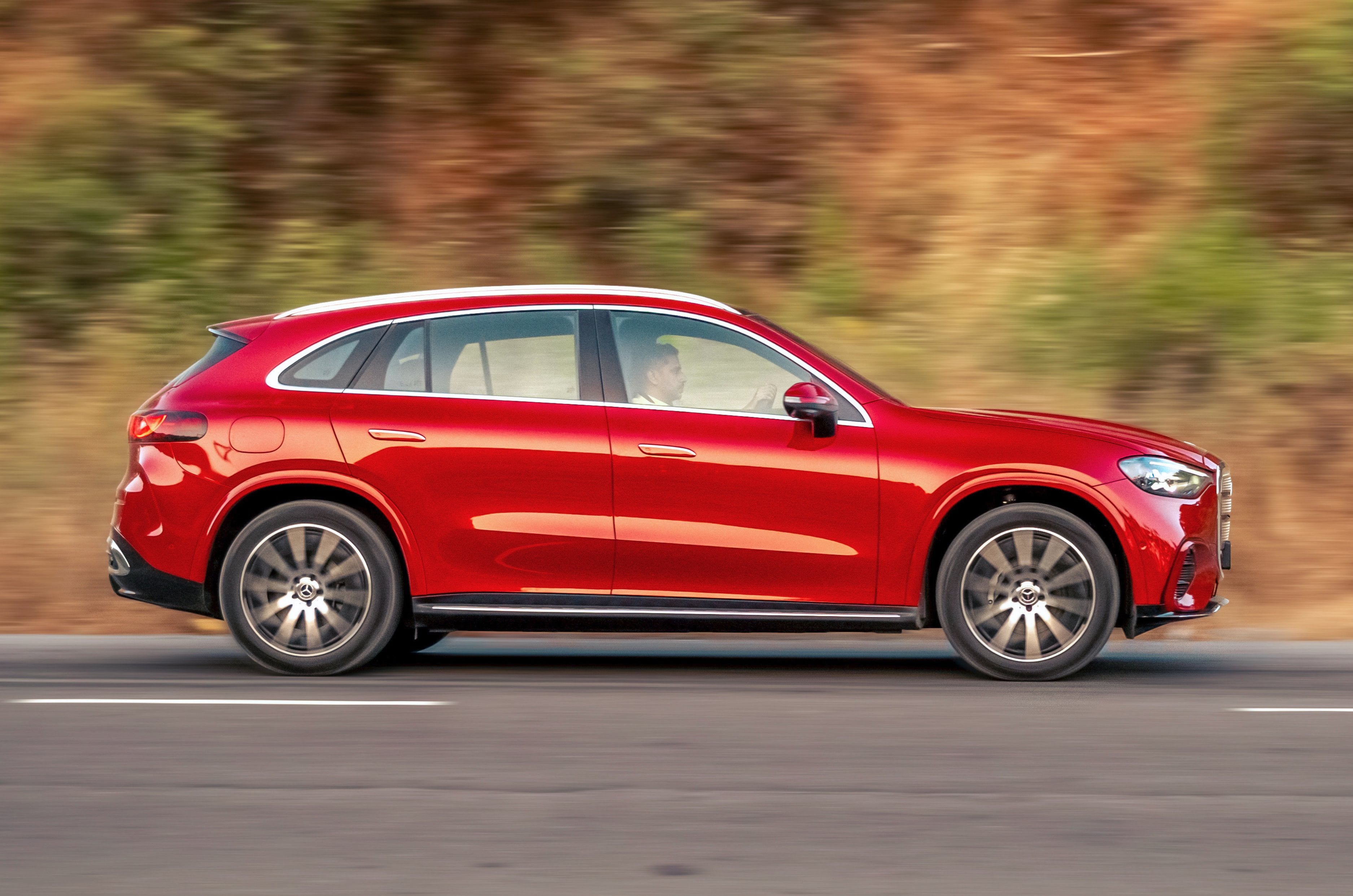
As you might expect from a soft suspension setup, cornering at speed is accompanied by noticeable body roll. To its credit, the quick and direct steering does its bit to encourage you through a bend, as does the grip from the dual-motor AWD system and wide 235/50 (front) and 265/45 (rear) R20 tyres, but ultimately, this does its best work as a relaxed cruiser, albeit one that just happens to have close to 500 horsepower. A huge issue with the old GLC was ground clearance, thanks to its ICE-derived platform that resulted in the battery hanging low below the wheels. The GLC Electric has no such problem, and despite its 2,972mm wheelbase, it never grounded on speed breakers in our time with it.
2026 Mercedes GLC Electric Value for Money
It’s not an exaggeration to say legacy carmakers were left a bit blindsided by the strong and sudden arrival of Tesla and the Chinese that brought EVs to the mainstream earlier than expected. What is to be commended today is how the same manufacturers have quickly caught up and, in many areas, surpassed those once-upstarts. The GLC Electric is a superb example of this, abounding with useful technologies that – crucially – work seamlessly with one another.
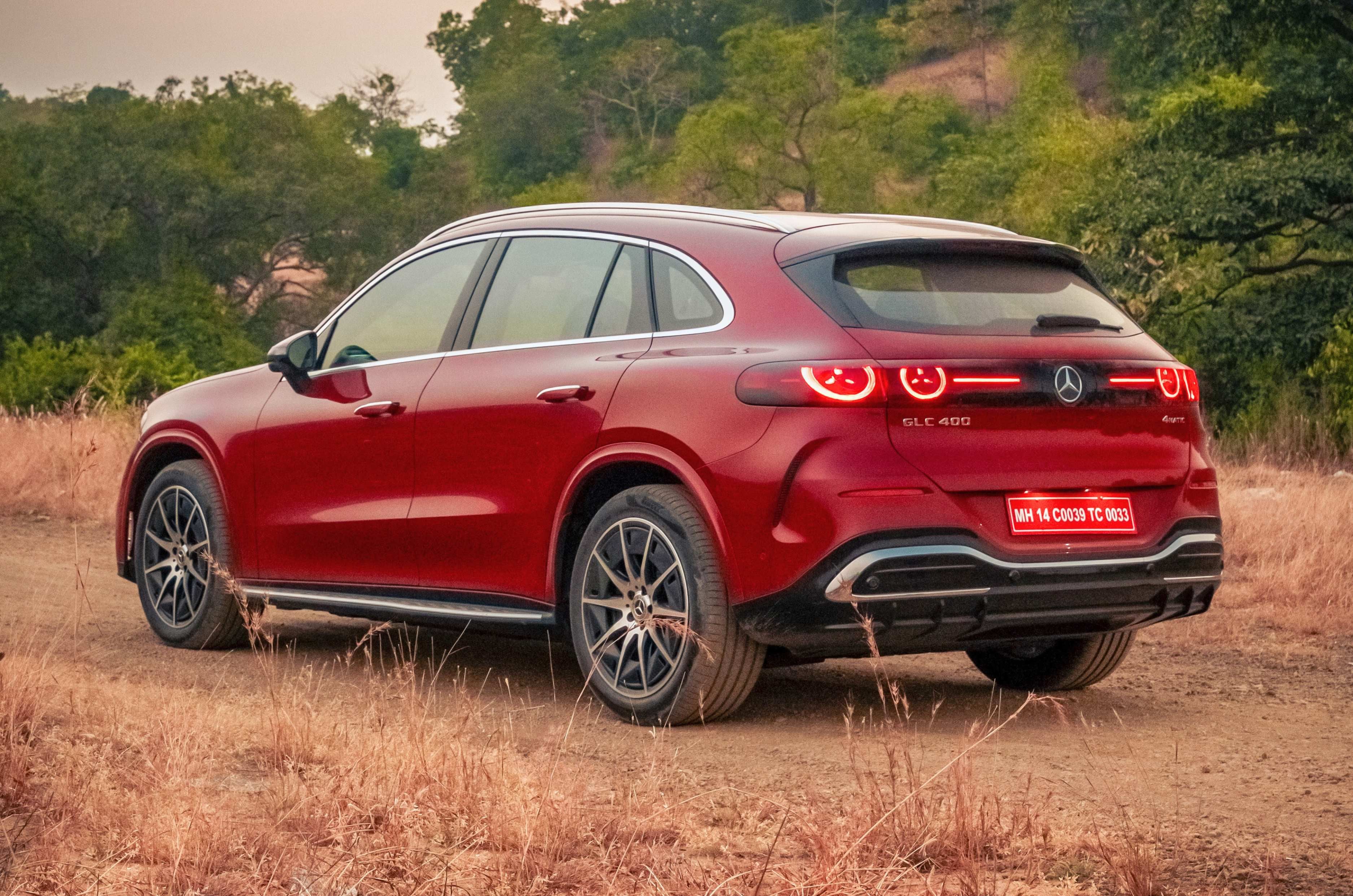
Impressive power figures aside, the powertrain must be experienced to really appreciate how far Mercedes has come, and it delivers a comforting yet potent driving experience that’s suited to various situations. And then there’s the outstanding range that makes this one of a few EVs you could feasibly take on a long road trip with little tension. The cabin is plush, but perhaps a bit over the top, with its gigantic screen and excessive use of ambient lighting, and the back seat could have been comfier. The tech, however, feels cutting edge and befitting of a luxury EV in 2026.
What will seal the deal for most, however, is the Rs 78.5 lakh price, which is incredibly aggressive, and would actually work out cheaper than the ICE GLC on road. With this, Mercedes has removed another barrier to entry for those who might have been on the fence about getting an EV, and it’s even more impressive when you consider how much they’ve packed into this locally assembled model. The GLC Electric comprehensively addresses the flaws of the old EQC – and some even of the EQS, if we’re being brutally honest – and delivers a superb all-round EV package.
 Hormazd Sorabjee
 Soham Thakur

 Saumil Shah
 Lenny D'sa
 Sergius Barretto