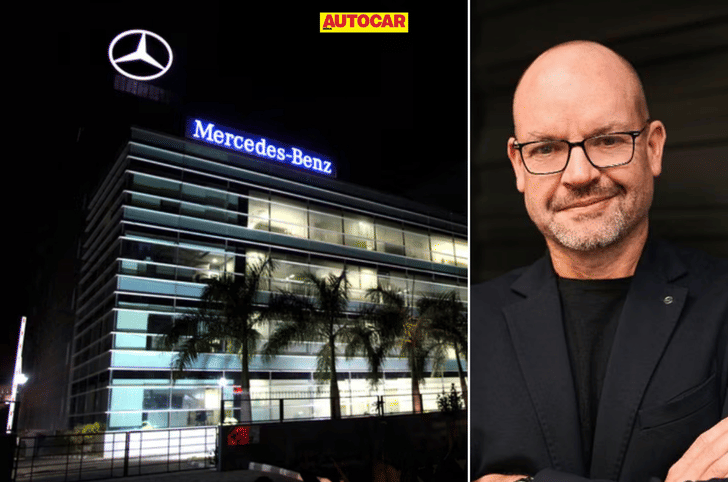
“There is a bit of India in each and every Mercedes because the competence level is so high,” Jorg Burzer, Member of the Board of Management of Mercedes-Benz Group AG who is responsible for Development and Procurement, told Autocar India during his visit to the country for the launch of the all-new S-Class.
According to Burzer, Indian engineers are playing an increasingly important role in the development of future Mercedes-Benz vehicles, particularly in areas such as software, infotainment and autonomous driving technologies.
- Bengaluru is Mercedes-Benz’s largest engineering centre outside Germany
- Indian teams contribute to infotainment and autonomous driving tech
- Mercedes continues to use radar, cameras and ultrasonic sensors for automated driving
India’s role expands beyond traditional engineering
For Mercedes-Benz, the shift is most visible at its Bengaluru operations, established in 1996 and now the company’s largest engineering centre outside Germany.
“We basically started with hardware, then powertrain, more hardware and so on. But in the last couple of years, what really happened is that the competence centre in terms of software was really developing and picking up like crazy,” Burzer said.
He identified infotainment and autonomous driving as two areas where Indian teams have established significant expertise. “The one is infotainment. And the other one is autonomous driving.”
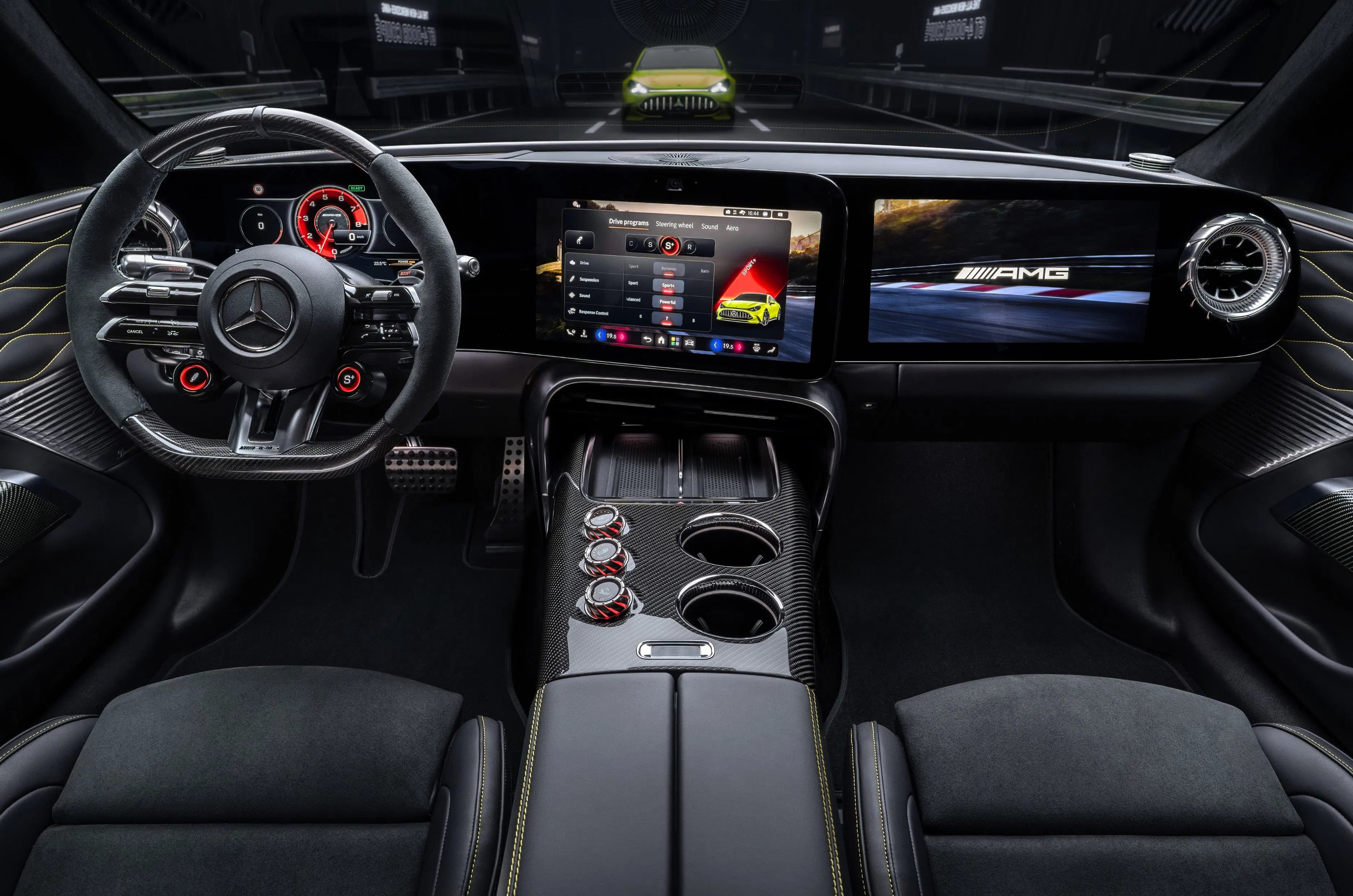
The comments highlight how India’s role within global automotive companies is evolving. Rather than focusing primarily on engineering support and localisation work, Indian teams are increasingly contributing to technologies that sit at the centre of software-defined and increasingly automated vehicles.
Software and AI becoming increasingly important
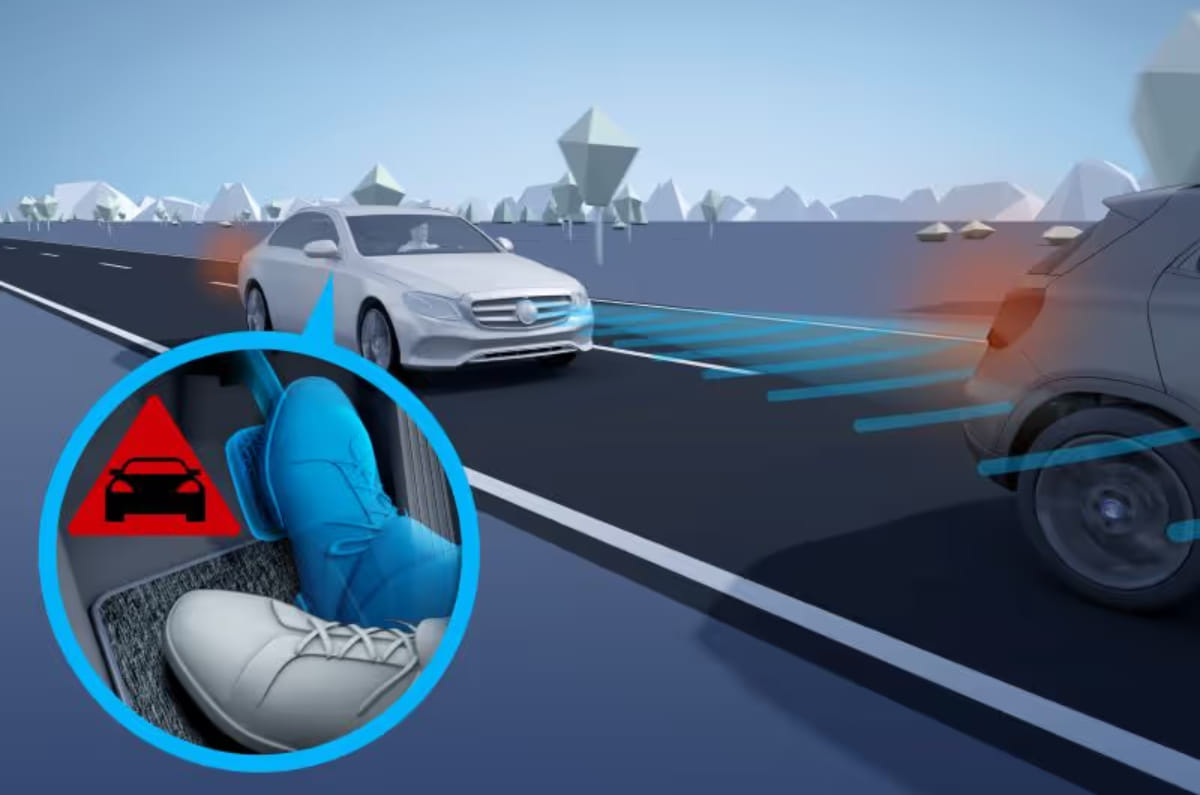
On the industry’s shift towards software, Burzer said, “I see this as an opportunity.” Mercedes-Benz is currently working with NVIDIA on future software architectures while advancing its Level 2++ driver-assistance systems and developing Level 3 and Level 4 autonomous-driving capabilities.
According to Burzer, one of the biggest challenges is integrating increasingly complex software systems across different vehicle platforms. “We are, to my knowledge, one of the only OEMs that do Level 2++ with traditional combustion engines.”
Many advanced driver-assistance systems have so far been introduced primarily on dedicated EV platforms. Mercedes-Benz, however, is deploying similar technologies across combustion-engine, hybrid and electric vehicles. “To bring a software stack into a combustion-engine environment where you have a transmission and an engine is more complicated than on the EV side,” Burzer elaborated.
Artificial intelligence is also playing a growing role in the company’s autonomous driving programme. “AI is one of the most important topics,” he remarked. “You don’t always have to go on the street. You can basically do that virtually as well.”
Mercedes sticks with a multi-sensor approach
Mercedes-Benz’s approach to autonomous driving differs from some rivals, which are increasingly moving towards camera-only systems. “We have radars. We have mid-range radar. We have ultrasonic sensors. We have cameras. That’s our philosophy,” Burzer said.
The company also combines a conventional rules-based perception stack with a data-driven model trained on real-world driving behaviour. “If this end-to-end system doesn’t know what to do, then it falls back to the classic stack.”
Hardware still remains central
Despite the growing focus on software, Burzer said hardware engineering remains a core part of Mercedes-Benz’s development process. “It’s not only software,” he said.
The Bengaluru centre continues to support hardware development, testing, manufacturing simulations and engineering activities alongside software programmes. “We have simulation on sheet-metal forming and welding in India.”
Burzer added that the increasing complexity of modern vehicles means that development responsibilities are now spread across global teams rather than concentrated in a single location. “Automotive engineering is the ultimate teamwork.”
As software, electronics, manufacturing and vehicle engineering become more closely integrated, India’s contribution to future Mercedes-Benz vehicles is expected to grow further.
With inputs from Sergius Barretto
 Viraaj Bhatnagar
 Dipan Sur
 Dhruv Dhaka
 Saptarshi Mondal