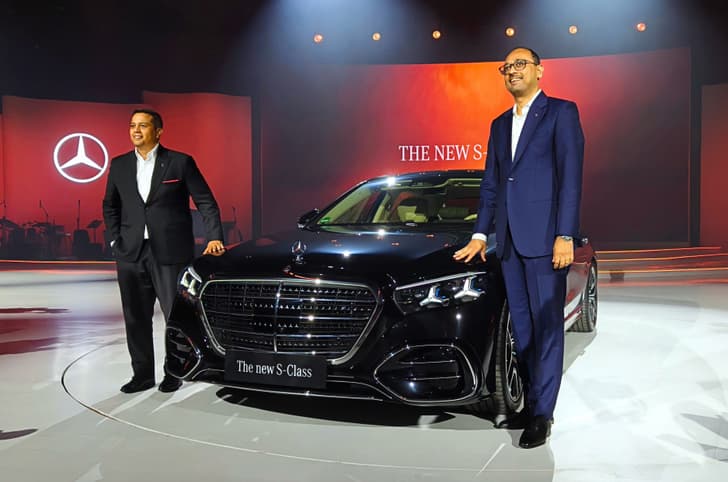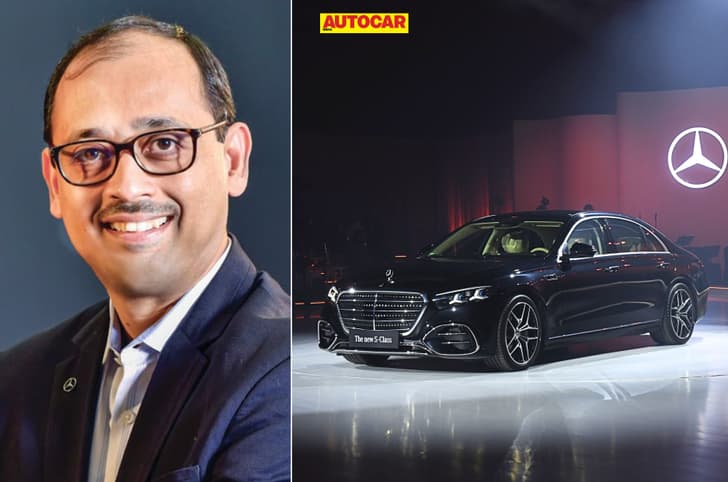
Mercedes-Benz will offer the S-Class exclusively as a plug-in hybrid in India this year, with no petrol or diesel alternative on sale. “With the S-Class, it is 100 percent PHEV. We are not offering any option at all, at least for this year,” said Santosh Iyer, managing director and CEO of Mercedes-Benz India.
- S 450e is Mercedes-Benz India’s first plug-in hybrid model
- Conventional S-Class variants to return after localisation
- Mercedes says PHEVs remain too expensive for some segments
S-Class to remain PHEV-only in 2026
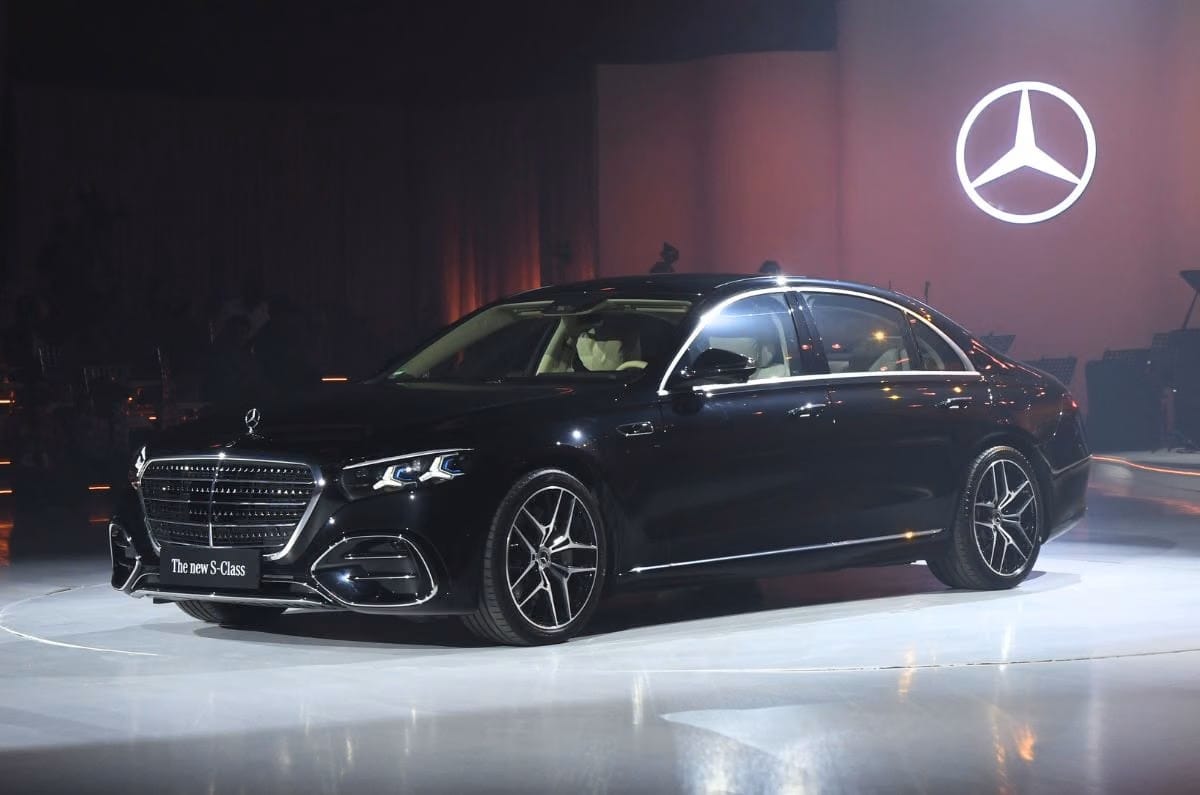
The announcement follows the launch of the Mercedes-Benz S 450e, the company’s first plug-in hybrid model in India. The luxury sedan is available in Exclusive Line and Manufaktur Edition AMG Line trims, priced at Rs 2.20 crore and Rs 2.38 crore (ex-showroom), respectively. Both variants will be imported as completely built units, with customer deliveries expected to begin around Diwali.
Iyer said conventional petrol and diesel S-Class variants could return once local assembly begins. “Next year, when we localise, we may offer a normal combustion engine as well. But right now, it is 100 percent plug-in.”
Mercedes sees limited role for plug-in hybrids
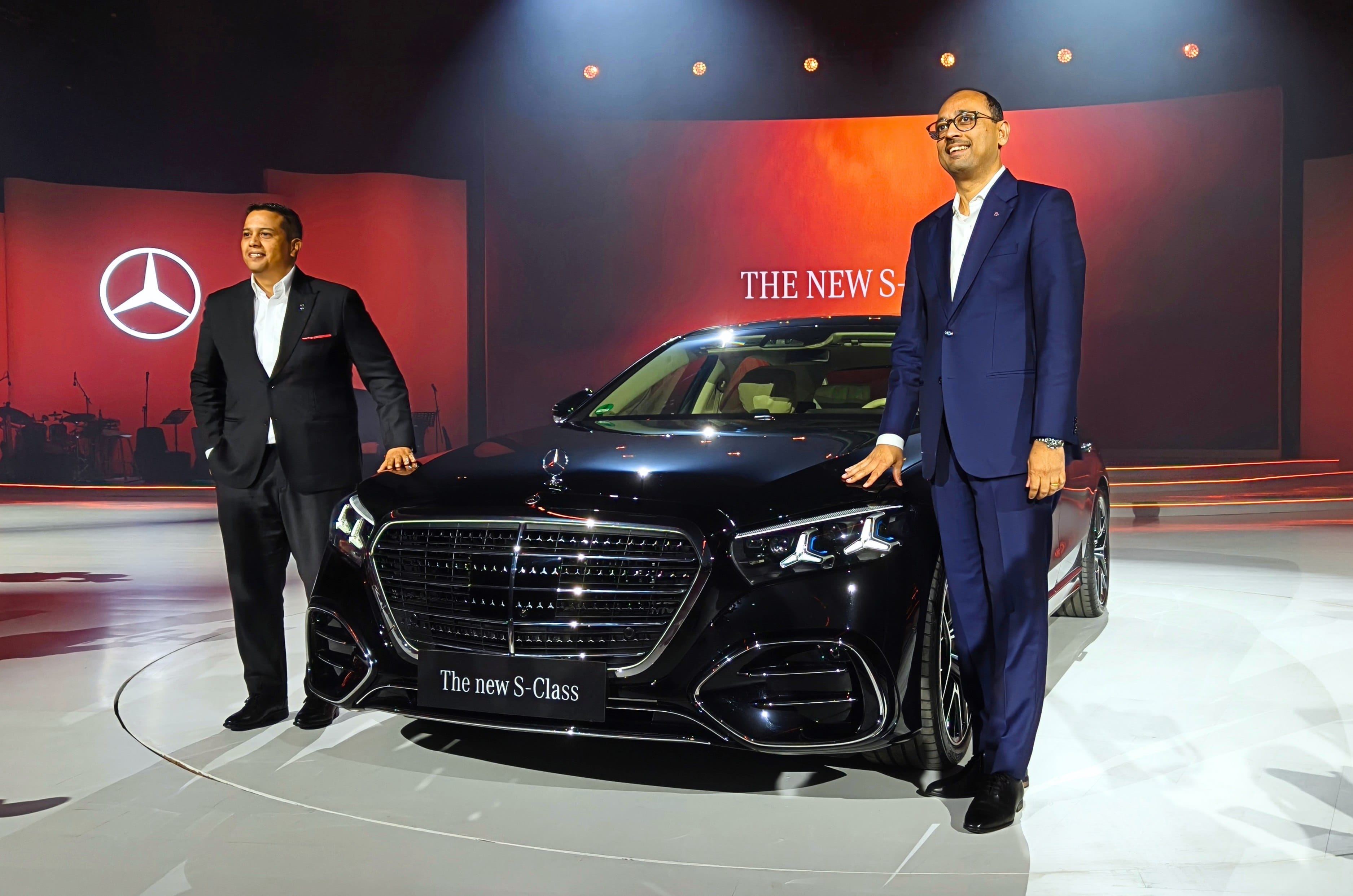
Mercedes-Benz has also ruled out a portfolio-wide rollout of plug-in hybrid technology. Instead, the company will evaluate PHEVs on a model-by-model basis, depending on customer demand and the viability of the business case. “The thing with hybrids is that they are expensive technology because of the multiple things and the cost that gets added to the vehicle,” Iyer said.
According to Iyer, Mercedes-Benz has been able to absorb the additional cost in a high-end product such as the S-Class. However, the same approach may not work in smaller and more price-sensitive segments. “We have seen that many times customers are ready to pay, but not a significant premium, whereas the technology is quite expensive. Only if we get confidence that the customer will pay it makes sense to get a plug-in.” Otherwise, it makes sense to remain with electric and combustion engines, he added.
Nevertheless, Mercedes-Benz sees plug-in hybrids as an important transition technology for customers who are not yet ready to move to a fully electric vehicle. According to Iyer, battery-electric vehicles account for around 20 percent of the company’s top-end vehicle sales, while the rest are combustion-engine models. “If you want to address that combustion-engine population with an electrified powertrain, I think plug-in hybrid is a much better solution for those customers,” Iyer said. “It gives them a chance to live with an EV.”
Multiple powertrains to continue
Mercedes-Benz currently offers petrol, diesel, mild-hybrid, plug-in hybrid and electric vehicles in India. Iyer said the company does not have fixed targets for any specific powertrain and will continue to respond to customer demand across segments.
While plug-in hybrids will remain part of Mercedes-Benz’s transition towards lower-emission mobility, the company does not expect them to feature across every segment. “Is the path going to go via hybrids and PHEVs? The answer is yes. Across categories, maybe no,” Iyer remarked. “It depends on the product and what compelling proposition you are able to give.”
 Viraaj Bhatnagar
 Dipan Sur
 Saptarshi Mondal