
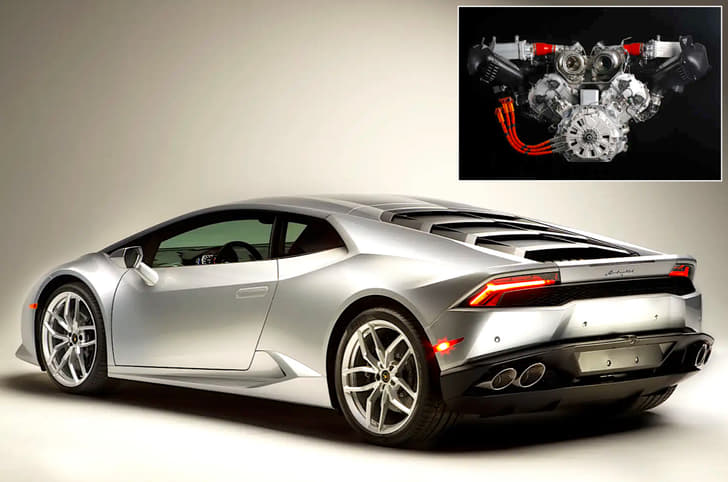
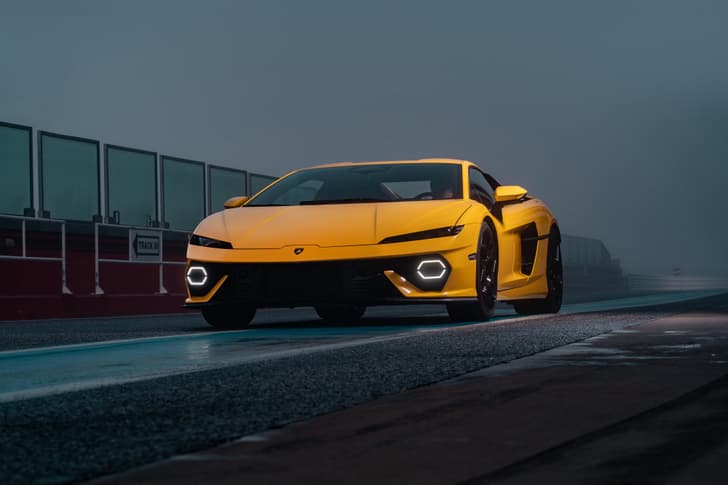
The replacement for the Lamborghini Huracan will feature the most powerful and highest-revving V8 engine ever installed in a production car. Codenamed 634, the Huracan successor will use a 4.0-litre twin-turbocharged V8 plug-in hybrid powertrain that will produce over 900hp.
- Huracan replacement to pack over 900hp from V8 PHEV powertrain
- Its electric drivetrain will be markedly different from the Revuelto’s
- The design will have details similar to the V12 flagship
Lamborghini Huracan successor powertrain details
The 634’s combustion engine will produce 800hp and 730Nm of torque – far more than what the Huracan’s naturally aspirated V10 engine could pump out even in extreme STO guise. But most notable is the 10,000rpm redline, “a figure normally reserved for racing engines”, Lamborghini said.
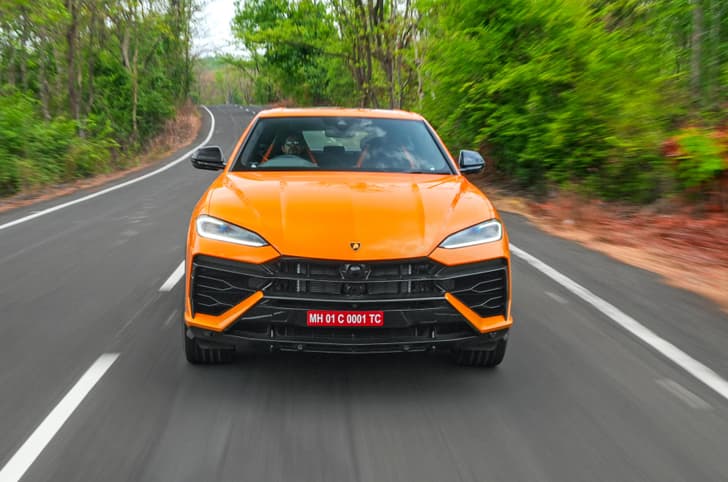
Only a handful of road-going hypercars, such as the Mercedes-AMG One, GMA T.50, and Aston Martin Valkyrie, have engines that spin faster. The Lamborghini Urus also uses a 4.0-litre twin-turbo V8, but that is an Audi-developed unit shared with various Porsche, Bentley and Audi RS models. On the other hand, the 634’s powertrain is said to be all-new and developed entirely in Sant'Agata, Italy.
Lamborghini said a “crucial element of the design process was to define the sound” of the new engine. It will work in tandem with a slimline, lightweight, axial-flux electric motor integrated ahead of the 8-speed dual-clutch automatic gearbox, which sends up to 150hp and 300Nm of torque to the rear axle.
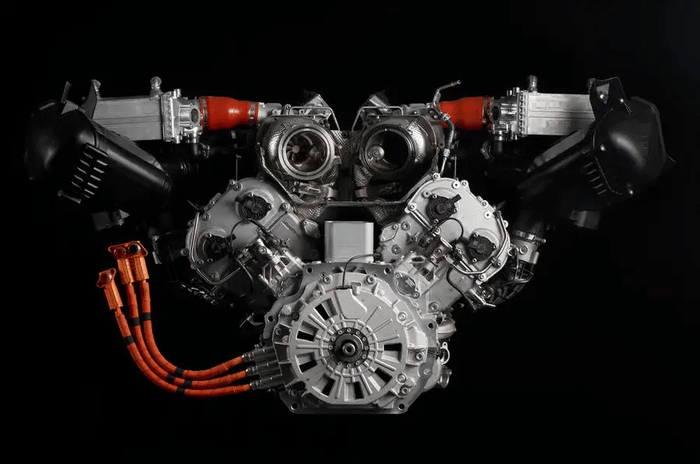
Lamborghini hasn’t given a total combined power output, but it’s likely to be north of 900hp. The 634’s drivetrain is markedly different to that of the Revuelto, which has two electric motors on the front axle and one in the gearbox. The 634 is expected to have its small-capacity traction battery housed in the transmission tunnel for compact packaging and optimal weight distribution.
The move to a PHEV system has significant implications for the dynamic behaviour of the Huracan’s replacement. “The package itself is much better than a normal ICE car,” Lamborghini’s chief marketing and sales officer Federico Foschini told our sister publication Autocar UK. “There are characteristics that you cannot achieve if you don’t have an electric motor [such as active torque vectoring]; it gives you the opportunity to leverage even more on the engine’s potential.”
Lamborghini Huracan successor design and underpinnings
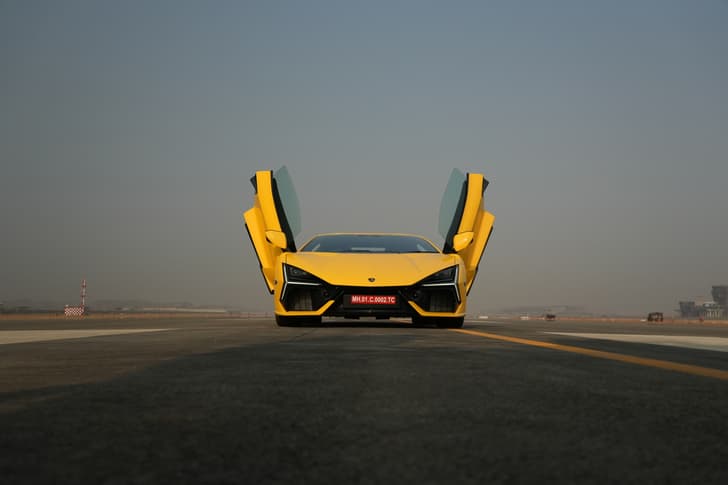
Visually, the new supercar will be clearly related to the flagship Revuelto. It will have a dramatic silhouette that adheres to the head of design Mitja Borkert’s ‘spaceship’ ethos, along with a raft of details that have become Lamborghini hallmarks, such as a gaping hexagonal exhaust, Y-shaped LED light designs, and prominent air channels throughout the body to boost downforce.
Instead, it is set to use aluminium where possible without incurring any major penalty to rigidity, in line with its more entry-level billing. For instance, while the Revuelto uses aluminium for its rear subframe, the junior supercar could use it for both front and rear subframes. The platform will also be shortened to visually distinguish the new car from the 4,947mm-long Revuelto. For context, the Huracan Tecnica is 4,567mm long.
Lamborghini will build the Huracan successor on the same production line as the Revuelto. This is the first time the brand has built both of its supercars in series on the same line, facilitated by the sharing of major architectural and electrical components.
 Viraaj Bhatnagar
 Dipan Sur
 Dhruv Dhaka
 Saptarshi Mondal