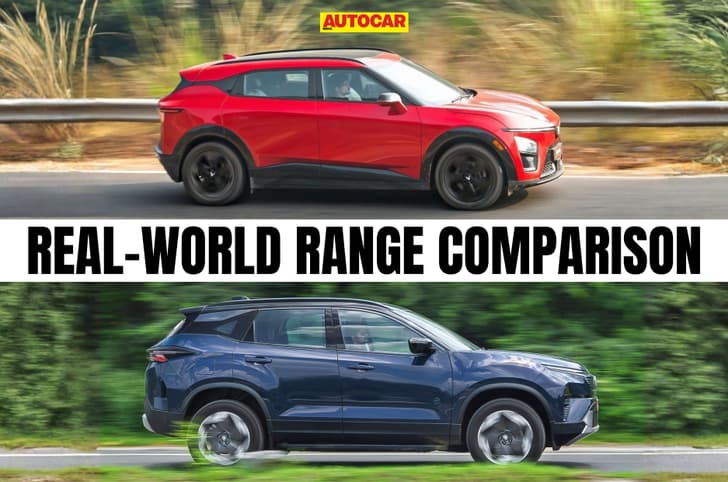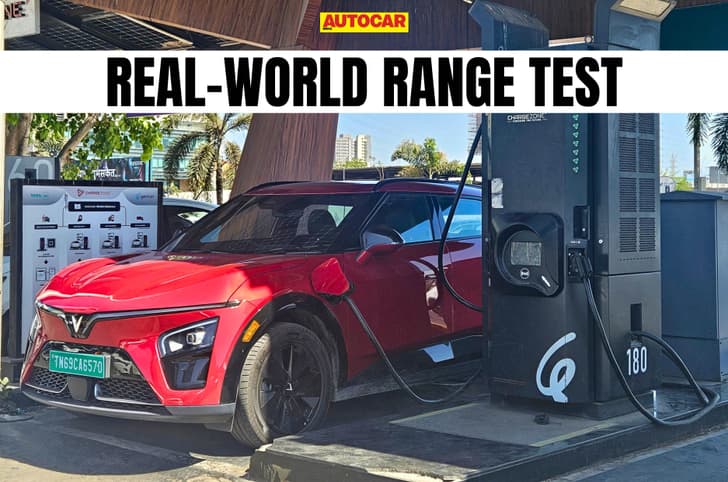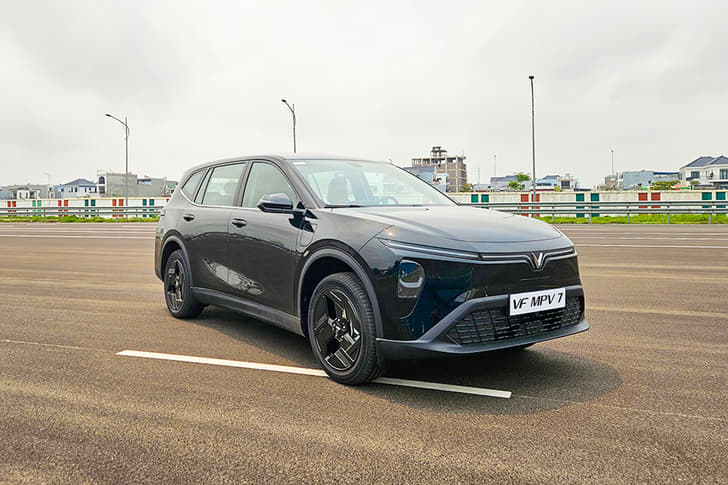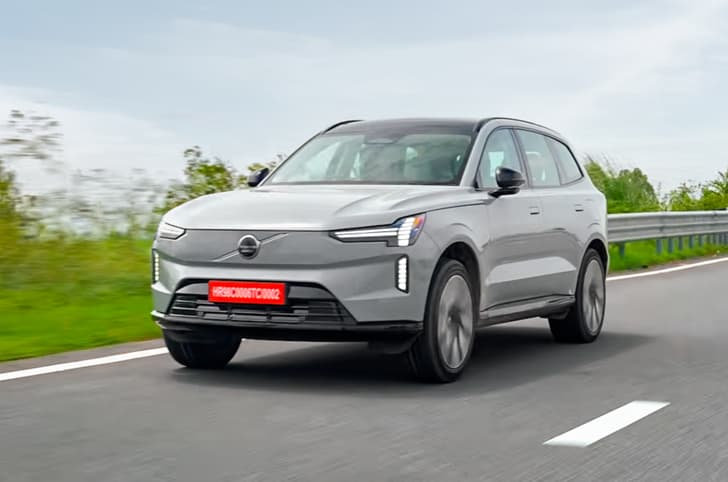


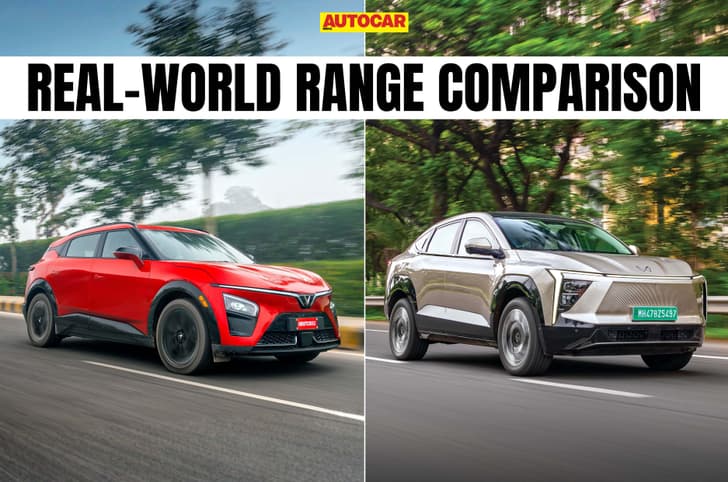
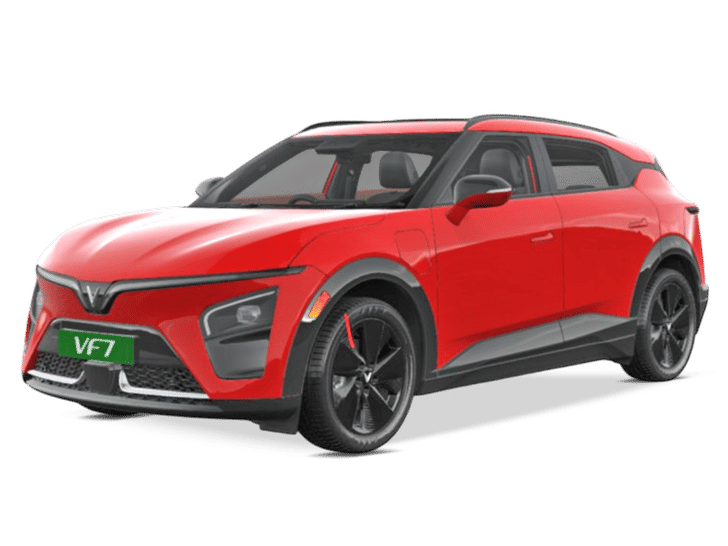
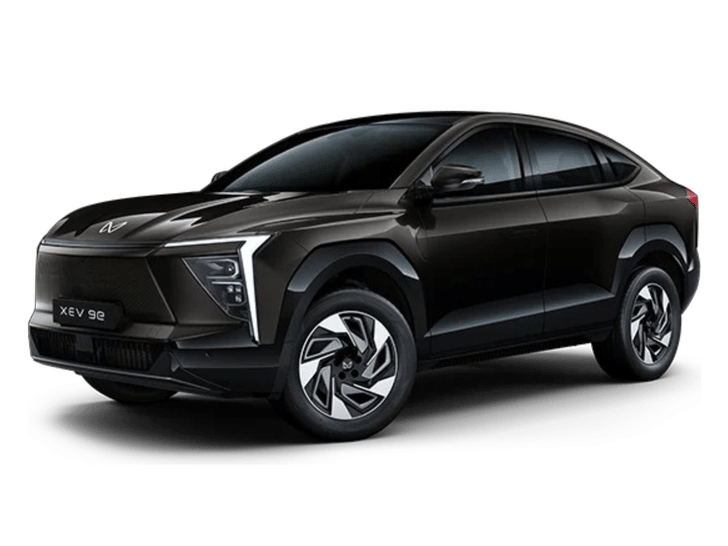
The Vinfast VF7 joined the electric midsize SUV segment in September 2025 as a direct rival to the Mahindra XEV 9e. Both SUVs are powerful and feature-loaded, but which one delivers a higher range in real-world conditions? We subjected their top-spec versions – the VF7 Sky Infinity AWD and XEV 9e Pack Three – to our fastidious real-world range tests to find out.
Vinfast VF7 vs Mahindra XEV 9e specifications and price
VF7 is more powerful and offers AWD, but XEV 9e has bigger battery
*Home charger and installation cost extra – Rs 50,000 for 7.2kW and Rs 75,000 for 11kW wallbox.
Not only does the VF7 set itself apart with a dual-motor AWD powertrain, but it also develops a healthy 68hp and 120Nm more than the XEV 9e. While that benefits performance, the VF7 does fall a substantial 146km short of the XEV 9e on the ARAI-claimed range front. This can largely be attributed to the XEV 9e’s 8.2kWh larger battery pack, lower power output and slightly lighter kerb weight.
The XEV 9e also supports much higher wattages for DC charging, going up to 180kW, while the VF7 can be charged at a maximum of 110kW. 11kW AC charging is also uniquely supported by the XEV 9e, with the VF7’s AC charging capped to 7.2kW.
As far as entry-level prices go, both SUVs are matched, but the top-spec VF7 variant featured here does cost Rs 3.71 lakh less than the fully loaded XEV 9e variant. Moreover, Vinfast offers perks like free EV charging, complimentary home wallbox installation, assured buyback schemes, and more.
Vinfast VF7 vs Mahindra XEV 9e real world range
What community is saying on the VF7?
XEV 9e takes the win across the board, but VF7 is closer to its ARAI range
In city conditions, the XEV 9e edges ahead of the VF7 by a hefty 63km margin, working out to a battery efficiency of 5.38km/kWh – the VF7 managed 5.11km/kWh. Out on the highway, the delta between the two widens to 69km, with the XEV 9e delivering 6.18km/kWh and the VF7 achieving 5.92km/kWh.
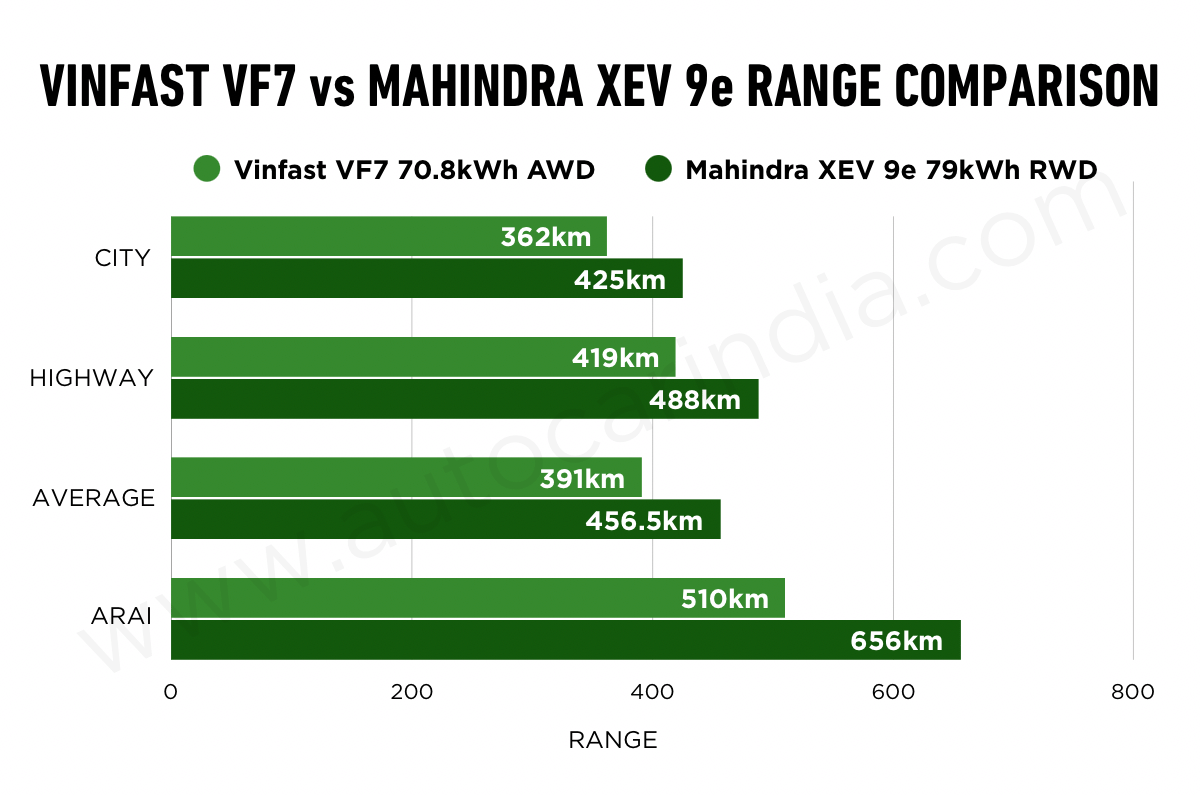
Tallying up the average figures, the XEV 9e's real-world range is 74.5km higher than that of the VF7. Average battery efficiency, meanwhile, works out to 5.78km/kWh for the XEV 9e and 5.52km/kWh for the VF7. Interestingly, the delta between the VF7’s average real-world range and claimed range is much smaller than that of the XEV 9e.
Autocar India’s range testing
For our real-world range test, we begin with each car’s battery fully charged and tyre pressures set as per the manufacturer’s recommendations. We drive the cars on a fixed loop covering both city and highway stretches while maintaining set average speeds. We then calculate the range based on the percentage of charge consumed. The AC is set to 22°C in auto mode, and features such as the music system, lights, and ventilated seats are used as needed, just as a regular user would. This approach ensures consistency and gives a clear idea of what to expect in daily use.
All prices are ex-showroom, India.



 Uday Singh
 Dipan Sur

 Glenn Noronha