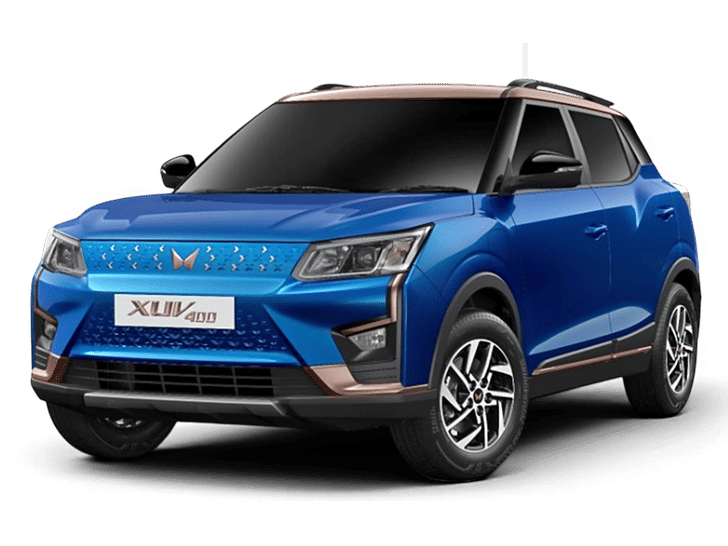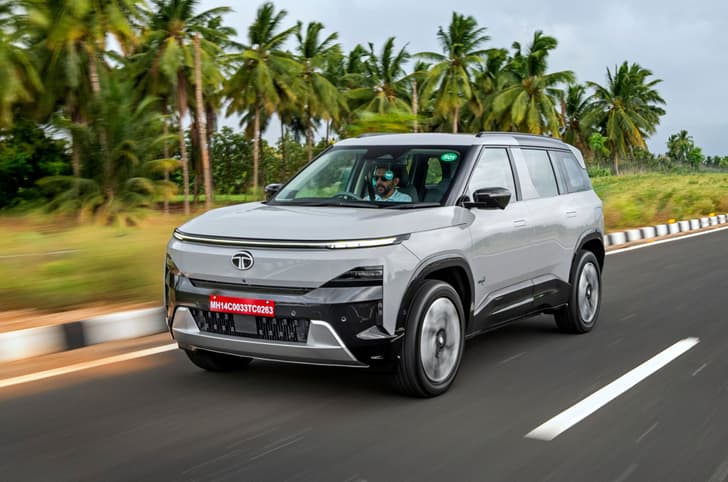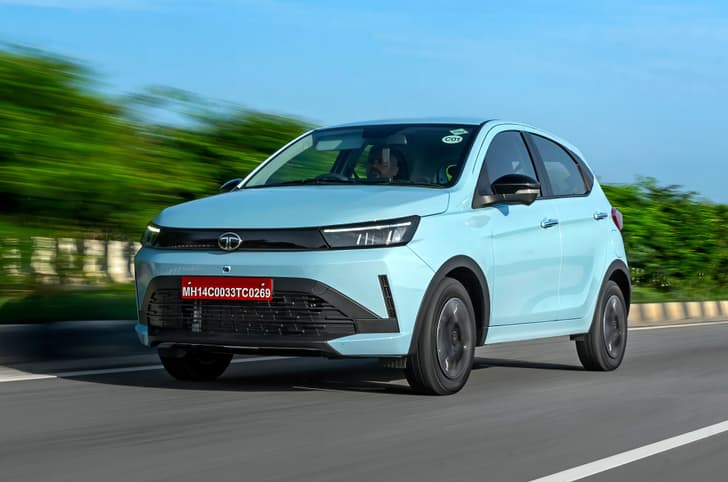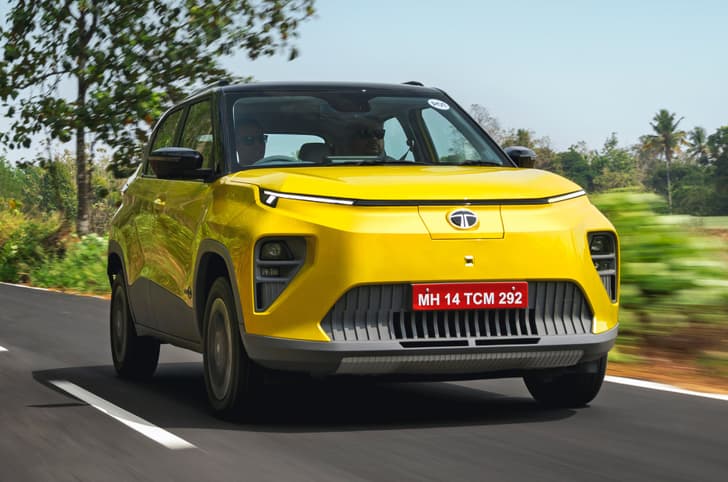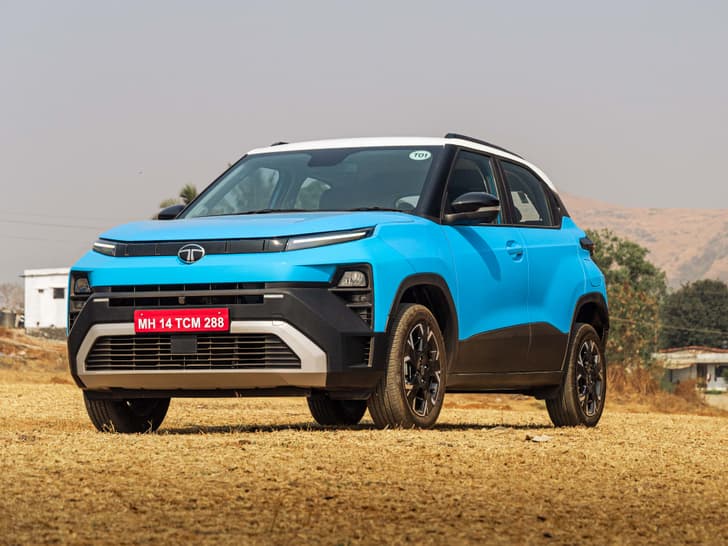

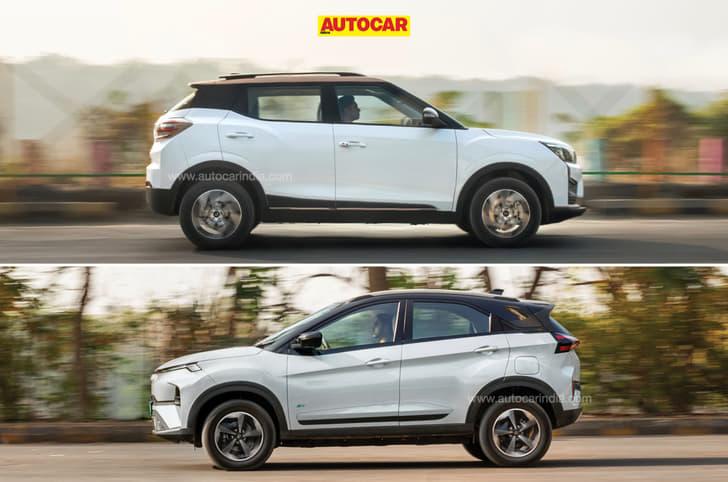
The Tata Nexon EV and Mahindra XUV400 EV are bitter rivals in the all-electric SUV space, and have been tested repeatedly against each other, as the brands updated their EVs time and again. The Nexon EV last received a major facelift in September last year, while the XUV400 was updated just this January. While the Mahindra didn’t get any mechanical upgrades, the Nexon EV did see an improvement in the efficiency of the powertrain and the better aerodynamics, which Tata claims has helped the EV SUV’s range.
Tata Nexon EV vs Mahindra XUV400: battery, charging
The top-spec Nexon EV Long Range we tested has a 40.5kWh battery pack that drives a 145hp and 215Nm electric motor, and has an ARAI-rated 465km of range on a single charge. Meanwhile, the range-topping XUV400 EL Pro you see here is equipped with a 39.4kWh battery, which powers a 150hp, 310Nm motor, and has an ARAI range of 456km.
Both these EVs come with a 7.2kW AC charger, and support DC fast charging. The XUV400 has the edge here as it can charge up to 45kW, while the Nexon EV’s max charging speed is capped at around 30kW. This means one can top up the XUV’s battery quicker at a 60kW (or higher) DC fast charger.

Tata and Mahindra have resorted to very different cell chemistries for their battery packs. Theoretically, Nexon EV’s LFP (lithium ferrous phosphate) battery tech is said to be more robust and longer lasting, whereas the Mahindra’s NMC (nickel manganese cobalt) battery is known to be more energy efficient to deliver stronger performance and range. While these cars are too new to pass a definitive verdict on which fares better, to protect users from any unforeseen battery or motor-related issues, both come with an 8-year warranty.
What community is saying on the Nexon EV?
Tata Nexon EV vs Mahindra XUV400: range
In our real-world range tests, the Nexon EV posted a range of 273km, which bettered the XUV’s 251km run. Interestingly, in our city run, the XUV400’s average city efficiency of 7.1km/kWh was higher than the Nexon’s 6.9km/kWh. However, the Tata was more efficient on the highway with an average efficiency of 6.7km/kWh compared to the XUV’s 5.8km/kWh.
The Nexon EV limits air-con and motor performance once the state of charge (SOC) falls below the 25 percent mark, in order to maximise range. The XUV400, on the other hand, enters limp mode below 12 percent, but even then, only its top speed is limited; there is no change to acceleration or its air-con performance.


 Uday Singh

 Glenn Noronha
 Dipan Sur