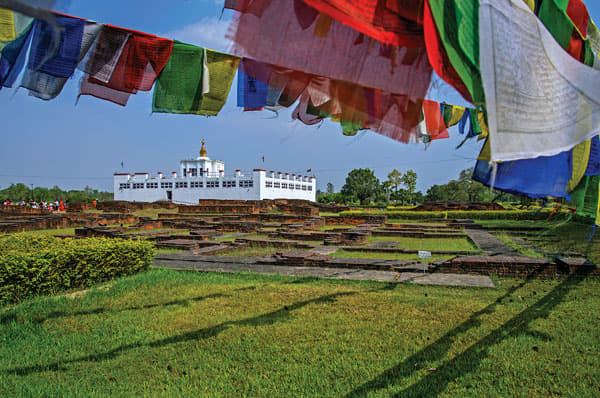
There is a rather nondescript stone marking the exact spot where Buddha was born in 623 BC. Surrounding the stone marking Buddha’s birth spot are mud brick structures in a cross wall system that date back to the 3rd century. These are remains of buildings that were built over the centuries to commemorate the place where Prince Siddhartha was born. Protecting this site is a simple white building that is known as the Maya Devi Temple.
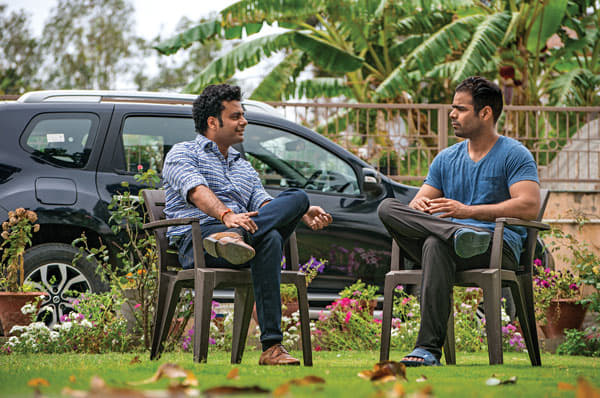
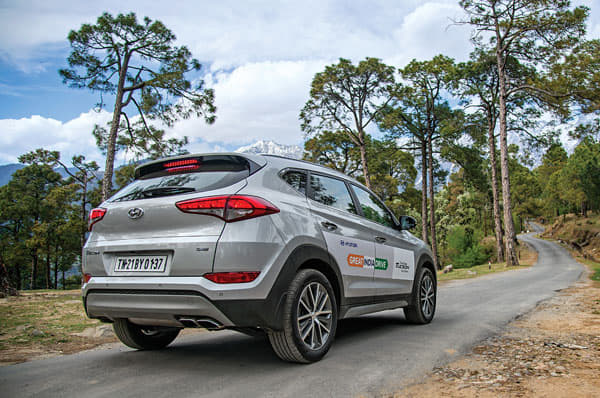
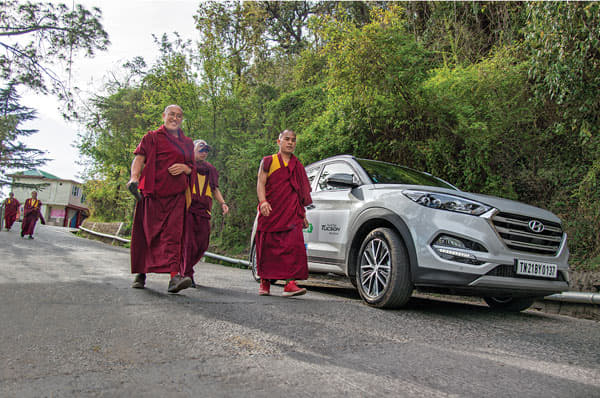
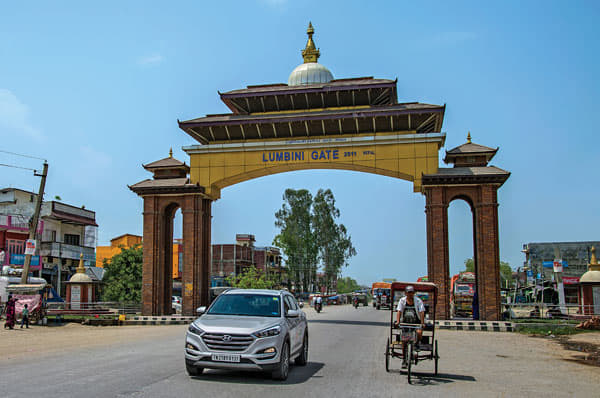
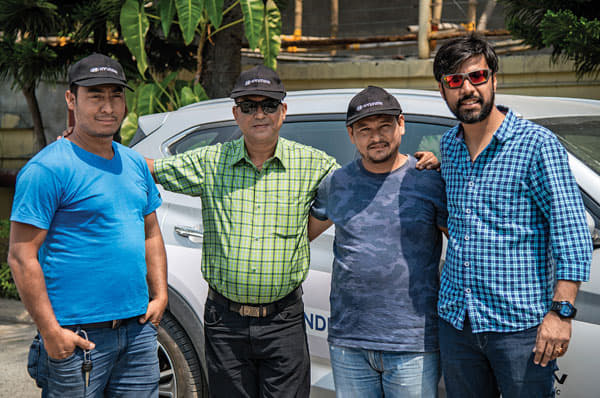
We are in Lumbini, located in the Terai plains of southern Nepal. It’s been a long drive from Dharamshala where the Great India Drive was flagged off four days ago. This is the second edition of this initiative by Hyundai where motoring journalists from across the country are invited to drive to a destination of their choice. In the first edition of the Great India Drive, we drove the Creta from Leh to Mumbai through Orchha in 2015. This time our vehicle is the recently launched Hyundai Tucson. And the purpose of the drive is to promote Hyundai’s road safety initiative in India — Be The Better Guy. We would be handing out specially monogrammed Hyundai caps to people along the way in exchange for a pledge to follow driving rules.
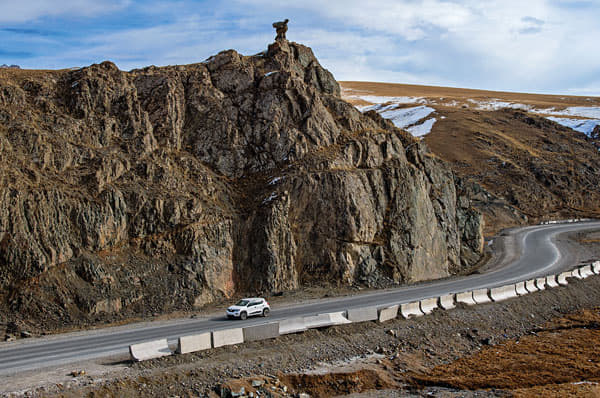
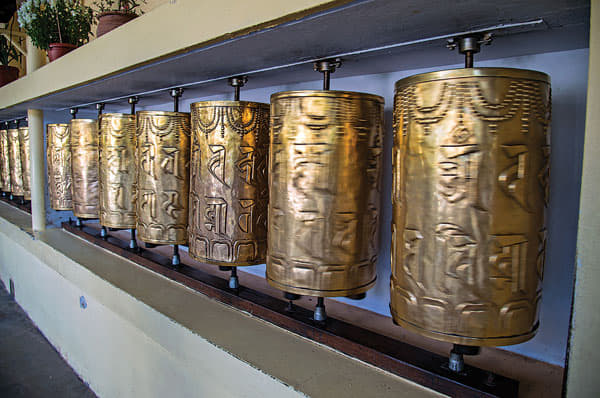
Autocar India had decided to take a more ambitious route for the second edition of the Great India Drive with the Tucson. Since Dharamshala is home to His Holiness, the 14th Dalai Lama, the face of Buddhism to the world, we decided to follow the Buddhist trail through India and Nepal. The route planned was not just to stitch together Buddhist landmarks but also to test the Tucson’s capabilities through various terrains and conditions. The journey would take us through the mountain roads of Shimla and Rishikesh, down to the plains of Nepal and back up to the mountains to Kathmandu, and then back to Siliguri in India before we reached our final destination, Gangtok, the capital city of Sikkim.
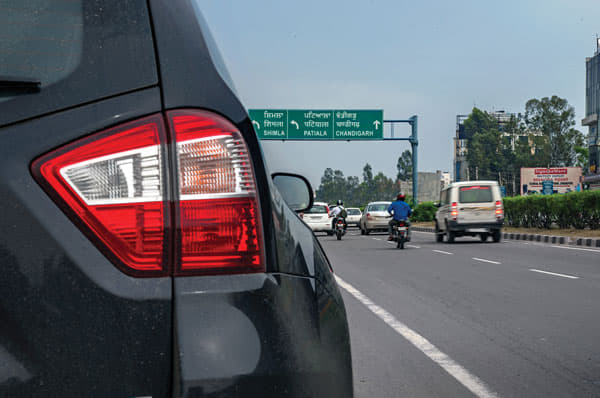
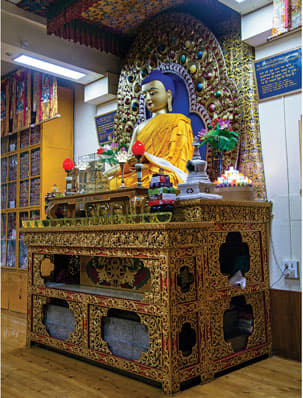
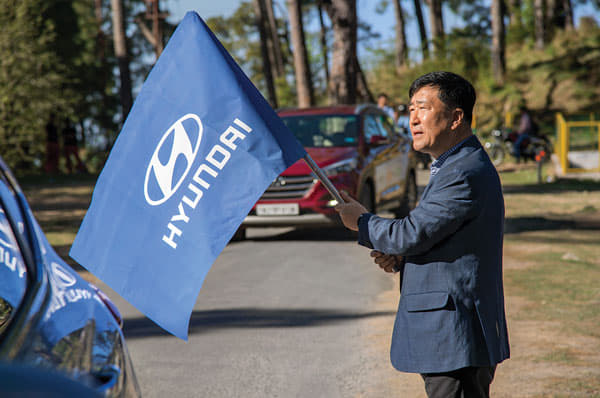
The snow-capped peaks of the Dhauladhar range provided the perfect backdrop for the flag off from outside the gates of the Fortune Hotel in Dharamshala. As Y K Koo, MD and CEO, Hyundai Motor India Ltd., waved us off, we reset the tripmeter to zero, slotted the drive to D, and headed for Thekchen Choeling temple to seek the blessings before starting our journey. Thekchen Choeling is the home of the Dalai Lama. It’s a Buddhist temple with a residential complex where the Dalai Lama and his devotees live. After seeking the blessings of Shakyamuni Buddha, we set course for Shimla, our first destination on this drive.
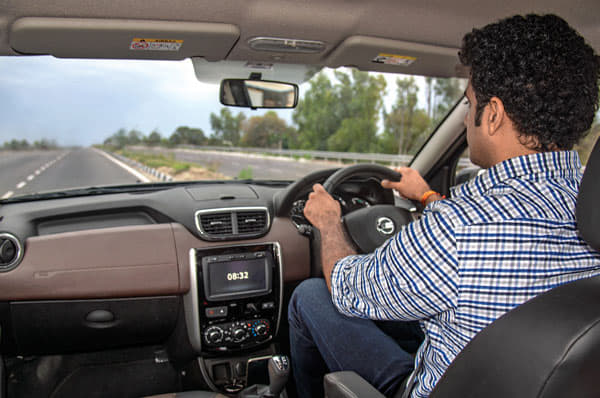
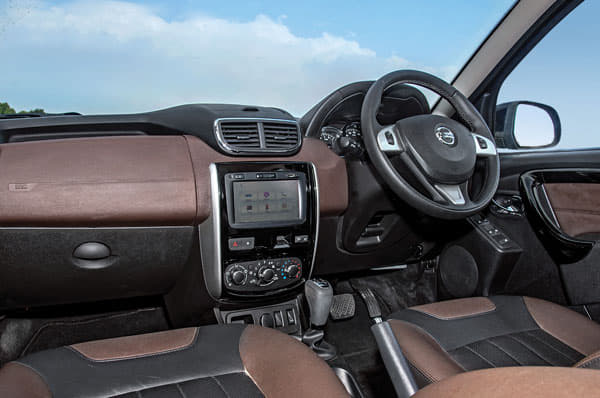
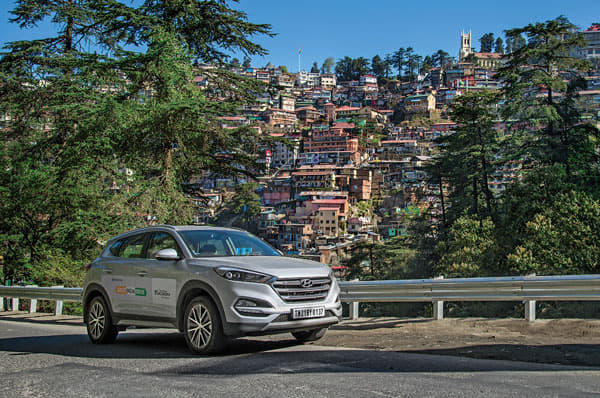
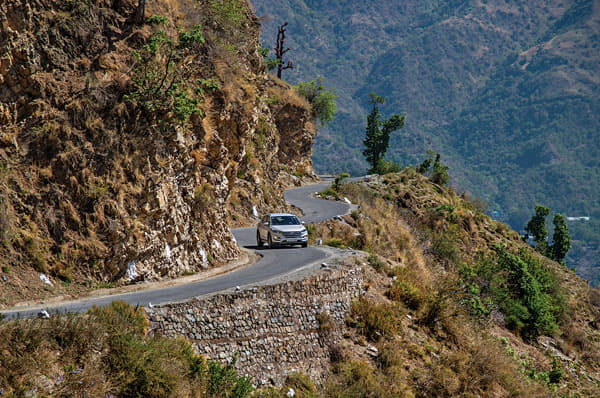
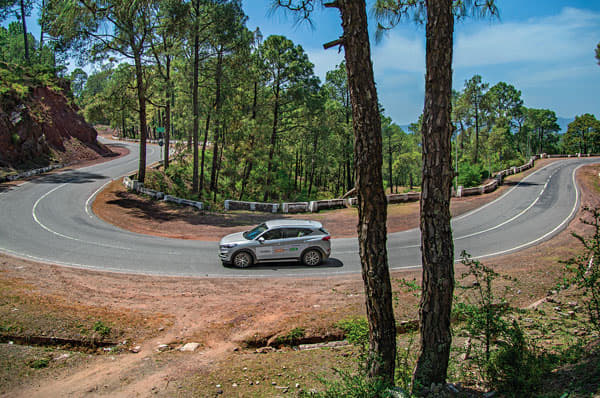
The first two days would see us drive on the hill roads of Himachal and then to Rishikesh in Uttarakhand. How would the big 4.5-metre SUV fare on the steep, narrow roads? It didn’t take long for us to find out. On narrow hill roads, overtaking is as much an art as it is science. Since you can’t overtake on blind curves, you have to take advantage of any open stretch you get to pass the slower vehicles. It is here that the 185PS engine showed its stuff. We just left the transmission on normal Drive mode, tapped the accelerator and the huffing-puffing lorry was in our rear view mirror in an instant and we could now enjoy the open stretch in front of us. If you think traffic jams in Delhi or Mumbai are bad, you wouldn’t want to get stuck during rush hour in Shimla. There’s a drop on one side and the mountain on the other, creeping up a steep incline. At times you have to choose getting a scratch on your car or rolling down the mountain. It is here the Tucson automatic box really helped, freeing us from the tiring clutch-handbrake-accelerator pedal dance. At times the Tucson’s electrically-folded mirrors had to be closed to let the traffic on the opposite side to pass by. That the Tucson has both front and rear parking sensors and a high driving position meant that we could navigate the big SUV with millimetre accuracy.
It’s on the second day of the drive, on our way from Shimla to Rishikesh that we came across one of the best driving stretches. The 80-odd kilometres between Solan and Nahan have little traffic, smooth black asphalt and engaging curves. The Tucson hungrily gobbled up the stretch, and we wanted to go back and do it again. We unfortunately had a schedule to stick to, but promised ourselves that we would be back.
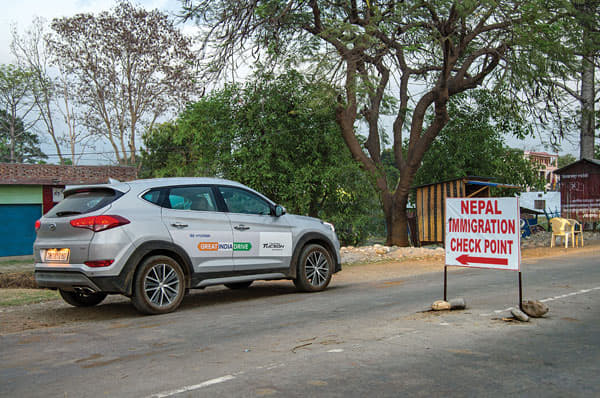
The highlight of the third day of our drive was entering Nepal through the Banbasa border in Uttarakhand. A narrow bridge connects the two countries, and there’s just enough space for one car to pass through. The gates are opened for vehicles every two hours, so if you are planning to drive to Nepal, check the timings.
It was relatively painless as we had the original papers of the car as well as our driving licences. But we had to go through about 10 checks before we were cleared to enter Nepal. On the Nepal border we paid Rs 300 per day our car would be in Nepal. Plus another Rs 50 for a temporary registration. A further Rs 275 and we were all cleared to go and drive in Nepal. It was past sunset by the time we entered Nepal, where we spent the night at Mahendranagar.
We had clocked over 1,000km on the tripmeter by this time, driving long hours through all sorts of terrain and road conditions, but the big SUV was running without a hiccup or breaking a sweat.
Our destination for day four of the drive — Lumbini. It was a 450km drive to the birthplace of Gautam Buddha. The major part of the road skims past and through the Bardia National Park and is sparsely populated. Driving on this immaculately maintained road, and cutting through the forest, we felt that we were driving in Europe rather than Nepal. The only non-European bit were road signs in Nepali language all along the road warning you of keeping your speed in check and be vigilant of wild animals crossing the road. And we were glad to pay heed since we spotted a deer and a bunch of wild animals by the roadside.
Lumbini is not only Buddha’s birthplace but also a site to see different Buddhist architectures and cultures from across the world. There are different monasteries and pagodas built by different countries. Each monastery has its own design, significance and importance. It would take a week to explore the whole complex, but we had just one morning, as another long drive lay ahead of us to Nepal’s capital city Kathmandu.
The road to Kathmandu reminded us that not all roads in Nepal are as good as the roads we drove on the previous day. In fact, the road between Narayangadh and Mugling, a 36km stretch is closed every day between 10am and 4pm to facilitate road building. When, after an hour’s wait in the queue, we finally drove into the closed section, we realised that there was no road but just a boulder-strewn dirt track. Though the big potholes did not ruffle the Tucson’s composure, there was one enemy even this SUV could not defeat. Dust from the vehicles ahead made it impossible to see more than a couple of metres ahead. Bad visibility and a rough road slowed us down to nearly a crawl and it took us two hours to cross the 36km stretch. It meant that the run to Kathmandu had to be done in the dark. Kathmandu had gone to bed by the time we arrived at our hotel. We were tired but elated. We were half way through our journey, and we would be spending the whole of next day in Kathmandu before turning back towards India. And that is another story that will be continued in the next issue.

 Uday Singh

 Glenn Noronha
 Dipan Sur