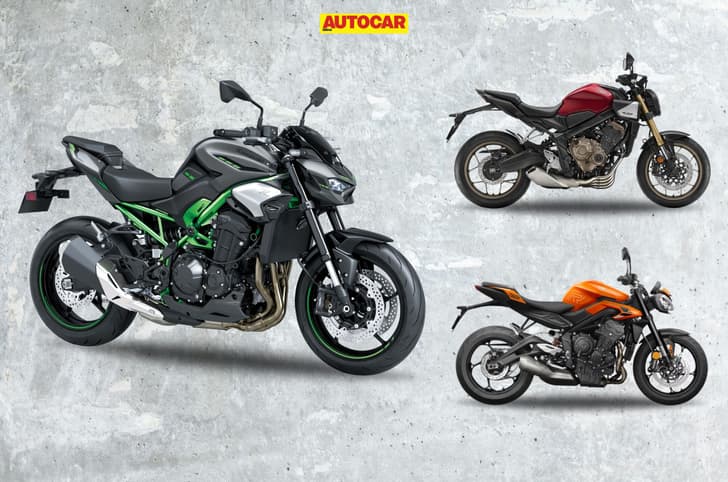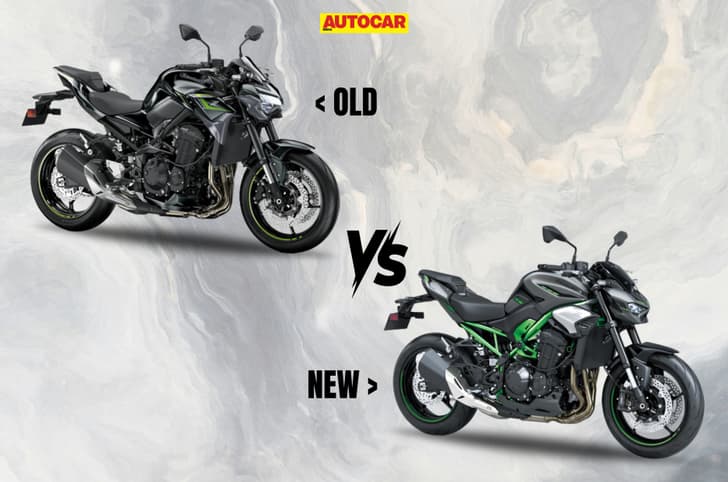
Unlike in previous years, when an update to the Z900 would simply mean new colours, Kawasaki has overhauled its sporty middleweight naked for 2025. Here are all the differences between the 2024 and 2025 versions of the middleweight Z.
Kawasaki Z900 old vs new: engine and output
Engine same as before but now updated to meet the latest emission norms
The creamy smooth 948cc four-pot motor has been carried over from before, and it is now Euro5+ compliant. In the process of meeting these stricter norms, the Z900’s engine has sacrificed a smidge of its peak output. Compared to the 125hp and 98.6Nm produced by the 2024 model, the 2025 Z900 makes 124hp and 97.4Nm, at exactly the same rpm as before. Another change is that, 8 years after it first came out, the Z900 finally gets ride-by-wire, enabling the addition of some new electronic aids.
Kawasaki Z900 old vs new: design and features
Design and feature set have seen big changes for 2025
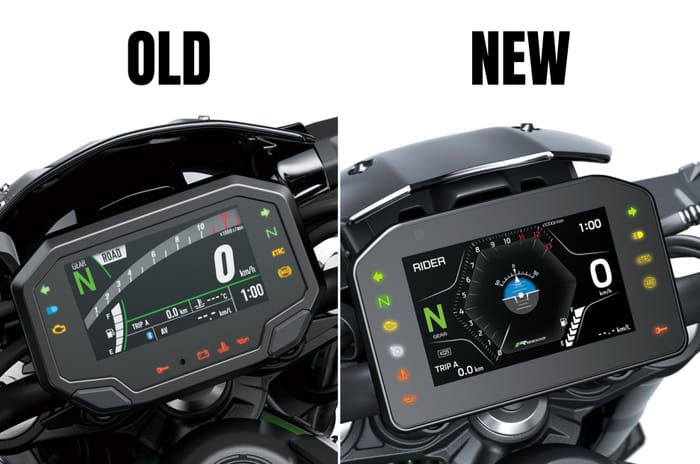
Speaking of electronic riding aids, the 2025 Z900 now comes standard with cruise control and a bidirectional quickshifter, both of which were missing in the 2024 version. Other aids like power modes, riding modes, traction control, and dual-channel ABS have been carried over but are now IMU-assisted. All of these features are now controlled via a new 5-inch colour TFT display with switchgear that is borrowed from the Kawasaki parts bin and is seen on models like the Ninja 1100SX.
Kawasaki Z900 old vs new: cycle parts
Z900 gets higher-spec componentry for 2025
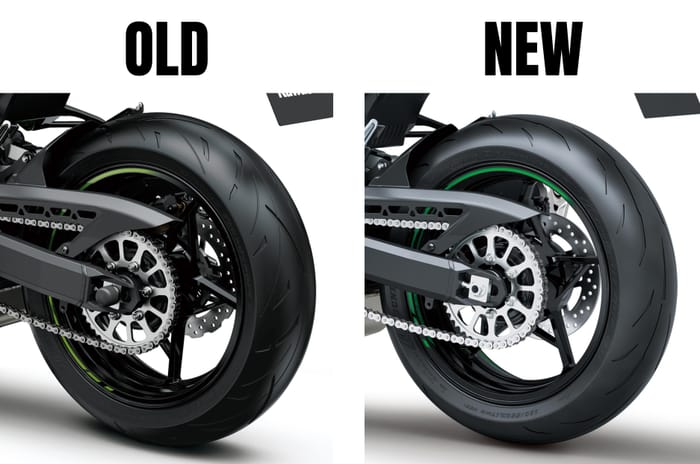
Another change for 2025 involves the Z900’s cycle parts, such as the tyres and brakes. It now uses four-piston, radially-mounted Nissin calipers to handle stopping duties in comparison to the previous version, which used axially-mounted units. The tyres have also been upgraded, with the 2025 model using Dunlop Sportmax Q5A rubber, replacing the rather average Dunlop Sportmax Roadsport 2.
Kawasaki Z900 old vs new: price and colours
It is available in two colours, price has risen by Rs 14,000
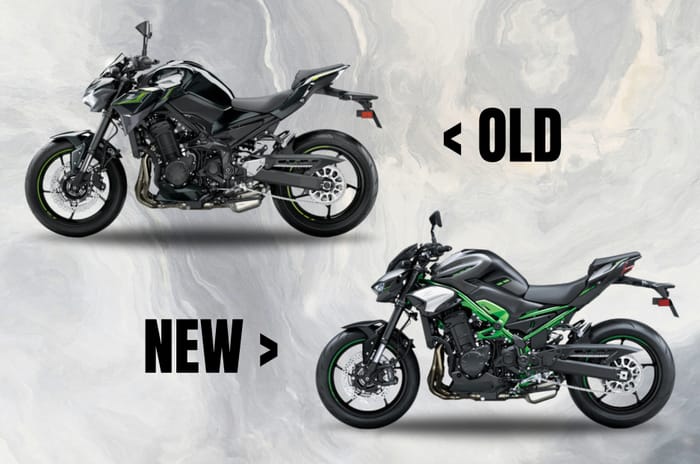
At Rs 9.52 lakh (ex-showroom, India), the 2025 Z900 is Rs 14,000 more expensive than the 2024 model. It is available in two colours – black/red and black/green – offering a broader choice than the 2024 version, which could be had in two shades of black/green.
 Vishal Venugopal
 Ved Janve
 Stephen Raj Antony