Autocar India
•10w

We are planning to buy a petrol car but are unable to make a concrete decision due to the ongoing ethanol blending crisis. I belong to a middle class family and I wish to own the car for long term but there is an uncertaininty due to the government policies regarding Indian oil market in the near future. There is no in-built garage in our house and no CNG refilling pump is available in our locality at the moment. Therefore, petrol car is the only option left. What can be the fate of the E20 compliant petrol engines in a situation when fuels with more than 20% ethanol blending will be the norm. According to that, suggest me which car should I buy and when should I buy it?

Verified
•10w

Do not let the ethanol blending policy delay your purchase. India is currently at E20, and there is no official roadmap or timeline for blends beyond that. Modern E20-compliant petrol engines are engineered with sufficient tolerance for E20, and the impact is largely limited to a small drop in fuel efficiency. There is no evidence to suggest that E20-compliant engines will suddenly become unreliable or unusable if the government were to increase the blend in the future.

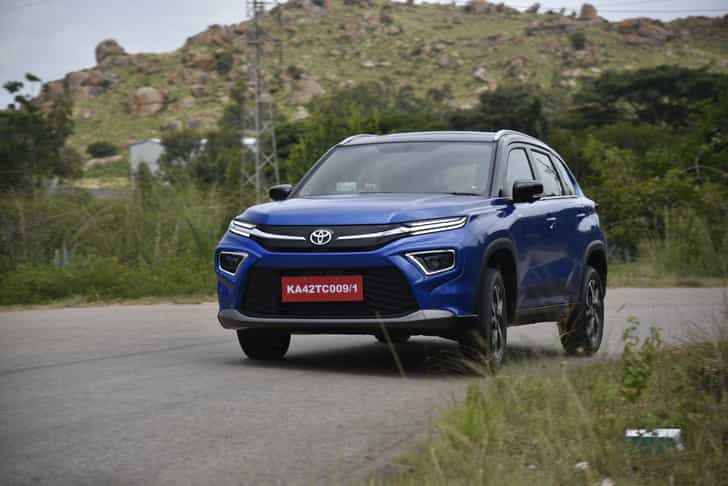
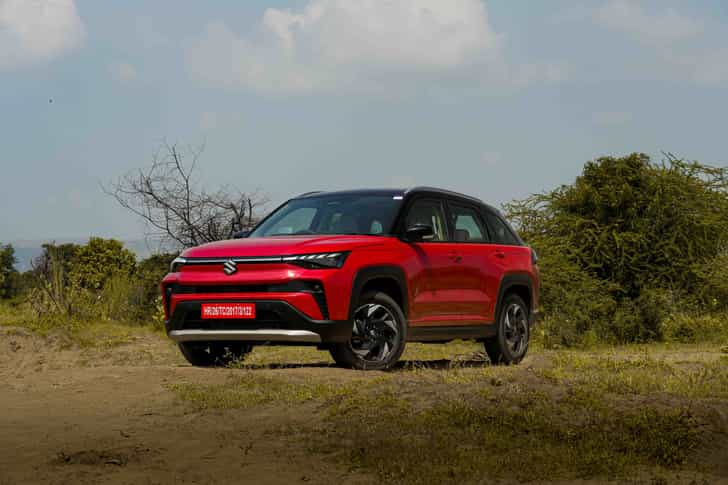
Your situation is clear: no home charging, no CNG pumps nearby, and a desire for long-term ownership. Petrol is the right choice. If you are concerned about running costs, consider a hybrid like the Maruti Suzuki Victoris Hybrid or Toyota Urban Cruiser Hyryder Hybrid. These cars deliver significantly better fuel efficiency in city driving and reduce your dependence on fuel price fluctuations.

Buy the car that best suits your needs today. Do not wait for hypothetical policy changes. The current E20-compliant petrol cars are designed for long-term ownership, and there is no reason to believe they will become obsolete in the near future.
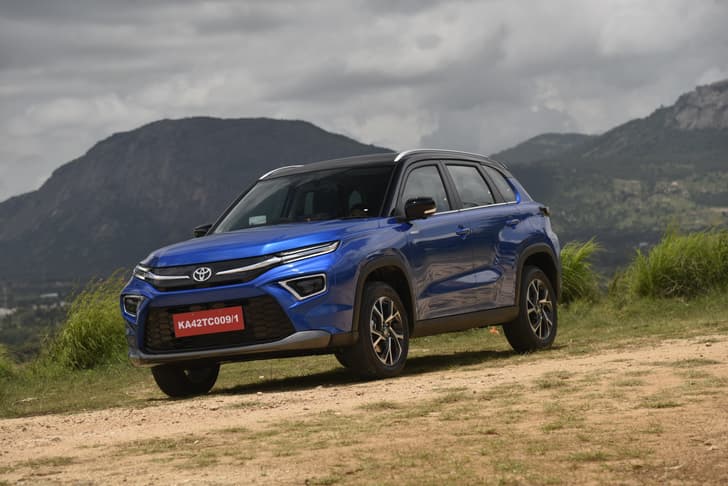
Toyota Urban Cruiser Hyryder

Toyota Urban Cruiser Hyryder

More posts on similar cars

•3w

Dear Team Autocar, I am planning to buy a mid-size petrol automatic SUV and have a monthly running of around 500km. I am currently considering the Toyota Urban Cruiser Hyryder Neodrive G, Honda Elevate and Mahindra Scorpio. I have come across several online reports suggesting that a facelifted Toyota Hyryder could be launched soon. Could you confirm whether this is likely and, if so, provide an approximate launch timeline? I would also appreciate your guidance on choosing a vehicle that offers a low cost of ownership, affordable maintenance and better fuel efficiency. Thank you in advance for your suggestions.

Verified
•4d

The Toyota Hyryder facelift is still some time away. While there are reports suggesting an update in 2027, we haven't seen a convincing indication of an imminent launch, and there is no confirmed timeline from Toyota.We would suggest considering the current Toyota Hyryder Petrol G(O) Neodrive AT rather than waiting indefinitely. The 1.5-litre petrol engine and six-speed torque converter automatic make for a reliable, easy-to-own package, and with your relatively low monthly running of 500km. The Honda Elevate CVT is also worth considering if you prioritise a smoother drive and a more spacious cabin.The current Hyryder is also attracting attractive discounts, which are unlikely to be available on the facelift when it first arrives. Our advice would be to negotiate hard on the current model and buy it if you get a good deal, rather than wait for an update that is still some distance away.

VehicleToyota Urban Cruiser Hyryder
VehicleHonda Elevate
•3d

I have a budget of Rs 15 lakh and am planning to buy either the Maruti Suzuki Victoris VXi AT or the Grand Vitara Delta 1.5 AT mild hybrid. Both are within my budget. I’ve recently heard that the Victoris has an AC leak issue. Is that true? Which of these would you recommend? I take five to six trips a year of more than 1,500 km each, and my city driving is around 400 km a month. Please advise.

Verified
•2d

The Maruti Suzuki Victoris VXi AT and Grand Vitara Delta AT are mechanically very similar, sharing the same platform, 1.5-litre naturally aspirated petrol engine, six-speed torque converter automatic and several key components. Therefore, the choice should largely come down to the deal you get, the design you prefer and the dealership experience. The Victoris is the newer product and has a more contemporary cabin with better perceived quality. However, its sloping roofline does compromise rear headroom slightly, which is worth checking if you regularly travel with adults in the back. The Grand Vitara has a more conventional SUV profile.Regarding the AC concern, there have been some owner reports of cooling-related issues with the Victoris, but it is too early to suggest that this is a widespread problem. The Victoris and Grand Vitara share much of their underlying hardware, including several components of the air-conditioning system, so there is no particular reason to assume that the Grand Vitara is immune to similar issues.Our recommendation would be to pick whichever dealership offers you the better deal. If you prefer the newer styling, cabin and Arena network, go for the Victoris. If you like the more conventional design and prefer the Nexa buying experience, the Grand Vitara is equally good.

VehicleMaruti Suzuki Grand Vitara
VehicleMaruti Suzuki Victoris

Has E20 fuel affected your mileage?

Curated collections
Is ADAS worth paying extra for in a car?

Popular discussions right now

•1w

improve the grammar and write it in a paragraph - Hi Autocar, Iam looking to book a car this week. I have narrowed it down to one of 3 cars. Petrol Automatic IVTs. My running is mostly going to be 95% city (office to work in Mumbai traffic). Daily commute is around 15km, so I don't want a turbo in traffic. That's roughly 5k annual running. I am 6ft tall so wouldn't want something that is cramped 1. New Seltos HTK(O) 2. New elevate VX 3. Bayon HX 8 All of these are close to the 16L ex showroom price. I've driven the Seltos and Elevate. I really liked both of them. The Seltos feels more premium from the inside and I feel like that is something worth having in a daily car. The elevate is brilliant, but it seems cheap on the inside. No pani sunroof too, although I would maybe use it 1 day in year, it's priced the same as the Seltos, so that felt a miss. I know Honda engines are top, but at my running and limited enthusiast journey, I'm not sure if that does justice to need. Now comes the bayon. I have not done a test drive yet as its not available, but the bayon pricing at Hx6 and hx8 seems very close to the Creta currently.. I am tempted to go for the hx8 as it as a 360 camera,( I think that might be usefull for parking etc as I am coming from a hatchback ) but I am getting a "lesser car" vs the Seltos here I wonder.. Which one would you recommend? I am keen on booking before diwali, will see if there are any discounts on the Seltos (unlikey though)

Verified
•1w

All things considered, the Kia Seltos is the better fit for your needs. Since you are on the taller side, you will appreciate the extra room it has to offer compared to the Hyundai Bayon. Opting for the Bayon does get you a higher variant with a 360-degree camera, which can be helpful in tight spots. However, once you get used to the size of the vehicle, you might find yourself using the camera less often.As for the Honda Elevate, as you rightly mentioned, the Seltos feels more premium inside and costs about the same. The Elevate does offer a bit more performance from its 1.5L naturally aspirated engine, but since 95% of your driving is in slow-moving Mumbai traffic, the added performance won't really make much of a difference.Overall, the Seltos is the right fit for your needs.

VehicleKia Seltos
VehicleHyundai Bayon
VehicleHonda Elevate
•2w

Dear Autocar India team, I am planning to purchase my first family car with a budget of Rs 11 lakh and have already booked the Kia Sonet HTK+ variant. However, concerns raised on social media about the performance of its 1.2-litre naturally aspirated petrol engine have made me reconsider my decision. Since our monthly usage is relatively low and the car will primarily be used for occasional trips, would the Sonet HTK+ be a suitable choice for our requirements, or should I consider another model or an alternative powertrain within the Sonet range? I would appreciate your professional guidance in making the right decision. Thank you in advance for your assistance.

Verified
•1w

If your usage is primarily in the city, the 1.2-litre Kia Sonet will serve you just fine. It has a smooth, refined engine paired with a light clutch and gearbox, which makes it easy to drive in city traffic. Where it falls short is on the highway, where it may need a downshift to make an overtake.If you frequently travel on the highway with three or more passengers, you would be better off looking at a turbo-petrol version of the Sonet. Alternatively, consider something like the Maruti Suzuki Brezza or Hyundai Venue with a turbo-petrol engine. However, the trade-off for better performance from a turbo-petrol engine is lower fuel efficiency in the city.If you only plan on using the Sonet around town, stick with the naturally aspirated engine. But if highway performance is important, the turbo-petrol is a worthwhile upgrade.

VehicleKia Sonet
VehicleHyundai Venue
VehicleMaruti Suzuki Brezza

Upcoming launch buzz

Community discussions on upcoming launches
Posted on: 3 Sept 2026