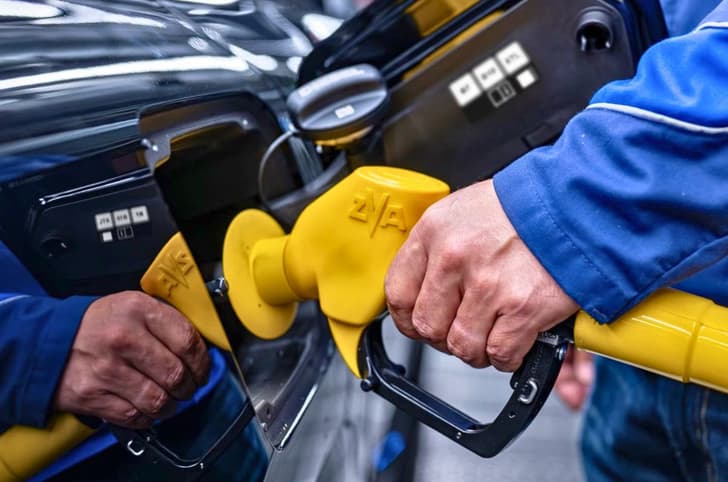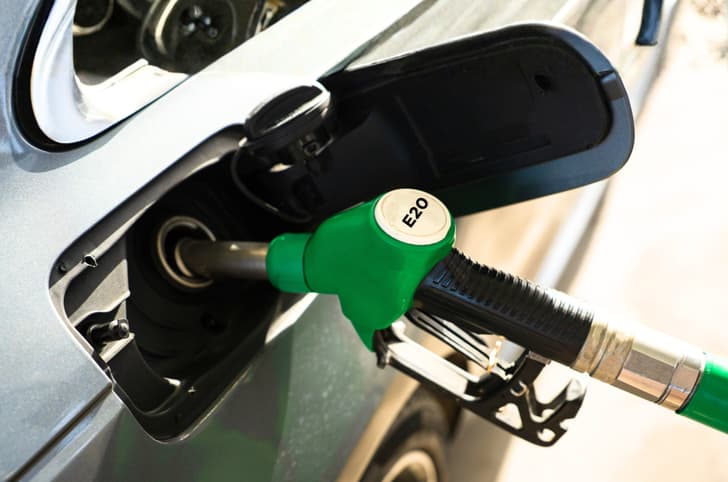
Amidst ongoing backlash and discontent surrounding E20 fuel, a 2021 research study conducted by ARAI that highlighted the impact of E20 on metals and non-metals used in fuel-system components, has resurfaced. The research paper noted that while metals and metal coatings had no issues with E20, some plastic and rubber components did experience some deterioration over a prolonged period.
How was the study conducted and what were the findings?
The study evaluated 8 metals, 6 elastomers and 4 plastics used in various fuel-system components, where all materials were subjected to laboratory immersion for a specific duration at a prescribed temperature.
The study was conducted with E20 as test fuel and E10 as a baseline fuel for comparative assessment. The impact of E20 on metals was evaluated through calculation of corrosion rates based on data obtained for change in mass post-immersion in above fuels. Similarly, impact on elastomers and plastics was evaluated through observed changes in properties like mass, volume, tensile strength, elongation, impact strength and hardness.
The study noted that, “Impact of E20 on metals tested was found to be insignificant based on the corrosion rates.” However, the report also added, “Impact of E20 on NBR-PVC and Epichlorohydrin was more as compared to commercial gasoline. Impact of E20 on tensile strength and volume change properties of PA66 was found to be more than commercial gasoline.”
For the uninitiated, materials such as NBR/PVC blend, Epichlorohydrin and PA66 are used in fuel-system components such as gaskets, seals, O-rings, pipes and hoses.
A NITI Aayog report on India’s roadmap for ethanol blending published in June 2021 further corroborated the ARAI report, even shedding some light on the potential drop in fuel efficiency. “In the vehicle level studies, fuel economy decreased up to 6 percent (depending on the vehicle type) on an average basis,” said the NITI Aayog report.
No abnormal wear or deposits observed
Recently, several people have raised concerns on social media platforms citing E20 as the root cause behind any mechanical failure, depositions or premature rusting. However, currently there is no conclusive evidence to prove the same, with Toyota even refuting such a claim by an Innova Hycross owner, stating that the engine trouble was “not related to E20 fuel usage, but caused by contaminated fuel.”
In its June 2021 report, too, NITI Aayog didn’t observe any damage to non-plastic or elastomer components. “The test vehicles passed startability and drivability tests in hot and cold conditions with E0 and E20 test fuels. In all the cases, there was no severe malfunction or stall observed at any stage of vehicle operation. No abnormal wear of engine components, or deposits, or deterioration of engine oils was observed after the on-road mileage accumulation trials,” claimed the report.
Should you be concerned?
All new vehicles manufactured from April-2023 are already E20-material compliant (with some additional headroom for tolerance against even higher ethanol blends), so if you own a relatively new car, there’s no reason to worry. However, the concern primarily surrounds older vehicles which aren’t categorically E20-compliant. Damage to rubber and plastic components in fuel-systems can be relatively easily fixed through ethanol upgrade kits. However, no manufacturer has formally made such upgrade kits available yet, although they can be purchased from third-party vendors. Still, the cost has to be borne by the vehicle owner.
Yet another concern is if the government further increases the level of ethanol beyond E20, as the BIS recently notified standards for E22, E25, E27 and E30. ARAI has also been tasked with carrying out a study on the impact of E25 on existing E20- and E10-compliant vehicles. While newer vehicles may not be severely impacted with a certain amount of margin built in, non E20-compliant vehicles could experience further deterioration to fuel-systems as well as efficiency.
It’s also worrying that the government is not willing to acknowledge the complaints of regular motorists, and even refuting findings previously published by its own institutions. In a recent post on X, the Ministry of Heavy Industries stated, “Extensive trials led by ARAI covering 40,000 km in passenger cars and 20,000 km in two-wheelers found no significant adverse impact on engine performance with E20 fuel.”
 Autocar India News Desk
 Dhruv Dhaka

 Uday Singh