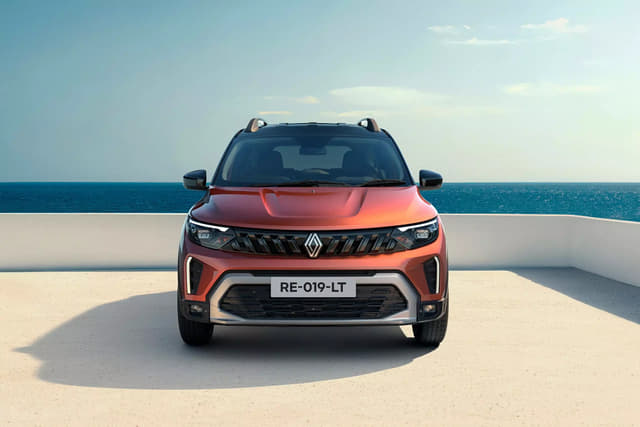
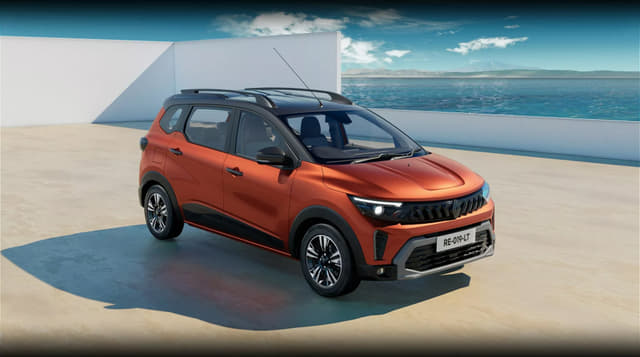
Renault Petrol Cars in India (6)
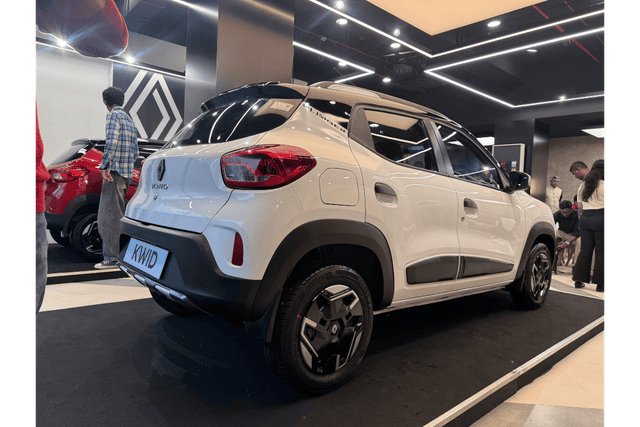
Discover the best Renault Petrol Cars. Our comprehensive guide covers detailed specifications, expert reviews, pricing information, and buying advice for Renault Petrol Cars. Find the perfect cars that matches your requirements and budget.


Still have more question?
Get answers from Autocar experts and owners
- 9,000+discussions
- 20,000+users online
- 10,000+members
Trending Questions on Renault Cars - Answered by Autocar Experts
Hello! I am currently driving a Volkswagen Virtus 1.5 GT and am considering upgrading to the new Renault Duster. I am confused between the 1.3-litre Turbo DCT and the Hybrid variants, both in their top-spec trims. Since most of my driving is within the city, I am inclined toward the Hybrid for its fuel efficiency and smoother city driving experience. However, I am concerned that the Hybrid misses out on several important features available in the Turbo DCT, such as ADAS, a 360-degree camera, parking sensors, and other convenience features. Considering that I am upgrading from a Virtus GT, which variant would you recommend? Should I prioritise the hybrid powertrain and fuel efficiency, or opt for the Turbo DCT for its performance and additional features? I would love to hear your suggestions.
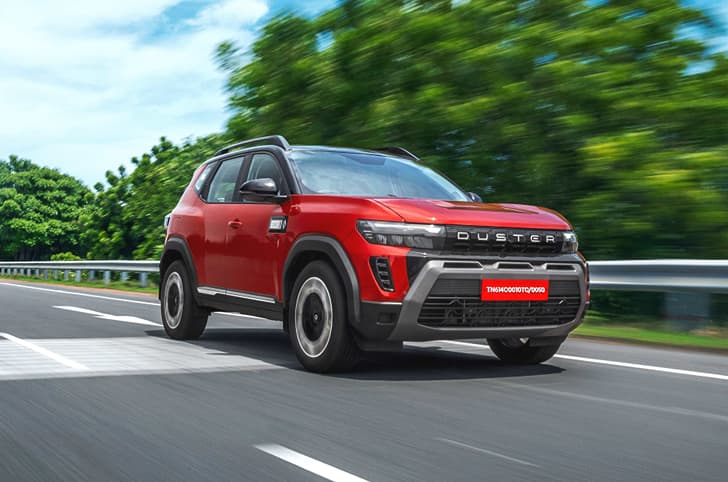
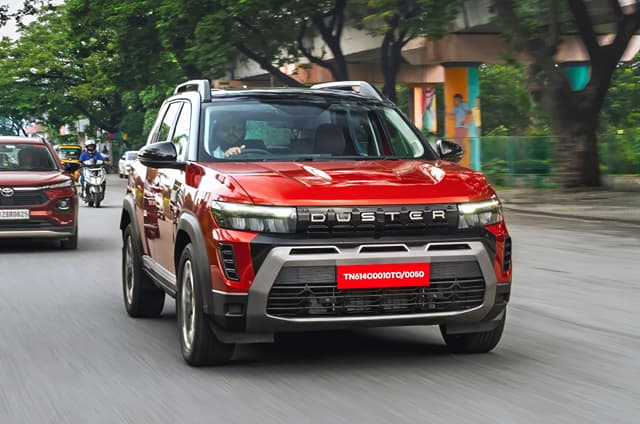
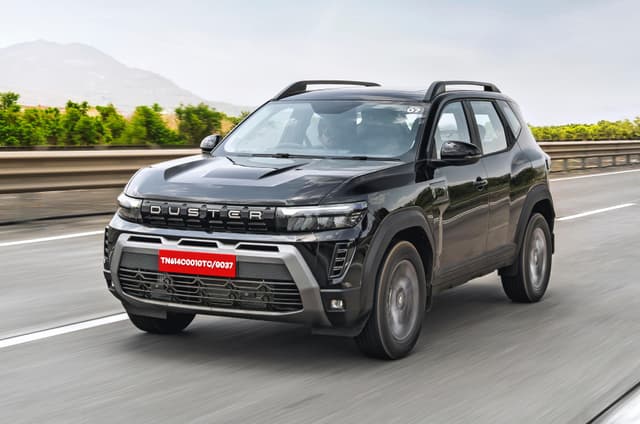
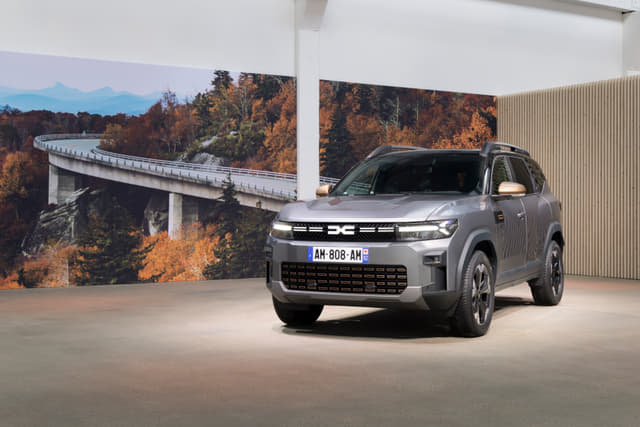
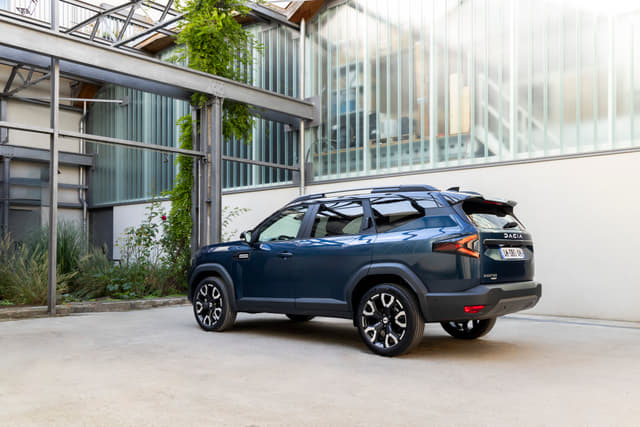
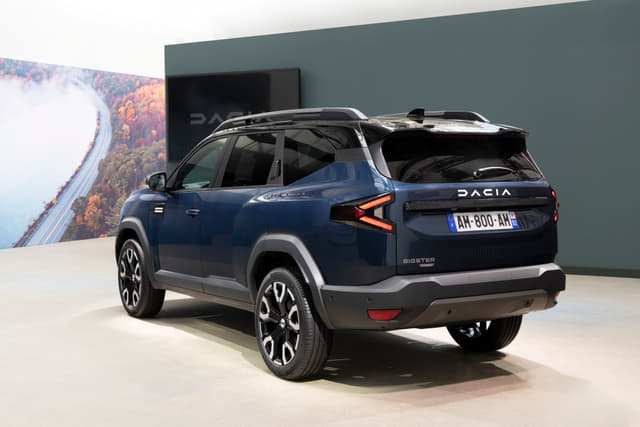
First things first, you aren't alone in your dilemma. Many prospective Renault Duster buyers who held back on their purchase, waiting for the arrival of the Hybrid, find themselves in the same situation. It's a pity that Renault hasn't packaged in some key features offered on the fully loaded Turbo DCT on the fully-loaded Hybrid. As we understand, this was done to keep pricing competitive. While Renault has not confirmed this, we have learnt that certain features, such as the 360-degree camera and auto-dimming mirror, will be introduced on the Hybrid. However, there is no official timeline for the same. As a powertrain the Renault Duster's hybrid system is easily among the best out there. The engine works beautifully with the two electric motors to deliver an involving drive experience that you don't usually get in strong hybrid cars. Yes, the Turbo DCT is fun in its own way but also comes with the penalty of high fuel consumption when you drive with enthusiasm. That is not a complaint you'd have on the hybrid that can deliver exceptional real-world numbers.Were it a choice to make for us, we'd go for the hybrid and its superior powertrain and compromise on a few features.
Hi, I currently own a Renault Kiger, which I am considering replacing due to its extremely poor fuel efficiency of around 6kpl during short 5km trips in Pune city. My combined city and highway running is approximately 12,000km per year. Would you recommend switching to an EV, a strong hybrid or sticking with a conventional petrol vehicle? My budget is Rs 22 lakh, and I am also a driving enthusiast. Do you think the upcoming Kia Seltos hybrid, if launched in India, could fall within this price range? If a conventional petrol SUV makes more sense, which models would you recommend, considering long-term reliability as well as driving pleasure? I like the Honda Elevate for its reliability, but I am looking for something better in terms of driving dynamics. Any suggestions would be appreciated. Thanks in advance!
You are likely to get low, single-digit fuel efficiency from short city runs, irrespective of the car you opt for. That's because your engine takes some time to reach optimal operating temperatures, and if your journeys are very short, your engine might not perform efficiently. This holds true for strong hybrid also, although you might almost never witness single digit fuel efficiency numbers.Since you're a driving enthusiast, we'll recommend you consider the Renault Duster 1.8 Hybrid for its excellent driving dynamics and its strong yet efficient powertrain. The upcoming Kia Seltos hyrbid is still some time away, although if you're in no hurry to buy a car, it could be worth waiting for.Since you mentioned that you're open to EVs, consider a fun-to-drive option such as the Vinfast VF7, only if you have reliable home charging. The VF7's excellent driving manners and strong acceleration are certainly likely to appeal to you. The only downside being Vinfast's network which isn't very widespread, and parts availability (in case of any untoward incident) could cause unexpected delays.
I am planning to upgrade from Skoda Rapid Monte Carlo 1.0 AT (2020) to a family-friendly SUV. Considering the new Renault Duster Hybrid and Hyundai Creta IVT/Turbo Petrol. With ageing parents and a 9-month-old baby, my priorities are easy ingress and egress, spacious rear seats and good boot space. My annual running is around 5,000 km which mostly involves city driving. Which SUV would you recommend?
The Renault Duster (non-hybrid) has a large rear boot and the car is also newer and fun to drive, however your priorities of spacious rear seats and easy ingress/egress would be better met in the Creta and we would suggest the IVT as its smoother than the DCT autobox for everyday family use. Given that an all new Creta is around the corner you should bargain hard for a good deal and you could have a significantly lower purchase price too.
I currently own a 2019 Honda Amaze petrol manual, which has covered around 70,000 km. I genuinely enjoy the car, particularly the creamy smoothness, predictable low-end response and reliability of Honda's 1.2-litre, four-cylinder i-VTEC engine. I am now contemplating a change, and the Renault Triber Turbo has caught my attention because of its modular seating, practical cabin and features such as cruise control. However, I am torn about whether moving from the Amaze to the Triber Turbo would be a genuine upgrade or an ergonomic and mechanical compromise. I would appreciate some advice on what to expect in terms of engine refinement, drivability, comfort and overall ownership experience compared to my current car.
The Renault Triber Turbo is a worthwhile upgrade if you want more space, versatility and stronger performance, but it won't match the Honda Amaze's engine refinement. Its 1.0-litre, three-cylinder turbo petrol engine produces 100 hp and 180 Nm, and is significantly more capable than the Triber's naturally aspirated engine. It has a strong mid-range, pulls well even when fully loaded and feels much more comfortable at highway speeds. The suspension is also well sorted, with good high-speed composure and improved body control around bends.However, the engine has noticeable three-cylinder vibrations at idle, and its power delivery is less linear than the Amaze's naturally aspirated i-VTEC. You will also need to keep it above 2,000rpm to avoid the off-boost hesitation. The five speed manual gearbox is notchy, while road and wind noise are quite noticeable at highway speeds. The Triber's front seats could also do with better lumbar and thigh support.We would look at the Triber Turbo as an upgrade in practicality and performance, rather than refinement or overall driving experience.
Hi, I’ve been driving a 2011 Ford Fiesta Classic 1.4 turbo-diesel as my primary car in Northeast India (Assam, Meghalaya, Arunachal Pradesh and elsewhere) through plains, hills, mud, snow and floods, often fully loaded with four people. I recently renewed its lapsed 15-year registration for another five years. The car is maintained in pristine condition, and I love its low-end torque and excellent fuel efficiency. However, it’s time to switch to a petrol car, and I need advice on a new car for the same driving conditions within a budget of Rs 17-18 lakh. Should I choose a turbo-petrol or a naturally aspirated engine to get similar driving dynamics, given that the terrain I drive on won’t change? I prefer a manual gearbox, especially for the hills, and I understand that petrol engines are thirstier. I’m nearly 48 and plan to keep the car for a long time, as I did with the Ford. Please leave out Hyundai, Kia and Maruti Suzuki, as I’ve had my fill of them. Thanks in advance. Dr
Given your experience with the 1.4-litre diesel Ford Fiesta, we would suggest looking at the Mahindra XUV 3XO T-GDi manual first, followed by the Renault Duster 1.3 Turbo manual. Both offer strong performance, which will be important when driving through the hills of the North East with four passengers and luggage.The XUV 3XO's 1.2-litre turbo-petrol engine produces 131hp with good low- and mid-range response. It is compact, easy to manoeuvre and offers a comfortable ride. The Duster has a comfortable ride and a more engaging chassis, while its 163hp, 280Nm 1.3-litre turbo-petrol engine offers considerably stronger performance. However, the Duster's tendency to stall when moving off from a standstill can be frustrating, particularly on steep inclines, so we would place it second.
Last Updated on: 22 Nov 2026