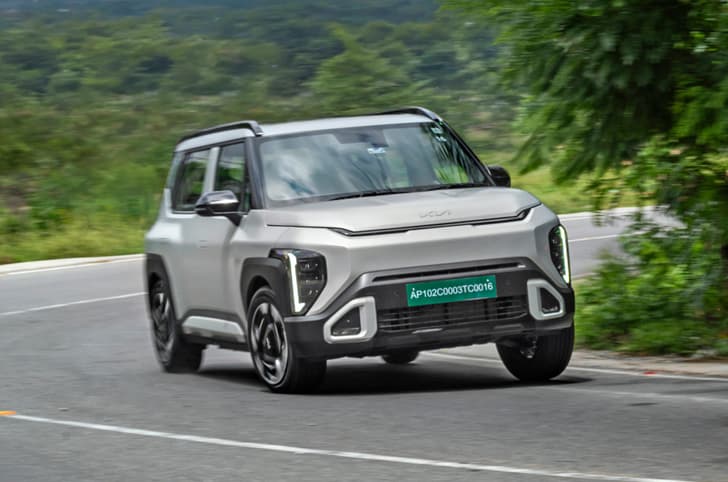
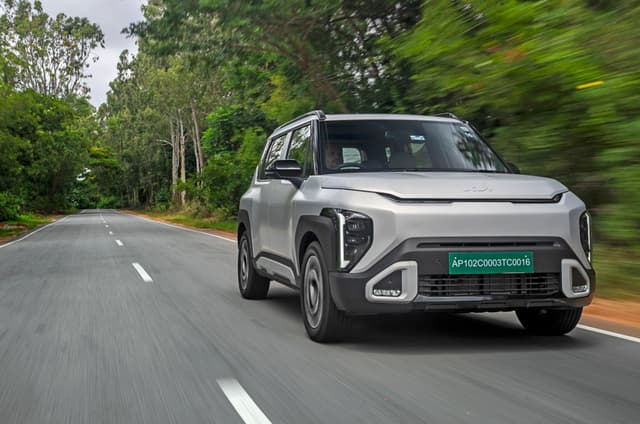
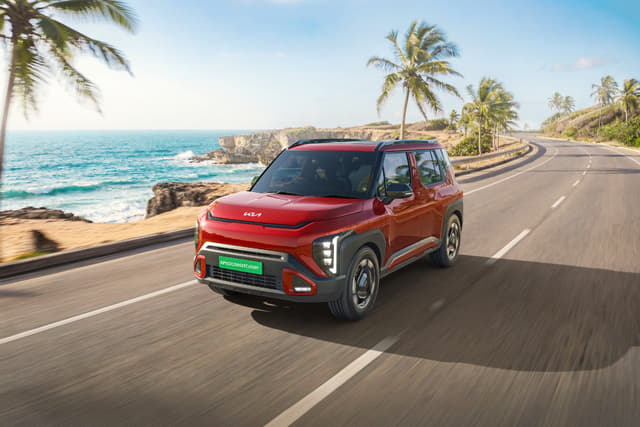
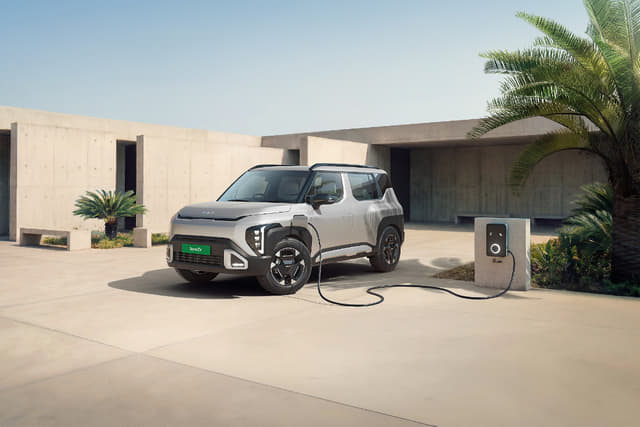
Kia Electric Cars in India (4)
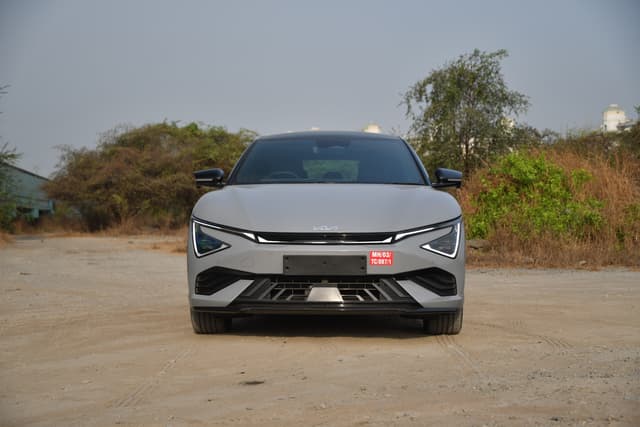
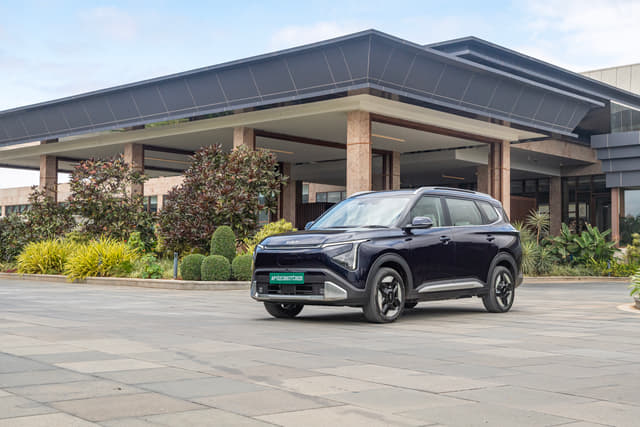
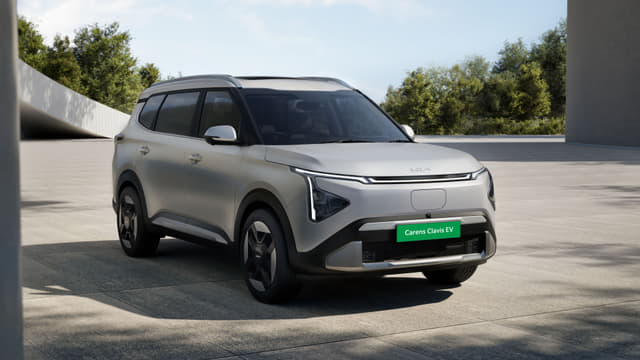
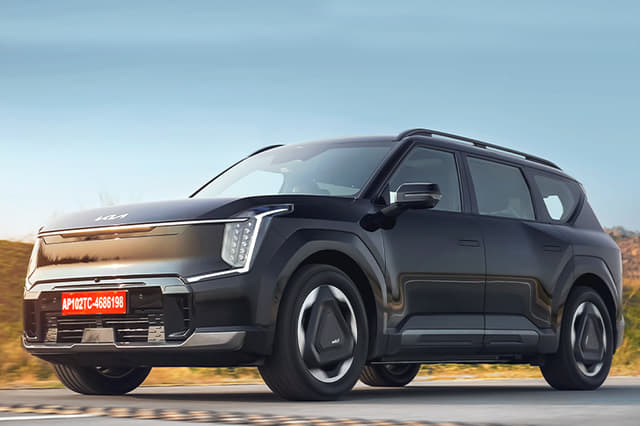
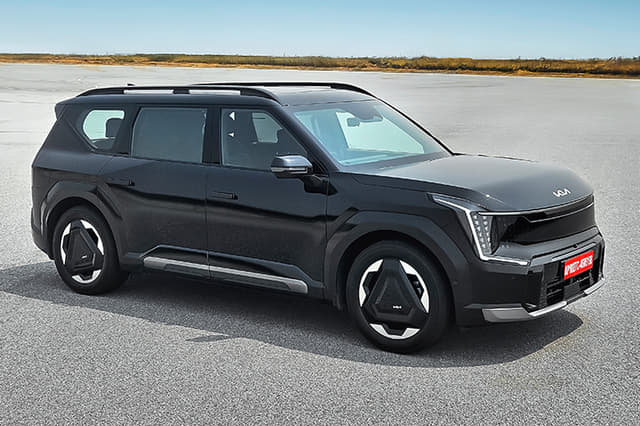
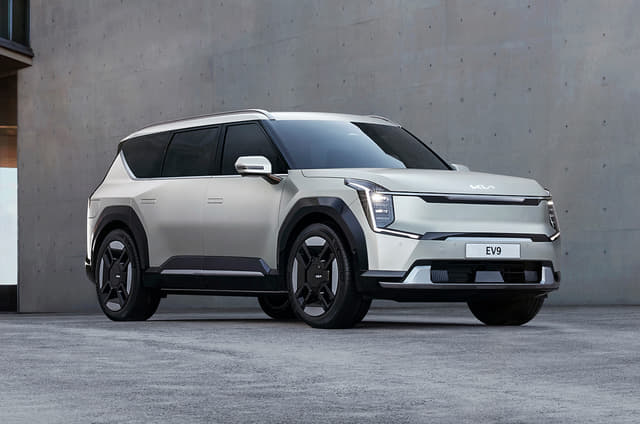
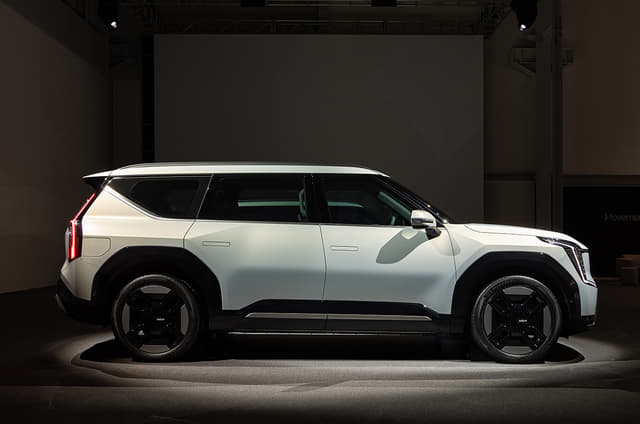
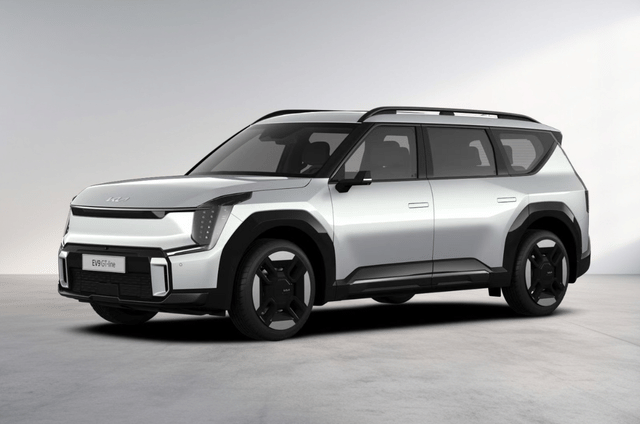
As of now, there are 4 Kia electric cars in India, out of which 3 are available for sale, and 1 is upcoming. The Kia electric car price starts from ₹17.99 lakh and goes up to ₹1.30 crore (ex-showroom). The most affordable electric car by Kia is the Carens Clavis EV, while the EV9 is the most expensive Kia electric car as of October 2026.
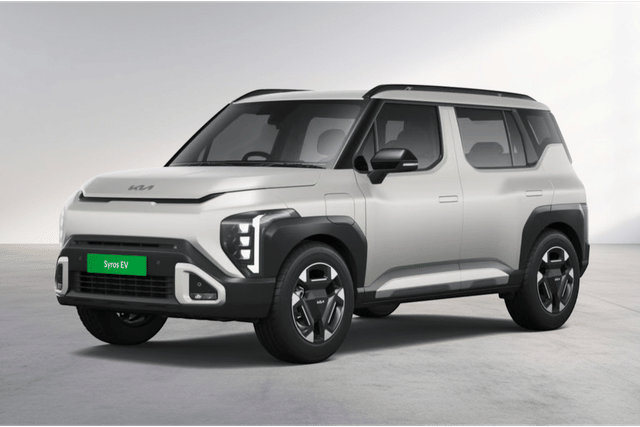
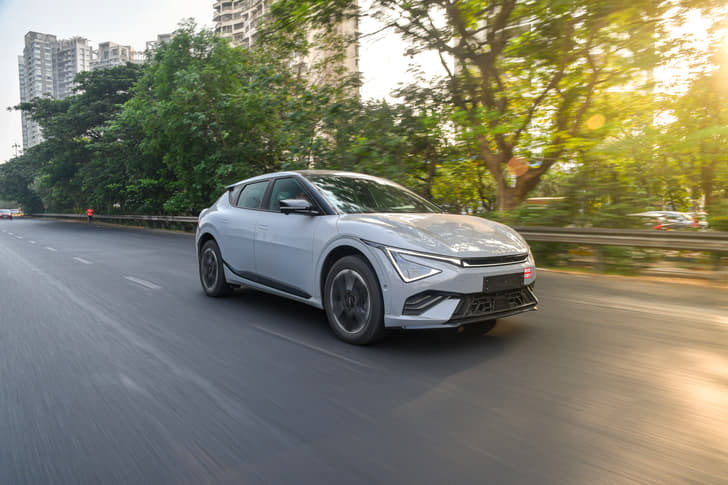
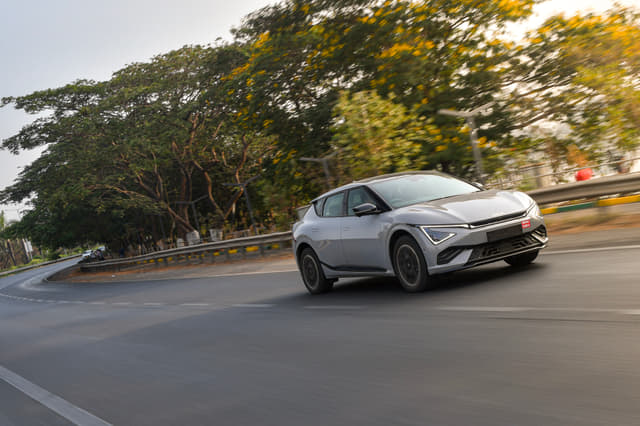
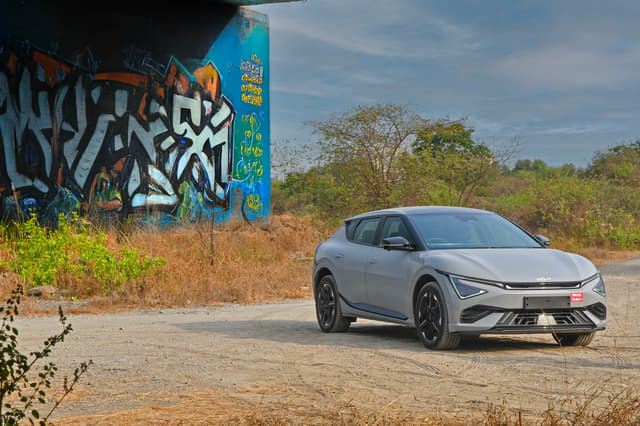
The current Kia cars electric lineup on sale includes the Carens Clavis EV, EV6, and EV9. Meanwhile, the Syros EV is going to be Kia new electric car and is expected to launch in India by early 2026.
Kia Electric Car Price List - October 2026
View the latest Kia electric car price in the table below:
Kia Electric Car | Price (Ex-showroom) |
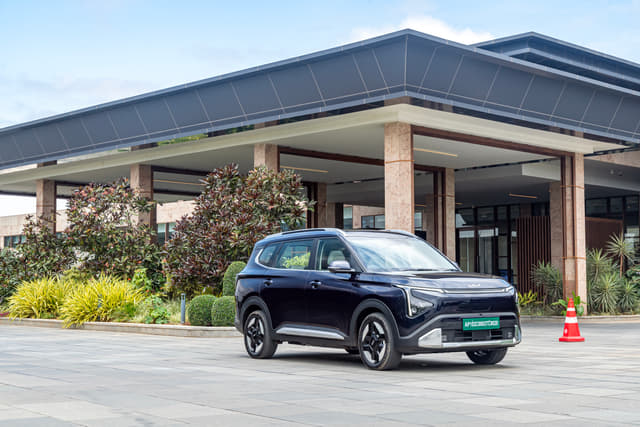
Kia Carens Clavis EV | ₹17.99 lakh - ₹24.49 lakh |
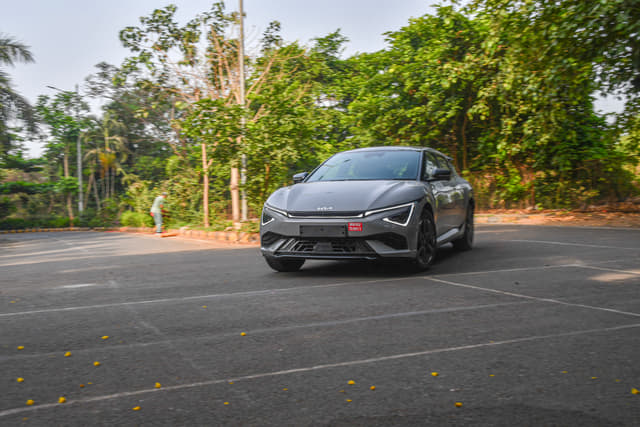
Kia EV6 | ₹65.97 lakh |
Kia EV9 | ₹1.30 crore |
Kia Syros EV (Upcoming) | ₹15.00 lakh - ₹18.00 lakh (Estimated) |


Kia Electric Cars - FAQs
As of now, there are 4 Kia electric cars in India, out of which 3 are on sale, and 1 is upcoming.
The Kia electric car price in India starts from ₹17.99 lakh and goes up to ₹1.30 crore (ex-showroom).
The Kia Carens Clavis EV is the most affordable electric car by Kia in India.
The Kia EV9 is the most expensive Kia electric car in India.
The Kia electric cars on sale in India include the Carens Clavis EV, EV6, and EV9.
The Kia Syros EV is the upcoming Kia electric car, expected to launch in India by early 2026.
Kia electric cars are available in major Indian cities, though availability may vary depending on the model and dealership network.
Yes, all Kia electric cars are offered with automatic transmissions as standard.
Trending Questions on Kia Cars - Answered by Autocar Experts
Hi Autocar team, I am planning to buy a new car for daily use, as we already have a Maruti Suzuki Ciaz at home. I drive at least 15,000km a year, and probably closer to 20,000km, so I initially considered diesel options such as the Mahindra XUV 3XO MX2 diesel manual. The Kia Syros EV is also on my shortlist. The on-road price of the 3XO is around Rs 11 lakh, while the Syros EV costs about Rs 15 lakh, a difference of Rs 4 lakh. I estimate annual fuel costs of around Rs 1.09 lakh for the diesel and electricity costs of Rs 30,000 for the EV, with a payback period of roughly 4.5-5 years after accounting for lower servicing costs. I can charge at home daily, rarely travel more than 300km in one trip, and can use the Ciaz for longer journeys. I am also considering installing a home solar system for around Rs 2.25 lakh. Should I buy the Syros EV, stick with the 3XO diesel or wait for the upcoming Hyundai compact EV? What should I consider regarding battery warranty, resale value, real-world range and service experience?
Go for the Kia Syros EV. With your running of 20,000 km a year, home charging and a solar plant planned, the maths works in your favour. Your payback calculation of 4.5-5 years is realistic, and with solar, your running costs drop even further. The Syros EV is a well-rounded EV with a comfortable ride, good space and a smooth powertrain. Your usage pattern is ideal for an EV: daily charging at home, predictable running and the Ciaz available for longer trips.The Mahindra XUV 3XO diesel is a strong product and makes sense for high-mileage highway users, but your usage is city-heavy, and the EV will be far cheaper to run. The Hyundai compact EV is worth waiting for only if you are not in a hurry, but the Syros EV is already a very competent product. The only thing to keep in mind is resale value, which is still evolving for electric cars in India. But with your running and ownership period, the savings will more than offset that. Go for the Syros EV and enjoy the savings.
Hi Autocar Team, I am planning to buy an electric vehicle for my daily commute of approximately 80 km in Hyderabad, with a budget of up to Rs. 20 lakh. My key priorities are spacious interiors, strong safety features, good build quality and overall reliability. Considering my daily usage, would opting for a Battery-as-a-Service (BaaS) model be financially beneficial in the long run? Please suggest suitable EV options that meet my requirements.
For your 80km daily commute in Hyderabad, the Kia Syros EV 51.4kWh is the variant to shortlist first, particularly if you want a spacious cabin, modern safety equipment and a manageable running cost within Rs 20 lakh. With home charging, your daily distance is well within its claimed 526km range, although real-world range will be lower.The Syros EV's biggest advantage is its flexible rear seat, with sliding, reclining and ventilated functions, making it practical for family use. Six airbags are standard, while higher variants add a 360-degree camera and Level 2 ADAS. The drawback is that the EV has not yet received its own official crash test rating, so don't assume the ICE Syros's five-star rating automatically applies to it.BaaS lowers the upfront cost, but at 80km a day, the battery charge of Rs 3.30 per kilometre adds up quickly. At 22 working days a month, that's about Rs 5,800 monthly before electricity. Choose the Syros EV 51.4kWh with the battery purchased outright if it fits your on road budget. Consider BaaS only if reducing the initial payment is more important than minimising long term cost.
Kindly suggest me a car under a budget of Rs. 15-16 lakh running of around 4000km per month. I am confused between EV or diesel. Also, please let me know which car is reliable for maintainence?
With 4,000km a month, your running is extremely high, so low running costs become the top priority. The question is, do you have reliable home charging. If the answer is yes, then an EV is your best bet, with running costs being around Re 1 per km.Within your Rs 16 lakh on-road budget your best options are the MG Windsor EV Excite 38kWh, Kia Syros EV HTK Plus 42kWh and Nexon EV Creative 45kWh. Out of these, the MG Windsor is the biggest car with the roomiest cabin and largest boot. With a 38kWh battery, its real-world range will be the lowest between 260-310km. The Kia Syros EV is a surprisingly spacious EV, with high quality interiors, a sophisticated ride-handling balance and smooth, zippy performance. Its motor is very efficient, hence you can expect 320-340km of range. If you don't mind the way it looks, this is an EV you must seriously consider.The Tata Nexon EV has the largest battery pack and its real-world range of around 350km is the most too. It has been around for a while, and over the years, Tata has polished it and ironed out most inconsistencies, making it a mature offering.
I have a budget of around Rs 14-15 lakh and am considering the Kia Syros EV with a 42kWh battery and the Tata Nexon EV Creative with a 45kWh battery. Which is the better choice? I am particularly concerned about the NMC battery chemistry in the Syros EV.
The Kia Syros EV 42kWh is the one to go for. It's significantly more spacious than the Tata Nexon EV, and overall quality and reliability are a clear step above the Nexon's. In our experience, Hyundai and Kia's electric cars are also the most efficient, so you'll manage a crucial bit more range on the Syros too. The NMC battery pack should not be a deal breaker by any means. While LFP is theoretically better suited to hotter climates as we have in India, real-world performance does not suggest one chemistry is better than the other. Car makers develop vehicles with a full life cycle in mind, and the long warranties on EV batteries should allay any fears you may have.
I'm planning to buy a new car with an on-road budget of up to Rs. 30 lakh in India. I want a car that offers excellent comfort, low running costs, and a relaxed driving experience for my daily commute. 1. My Driving Profile -Average monthly driving: 2,500 km -Driving conditions: 60% suburban roads and Highway and 40% city traffic -Long-distance trips: One or two trips per month -Current car: 2017 Maruti Suzuki Baleno, manual transmission 2. Comfort and Ergonomics I'm approximately 6 feet tall and currently experience fatigue and leg pain during my daily commute in my manual Baleno. My top priority is to find a car with: -An automatic transmission for easier driving, especially in traffic. -Excellent front-seat comfort and adequate legroom. -Good driving posture, lumbar support, and adjustable seating. -A comfortable suspension setup for daily commuting and long journeys. -Low cabin noise and minimal driver fatigue. 3. Running Costs and Powertrain -Low running costs and excellent overall energy efficiency are important. -I have charging facilities available at home, so I'm open to considering an electric vehicle (EV). -I'm also willing to consider petrol, diesel, or hybrid vehicles if they offer better overall value. -I want to compare energy or fuel costs, maintenance, insurance, and long-term ownership costs. 4. Family Requirements -The car will primarily be used for my daily commute. My family occasionally travels with me, so rear-seat comfort is also important. -I'm open to both 5-seater and 7-seater options, provided the car meets my comfort and cost requirements. 5. Budget and Ownership -Maximum on-road budget: Rs. 30 lakh -I want a reliable car that offers good value for money over long-term ownership. -I plan to use the car for several years, so durability, battery longevity (for EVs), resale value, and total cost of ownership matter. Please suggest a car.
Based on your requirements, the Hyundai Creta Electric is a solid choice. With a 2,500 km monthly running and home charging available, an EV makes strong financial sense, and the Creta Electric stands out for its comfort, refinement and ease of ownership. The front seats are well-cushioned with good lumbar support, the driving position is comfortable for taller drivers, and the suspension is well-tuned for both city and highway use. The cabin is quiet, the ride is comfortable, and the overall driving experience is relaxed and effortless, which will significantly reduce fatigue compared to your Baleno. Running costs are low, maintenance is minimal, and Hyundai's service network is strong. The Creta also offers a spacious rear seat and a practical boot, making it suitable for occasional family trips. If you prefer a petrol option, the Kia Seltos 1.5 IVT automatic is the best alternative. It offers excellent seat comfort, an efficient engine, and a comfortable ride, but the Creta Electric is the better long-term ownership proposition given your usage pattern.
Last Updated on: 26 Oct 2026