Tata Motors and the Volkswagen (VW) Group, along with its Czech brand Skoda, signed a Memorandum of Understanding at the Geneva motor show in March 2017 to explore a long-term cooperation for joint product development. The alliance was to be centred on the development of a common platform that would spawn bespoke products for the individual brands.
It was initially agreed, after much debate between the two partners, that Tata’s next-gen Advanced Modular Platform (AMP) which offers a significant cost advantage over the VW Group’s MQB-A platform, would be used as the alliance’s common platform.
In the June 2017 issue of Autocar India magazine, we broke the news that these plans have hit a roadblock. According to sources working on this project, both VW and Skoda have become increasingly skeptical about the AMP platform, which is not proving to be as cost-effective as expected. Sources say that for VW and Skoda to jointly develop and adapt the AMP for its own ‘top hats’ could cost an estimated 140 million euros (around Rs 1,000 crore). Skoda engineers have convinced the top management that with such an investment, it’s possible to develop and localise the MQB-A platform for India.
The VW Group had already explored the possibility of bringing its MQB-A platform to India but this was working out to be too expensive for a price-sensitive market such as India. Currently for India, MQB-based products like the VW Tiguan, Skoda Octavia and Superb and the Audi A4 are all assembled locally from imported kits and with very little local content.
VW and Skoda’s high-volume cars are based on the now defunct PQ25 platform and, hence, to introduce a new range of products, the two VW Group brands may have no choice but to bite the bullet and invest in MQB. “In the long term, it is better to develop our own platform as that gives us control of our destiny,” says a VW Group source.
Moreover, there isn't much of an appetite for this cooperation from Tata Motors either. The board feels it would be better to deploy resources and energies towards reviving its ailing commercial vehicle business, company sources revealed. Tata Motors' market share in the CV segment has been plummeting and has hit an all-time low of 38.70 percent in May 2017.
However, Tata Motors is non-committal on the future of the joint cooperation. When contacted, a Tata Motors spokesperson said, "We are currently in the phase of evaluating the potential cooperation based on technical feasibility and adequate levels of synergies. We will communicate concrete details of the outcome at the right time. Till then, it will be premature to disclose any information or respond to such speculations."
A break-up of this joint cooperation could be a big setback for both companies. For VW and Skoda, it will mean going back to the drawing board to develop a new strategy and a fresh platform for India, which would lead to a delay of at least two years before all-new products can be launched. Already, VW India seems to have missed the boat with the all-new Polo, which made its international debut this month.
For Tata, the end of the alliance would mean developing the AMP on its own, without VW’s know-how. Also, going solo will result in ballooning costs, as Tata will not enjoy favourable economies of scale without volumes of VW and Skoda. In fact, the combined volumes from all the three brands for both domestic and global markets were estimated to be as much as 700,000 units per year.
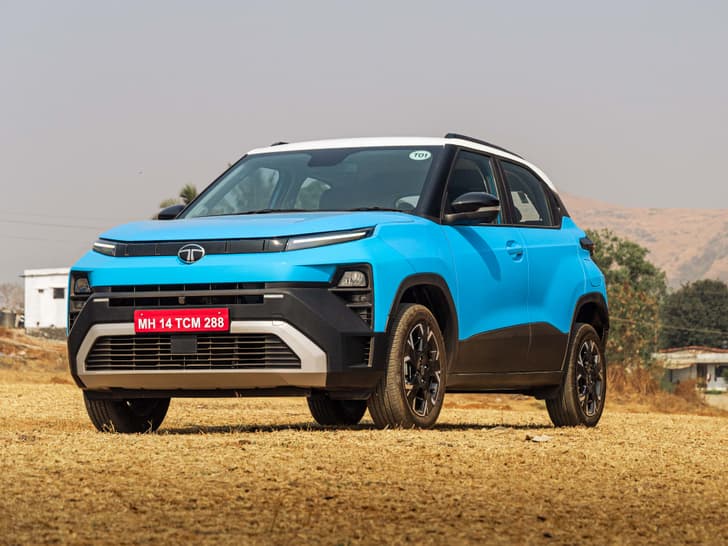
Tata’s first AMP-based car (X451), a premium hatchback, is due for launch in 2019. Future AMP-based models include a sedan crossover (X452) and a Creta-sized SUV but these projects are yet to be signed off by the board.
 Viraaj Bhatnagar
 Dipan Sur
 Dhruv Dhaka
 Saptarshi Mondal