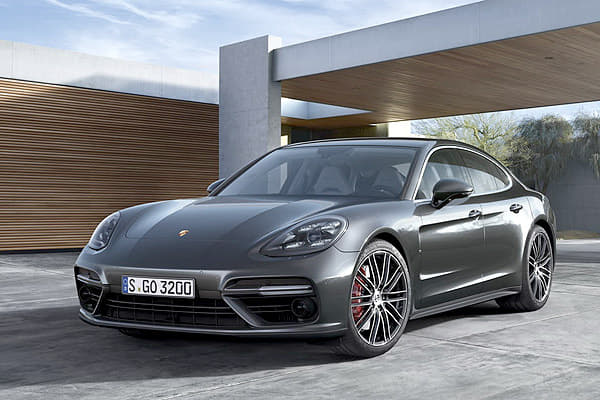
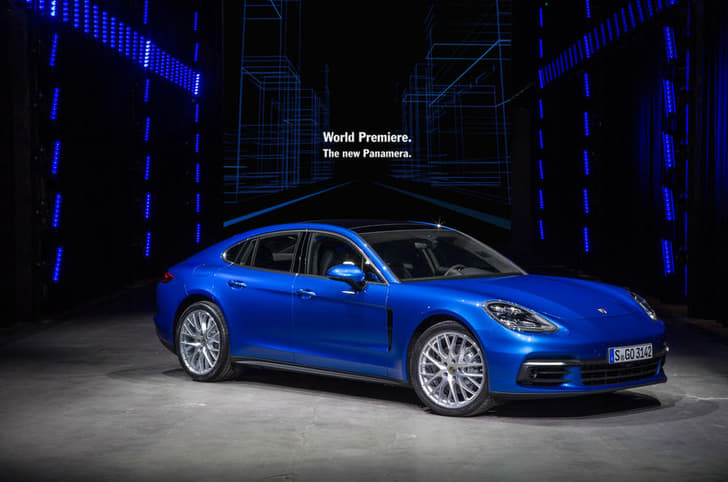
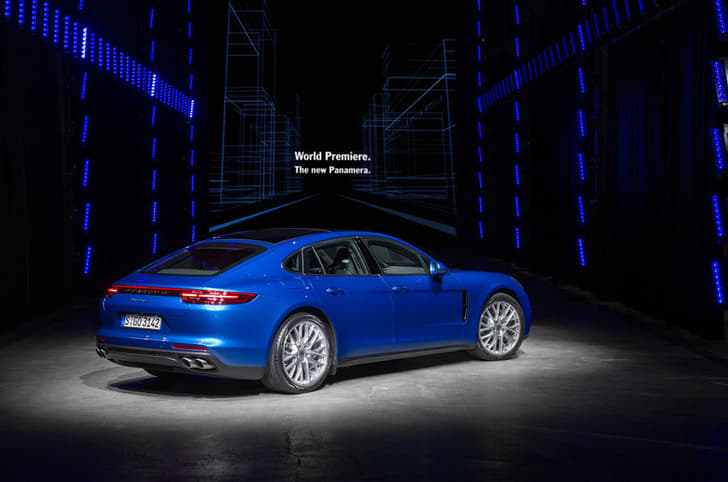
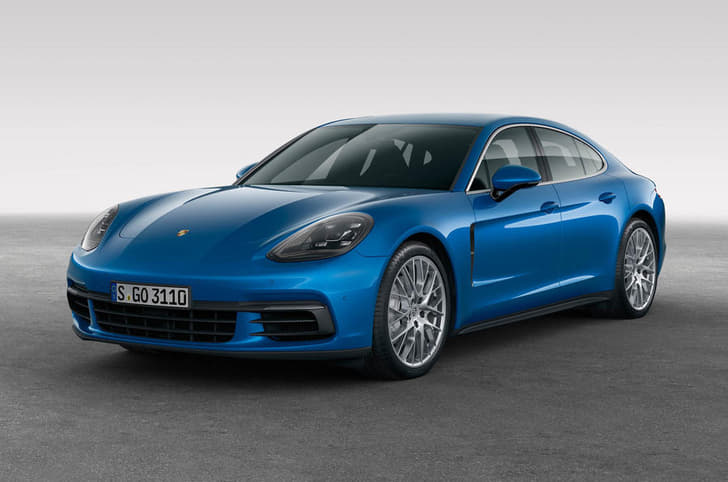
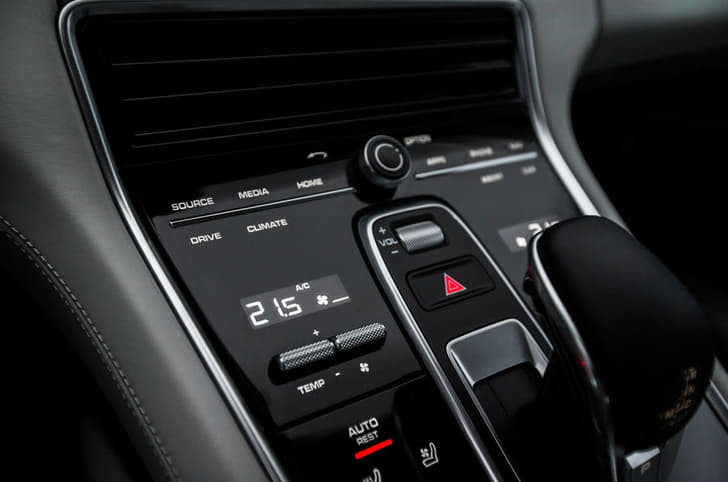
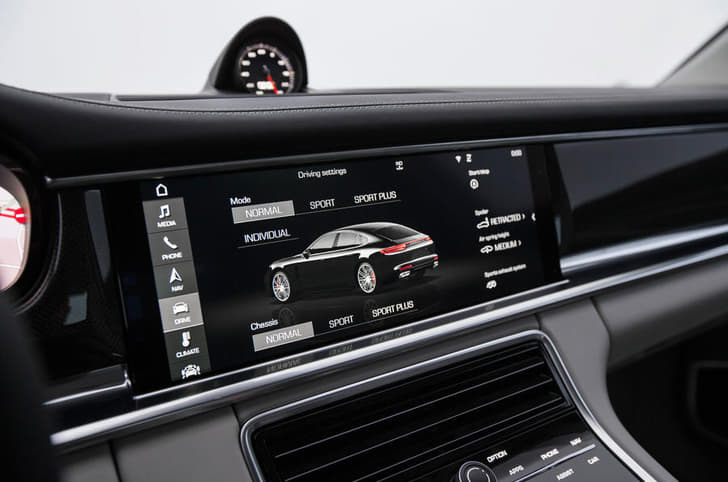
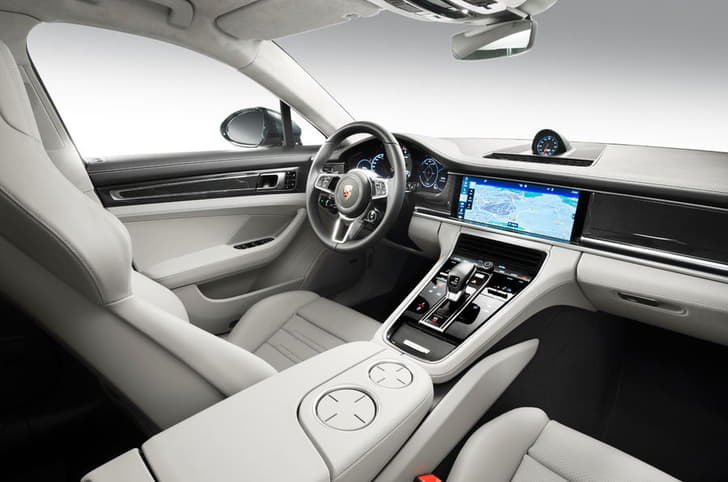
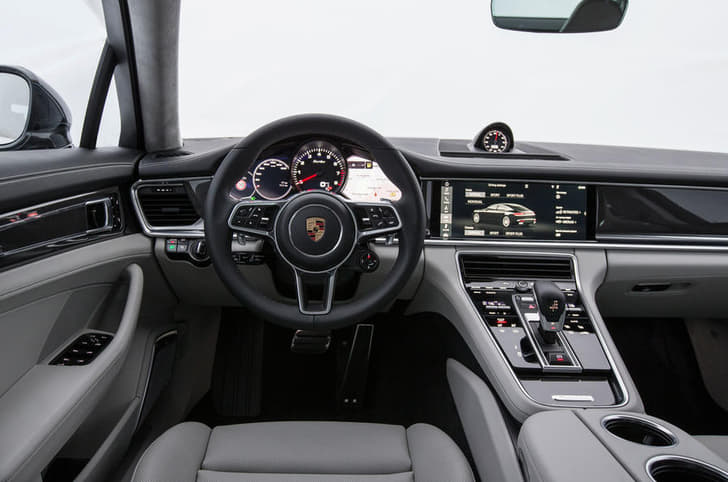
Porsche has unveiled the second-generation Panamera — a car that, it says, has been “redeveloped and realigned down to the last detail” in a renewed challenge to luxury rivals such as the soon-to-be-replaced Audi A8, latest BMW 7-series and newly updated Maserati Quattroporte.
The all-new liftback-style sedan replaces today’s seven-year-old model, which has contributed to record sales for the German carmaker in recent years. The initial line-up comprises three four-wheel-drive models: the Panamera 4S, Panamera 4S Diesel and Panamera Turbo.
Further derivatives are planned for early next year, including entry-level rear-wheel-drive variants in petrol and diesel guises, as well as successor models to today’s GTS and petrol-electric plug-in S Hybrid.
The new Panamera is based on the second incarnation of Porsche’s MSB (or modular standard architecture) platform. It contributes to a reduction in weight through the use of aluminium for
the main structure as well as the bonnet, wings, roof and tailgate.
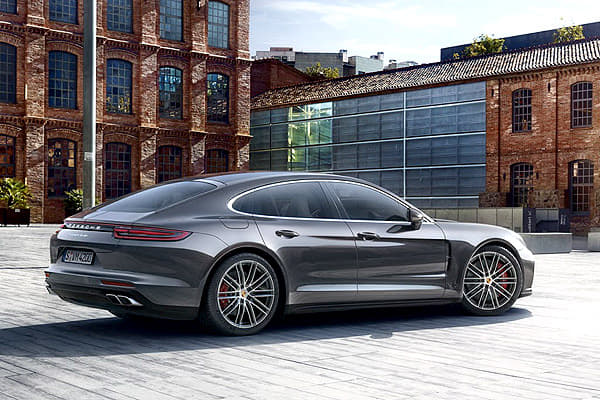
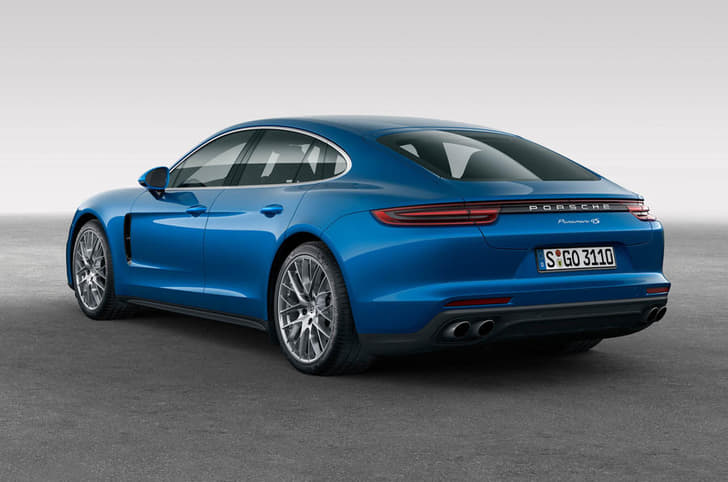
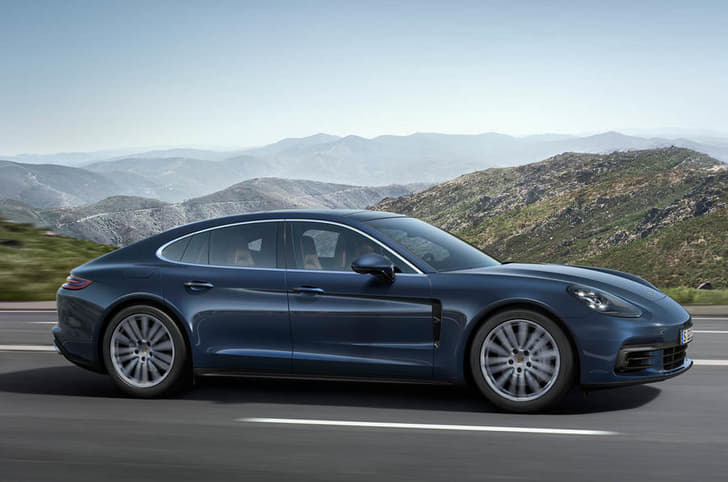
The new model marks a concerted effort by Porsche’s design team to provide the Panamera with some of the iconic stylistic cues of the 911, with tauter surfacing and more precise swage line detailing. Gone is the humpback look of the previous car and the new model is all the better for it.
Dimensionally, the new Panamera has put on 35mm in length (to 5,050mm), 5mm in width (1,935mm) and 5mm in height (1,423mm). This makes it 50mm shorter, 35mm wider and 67mm lower than the latest BMW 7-series.
A more curved roofline has reduced the height above the rear passenger compartment by 20mm, with the effect that the new Panamera looks lower and longer than before. This is further enhanced by a wheelbase that is 30mm longer, at 2,950mm.

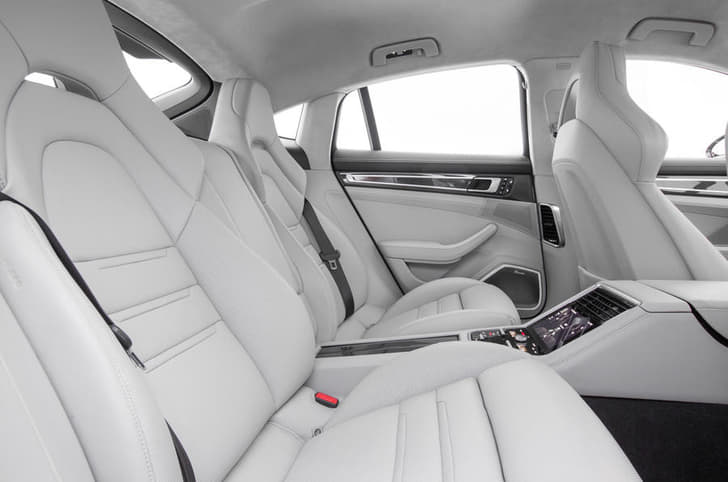
Despite the reduction in roof height at the back, Porsche says rear head room has increased. So has the boot capacity, up by 50 litres over the first-generation Panamera, at a nominal 495 litres. That extends to 1,304 litres when the standard 40/20/40 split rear seat is folded.
The new Panamera is the first recipient of Porsche’s new turbocharged 2.9-litre V6 and twin-turbocharged 4.0-litre V8 petrol engines. In a move that is becoming increasingly common among performance carmakers, the new V6 and V8 engines rely on twin-scroll, counter-rotating turbochargers that are mounted centrally within the space between the two cylinder banks. This ‘Hot-V’ layout, claims Porsche, provides shorter charging paths for added response and greater torque at lower engine speeds.
The new engines come mated to a new eight-speed dual-clutch automatic gearbox and a reworked version of the multi-plate-clutch four-wheel-drive system used by the Mk1 Panamera.
In the Panamera 4S, the new turbocharged 2.9-litre V6 delivers 440hp and 550Nm of torque— sufficient for the car to hit 100kph from rest in 4.2sec (when equipped with the Sport Chrono package) and reach a top speed of 290kph.
The new turbocharged 4.0-litre V8 in the new Panamera Turbo develops 550hp and 770Nm of torque. When the car is fitted with the Sport Chrono package, it has an official 0-100kph time of 3.6sec, beating its predecessor by 0.5sec and delivering the same 305kph top speed.
 Dipan Sur
 Dhruv Dhaka

 Viraaj Bhatnagar