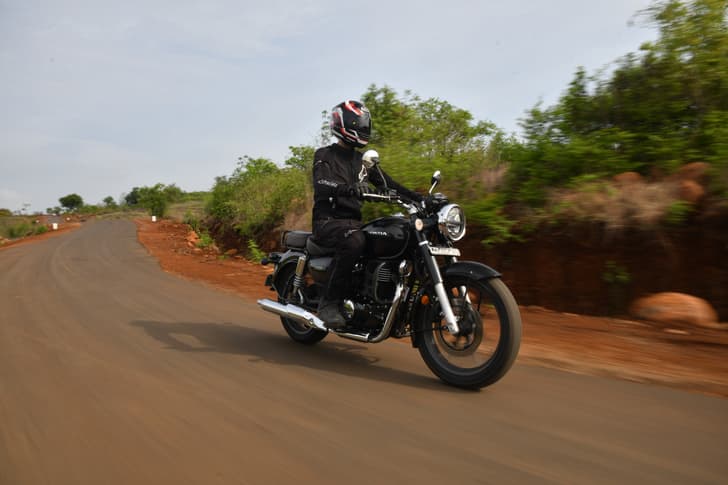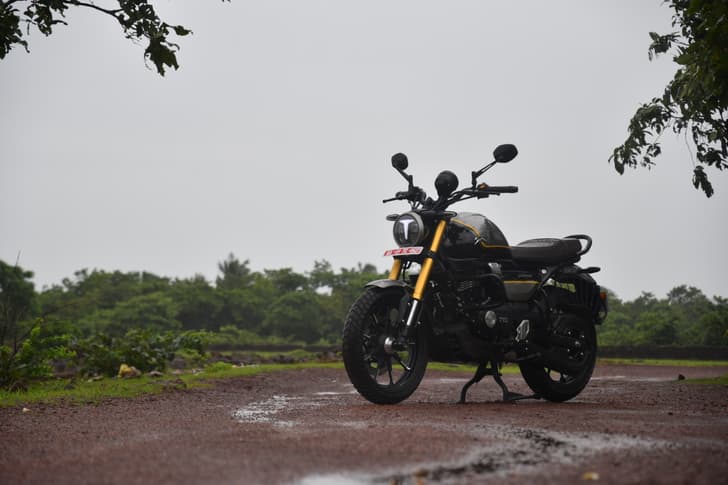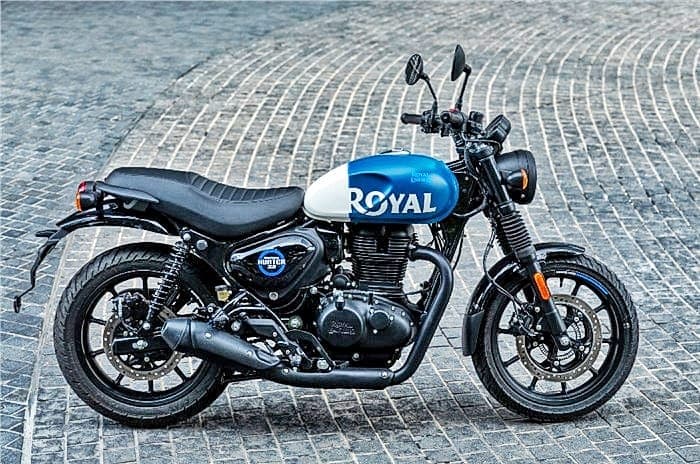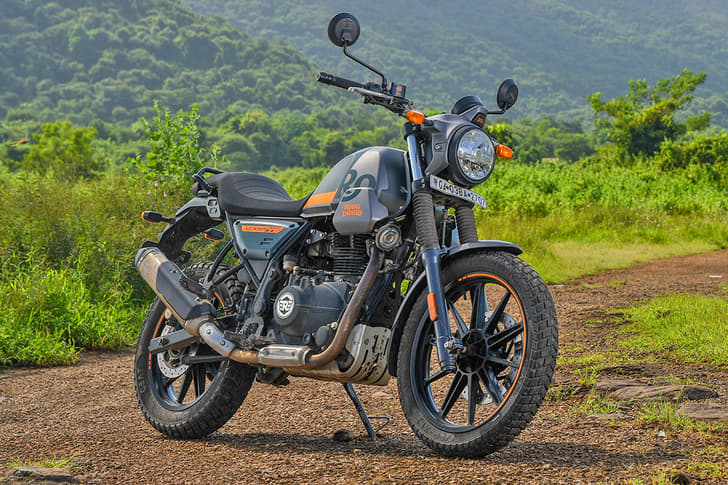

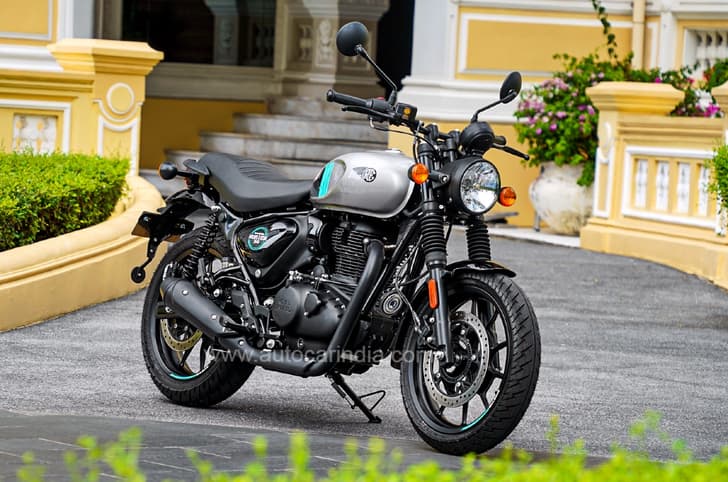
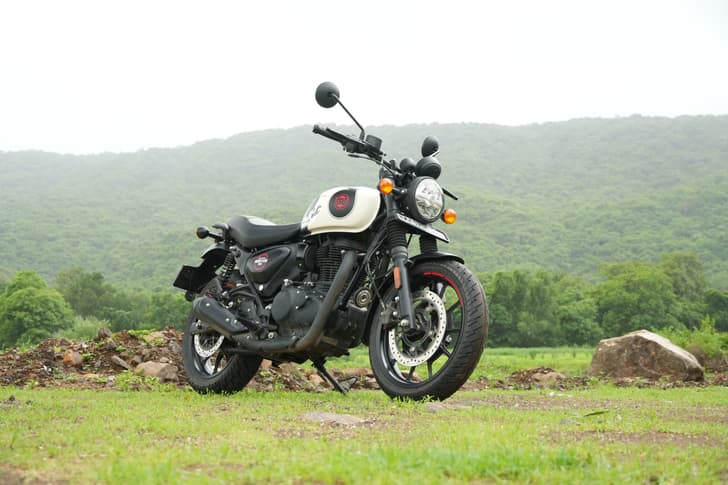
Royal Enfield has finally taken the wraps off its newest model, the Hunter 350, and launched it in two variants. Here are five key things to know about the neo-retro roadster.
RE Hunter 350: New J-platform engine
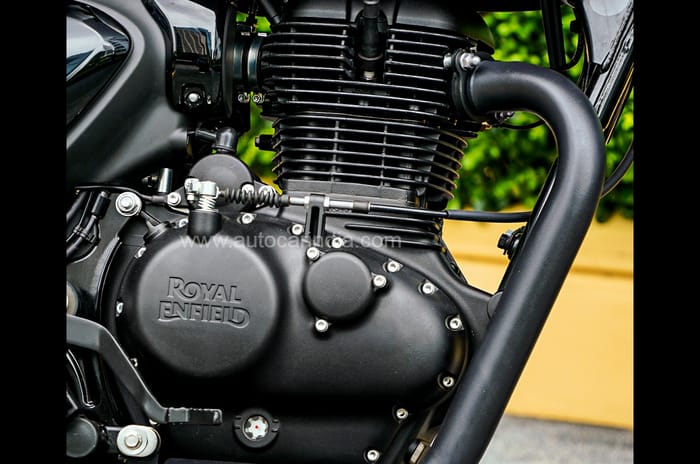
The Hunter 350 gets the J-platform engine from RE, also found in its siblings, the Meteor 350 and Classic 350. The 349cc, 2-valve, air-cooled, single-cylinder engine produces the same 20.2hp at 6,100rpm and 27Nm at 4,000rpm as it does in the other models. However, RE has tweaked the fuel and ignition maps to help it better suit this bike’s character, and you should expect punchier, sharper throttle response. In our experience with this motor, we have found it to be characterful and quite refined with only mild vibrations creeping in at the upper echelon of its rev range.
RE Hunter 350: Underpinnings
The Hunter 350 tips the scales at a considerably lower figure than its stablemates and this is down to new components bespoke to it. RE says weight has been saved primarily in areas like the chassis, exhaust system, wheels and bodywork. While both variants come with a 300mm front disc, the lower-spec Retro comes with a drum brake at the rear in contrast to the 240mm rear disc on the Metro.
Both versions roll on 17-inch rims, construction and tyre sizes are different. The Retro runs on tubed wire-spoke wheels with a 100/80-17 (front) and 120/80-17 (rear) set-up. The Metro, meanwhile, runs on cast alloy rims, shod with tubeless CEAT Zoom XL tyres, with sizes of 110/70-17(front) and 140/70-17(rear).
RE Hunter 350: Features
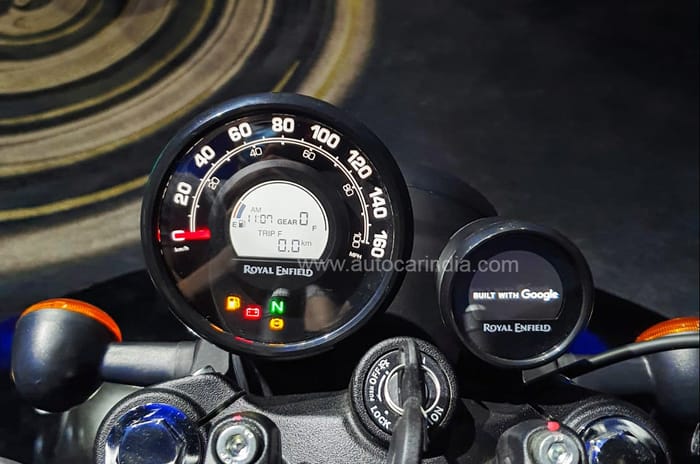
Features differ depending on the variants you select, with the entry-level Retro getting less equipment as a result of the lower price, while the Metro variant offers you more kit and features. The display on the Retro is more basic compared to the unit on the Metro (which is borrowed from the Scram and Meteor), while the Metro’s unit features a comparatively smaller digital inset. Switchgear differs too with the Retro getting more basic hardware.
ABS is standard across the board, but as a result of its rear disc brake, the Metro gets a dual-channel system, while the Retro makes do with a single-channel unit.
As has been the case with recent RE launches, there will be a whole suite of optional accessories available to deck out the bike as per your liking, including the Tripper navigation pod.
RE Hunter 350: Variants
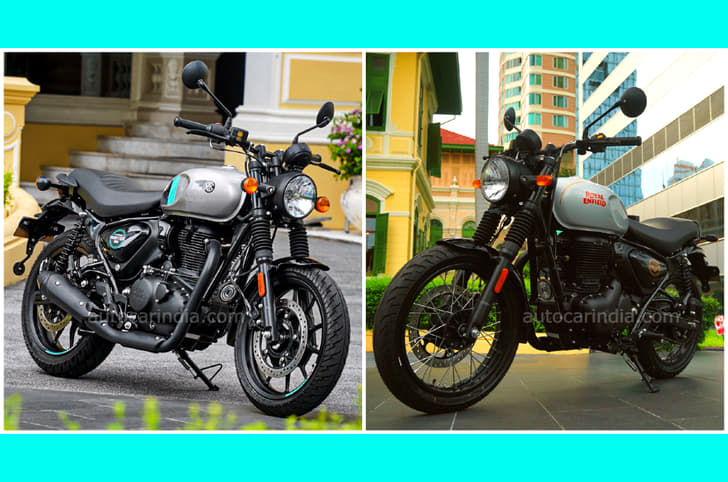
The main difference between the variants stem from their equipment levels and underpinnings, and therefore, their pricing. The entry-level Retro variant comes with wire-spoke rims shod with thinner tubed tires, a drum brake at the rear, a halogen tail lamp, a more rudimentary tubular rear grab rail and single-channel ABS. It also misses out on a centre stand which the top-spec Metro variant comes standard with.
The higher-spec variant is equipped with cast alloy rims, shod with fatter tubeless tires, gets more sleek and stylised twin grab handles at the rear, an LED tail lamp, and a rear disc brake which enables ABS at both ends. With the addition of the centre stand and a dual-channel ABS unit, the Metro variant weighs slightly more, tipping the scales at 181kg vs the Retro’s 178kg.
RE Hunter 350: Pricing and rivals
Prices for the Hunter 350 begin at Rs 1.50 lakh for the entry-level Retro variant, while the premium Metro version commands a price tag of up to Rs 1.69 lakh (ex-showroom, Delhi).
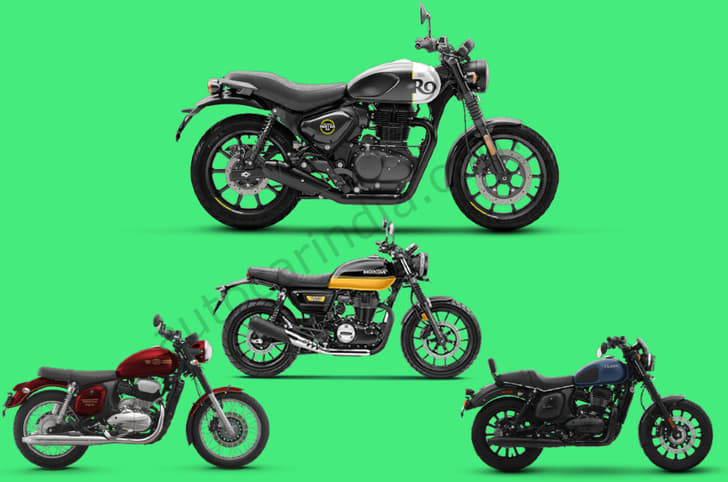
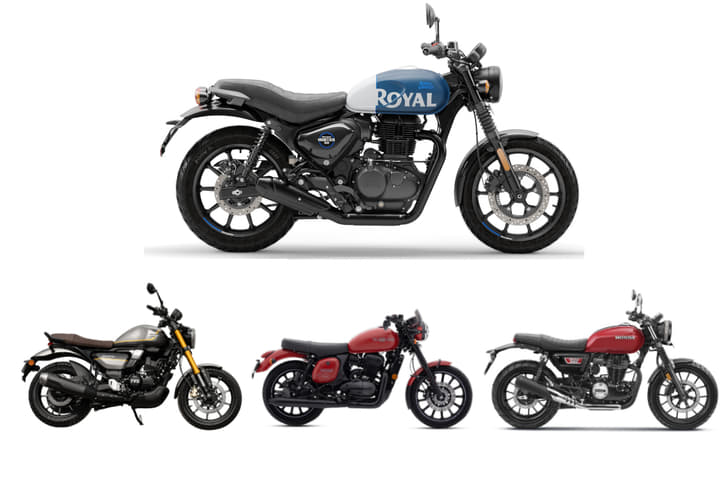
The most direct competition to the Hunter comes from the other neo-retro roadsters at this price point, which include the Honda CB350RS (Rs 2.03 to 2.04 lakh), the Jawa Forty Two (Rs 1.67 lakh to 1.81 lakh), and the Yezdi Roadster (Rs 2.01 lakh to 2.09 lakh). Even though it isn’t exactly a direct competitor, the TVS Ronin (Rs 1.49 lakh to 1.69 lakh) could also feature on a Hunter buyer’s radar. You can see how all these bikes stack up on paper in our spec comparison here. As for a ride impression, stay tuned for our review of the Hunter 350 dropping on August 10 at 10am.
Which variant of the Hunter 350 would be your pick? Let us know in the comments section below.
 Ved Janve
 Vishal Venugopal
 Dinshaw Magol