
The Speed 400 kick-started Triumph’s 400cc run in India. It debuted the KTM-derived 398cc engine, albeit with internal revisions, and this mill has now been downsized to 349cc to benefit from the lower 18 percent tax for smaller bikes.
The original 400cc platform subsequently spawned multiple models, including the Scrambler 400 X and Thruxton 400. Now, Triumph has launched another model in India – the Tracker 400, priced at Rs 2.46 lakh, which debuts the new downsized engine with the same ‘400’ nomenclature. Here’s a rundown of what sets this newest model apart from the existing Speed 400.
Triumph Tracker 400 vs Speed 400: Design
The Tracker 400 features a more rugged design, whereas the Speed 400 takes a neo-retro approach
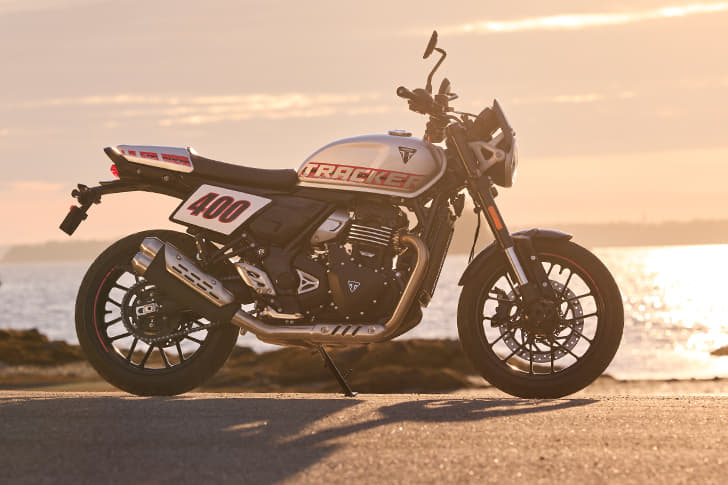
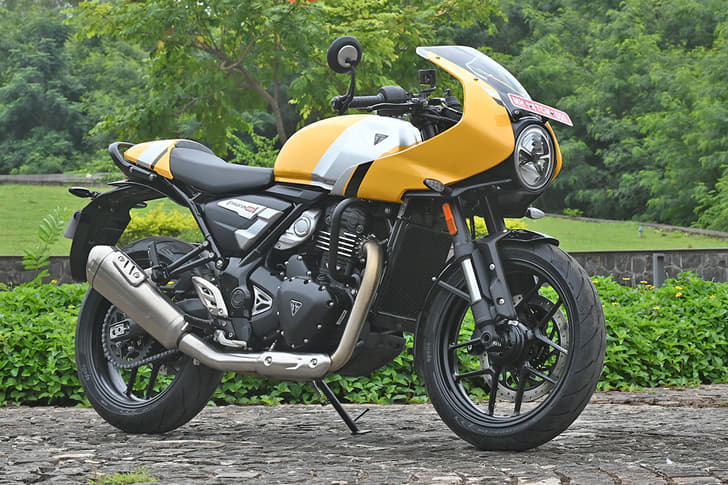
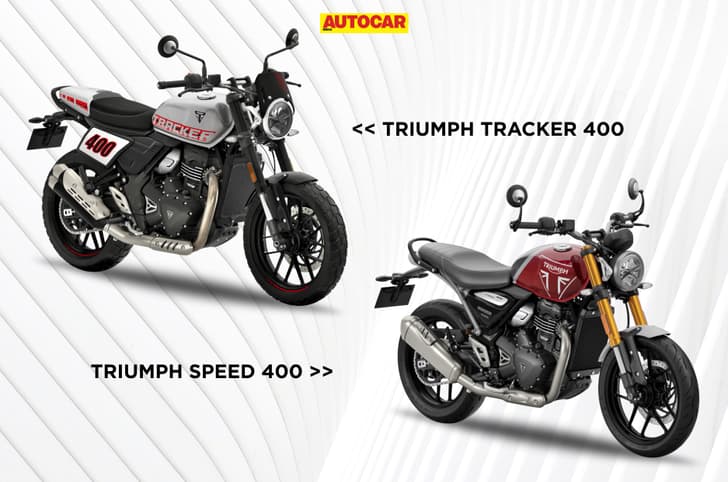
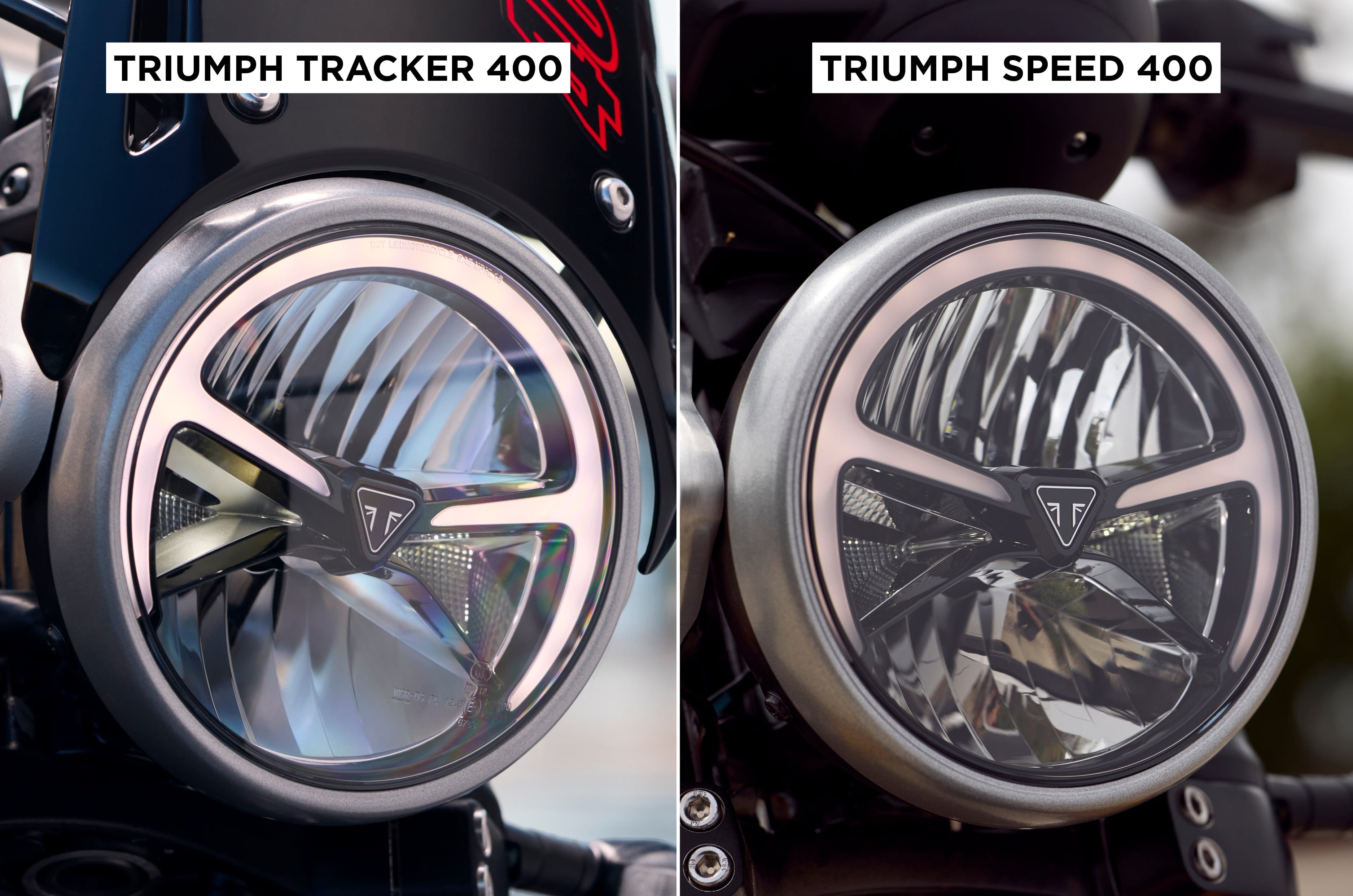
The biggest difference that sets the two models apart is their styling. As the name suggests, the Tracker 400 is a flat-track-inspired motorcycle with a more rugged appearance, whereas the Speed 400 is a neo-retro roadster. Starting at the front, it shares its headlight with the current range but gets a tinted flyscreen on top. This flyscreen is shorter and more squared-off compared to the unit found on the Scrambler 400 XC. While the Speed 400 gets a USD fork finished in gold, the Tracker has a black USD fork.
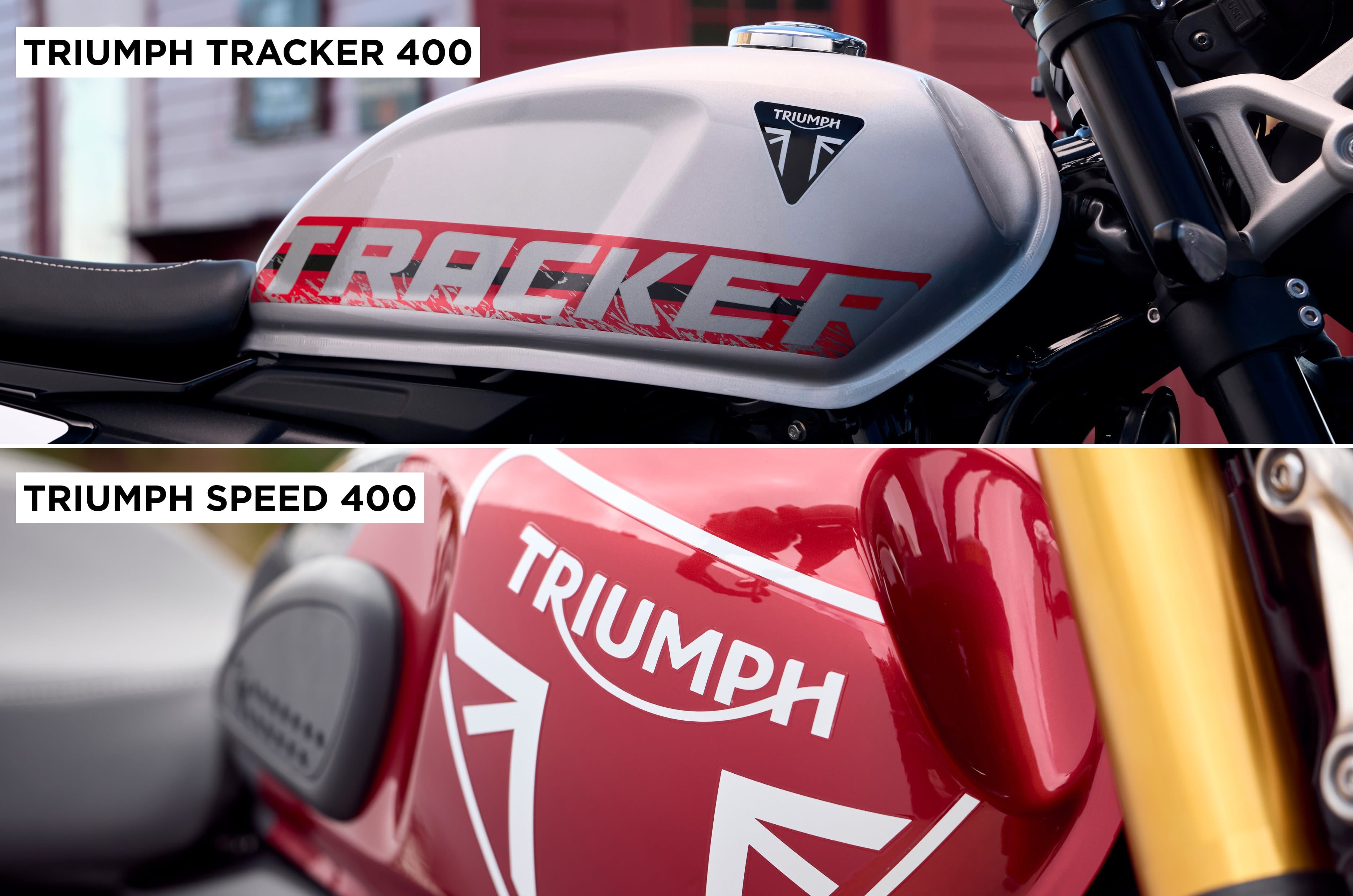
The fuel tank is also quite different from the rest of the range. The Tracker 400 features more pronounced tank recesses compared to the Speed 400’s smoother, more rounded cut-outs. The side panel on the Tracker is completely blacked out, whereas that of the Speed carries Speed 400 badging. Just ahead of this panel, the Tracker also gets a square plaque with contrasting ‘400’ badging.
The seat, too, differs significantly. The Speed 400 shares its seat with the Speed T4 and the Scrambler range. On the Speed, the pillion perch has a slight step-up, while the Tracker 400’s Thruxton 400-derived seat is noticeably flatter and features a removable cowl that slides out to reveal a pillion seat. The wheel design, too, is slightly different on the Tracker 400 compared to the entire small-capacity range. However, it continues with 17-inchers at both ends.
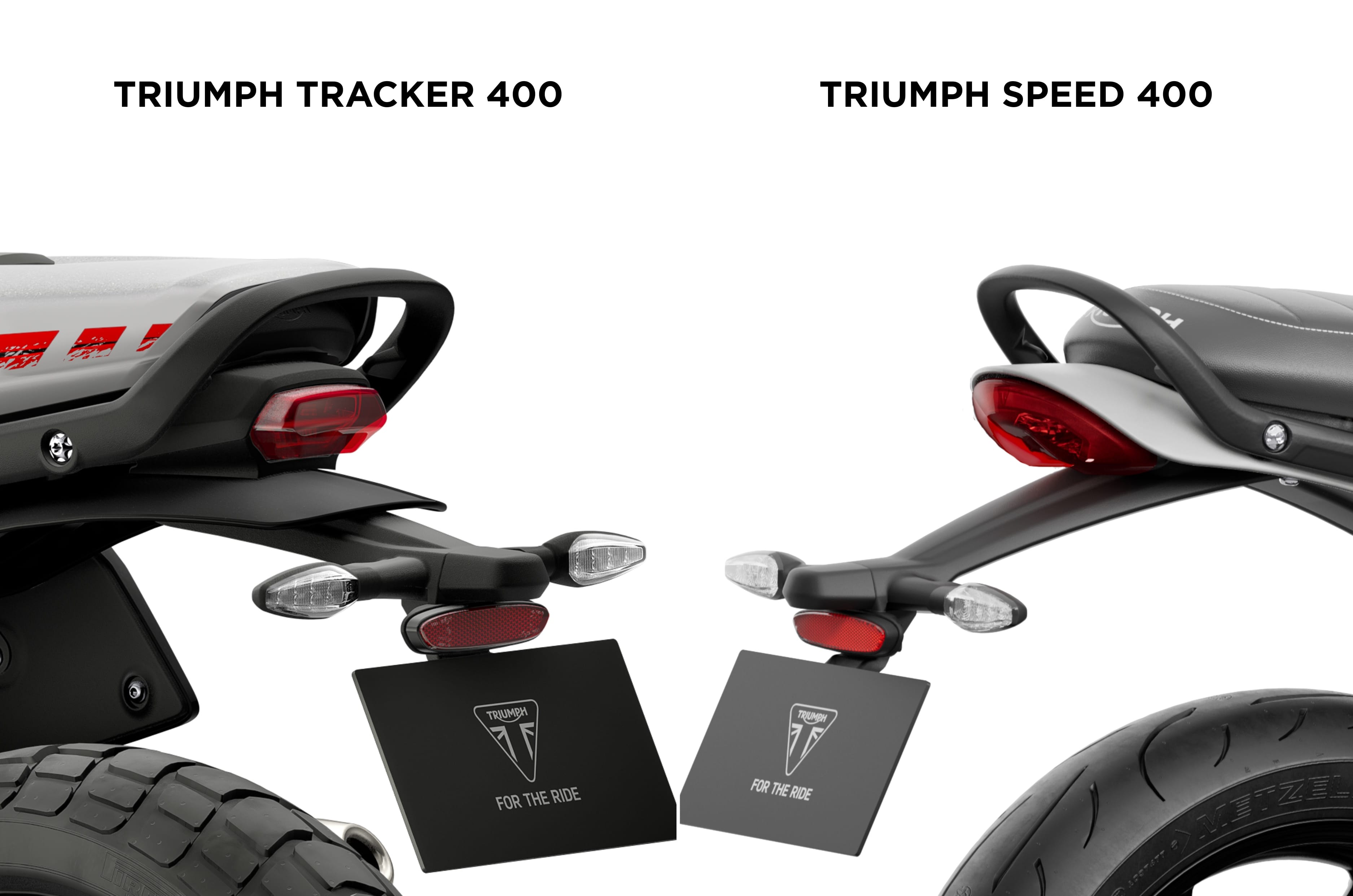
The rear end is another area where the two bikes diverge. The Speed 400 uses the 3D tail-light shared with most of Triumph’s 400cc models, while the Tracker 400 gets a simpler, rectangular unit, once again borrowed from the Thruxton 400.
Triumph Tracker 400 vs Speed 400: Engine
What community is saying on the Speed 400?
The Tracker 400 produces 2hp more
While both are powered by the downsized 349cc engine, there is a slight difference in tuning and output. The Tracker 400 makes 40hp at 8,750rpm, which is identical to the Thruxton 400 and 3hp more than the Speed 400, but the torque output – 32Nm delivered at 7,500rpm – is the same.
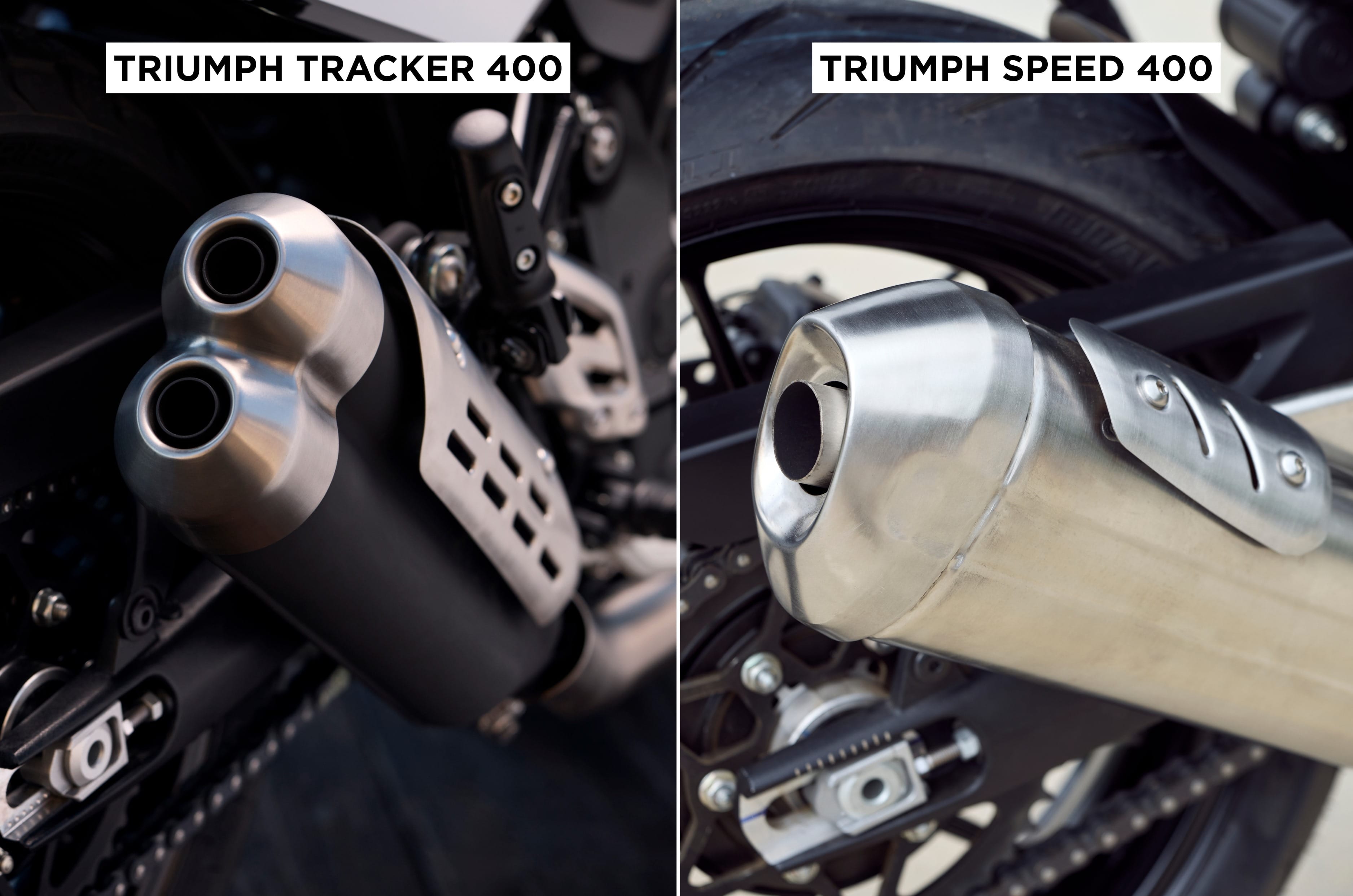
The Tracker’s power and torque are also delivered at 250rpm and 500rpm higher, respectively, in the rev band. Compared to the models that got the full-fat 398cc engine, the Speed 400 is down 3hp, and the Tracker 400 is down 2hp. Speaking of the engine, the Tracker 400 shares its dual-barrel exhaust with the Scrambler 400 range.
It is also worth noting that despite these models now using a smaller 349cc engine than the outgoing models’ 398cc unit, their nomenclature hasn’t been tinkered with.
Triumph Tracker 400 vs Speed 400: Weight and dimensions
The Speed 400 is 2kg lighter than the Tracker 400
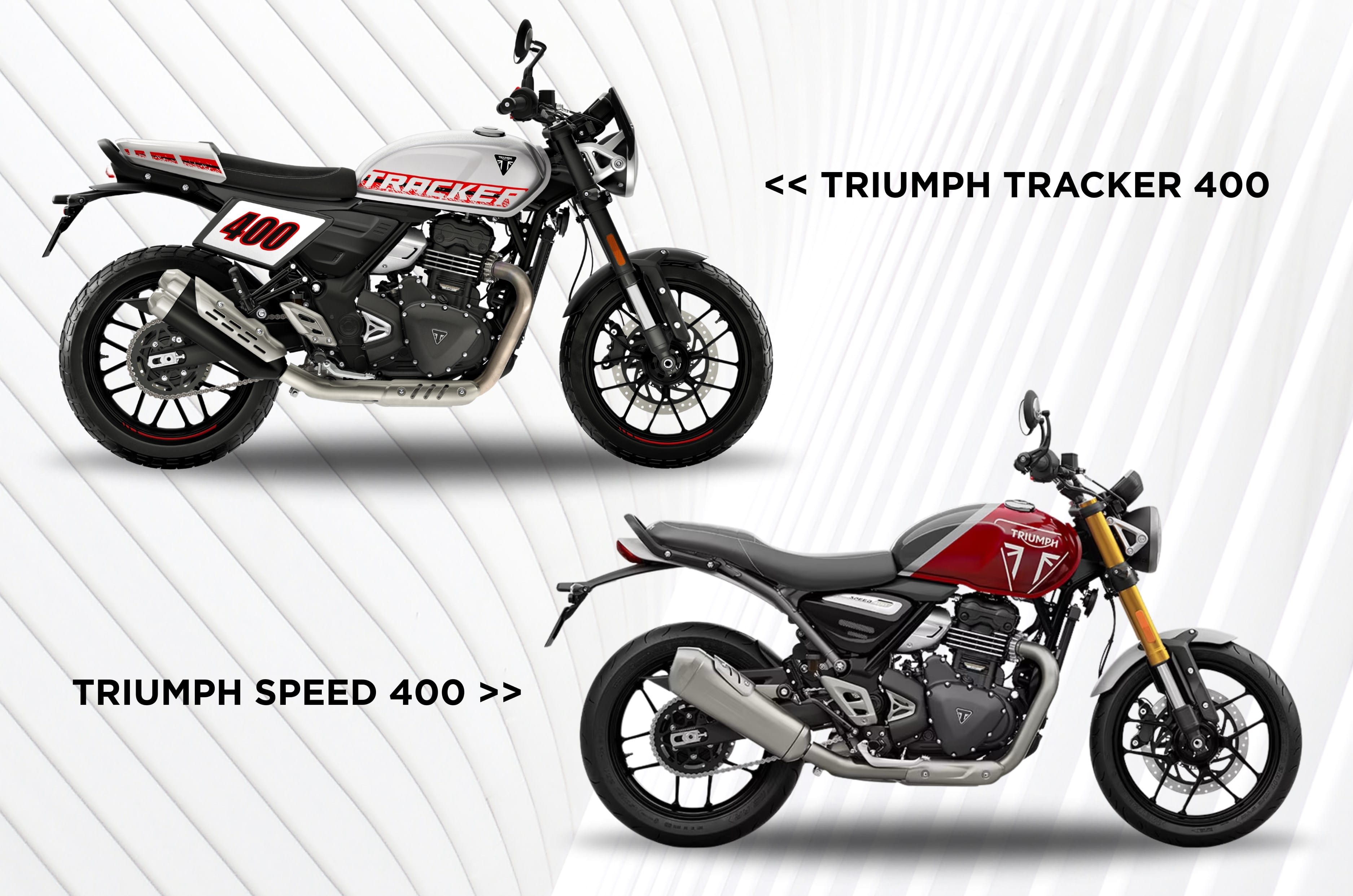
To justify the Tracker moniker, Triumph has revised a few things, including the handlebars. The Tracker (UK-spec) gets a handlebar that is 43mm wider than the Speed’s 814mm-wide unit. The seat height is 2mm taller, but it remains relatively accessible at 805mm. Another difference is the wheelbase: the Tracker’s is 19mm shorter. The Tracker 400 is also 2kg heavier than the Speed 400 on which it is based.
Triumph Tracker 400 vs Speed 400: Price
The Tracker 400 has been launched at Rs 2.46 lakh, whereas the updated Speed 400 with the downsized engine is priced at Rs 2.32 lakh, which is a difference of Rs 14,000. The Tracker slots right between the Speed 400 and Scrambler 400.
 Vishal Venugopal
 Stephen Raj Antony