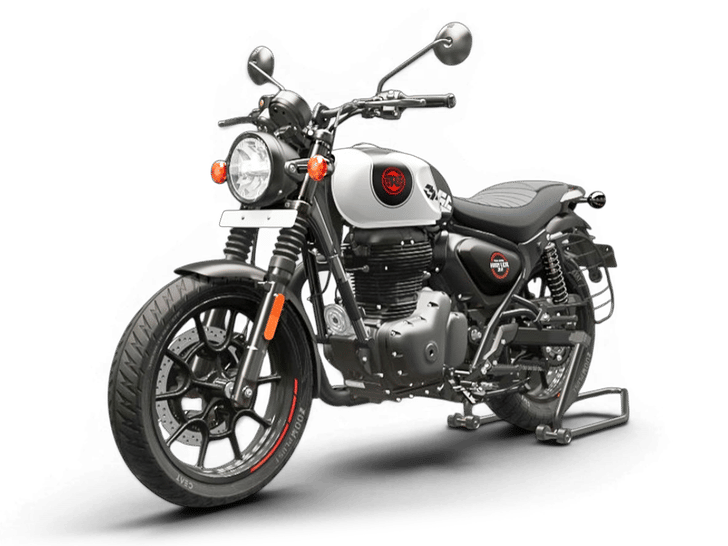
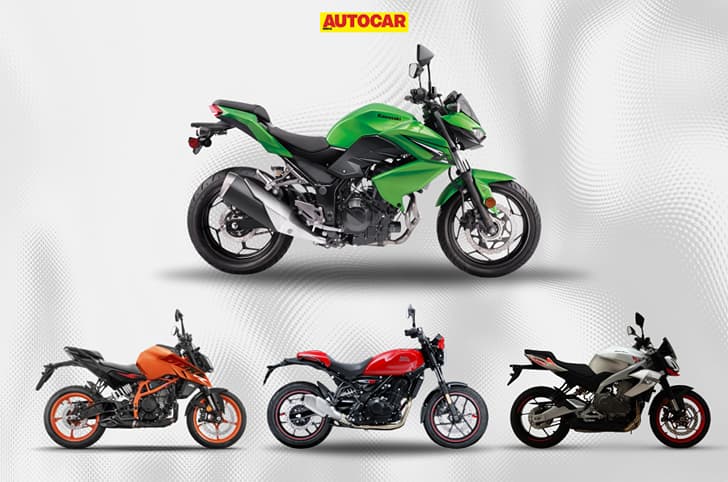
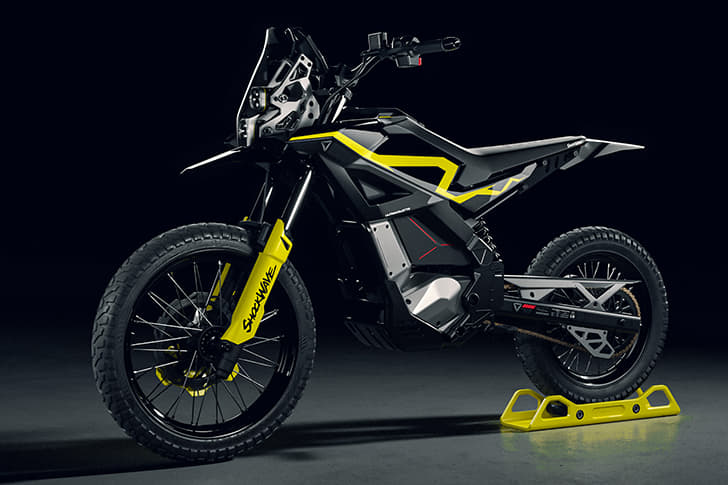
After months of anticipation, multiple sightings during testing and even a few close encounters with prototypes, the Royal Enfield Himalayan 750 has finally made its official debut at EICMA 2026. The big Himalayan is now open for bookings in Europe, with an India launch expected to follow. It enters a growing middleweight adventure bike segment, where it will take on rivals such as the BMW F 450 GS, Honda NX500, Kawasaki Versys 650 and the upcoming Norton Atlas. Here’s how the specifications of these motorcycles compare.
Royal Enfield Himalayan 750 vs rivals: Engine and output
The Himalayan 750 makes the most torque, while the Atlas is the most powerful
All five bikes use a parallel-twin engine mated to a six-speed gearbox, but the Himalayan 750 is the only one that uses a simpler air/oil-cooled architecture. So despite having the largest displacement, it falls short on peak power on paper. It comfortably outguns the smaller-engined BMW and Honda but falls 12hp short of the Kawasaki and 15hp behind the Norton.
On the flip side, it has the advantage with torque, and it produces its peak torque notably lower in the rev range than any of its rivals. On paper, that should make the Himalayan 750 the most relaxed bike here, especially at low speeds, but we’ll have to wait until we ride the bike to form an accurate opinion on that.
Royal Enfield Himalayan 750 vs rivals: Weight and dimensions
The Himalayan 750 has the lowest seat height and second-highest ground clearance
The Himalayan 750 is the heaviest bike here, with a kerb weight of 224kg. That makes it 4kg heavier than the Versys 650 and a whopping 46kg heavier than the BMW F 450 GS. A direct comparison with what is arguably its closest rival, the Norton Atlas, isn’t possible, as Norton has only quoted its weight without fuel. With a full tank, the Atlas should weigh around 200kg, which would still leave it roughly 20kg shy of the Himalayan.
Where the RE does have an advantage is seat height. At 815mm, it is easily the most accessible motorcycle here on paper. Royal Enfield also offers two optional seats, allowing riders to either lower or raise the seat height to suit their needs. Despite its relatively low seat, there’s no compromise on ground clearance, offering a healthy 205mm – second only to the Norton Atlas.
Royal Enfield Himalayan 750 vs rivals: suspension, brakes and tyres
The Himalayan 750 has the most suspension travel
The bikes are similar in terms of suspension hardware, with a USD fork at the front and a monoshock at the rear, but the level of adjustability varies. The Himalayan 750 and Norton Atlas are the best equipped, with fully adjustable 43mm forks (Showa on the Royal Enfield and KYB on the Norton) that offer preload, compression and rebound adjustment. At the rear, both have a monoshock with rebound adjustment and a remote preload adjuster. The F 450 GS also offers adjustable suspension but only on the higher variants.
Reflecting an increasingly common trend among adventure motorcycles, the Himalayan 750 gets a 19-inch front and 17-inch rear wheel, available in either spoked or alloy form, with tubeless tyres either way. The Versys 650, given its predominantly road-biased intentions, is the only bike here with a 17-inch wheel at both ends. The Atlas is also available in a GT variant that takes the same road-focused approach, with 17-inch wheels at both ends, reduced suspension travel of 140mm front and rear and a lower 815mm seat height, the last of which is the same as that of the Himalayan 750.
Royal Enfield Himalayan 750 vs rivals: Features
The Himalayan 750 is the most feature-packed Royal Enfield yet
We’ve known for a while now that the Himalayan 750 would effectively be the manufacturer’s most feature-packed motorcycle yet. It gets a six-axis IMU that manages cornering ABS and lean-sensitive traction control. There are five ride modes (Road, Road Sport, Rain, Trail and Custom), which adjust the throttle map, ABS and traction control, along with cruise control and a tyre pressure monitoring system, all of which are standard. The 4-inch circular TFT (also seen on the Himalayan 450) is the smallest in this comparison, but it has Wi-Fi and Bluetooth connectivity with e-SIM capability that enables navigation and phone and music control. The bike is also available in a range-topping Antarctic Silver colourway that adds a touring pack with Givi-branded panniers and a top box, heated grips, handguards and an aluminium skid plate.
The only motorcycle here that arguably goes a step further in some areas is the Norton Atlas. It gets a larger 8-inch touchscreen TFT and a six-axis IMU overseeing a suite of electronics that includes wheelie control and rear slide control. The BMW F 450 GS has a 6.5-inch TFT display, traction control, engine brake control and heated grips, and its standout feature is the Easy Ride Clutch (ERC) on the highest-spec GS Trophy variant. While the Honda NX500 also gets an E-Clutch, it and the Kawasaki Versys 650 are more straightforward, with a 5-inch and 4.3-inch TFT, respectively, and traction control as pretty much the only electronic rider aid.
 Autocar India Team
 Stephen Raj Antony