Ever driven to Leh? Ridden the roller coaster from Manali that crosses five high-altitude passes? Up, down, up, down, up, down. So high you get a throbbing headache almost every time. Baralacha La (4,890m), Lachung La (5,065m), Tanglang La (5,328m), that’s right, many of these passes are over five kilometres above sea level. Imagine that. Needless to say, it is bitterly cold, there’s very little oxygen, the cold wind just cuts through you. Unless you have the disposition of a rock hyrax, spending more than a few minutes here feels downright uncomfortable.
Now, however, there’s an easier way, a new road does it the smart way. Rather than cross pass after pass, it stays low. How? Simple, it follows the river. A river that slices straight through the mountains. Formed over 30 million years ago, before India came crashing into Asia to form the Himalayas, the Zanskar river often runs a kilometre and a half below the highest peaks, the narrow gully-like gap between the mountains looking like a crack or fissure in the mountain range from above.
Leh; high-altitude oasis
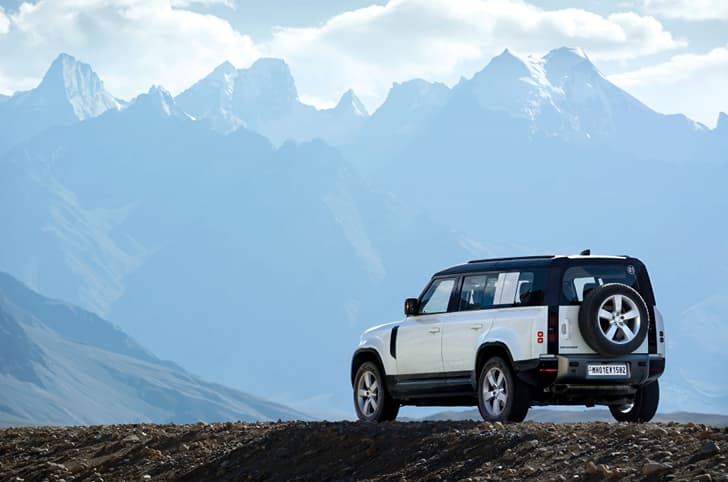
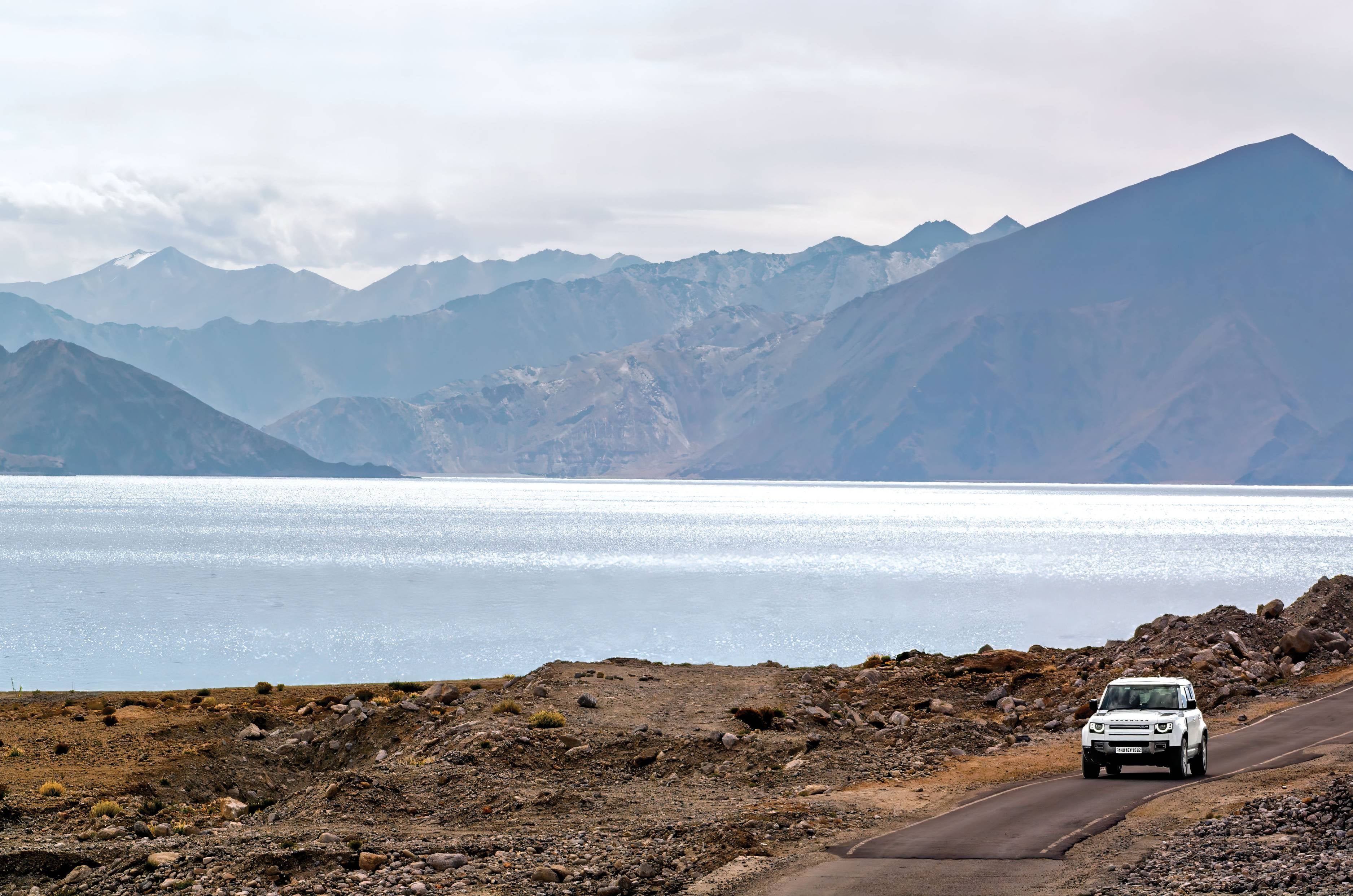
We start in Leh. Situated in the rain shadow at an altitude of 3,500 metres, Leh blends Tibetan culture and Himalayan customs into a unique mélange. And for the most part, the old buildings and locally sourced natural insulation give it a unique feel. So it’s no surprise that the Defenders at times feel oversized here, the narrow roads and steep hills only adding to this feeling.
The next day, our route takes us to the iridescent blue lake Pangong Tso. What a magical place. The colour of the high-altitude lake faithfully reflects that of the sky, making it feel otherworldly. Since it freezes over, there are few aquatic plants, algae, or heavy organic matter in this salty lake, and this means incredibly clear water and the prevalence of Rayleigh scattering that turns the water extra blue. Driving along the lake, we stop every few kilometres. The colour changes every few minutes before sunset and the next day after sunrise, the expanse of mountains ahead and the limitless terrain around make it feel like you are on another planet. The Defender feels right at home running along its barren shores, and because of its formidable off-road skills, we even manage to go down close to the water, after obtaining permission, of course.
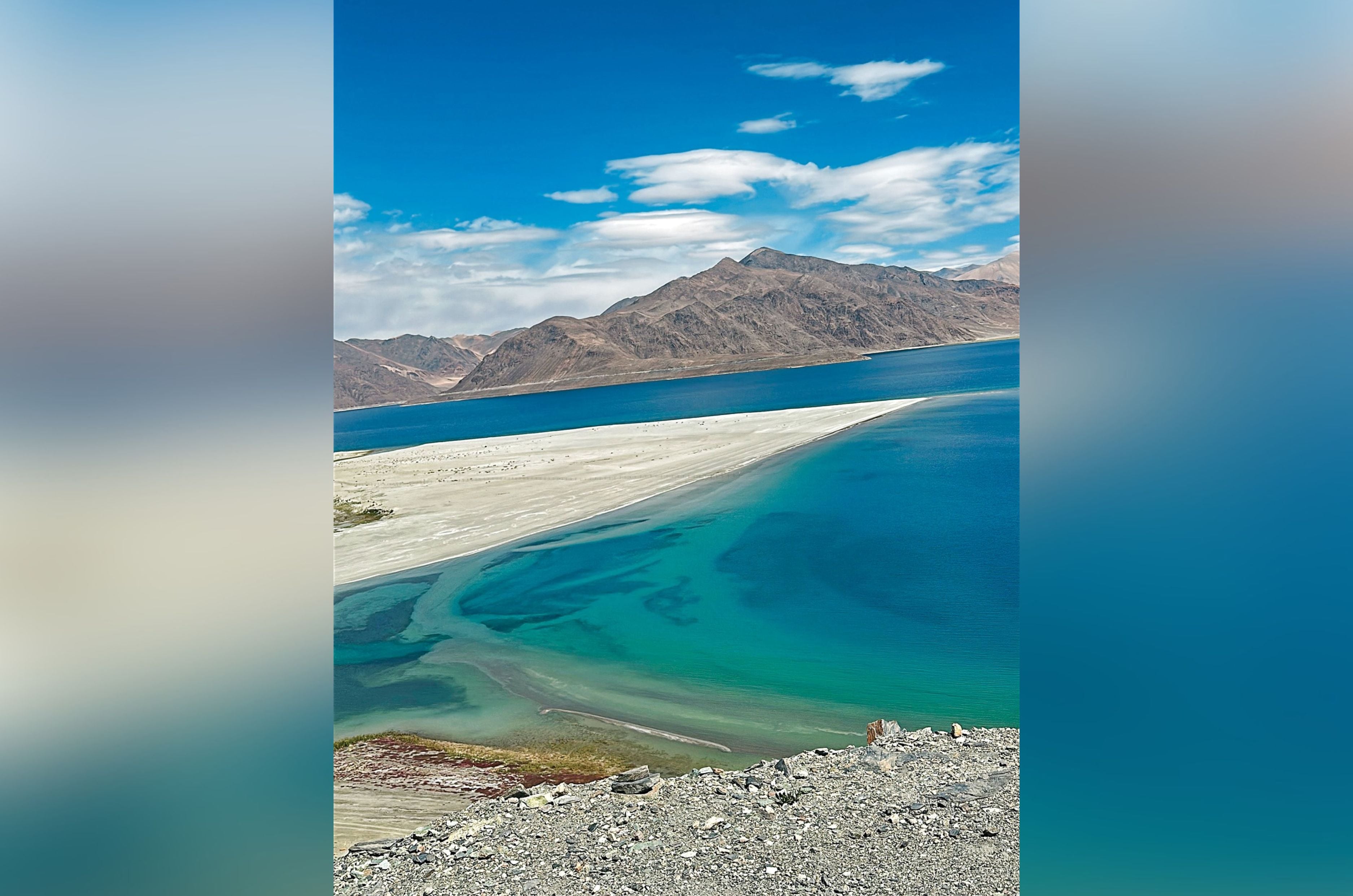
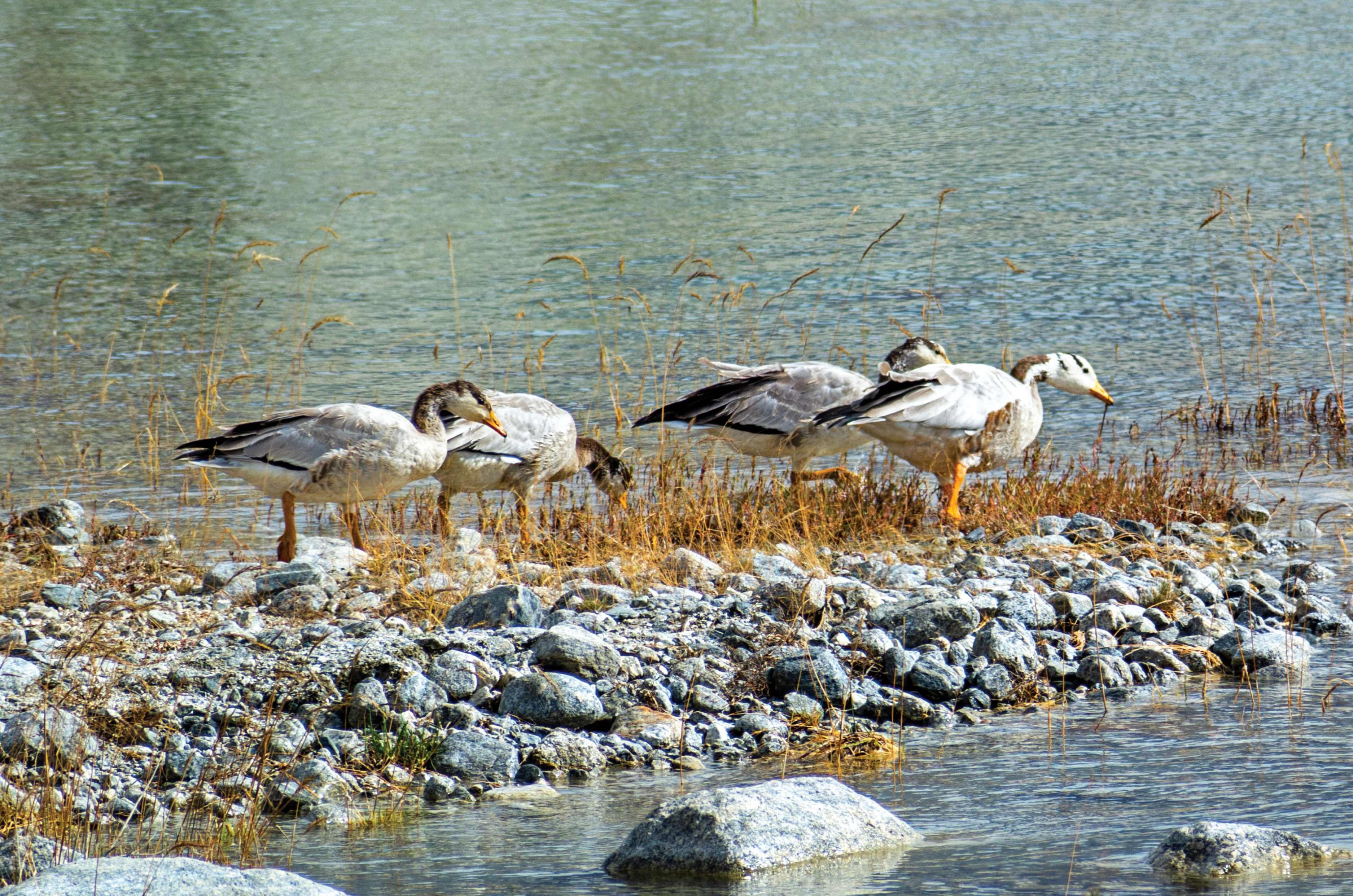
This place is clearly magical; above us floats one of the highest-flying birds of prey, the Bearded Vulture or the Lammergeier. And then only minutes later, right near the water’s edge, appear a flock of bar-headed geese, who, while migrating, fly over Mount Everest; no less.
The next day we drive back past Sangam point, where the brown and deep-blue waters of the Zanskar and Indus river meet. You can park right alongside, and we spend a fair amount of time here. Then it’s on to our quarry, the recently opened NPD or Nimmu-Padum-Darcha road. This new road follows the river and eventually takes you onto the road to Manali.
The zanskar canyon road
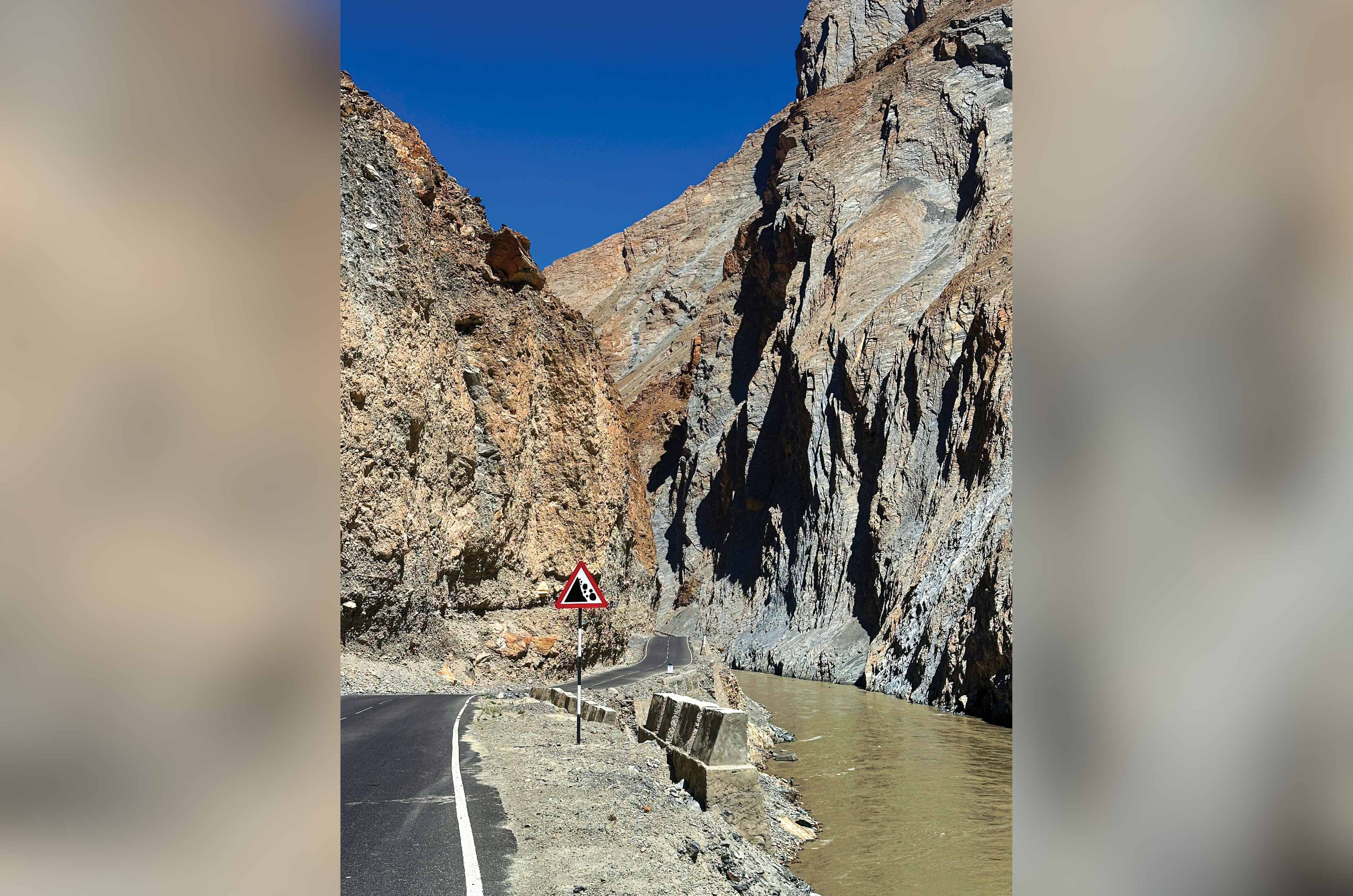
The first glimpse of the Zanskar Canyon arrives almost without warning. One moment the Defender is flowing effortlessly out of Nimmu, following the familiar contours of the river, and the next, the landscape begins to fold in on itself. The mountains now grow tall on each side, the road and river drop down as if riding a massive elevator. And then, every kilometre we drive, the impossibly tall cliffs seem to get closer and closer. Soon, it feels like the road is being funnelled through a bottleneck, the river right beside.
This then is the heart of the BRO’s NPD, the new Nimmu-Padum-Darcha road from Leh to Manali. Built into one of the most spectacular geological formations in Asia, right along the Zanskar River. Here, the tarmac precariously hangs onto ledges, cliff faces and outcrops. And where there is no obvious place to make a road, which is often, sections of road have been literally carved into the side of the mountains by the Border Roads Organisation. There’s no other way.
Some say the river was here before the Himalayas came up, others claim that it has spent millions of years carving a deep wound through granite and limestone, creating a canyon so steep, so narrow and so inaccessible that nobody believed a road could pass through.
Yet here we are, cruising along a freshly cut ribbon of tarmac, the Defender’s air suspension only occasionally called upon to do duty over small, unpaved patches. While the road poses no challenge to the Defenders’ off-road skills, what makes it feel like ‘the’ SUV for the job is its ability to take small excursions off road, either into gullies in the terrain or down to the waterline where possible.
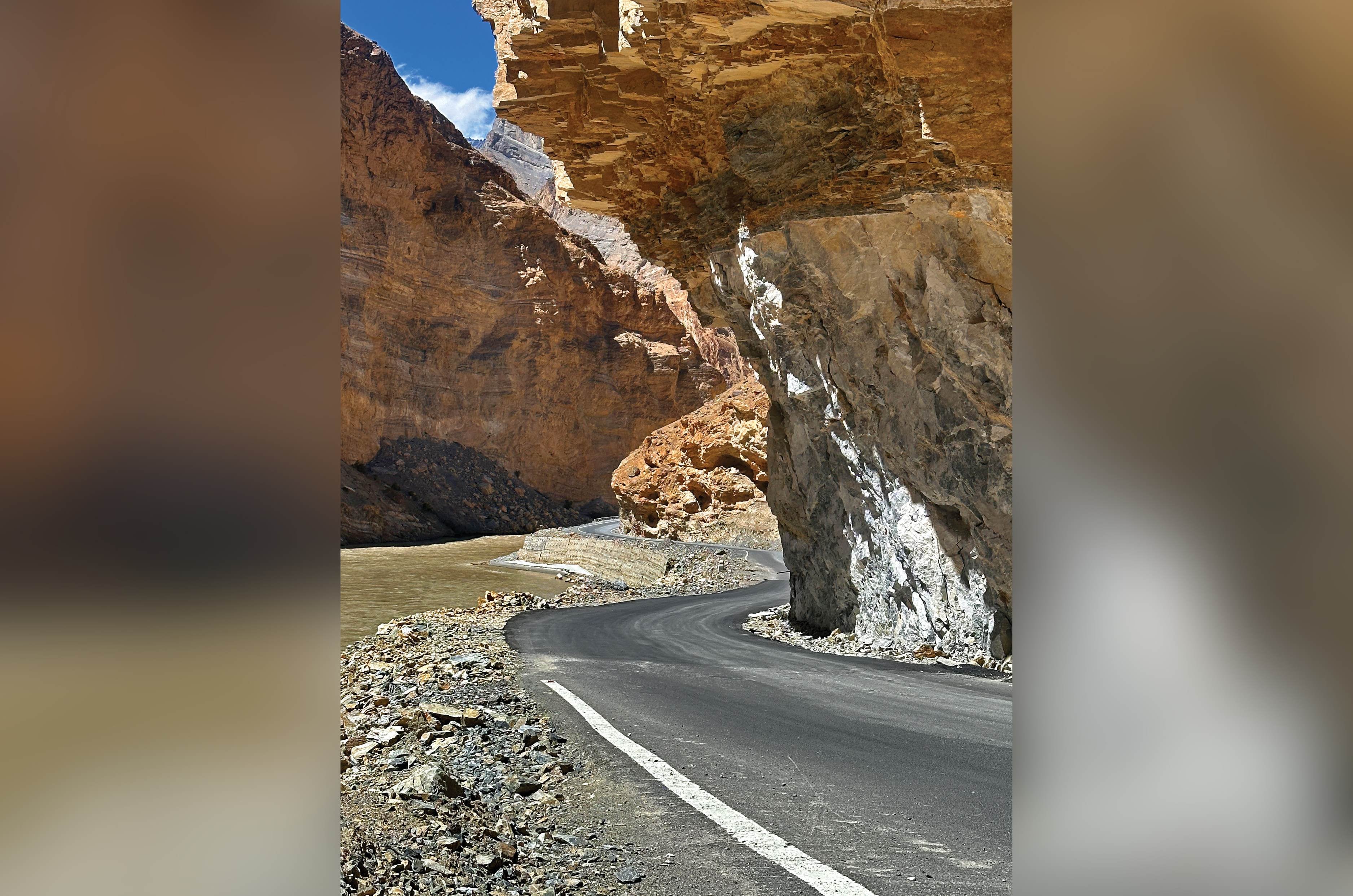
Also, while the ribbon of black tarmac is near perfect, I’m not really tempted to fly along this road. Sure, some sections are deliciously sinuous and impossible to ignore, and so I indulge myself briefly. But soon the temptation to stop and step into the incredible scenery is too much. What a place.
And then, once the sun is at a favourable angle, shades of gold and copper spread across the cliffs, while the river below reflects spotlight-like individual beams, sliced and cut by the ridges high above. This is why, for the most part, the Defender rolls quietly through the landscape, the occupants gaping in wonder, its silhouette occasionally mirrored on the craggy brown cliff walls as we slip by.
While the Defender drives on, I have to pay special attention to the four-cylinder turbo engine that does feel somewhat breathless at low engine speeds before the turbo comes in. There clearly is much more turbo lag because of the altitude. To counter this, I tap the automatic gear lever into manual and shift gears ‘manually’ as and when needed, so I can stay in the power band.
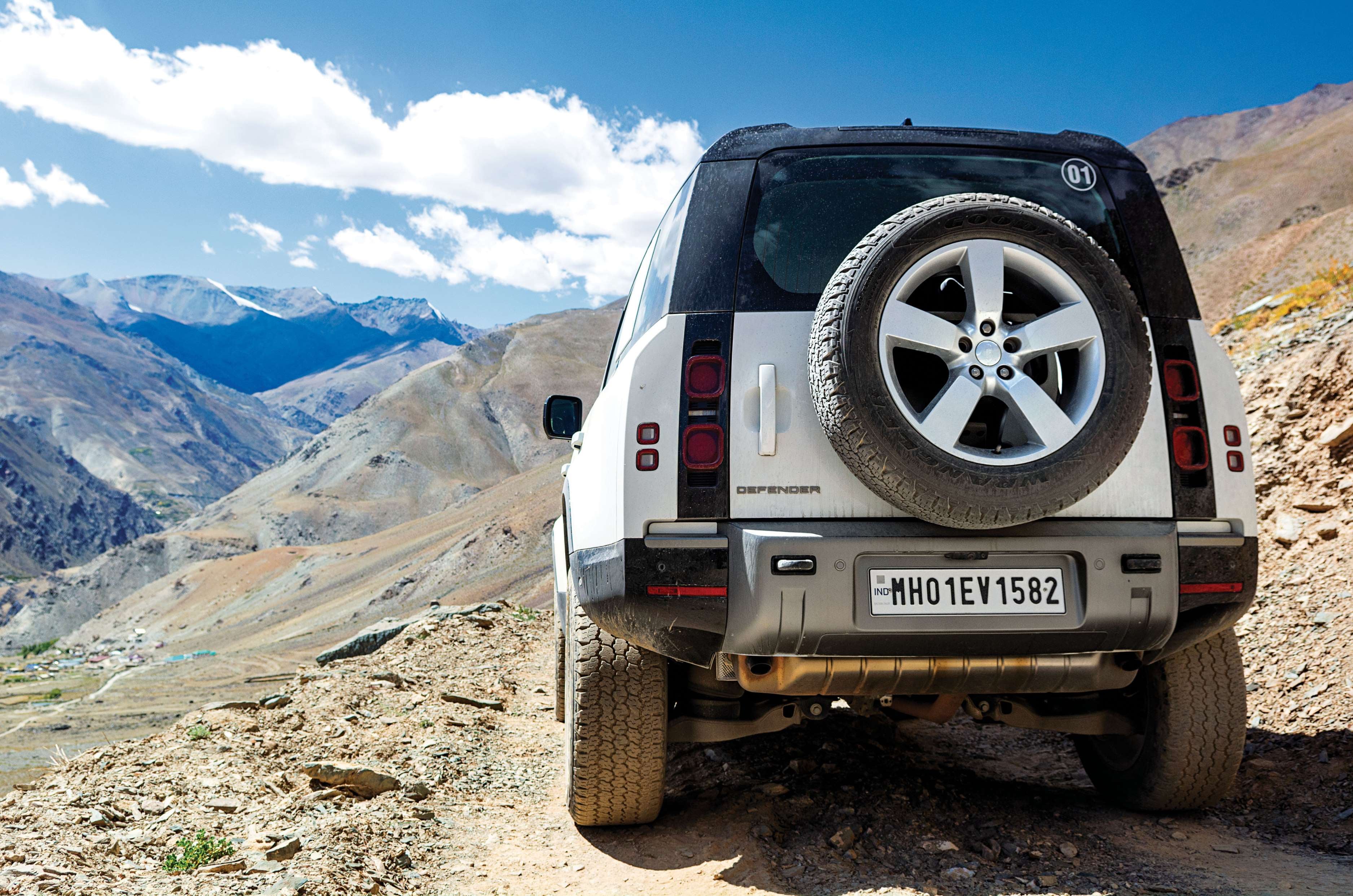
While no trails exist along the river normally, locals do travel along the river once winter sets in. Come winter, the Zanskar River gradually transforms into a sheet of ice thick enough to support human traffic. Known as the Chadar, or blanket, this frozen river became the region’s primary transport corridor, with locals carrying supplies across it.
What must it have been like for the Border Roads Organisation to just inch along here, building the road one stretch at a time. While the NPD road was approved in 2002, the work on the 39.6km Darcha-Shinku La/Shingo La Road started sometime in 2007-2008. The first 4x4 light vehicles were permitted to reach up to the pass from Darcha in 2015. The tarmac road has only been opened recently.
And the BRO isn’t finished yet. Up next, a four-kilometre tunnel under the Shinku La pass, to truly make this an all-weather road.
Up the pass
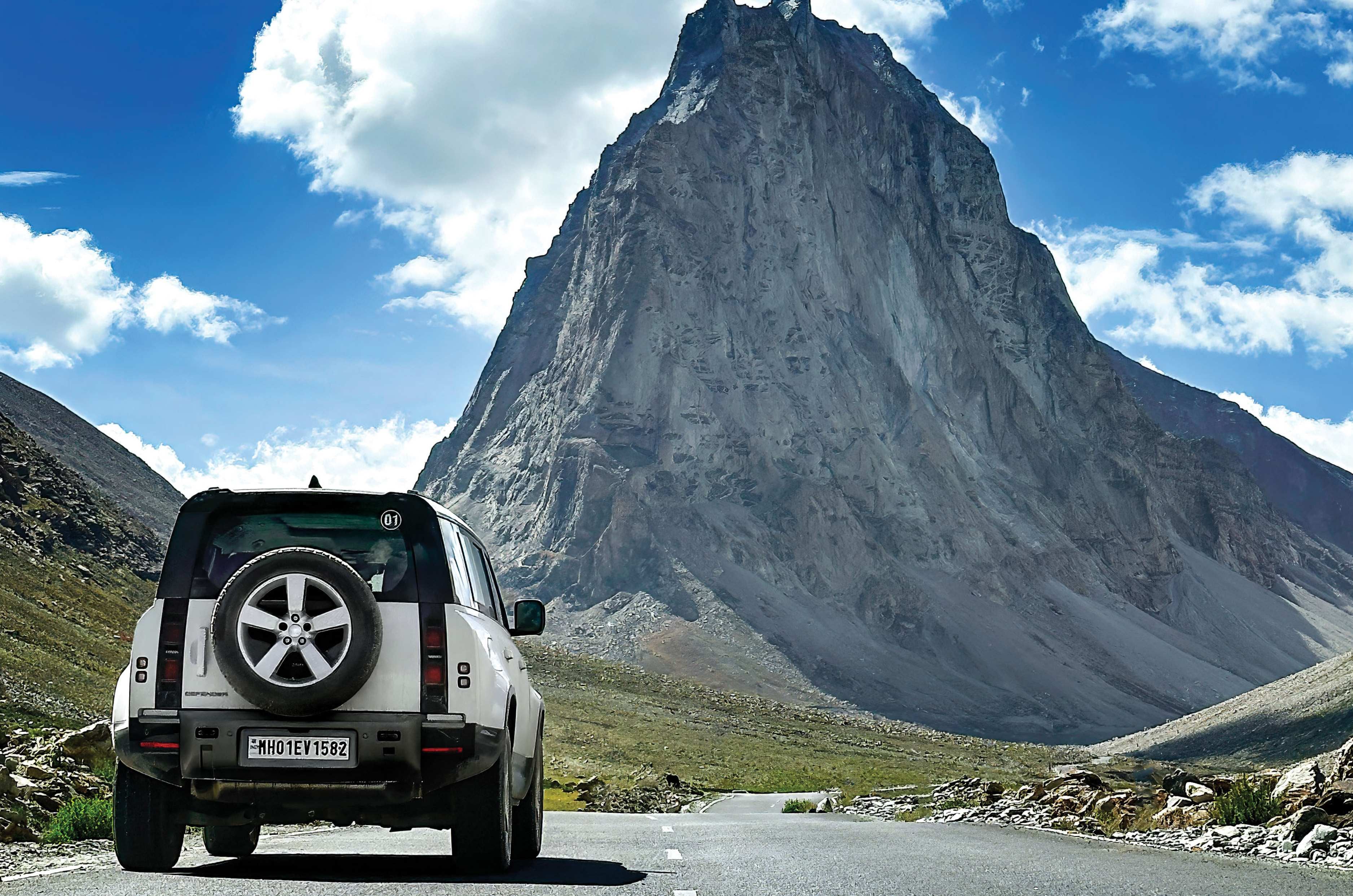
Before we begin to ascend the 5,091-metre Shinku La pass, the road passes along a massive monolithic mountain. There are no ridges that run alongside, no sister peaks, no mountains that connect to the sea of mountains that is the Greater Himalayan Range. Majestic in its glory, and even more stunning when the light snow allows you to gaze on the rock face endlessly, its presence dominates the initial climb up. As we climb, I hold on to gears even longer, so as to not fall into the clutches of extended turbo lag at this altitude, and at times, on the tighter turns, I have to make to look around the thick A-pillar.
The Defender, however, feels uniquely suited to this terrain. A vehicle born from a tradition of exploration, this feels too easy for its capabilities. So, it’s little surprise that when we stop for the day at the Tara Mountain Sarai in Purne, I want to give the Defender something more substantial to sink its teeth into.
Up where we belong
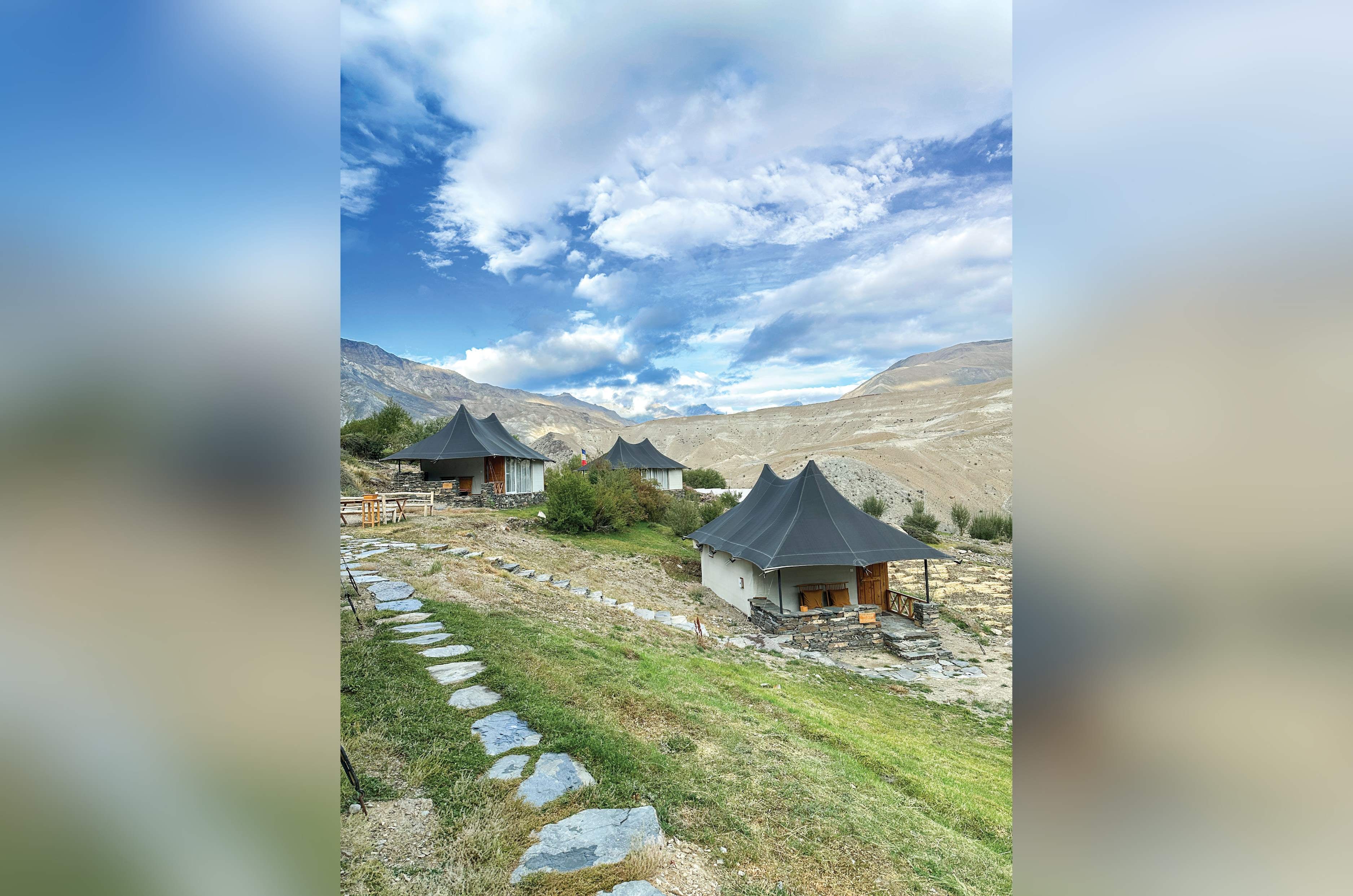
Finding a suitable trail here is dead easy. The luxury tents are not only surrounded by mountains, with peaks sometimes two kilometres up from the valley floor, but there are also plenty of trails visible from where we stand. Up ahead in the distance, tracked construction vehicles are building a trail. And that’s where we head.
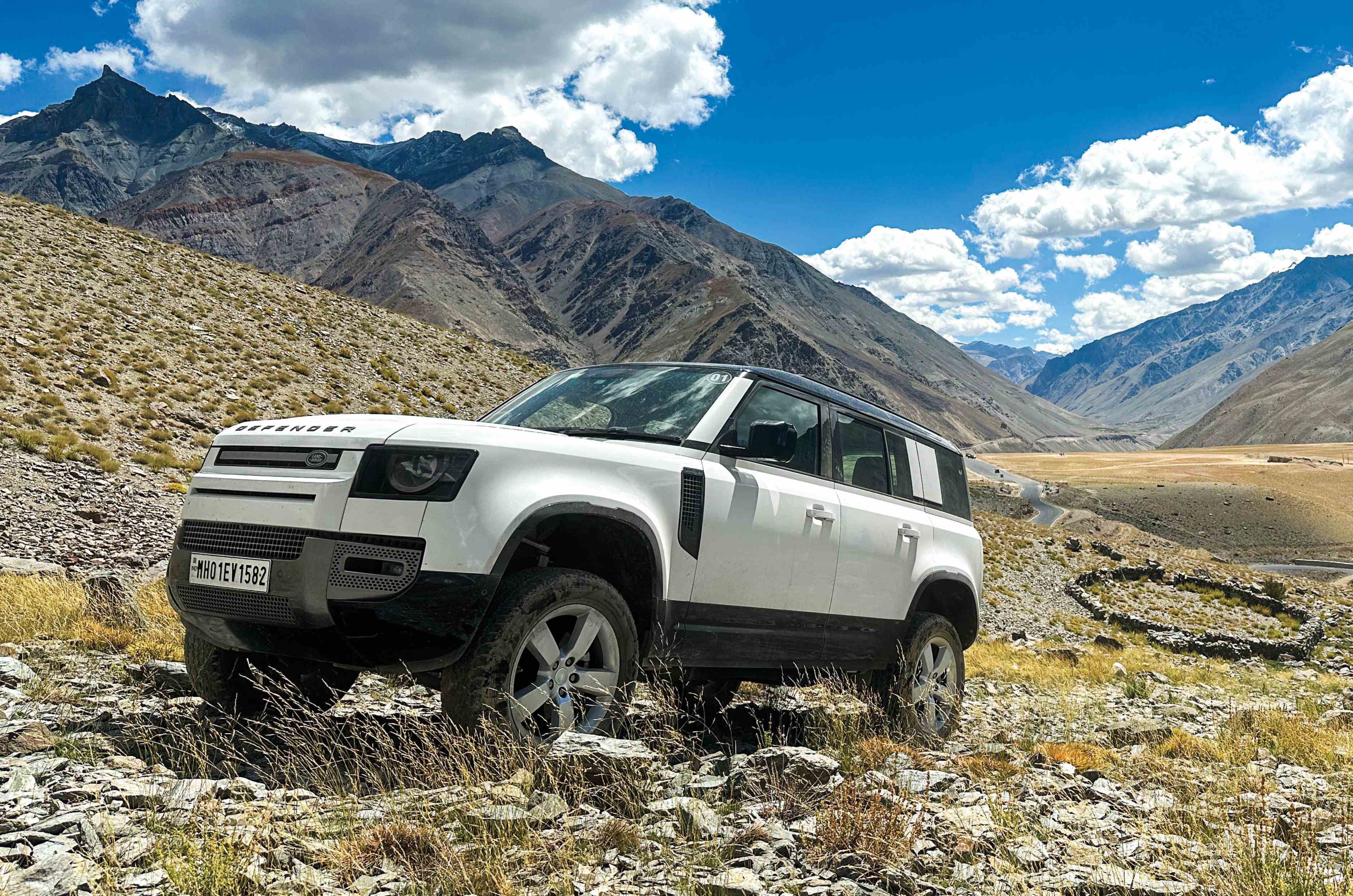
Finding the trail is initially more difficult than I imagine. But eventually, after climbing up a couple of trails and having to come back down, we finally begin our climb in earnest. Finally, low range and rock crawl mode are engaged, I’m sure the Defender smiled, and now with the air suspension raised and the diffs working in sync with the traction control system, we climb up the seriously steep rocky trail. It’s so steep, after some steering for a bit, head out of the window, the most important bit of tech on the Defender becomes the forward-looking camera.
If anything, the Defender makes this seem all too easy. Finally, we stop for some pictures, and I almost step off the edge! To our left is a near-vertical mountain face, we are sat on a narrow rocky trail, and to the right is a drop into the abyss. Luckily, there’s a wide space up ahead where we can take a U-turn. Once turned around, I look down at the river. It’s barely visible and the luxury tents are so difficult to spot I can’t find them initially. It’s only then that I realise how far up we’ve come.
Well done BRO
Back on the NPD road, the scale of what has been achieved becomes increasingly clear. This is not merely a new road. It is a strategic transformation. The Zanskar Canyon, once an obstacle, now becomes one of the route’s greatest strengths. Running, for the most part, at the absolute bottom of a deep geological trench, the road lies protected by immense rock walls. Away from prying eyes in the sky, shielded from the advanced optics of satellites and nearly impossible to get to on wing at upwards of 500kph, this road represents a crucial third axis into Ladakh. Make sure you go there while you can still have the place to yourself, like we did.
Defender journeys – drive your dreams
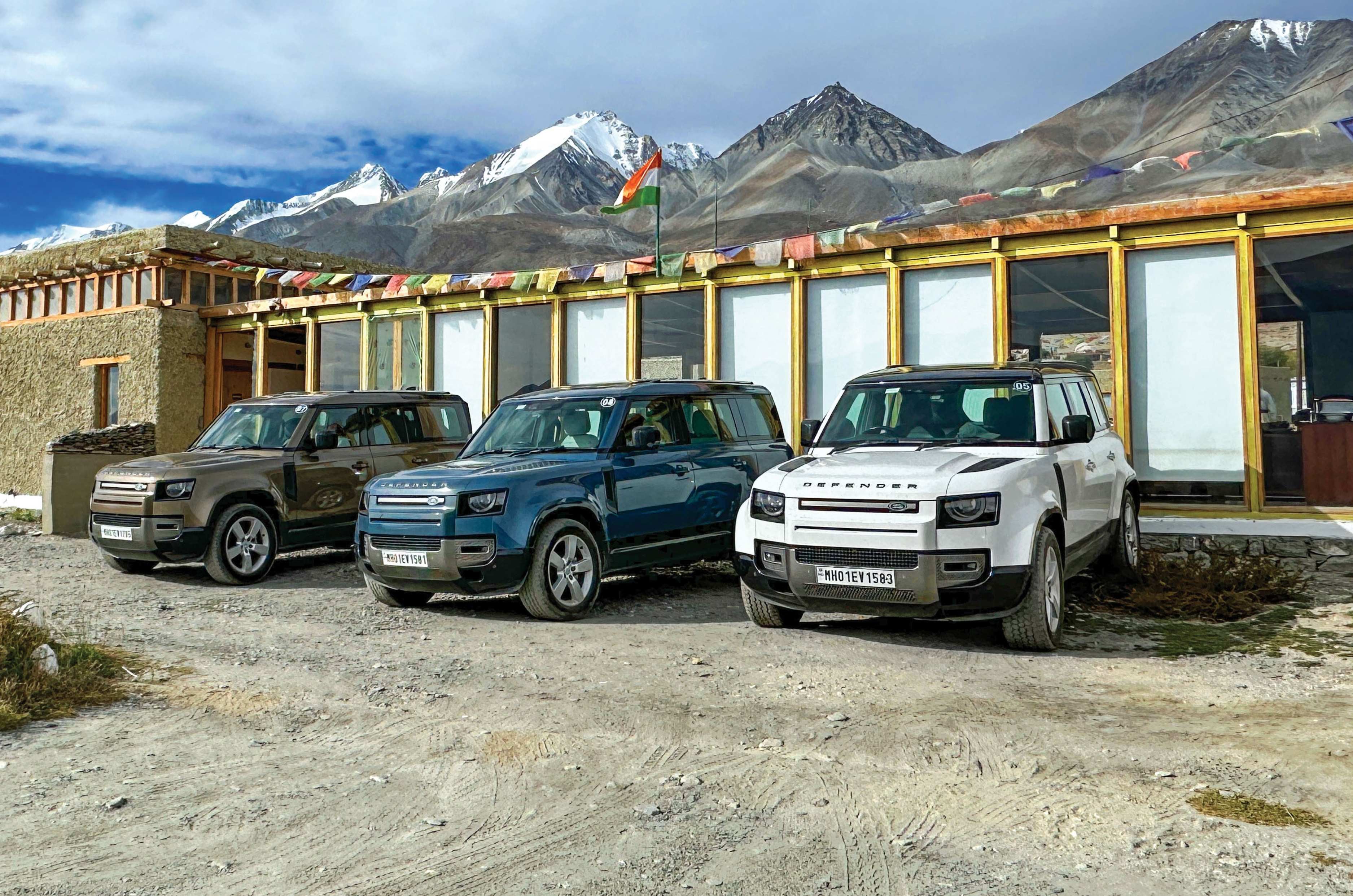
We often want to drive out and access inaccessible parts of our incredible country. But planning a trip or getting there on your own isn’t always possible. The isolation, challenging conditions, the massive distances involved are all big challenges. And these, at times, could come with serious consequences. And then come the ‘what ifs?’ And honestly, there is no end to them. Which is why, at times, the best thing to do is go on curated trips like ‘Defender Journeys.’ Run by Cougar Motorsport for Land Rover, the team planning the drive has been over these roads hundreds of times. They are well prepared with backup and contingency plans, know the best places to stop and stay, and in general make sure you see and experience the best a trip like this has to offer.

 Uday Singh


 Saptarshi Mondal
 Suraj Viswanathan

 Dipan Sur

 Viraaj Bhatnagar