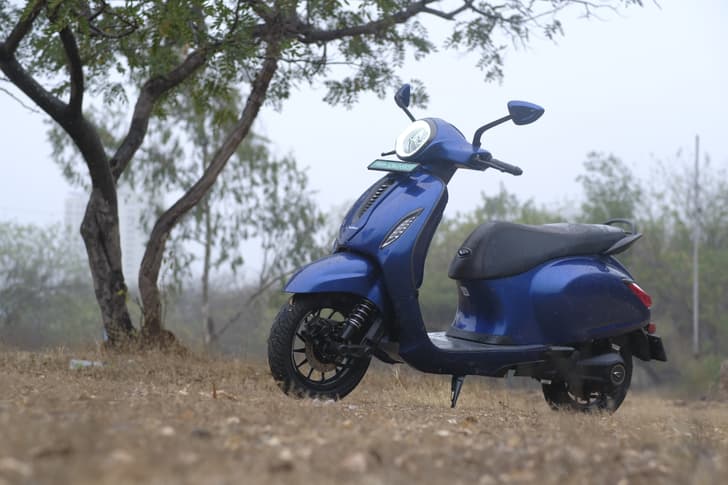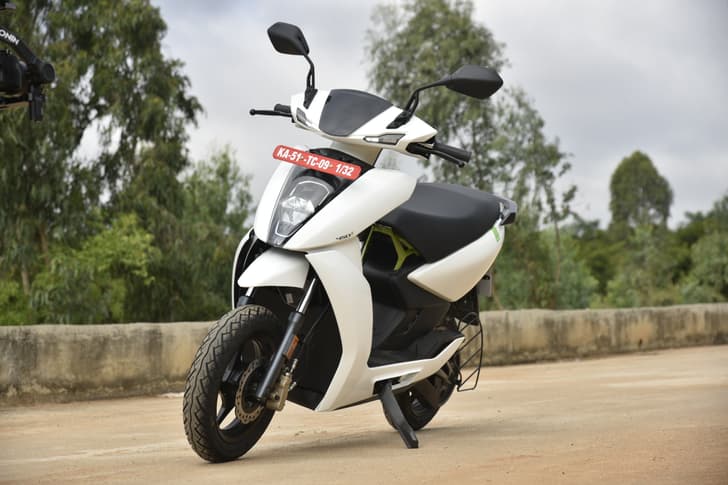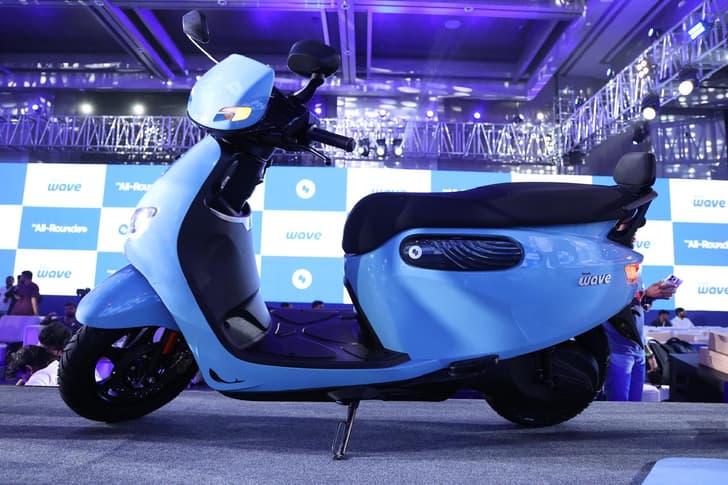

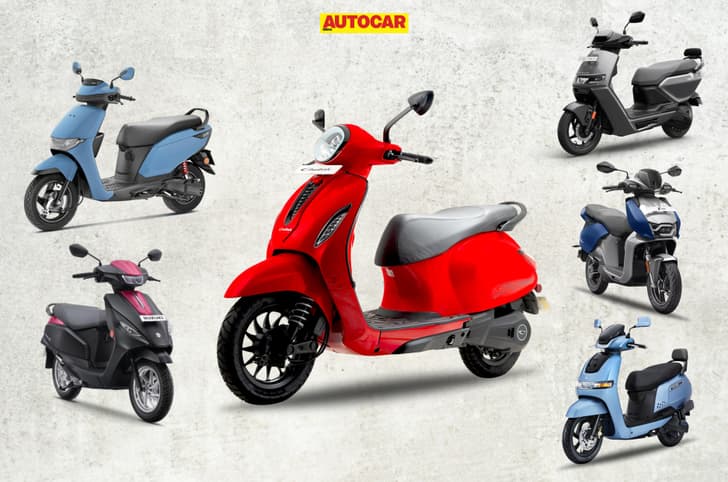
Bajaj has launched a new entry-point into the Chetak family, in the form of the new 3001 model (priced at Rs 99,990 ex-showroom, Bengaluru). Here, we’ve pitted the Chetak 3001 against rivals with comparable battery capacities and price tags to see how its range and charging time stacks up in the fast-changing EV market.
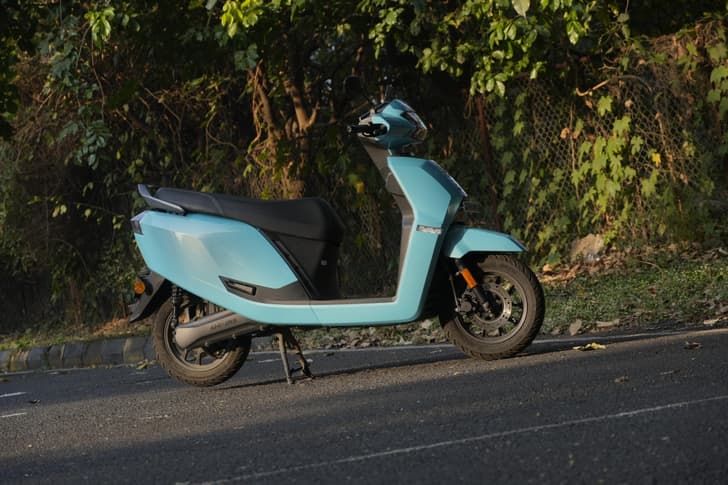
The new Chetak 3001 is powered by a 3kWh battery pack and its Indian competition includes the Ather Rizta S (2.9kWh), Vida V2 Plus (3.44kWh) and two iQube variants – the 2.2kWh and 3.5kWh variants. The Honda QC1 (1.5kWh) is a similarly priced offering and the soon-to-be-launched Suzuki e-Access has the same battery capacity as the Chetak, which is why we have included these two Japanese rivals too.
Bajaj Chetak 3001 vs rivals: range comparison
iQube 3.5 and V2 Plus have the biggest batteries and most range
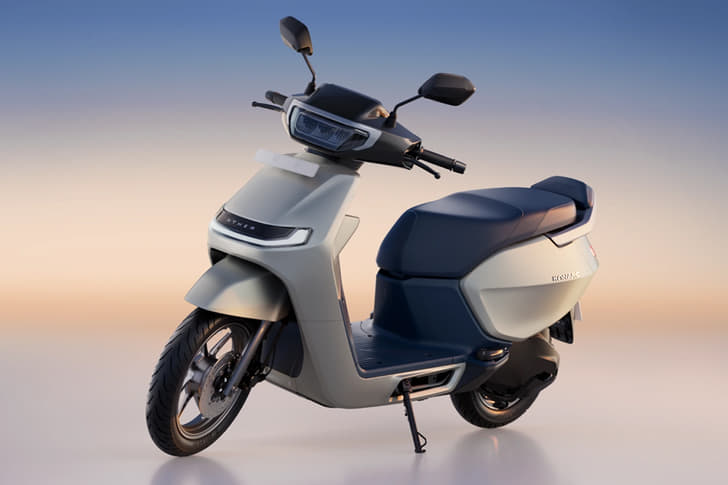
With a claimed range of 127km, the Chetak 3001 is almost exactly on par with the Rizta S, which has an IDC-claimed range of 123km. Things aren’t as close when you compare the Bajaj to TVS’ electric offerings. The iQube 2.2 has a claimed range of 94km, while the 3.5 has a 145km claimed range (both IDC numbers).
Since the Chetak’s 3kWh battery pack slots in between the iQube’s 2.2kWh and 3.5kWh variants, it sits right in between these models in terms of range. Similarly, the Vida V2 Plus has a battery capacity of 3.44kWh with a claimed 143km IDC range, which is a step up over the Chetak 3001.
Moving on to the Chetak’s Japanese competition, the Suzuki e-Access has the same battery capacity as the Bajaj – at 3kWh – but it uses an LFP battery, which is less energy dense compared to an NMC one. The e-Access has a claimed IDC range of 95km, which is about 30 percent less than the Chetak’s 127km claimed number. That leaves the Honda QC1, which has a tiny 1.5kWh battery, with a claimed 80km IDC range; a significant step down compared to every other similarly priced offering.
Model Claimed range | Bajaj Chetak 3001 127km | Vida V2 Plus 143km |
Honda QC1 80km | TVS iQube 2.2 94km | Ather Rizta S 123km |
TVS iQube 3.5 145km | Suzuki e-Access 95km |
Bajaj Chetak 3001 vs rivals: charging time comparison
Rizta, V2 Plus and e-Access have fast-charging capabilites
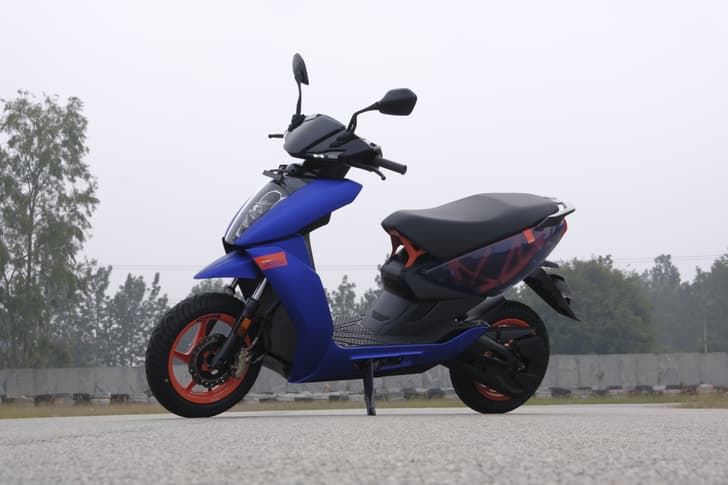
A pretty quick 750W charger is supplied with the Chetak 3001, which means its 0-80 percent charging time is just 3 hours 50 minutes. Coming to the Rizta S, you get a slow 375W charger with this base model, which means a 0-80 percent top-up takes 6 hours 30 minutes. The silver lining here is that Ather’s Grid fast-charging network is spread out across our country reasonably well and plugging into that charger will give you a range of 15km in just 10 minutes.
Moving forward, the iQube 2.2 takes only 2 hours and 45 minutes for a 0-80 percent charge, thanks to its small battery and the reasonably fast 650W supplied charger. Since the iQube 3.5 comes with the same charger, a 0-80 percent charge takes a longer 4 hours 30 minutes, which is still not too much more than the Chetak 3001.
The V2 Plus takes 5 hours 15 minutes to go from 0-80 percent SOC when plugged into the portable charger, which is quite a bit slower than the Chetak, although, just like the Rizta, the Vida too can be charged at Ather’s Grid fast-charging network, because both share the same charger connector. Plugging the V2 Plus into an Ather Grid fast charger will give you a range of 12km in 10 minutes, which is a little slower than Ather’s own offerings.
Suzuki’s e-Access takes 4 hours 30 minutes to charge from 0-80 percent with the supplied charger, which is a comparable time to the new Chetak. Suzuki is also aiming to set up its own fast-charging network across the country, and if plugged into one of those, the e-Access’ battery can go from 0-80 percent SOC in just 1 hour 12 minutes.
Despite having half the battery capacity of the Chetak (and the other scooters included here), the Honda QC1’s battery takes 4 hours and 30 minutes to go from 0-80 percent SOC, thanks to the slow 330W charger supplied with it.
Bajaj Chetak 3001 vs rivals: price
Three scooters here priced below the Rs 1 lakh mark
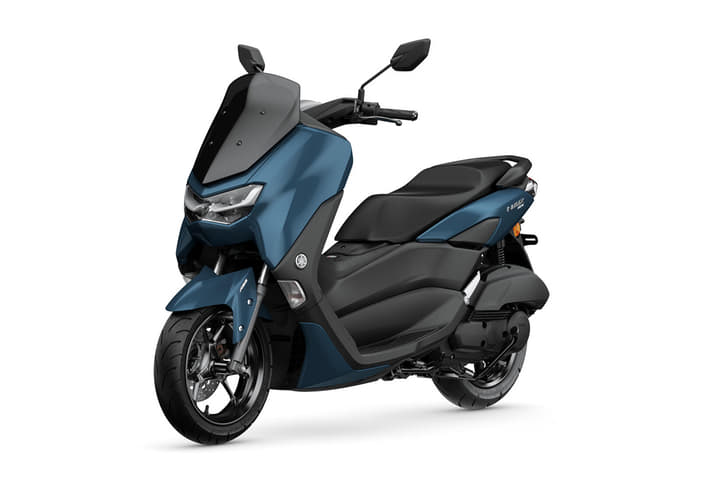
The new Chetak 3001 has a rather affordable price tag, but today’s EV landscape is quite competitive and this isn’t the most affordable scooter here. The Vida V2 Plus is the most affordable model here with a Rs 85,300 price tag, although this appears to be heavy discounting on Hero’s part and is likely to end at some point. Then we have the Honda QC1 at Rs 90,000, although its affordable price comes with its fair share of compromises.
Moving on from that, we have the TVS iQube 2.2 – Rs 1 lakh – and then the Ather Rizta S, which is priced at Rs 1.10 lakh. One thing that bears mentioning is that nearly all of the Rizta’s features and the extended battery warranty are bundled into Ather’s Pro Pack, which costs an additional Rs 14,000. The most expensive scooter we’ve compared in this story is the TVS iQube 3.5, which is priced at Rs 1.31 lakh (ex-showroom, Bengaluru). The Suzuki e-Access is yet to be launched in India and it remains to be seen where that Japanese EV finds itself in the market.
Model Price | Bajaj Chetak 3001 Rs 99,990 | Vida V2 Plus Rs 85,300 |
Honda QC1 Rs 90,000 | TVS iQube 2.2 Rs 1 lakh | Ather Rizta S Rs 1.10 lakh |
TVS iQube 3.5 Rs 1.31 lakh |
All prices ex-showroom, Delhi unless specified otherwise
All range and charging time numbers are as per manufacturer claims
Also See: 2025 TVS Apache RTR 200 4V vs rivals: price and specifications comparison
 Vishal Venugopal
 Ved Janve
 Stephen Raj Antony