Autocar India
•10w

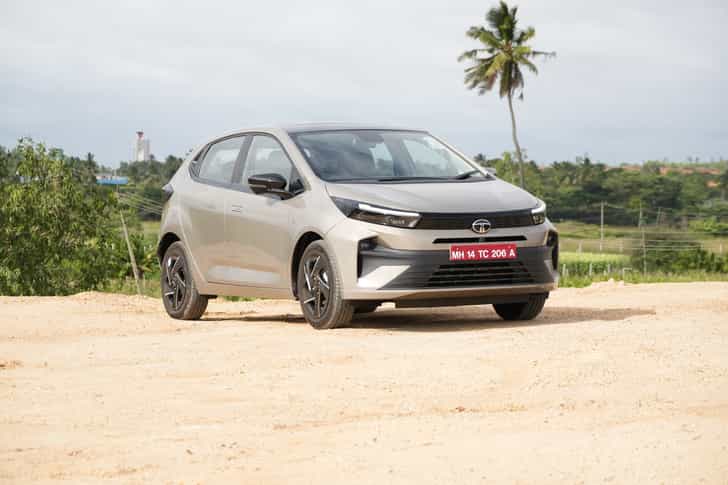
I drive around 6,000-7,000 km a year, but I’m not happy with the mileage of my Tata Altroz DCT. It averages only around 10 km/l, and with E20 petrol becoming more common, fuel costs are becoming increasingly challenging. What options or alternatives would you suggest?

Verified
•9w

With 6,000-7,000 km a year, the fuel cost is a concern, but the running is not high enough to justify a diesel car or a hybrid purely on savings. The Tata Altroz DCT’s 10 km/l is on the lower side, and E20 will reduce efficiency slightly, but the bigger issue is likely the DCT itself. Dual-clutch gearboxes are not the most efficient in stop-start city driving, and the Altroz’s DCT is not the most refined or efficient example either.

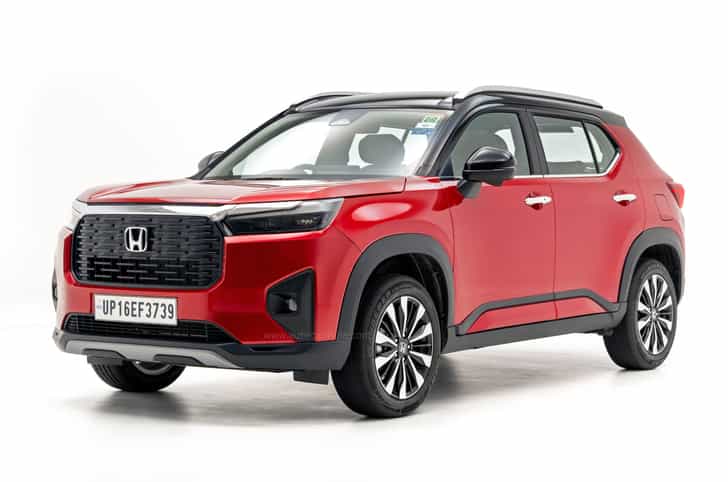
The simplest solution is to move to a naturally aspirated petrol engine with a torque converter, IVT, or CVT automatic. These gearboxes are smoother in traffic and generally more efficient in real-world conditions. Cars like the Honda Elevate CVT will deliver better efficiency and a more relaxed driving experience. If you are open to a manual, a naturally aspirated petrol with a manual gearbox will be even more efficient.

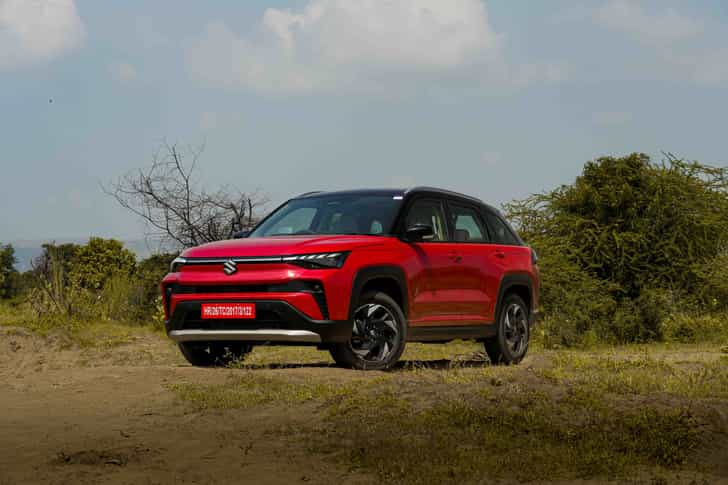
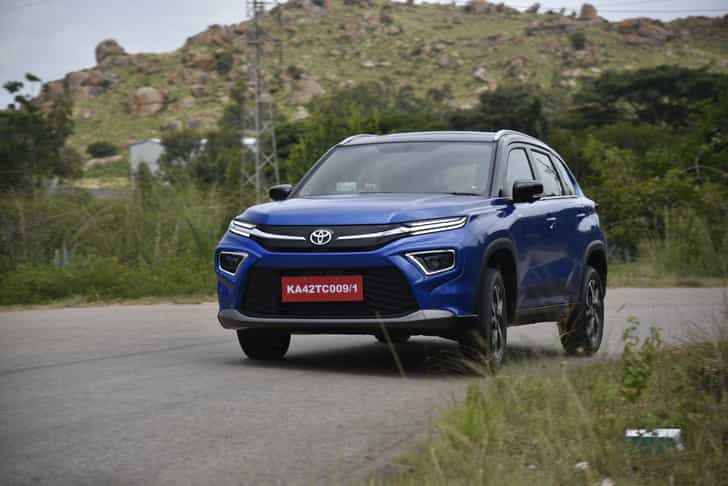
Hybrid cars like the Maruti Suzuki Victoris Hybrid or Toyota Urban Cruiser Hyryder Hybrid are the most efficient option, but at your running, the payback period is long. They make sense if you want the lowest possible fuel cost per kilometre, but not as a purely financial decision.
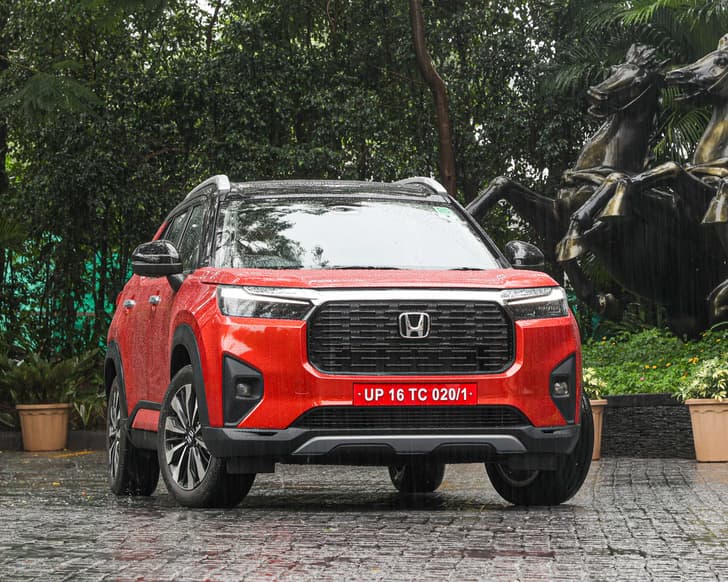
Honda Elevate

Honda Elevate

•9w•

@autocar.india thank you so much

•9w•

@autocar.india one question looking at the uncertainty of Ethanol blending based on my running if team would like to suggest a budget diesel automatic car which one would it be ?

•9w•

@shashank12

Still have more question?

Get answers from Autocar experts and owners


  • 9,000+discussions
  • 20,000+users online
  • 10,000+members

More posts on similar cars

•5d

Hello Autocar team, I am planning to buy a car, and as advised by many, I was looking at the Brezza 1.0L Turbo ZXi Plus MT (Rs. 13.5 lakh ORP). It would not be cost effective if I go for the Brezza 1.5L ZXi Plus AT (Rs. 16 lakh ORP) but when I went for the test drive, I really liked the Victoris ZXi (O) AT (19.4L (ORP) that was parked next to the Brezza. In terms of driving, I found the Brezza 1.0L to be better than the Victoris. Now, for my family of 5, I felt the Victoris is better than Brezza. If I buy Brezza, I am saving atleast 5-6 years of petrol cost but if I plan to buy a Rs. 19.4 lakh car, I feel I should go for an EV in which my options are either the e vitara Delta (Rs. 20 lakh ORP) or the Curvv EV Empowered X 55 (Rs. 20.20 lakh ORP) which will save a lot on fuel. My driving will be mostly within the city (approximately 500km per month or lower) and ocassional Mumbai-Goa and rarely Mumbai-Delhi driving with 5 people onboard with their luggage. The driving distance may increase in case of EV since the fuel cost is less. I do not have any problem waiting for charging because at the end of the day, I will be taking breaks during long rides. Given the 380-400km range of Curvv EV, I don't think that there would be much problem. As for charging, we have a 7.2W AC charger in our society which costs 14 rupees per unit (the unit price at home is 10 rupees if the FAC and meter charges are added. I feel the overall cost would be around 14 rupees per unit). The charger that I will get with the car can be installed in my home in Goa. Which between Bezza or Curvv EV is the better option? Also, is the EV charging infrastructure good enough so that I can visit any part of the country without worrying about charging (eg. hill stations and remote areas).

Verified
•1d

The Maruti Suzuki Brezza 1.0 L Turbo ZXI Plus MT is a great buy for the money. It offers peppy performance and adds a new layer to what is an otherwise sensible family car. The jump from a Brezza to a Victoris ZXI (O) AT is a very big one. While the Victoris is a larger car and feels more premium on the inside and also gets you the convenience of an automatic transmission, it isn't the best petrol automatic SUV for the money. You could consider the Kia Seltos IVT, which is the current segment's best. The Kia is far more spacious than the Victoris, feels more special inside, and also delivers a nicer drive experience. If you are open to the idea of spending big and want an EV, you should consider the Kia Syros EV. It's significantly roomier than the Maruti Suzuki e Vitara and Tata Curvv EV, and will meet the requirements of your family better. The Kia Syros EV also boasts a very high-quality interior and packs in lots of features. In our experience, Kia's EVs also deliver very well on real-world range, so your long-distance drives between Mumbai and Goa should be stress-free affairs. While the EV infrastructure is spreading rapidly across India, EV charging is not consistently good everywhere. Heavily frequented highways will offer you plenty of charging options while state highways and interior areas will not be as dense, especially with fast chargers. In essence you still have to plan your drive route thoroughly and account for long stops in case a charger is occupied or not functioning at capacity.

VehicleMaruti Suzuki Brezza
VehicleMaruti Suzuki e Vitara
VehicleTata Curvv EV
VehicleKia Seltos
VehicleKia Syros EV
VehicleMaruti Suzuki Victoris
•3d

Given that Toyota sells badge-engineered versions of Suzuki’s cars, could you help me understand which of the following is true? Maruti Suzuki cars are as reliable and long-lasting as Toyotas. That would mean Toyota’s selling points of reliability and longevity are overhyped, while Suzuki undersells its own cars. For example, Toyota offers longer warranties on some of its badge-engineered Suzuki models. Toyota has lowered its standards of quality and reliability to Suzuki’s level in order to gain market share.

Verified
•1d

Neither of the two is entirely correct. Maruti Suzuki cars are generally very reliable and can last as long as Toyota products, but Toyota's reputation for reliability and longevity is not merely hype. The two companies have a long-standing global partnership, and their badge-engineered cars share platforms, engines, transmissions and several other components. The Grand Vitara and Hyryder, for instance, are essentially the same car underneath. Toyota has not lowered its quality standards to match Suzuki. It is using Suzuki's engineering and manufacturing capabilities to expand its portfolio, while applying its own brand positioning, sales and after-sales strategy. Equally, Maruti is not necessarily underselling its products. Differences in warranty coverage are largely a commercial decision and should not be taken as evidence of a fundamental difference in vehicle quality. Toyota's reputation has been built over decades across several markets and products, not just through its Indian badge-engineered models.

VehicleMaruti Suzuki Grand Vitara
VehicleToyota Urban Cruiser Hyryder

Has E20 fuel affected your mileage?

Still have more question?

Get answers from Autocar experts and owners


  • 9,000+discussions
  • 20,000+users online
  • 10,000+members

Curated collections

Is ADAS worth paying extra for in a car?

Popular discussions right now

•1w

Hi Autocar India team, I would appreciate your advice on choosing a used automatic car for around Rs 12 lakh. I currently own a 2009 Maruti Alto LPG, which has covered 1.1 lakh km. My annual running is around 7,000km. My village is about 350km away, so I make two to three highway trips there every year. I have a family of four and want to keep my fuel expenses within Rs 5-6 lakh over the next 10 years. My priorities, in order, are an automatic gearbox, good road presence and reliability, followed by maintenance costs, as I have a close friend who is a mechanic. I want to avoid diesel cars, DCT gearboxes and gimmicky features. The Nexon, Venue and Punch feel a little too small for my needs. I would also prefer to avoid 1.2-litre three- or four-cylinder engines, as I don't want too much vibration at highway speeds. My shortlist, with all these cars test-driven and available for around Rs 12 lakh, includes the Hyundai Alcazar 2.0, Maruti Grand Vitara mild-hybrid, Hyundai Creta/Kia Seltos IVT and Honda Elevate CVT. I am also open to MPVs and sedans as a last resort. I have a few questions: 1. Which of these would you pick, and why? 2. If E30, E85 or E100 petrol is introduced, would retrofitting the Alcazar with a CNG kit make sense? I do not need the third row. 3. Are there any other used cars I should consider? 4. Would a 2019 Toyota Camry Hybrid be worth considering at around Rs 6-9 lakh? 5. What about a Toyota Innova Crysta for around Rs 9 lakh? 6. Should I consider EVs? I would love to hear your opinion.

Verified
•6d

Since you don't need the Alcazar's extra third row, why not consider a Hyundai Creta 1.5 IVT instead? It is a smooth, spacious, comfortable and sensible choice. You should get a 2022-23 manufactured, well-maintained example in your Rs 12 lakh budget.Alternatively, in case you're looking for road presence, you could also consider a used Jeep Compass diesel-automatic. It is an excellent highway car, and the 2.0-litre diesel and 9-speed torque converter automatic combination will ensure that your fuel costs are in check compared to its petrol-automatic version.

Upcoming launch buzz

Community discussions on upcoming launches
Want to sell your car?

Sell your car at the right price, without the stress.

Posted on: 11 Sept 2026