Luxury Segment
Luxury cars, ownership, maintenance and premium buying advice.
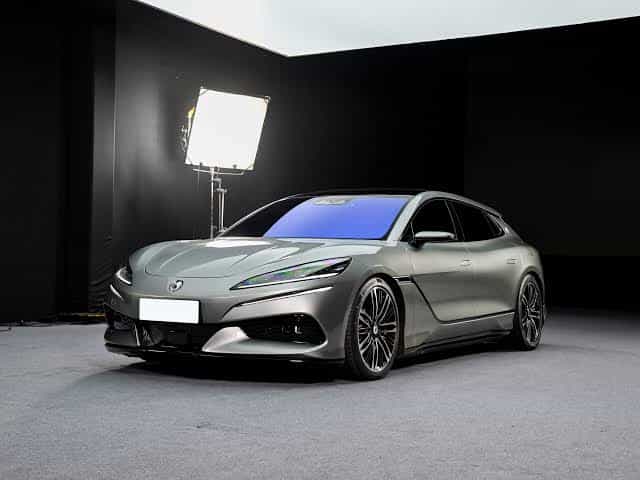
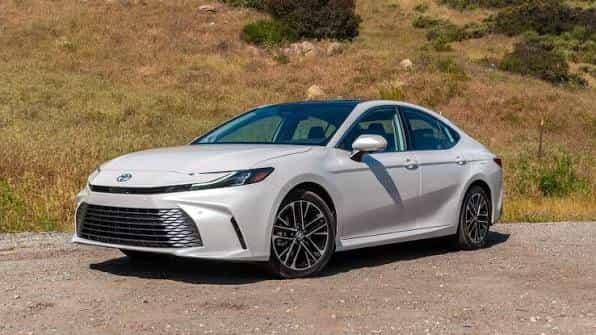
Hi Autocar Team, I wanted your guidance on whether I should buy the new Lexus ES 350h Hybrid or wait for the upcoming BMW i5 LWB. My concern with the BMW i5 LWB is that it is likely to be one of the last models based on BMW's current platform, with the Neue Klasse-based i5 expected to arrive in the near future. Given how quickly EV technology is evolving, I am worried that it could become outdated relatively soon. On the other hand, the Lexus ES 350h is based on Toyota's sixth-generation hybrid technology, which makes me feel it may remain relevant for longer within its segment. That said, the idea of switching to an EV is also very exciting, so I am finding it difficult to decide. Which one would you recommend?
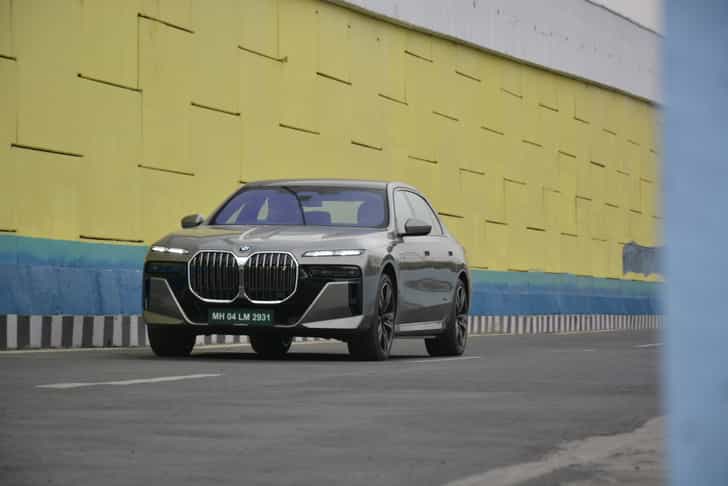
The new i5 LWB is expected to be a thorough revision of the current model based on the CLAR platform, with Neue Klasse-inspired styling and perhaps battery and motor updates, rather than an outright shift to the Neue Klasse platform of the i3. This is similar to what was done with the BMW i7, which also shares the CLAR platform, as both are only halfway through their life cycles. Besides, that is still some time away, and the only i5 you can buy now is the sporty (and low-slung) M60. You're right about rapidly advancing EV tech, but whether you choose today's i5 or the incoming LCI or LWB, you'll still have a luxurious, comfortable, refined and powerful EV.As for the Lexus, if you're choosing the hybrid, know that it is about half the price of what the i5 LWB will likely cost. There is also the ES Electric, which is closer in price and concept to the i5. Either way, the ES seems like the better choice for you if you plan to purchase today, since as you mentioned, it is presently the more contemporary option. That said, depending on which camp you fall into, a hybrid may already be behind in terms of relevance compared to any EV, so it really comes down to the nature of your usage. For now, in India, pound for pound, a hybrid makes more sense than an EV, so if you're keen on the new ES hybrid, you should go for it.
I am planning to buy my first luxury car and am considering the BMW 3 Series M Sport Pro, which is available for Rs. 70 lakh on-road. Is this a good deal? Also, is its ground clearance too low for long-distance or cross-country road trips?
The BMW 3 Series M Sport Pro at Rs. 70 lakh on-road is a reasonable deal, though not an outright bargain. It remains one of the most engaging luxury sedans to drive, thanks to its strong performance, well-balanced chassis, and genuinely premium cabin. For a first luxury car, it is a very satisfying choice.As for ground clearance, the version sold in India is capable of clearing most speed breakers and potholes without scraping. In fact, it is well-suited to cross-country trips as well. With sensible driving and a bit of care, it can handle most highways and rural roads with ease.
I want to buy a car in the Rs. 60 lakh to Rs. 70 lakh range. An SUV seems like the more practical choice, but there aren't many exciting options from BMW or Mercedes-Benz in this budget. Sedans like the BMW 3 Series are available, but I am concerned about their low ground clearance, especially since the roads in my area are not in great condition and waterlogging is a common issue. Toyota appeals because of its reliability, but I don't find the interiors very appealing. As for Skoda and Volkswagen, I am not very confident about their after-sales service. Would the BMW 3 Series still be comfortable and practical to own on bad roads and during waterlogged conditions? Above all, I want complete peace of mind after the purchase.
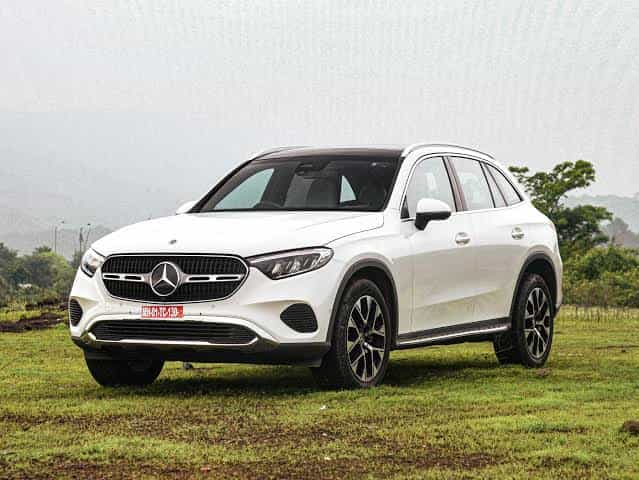
Within a budget of Rs. 70 lakh, the BMW 3 Series is one of the best choices. However, if ground clearance is a concern, an SUV would be the more practical option. Equivalent SUVs such as the BMW X3 and the Mercedes-Benz GLC will require stretching the budget by another Rs. 10-15 lakh. Otherwise, the alternatives will have to come from a segment below.Since comfort is a priority, it would be worth waiting for the upcoming BMW X1 Long Wheelbase, which is set to launch on 21 August. As it will be assembled in India, pricing is expected to remain competitive and within your budget.The Audi Q3 and Q3 Sportback are also worth considering. They offer a refined petrol engine, smooth performance, and a high-quality cabin. Their only drawback is that they are not the most modern in terms of features. With the new-generation Q3 expected to arrive soon, attractive discounts on the current models are also likely.
Hello team, I have a budget of around 50-55 lakh and am looking for a premium luxury car. I would prefer a sedan, but I'm also open to an SUV. The Audi A4 fits my budget, but I'm hesitant because it has been discontinued in some international markets, and the current model has been on sale for around five years. Which vehicle would you recommend?
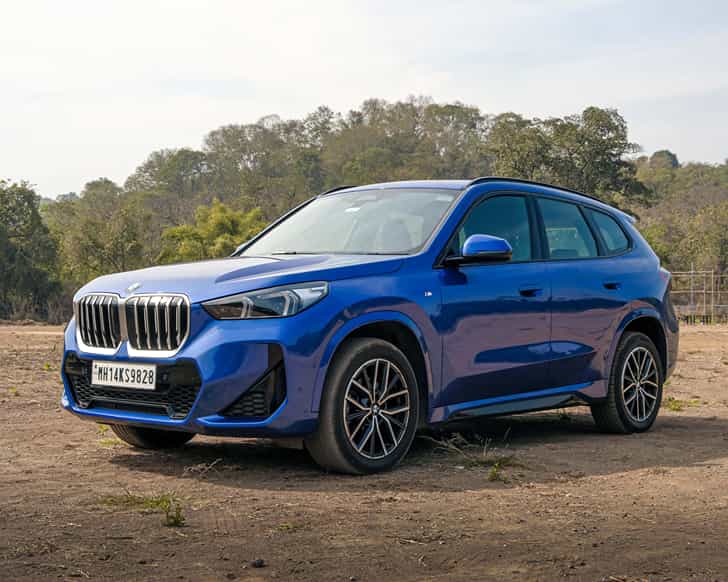
Skip the Audi A4 and go for the BMW X1. It is the freshest luxury model you’ll get for around Rs. 50-55 lakh, so you won’t be buying something that already feels old, and it will age better than a 5-year-old Audi car A4. Since you’re open to an SUV, the BMW car makes daily life easy. It is compact enough to drive in the city, comfortable on bad roads, and still relaxed at highway speeds. It also gives you more space and a bigger boot than any sedan in this budget, which helps if you have a family or do airport runs often.Do note, though, that the X1's performance is just alright. The X1’s engines are fine, not thrilling, and the cabin doesn’t feel as plush as the bigger German sedans.If you must have a sedan car at this price, look at the BMW 2 Series Gran Coupe. It is newer than the A4, sharp to drive, and usually fits the budget, but rear seat space is tight.

I would appreciate your recommendation on which car I should buy in India. Here are my requirements: I want an automatic transmission. It should have a strong road presence, look premium, and not feel like a budget vehicle. It should be highly reliable, durable, and capable of lasting for many years with minimal maintenance, as I don't enjoy spending a lot of time maintaining vehicles. There may be occasions when the car remains unused for one or even two weeks, so it should be able to handle infrequent use without issues. Although I don't frequently carry heavy loads, once or twice a year I may need to transport cement bags, rice bags, or other bulky items. Therefore, the vehicle should have a reasonably spacious boot or cargo area. I also occasionally travel to villages where the roads are unpaved, uneven, and in poor condition, although they are not true off-road trails. I don't think an AWD system is essential, but the vehicle should be comfortable and capable on such roads. For context, I currently own: A Maruti Suzuki Wagon R (purchased in 2006) A Mahindra XUV500 AWD (purchased in 2017) Both vehicles are still in good running condition. However, I am now looking to replace one of them or add another vehicle with an automatic transmission that is dependable, comfortable, and built to last. My budget is between Rs 35 lakh and Rs 40 lakh (on-road). One final point that may be relevant is that I am now over 50 years old, so I would prefer a vehicle that is comfortable to drive, easy to get in and out of, and well-suited to long-term ownership. Based on these requirements, which cars available in India would you recommend, and why? Please compare the shortlisted models in terms of reliability, maintenance costs, comfort, road presence, practicality, fuel efficiency, resale value, and suitability for my intended use.
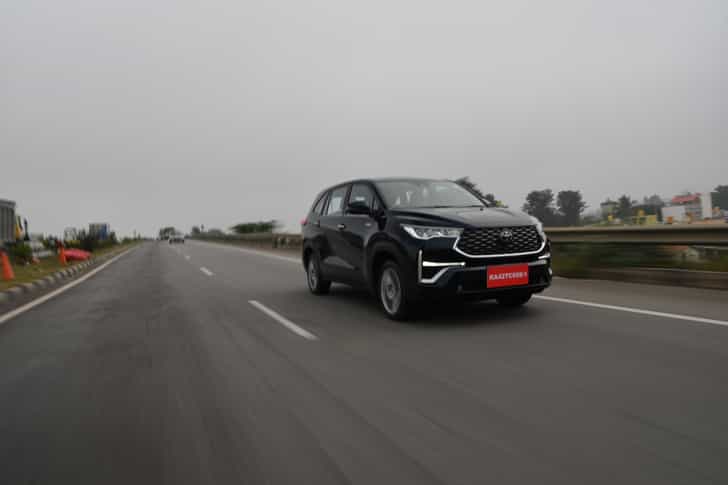
Consider the Toyota Innova HyCross automatic hybrid. It suits your “own it for a decade, little fuss” style better than anything else in your budget, gives easy ingress for a 50-plus driver, rides comfortably on broken village roads, and with the third row folded, it swallows cement or rice bags without drama. Toyota’s hybrid is proven, the automatic is smooth in traffic, the real-world economy is strong for a big car, and it tolerates long idle periods well. Road presence is solid, the cabin feels premium enough, and Toyota service and resale are still the safest bets in India. The drawback is that you won't have the rugged feel or off-road ability of a ladder frame chassis SUV. If that is something you are looking for, the Fortuner will be a good fit, but it will require you to stretch your budget a bit. Also, fuel economy won't be as good as the HyCross, and getting in and out will require more effort. Alternatively, you could consider the Mahindra Thar Roxx, which will get you 4x4 and a proven diesel automatic under your specified budget. Another option is the XUV 7XO AWD, which is a suitable replacement for your XUV 500 AWD. The drawback with these two is that long-term reliability and resale are not at the Toyota level.Overall, the HyCross wins for reliability, low running costs, comfort, space and long-term peace of mind, while still fitting Rs. 35-40 lakh on-road.
Dear Autocar India Team, I am writing to highlight a serious ownership concern with premium Volkswagen Group CBU SUVs in India. I own a Volkswagen Tiguan R-Line costing over Rs. 60 lakhs on road. After tyre damage, I approached the authorised service network and was informed that the OEM tyre size - 255/45 R19 - is not available in India. This is a safety-critical consumable, not a cosmetic accessory. For a premium CBU SUV, it is deeply disappointing that owners are left struggling to source the standard tyre size after damage. This concern may not be limited to the Tiguan R-Line alone. The Volkswagen Tayron R-Line in India also uses the same 255/45 R19 tyre size, and the recently launched Skoda Kodiaq RS uses another rare performance tyre size, 235/45 R20. This raises a larger question: are premium CBU models being sold in India without adequate long-term tyre and consumable support? Insurance has approved an alternative tyre size in my case, but that does not solve the core issue. Owners should not be forced into non-OEM tyre sizes because the manufacturer has not ensured the availability of the factory-specified tyre. I had publicly raised this with Volkswagen India, but received no response. I request Autocar India to kindly look into this and raise the issue with Volkswagen India / Skoda Auto Volkswagen India, so that either OEM tyre availability is ensured or formal written guidance is provided for safe alternative tyre sizes. Regards, Dr. S. Alagu Ganesh Madurai
We’ll take this up with Skoda Auto Volkswagen India right away and ask for a clear tyre support policy, stocking timelines for 255/45 R19 and 235/45 R20 in India, and written guidance on approved alternates. We will publish their response. You’re right to call this out. A Rs. 60 lakh CBU that leaves owners hunting for a basic, safety‑critical size is not acceptable. No doubt, import curbs and BIS rules have choked niche sizes, but that is the OEM’s job to solve with their tyre partners, not the owner’s problem.While we push for a fix, two practical options keep you mobile without straying far from spec. For Tiguan R‑Line 255/45 R19, the closest matches are 245/45 R19 or 235/50 R19. For Kodiaq RS 235/45 R20, 255/40 R20 is closest. Only choose tyres with equal or higher load and speed rating, check full‑lock clearance, and do an alignment. With AWD, replace in pairs at a minimum, ideally all four, to avoid drivetrain stress. Expect a small speedometer error.
Hello, we own a Jeep Compass Limited and a Volkswagen Polo. We seek a new car of around 15-40 lakh Rs on road max budget with a high-quality cabin and comfort. We would love it if the car were from a high-quality brand, too. Please recommend one.
Get the Toyota Innova HyCross VX(O). It delivers the most comfortable, high-quality cabin you can get under Rs. 40 lakh on-road, and the Toyota badge nails your “high quality brand” ask. Compared to your Compass and Polo, this gives you a clear step up in space and long-trip comfort. The second row is wide and supportive, the ride is plush over bad roads, and the strong-hybrid is quiet and smooth in traffic while staying efficient in the city. It is an easy, relaxing family car that still cruises confidently on highways.It also brings the peace-of-mind bit Toyota is known for, which matters when you plan to keep a car a long time. If you often carry parents or kids, they will feel the difference straight away.One honest catch: the ZX variant looks and feels even more premium, but it usually pushes past your budget in many cities. The VX(O) misses some toys, and it is not as rugged or fun to drive as your Compass. You buy this for calm and comfort.
Hi Autocar India, My name is Radhika from Hyderabad. I have tested XEV 9E, XEV 9S, BYD Sealion 7, Tesla Model Y and BMW iX1. My budget is not a constraint, and I can spend up to 55-57 lakhs on a car. BMW's driving dynamics felt better than those of Mahindra or Tata. FYI, I have tried BYD Sealion 7 also, but decided not to go with it due to their network, badge value and other reasons. My family did not like Tesla as the interiors are very minimal. My question is whether spending an additional 25 lakhs for the BMW iX1 makes sense, or if it's not a great car. Can you please clarify? Thank you!
Pick the BMW iX1 LWB. The extra spend gets you what you already liked on the drive - a tighter, more confidence‑inspiring feel than the Mahindra XEV 9e/9s, and a premium, normal‑to‑use cabin your family will prefer over Tesla’s sparse setup. You also sidestep your BYD car related worries with stronger brand pull and a wider service network.On our roads, the iX1’s steering and body control make everyday driving feel calmer and cleaner, whether in Hyderabad traffic or on the ORR. Fit and finish, seats, and infotainment feel a class up, so it will still feel special three years in, not just on day one.Be aware that rear space and boot are not as generous as the XEVs or Model Y L; the ride is on the firmer side on rough patches, and range and fast‑charge speeds are not class‑leading. If you carry tall adults in the back often or do frequent very long highway runs, you will notice those.If your deal lands close to Rs. 55‑57 lakh on road, the premium isn’t just badge tax; it’s daily satisfaction. If not, the XEV 9e/9s are a strong value, but for your priorities, the BMW is the right call.
Need expert advice?
Ask the Autocar community and experts.