Autocar India
•1d

I am 6.1 ft tall, weigh 101 kg, and live in Pune (PCMC). My maximum budget is Rs 13 lakh on-road. My weekly city driving is limited to around 50 km, and I undertake a 250 km long drive once every three months. I also take an annual family trip of around 1,500 to 2,000 km from Pune to Delhi or Kerala. My main priorities are comfort, generous legroom and good under-thigh support, as my parents are tall too. Good mileage would be an added advantage. I prefer an automatic transmission, but I am open to a manual if there are no suitable automatic options. I am open to any fuel type, including petrol, diesel, CNG or electric. I am also willing to consider a used car manufactured in 2021 or later, provided it is in good condition. Could you please suggest the most suitable options for my requirements? Should I buy a car now or wait for any promising upcoming models in the market?

Verified
•2h

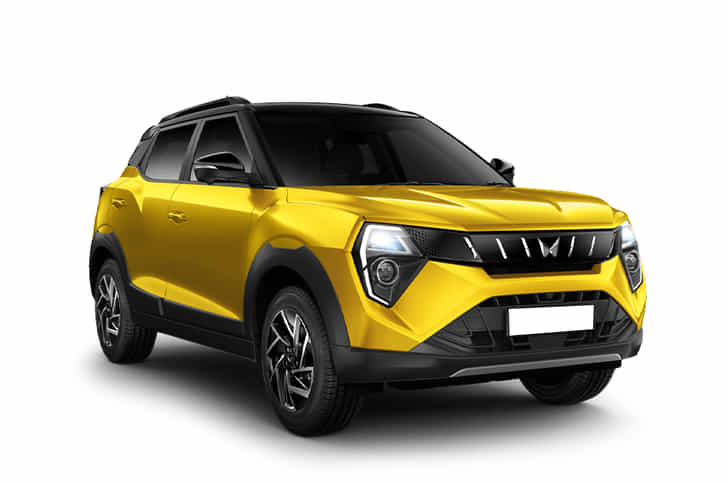
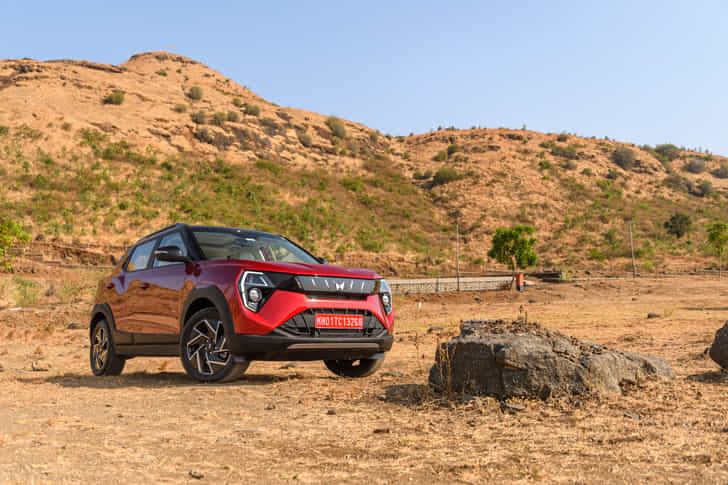
Go for the Mahindra XUV 3XO petrol automatic. At 6 ft 1 in and 101kg, comfort, legroom and thigh support are your top priorities, and the 3XO delivers on all three. The front seats are wide and supportive, the driving position is comfortable for taller drivers, and the rear seat offers genuinely good legroom and a flat floor, which will make a big difference for your parents on longer journeys. Your usage pattern is predominantly city driving with occasional long highway trips, so a petrol automatic is the right choice. The 3XO’s torque converter automatic is smooth and reliable in traffic, and the car feels stable and comfortable on the highway. It is also one of the safest cars in the segment, which is important given your family trips. The only drawback is the boot, which is on the smaller side, but for your usage, that is a manageable compromise.

VehicleMahindra XUV 3XO
Mahindra XUV 3XO
Mahindra XUV 3XO
•1d

I am currently driving a 2020 Skoda Octavia diesel and am planning to switch to an EV, as my daily commute is approximately 125 km, with around 70% highway driving and 30% city driving. I have shortlisted the Mahindra XEV 9e but am also considering the Mahindra XEV 9S, particularly the six-seater version. I would like to know how comfortable the 9S would be for my family of five, especially on longer journeys. How much boot space is available when the third row is in use, and is the third row comfortable enough for regular use? Would you recommend the XEV 9e or the XEV 9S for my requirements, or are there any other EVs I should consider? Please suggest the most suitable option based on my daily driving needs and family requirements.

Verified
•3h

The Mahindra XEV 9e is the right call, and go for the bigger 79kWh battery. You’re doing 125km a day, mostly on the highway, so range is what you’ll notice most. We got around 450km from a full charge in our test, which means plugging in every three days or so. The 9e is also lovely on the highway. The ride is plush and it feels planted at speed, which will make the switch from your Octavia easy.You don’t need a third row for five people. The 9e’s back seat is wide and the floor is flat, so three adults fit without a fuss, and the boot is huge, with a small extra one under the bonnet. The one thing to watch is the sloping roof. Anyone tall in the back may find their head close to the ceiling.In your case, we would skip the 9S six-seater. With captain’s chairs in the middle, someone in your family always ends up in the third row, and then there’s hardly any room for bags with the third row up. If you like the 9S, get the seven-seater instead. You all fit in two rows, and the third row folds away for luggage. It doesn’t ride as nicely as the 9e on the highway, though.

VehicleMahindra XEV 9e
•16h

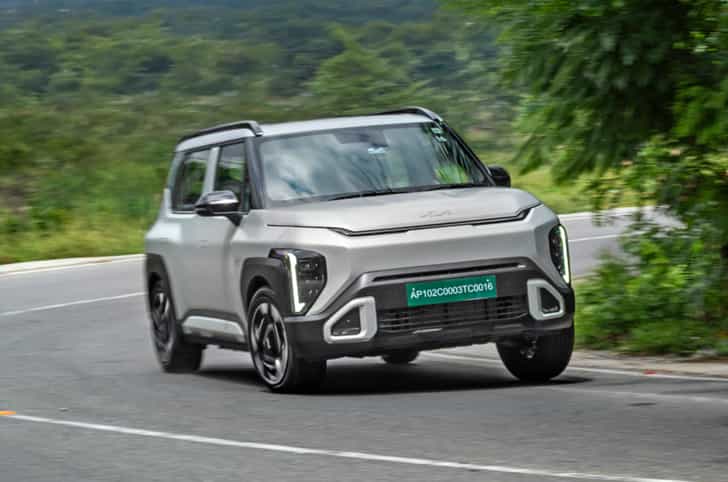
I am looking forward to upcoming sub-4-metre car launches and would appreciate it if you could share the expected launch timelines for the following models: the next-generation Kia Sonet based on the K1 platform, Volkswagen’s sub-4-metre SUV, Mahindra Vision S, Mahindra Vision X, and the next-generation Hyundai i20. Thank you in advance!

Verified
•4h

None of these five is likely before 2027, and Mahindra and Volkswagen are the only ones with even a rough timeline so far.Kia New Sonet: Kia is expected to bring the second-generation Sonet to India in 2027. Like the new Sonet, it will move to the K1 platform, with bigger screens, Level 2 ADAS and more rear-seat room, but there’s no confirmed date yet.Volkswagen Tera is expected around mid-2027, at an estimated Rs 8-13.5 lakh. As a Virtus owner, you’ll find it familiar territory.Mahindra Vision S production version is expected in 2027, and according to our estimates, it will be priced between Rs 10.5-15 lakh.In the case of the Mahindra Vision X, this sporty, crossover-styled SUV was shown as a concept in August 2025 and is expected to go on sale in 2027 and is expected to be under 4m. It will use the new NU_IQ platform, which can take petrol, diesel, hybrid and electric powertrains, but the production engines haven’t been confirmed.In the case of the Hyundai New i20, it made its global debut in Brazil in June, with a more crossover-like look and twin screens. Hyundai hasn’t confirmed an India launch date yet.All of these are estimates, and timelines tend to slip. If you need a car in the next few months, buy from what’s on sale now rather than holding out for any of these.

VehicleVolkswagen Tera
VehicleMahindra Vision S
VehicleMahindra Vision X
VehicleKia New Sonet
VehicleHyundai New i20

Upcoming launch buzz

Community discussions on upcoming launches
•4d

Hi Autocar experts, I am currently driving a 2022 Renault Kwid, which I primarily use for commuting within the city. Now that my wife also needs to drive to work, I am planning to give her this car and buy a second car for myself. I want the new car to serve as our primary vehicle for family trips on highways, so safety, good driving dynamics, and overall comfort are important. It should also be suitable for my daily city commute. My budget is under Rs 15 lakh. Could you suggest some good options?

Verified
•5h

For your requirements, the Mahindra XUV 3XO is the best fit. It is one of the safest cars in the segment, has a strong turbo petrol engine and is genuinely enjoyable to drive on highways. At the same time, it is compact enough to be manageable in the city and offers a comfortable ride. The wide cabin also makes this Mahindra car a good family car, and Mahindra’s service network is strong in most cities.If you want something with a more premium feel and a slightly better ownership experience, the Kia Sonet is a good alternative. It is also a safe car, has a refined turbo petrol engine and feels more upmarket inside. However, this Kia car is not as spacious as the 3XO and does not feel as robust on bad roads.Alternatively, the Skoda Kylaq is worth considering. It is one of the best driver’s cars in the segment, with excellent handling and a strong turbo petrol engine. However, this Skoda car is slightly more expensive and does not offer as many features as the 3XO at a similar price point.Overall, the XUV 3XO strikes the best balance between safety, driving dynamics, space and value for money.

VehicleMahindra XUV 3XO
VehicleKia Sonet
VehicleSkoda Kylaq
•13h

Hi Autocar Team, I am interested in buying a Hyundai Creta, but I am confused between the petrol and diesel variants. I drive around 10,000 km per year, with a mix of short trips, long trips, and city driving. I am concerned about DPF issues with the diesel engine and the mileage of the petrol engine. Q1. How often do we need to drive a diesel car? Is there any rule that we need to start and drive it daily? Q2. If we don't drive the car, will soot still form in the DPF? Q3. If I don't drive the car for two weeks and then drive it only in the city for the next two weeks, how would DPF clogging occur? Basically, how should we maintain these diesel engines? Please guide me in understanding this.

Verified
•5h

At 10,000km a year, buy the Hyundai Creta petrol. A diesel only pays off at much higher mileage, and its higher price would take many years to recover. The petrol’s fuel bill will be higher, but at your running, the difference is only around Rs 2,000-2,500 a month.To answer your DPF questions: No, you don’t have to drive a diesel every day. Soot only forms while the engine is running, so a car parked for two weeks builds up nothing. The bigger risk then is a flat battery. The filter cleans itself by burning off the soot, but it needs heat to do it. That takes 15-20 minutes of steady driving at highway speeds. Short city trips never get it hot enough, so the soot keeps building until a warning light comes on.Your pattern is the risk. Two weeks parked does no harm, but two weeks of only city driving is exactly what fills the filter. A diesel car owner in your position would need a proper highway run every couple of weeks and avoid switching off midway through a cleaning cycle.None of this is difficult, but it’s a routine you have to keep up, and with a petrol car you don’t have to think about it.

VehicleHyundai Creta
•4d

Hi, I am planning to buy a car around Rs. 11.5 lakh (on-road) for monthly running of around 700-800 Km with a trip in 3-4 months of around 1000 km on hilly terrain and highways. My requirements include sunroof for children, 60:40 seats, rear AC, good torque for hills and rear camera. I feel that push button or automatic will be advantageous. Please suggest.

Verified
•7h

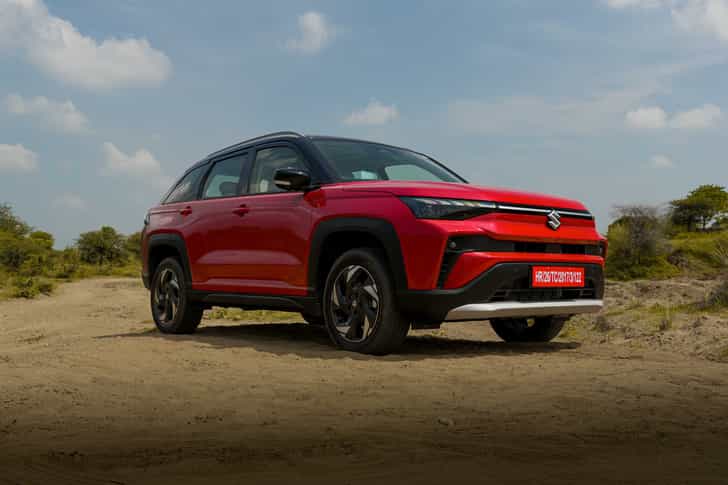
With a budget of around Rs 11.5 lakh on-road, your requirements are quite clear: a sunroof, 60:40 split rear seats, rear AC vents, good torque for hills, a rear camera, and ideally push-button start or an automatic transmission. Your monthly running of 700-800 km with occasional 1000 km hill trips points towards a petrol car, as a diesel would not justify itself at this usage level.The Mahindra XUV 3XO is the best fit here. It offers a strong turbo petrol engine with good low-end torque, which will help on hilly roads, and it comes with a sunroof, rear AC vents, 60:40 split rear seats and a rear camera in the mid variants. The automatic gearbox is also available within your budget, and the car is well equipped for the price.The Maruti Suzuki Brezza is another solid choice. You have the choice of a naturally aspirated or a turbo petrol, but only the former comes with an automatic. It also offers a sunroof, rear AC vents and a rear camera, and Maruti's service network is a big advantage.The Hyundai Venue is another option, but the turbo petrol automatic variants are likely to stretch your budget. The naturally aspirated petrol is available within your budget, but it will not feel as strong on hills.Overall, the XUV 3XO is the best fit for your requirements. It offers the right combination of features, performance and value for money. The Brezza is the more sensible alternative if you prioritise reliability and ease of ownership over performance.

VehicleMahindra XUV 3XO
VehicleMaruti Suzuki Brezza
VehicleHyundai Venue
•3d

Hi team, I currently drive a Honda City (2009 model) and have been pretty satisfied with the riding experience. I am now planning to upgrade to a car under a budget of Rs. 25 lakh. Since it would be my primary car for now, please suggest whether I should go with an EV or an ICE. Given my limited highway travel (surely it will happen during trips), and daily city travel of 30-50 km, please suggest the car type and model. I am looking for am economical car with good road presence.

Verified
•7h

Given your usage pattern of 30-50km daily city driving with occasional highway trips, an EV is a very strong option. The running cost savings will be significant, and modern EVs are now genuinely usable for highway trips as long as you have home charging. The key is to choose an EV with a realistic range and a comfortable, spacious cabin, since this will be your primary car.The Tata Sierra EV 75kWh is the recommendation here. It offers a spacious, premium-feeling cabin, a comfortable ride and a usable real-world range that makes both city driving and occasional highway trips easy to manage. It also has good road presence and feels like a proper upgrade from a Honda City in terms of comfort and overall ownership experience.If you are still on the fence about EVs, the Maruti Suzuki Victoris Hybrid is the best ICE alternative. It is extremely efficient in the city, reliable and easy to live with, and the hybrid system keeps running costs low without any charging dependency.The decision comes down to your comfort with home charging. If you have it, the Sierra EV is the better long-term ownership proposition. If not, the Victoris Hybrid is the safer choice.

VehicleMaruti Suzuki Victoris
VehicleTata Sierra EV
VehicleHonda City
Maruti Suzuki Victoris
•1d

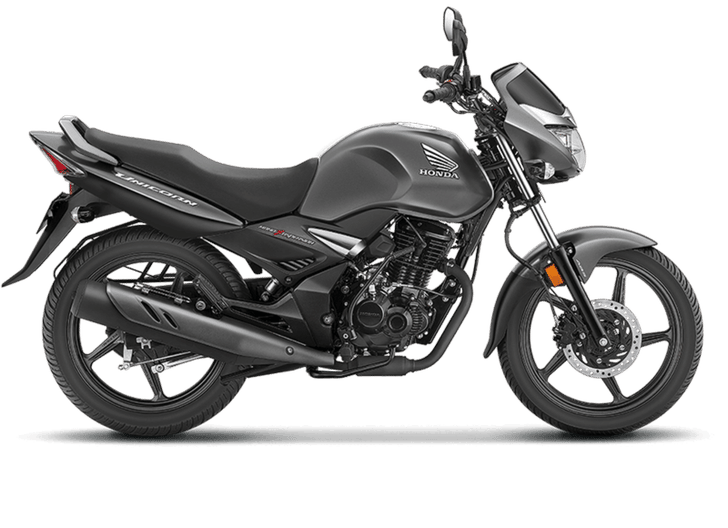
I'm planning to purchase my first motorcycle and have narrowed down my options to the Bajaj Pulsar N160 SS and Dominar 250. My primary usage will be short daily commutes of approximately 5-6 km one way in Hyderabad's traffic (around 12km two way), with occasional longer rides. I'm a relatively new rider, so low-speed usability, manoeuvrability and ease of handling matter to me. The N160 SS appeals to me because of its lighter weight, Crawl Tech, TFT and city-friendly characteristics. However, the Dominar 400 has been my dream motorcycle for the past ten years, ever since it was launched in India while I was still in school. While the Dominar 400 remains my dream bike, the Dominar 250 seems like a reasonable compromise for my primarily urban use, offering some of that Dominar experience without going straight for the 400. I've ridden the Dominar 400 and found it surprisingly manageable and planted, but I haven't been able to test-ride the Dominar 250 because dealerships don't have test-ride units. I've also heard that the Dominar 250 lacks low-end urgency, requires frequent gear changes in slow traffic and is relatively heavy for city use. On the other hand, my uncle, who has owned a Dominar 400 for years and uses it in Hyderabad, has suggested that the Dominar 250 could be a reasonable choice for my requirements. The Dominar 250 is currently quoted at approximately Rs. 2.42 lakh (on-road), compared with around Rs. 1.86-1.94 lakh for the N160 SS. Given my usage, beginner experience and long-standing desire to own a Dominar, would you recommend the N160 SS as the more sensible long-term choice, or is the Dominar 250 a motorcycle that I could realistically grow into and enjoy despite its compromises? I would particularly appreciate your thoughts on low-speed tractability, bumper-to-bumper traffic, manoeuvrability for a beginner, and whether the Dominar's additional weight and cost are justified for someone whose riding will primarily be urban.
Verified
•9h

There's no doubt that the Bajaj Dominar 250 will fit the bill well for your needs as a first-time motorcyclist. However, what stops us from recommending it wholeheartedly is that the smaller Dominar sells in extremely microscopic numbers which means sometimes you'll be waiting a long time for a small part, leaving your bike out of action which is never a good thing. Truth be told, the Dominar 400 (especially since it is now powered by a downsized 349cc motor) is a perfectly acceptable first bike and since you have had an inclination towards the Dominar for a long time, why not go ahead and scratch and that itch! The only caveat here would be that the Dominar is a hefty machine, weighing 190kg, which can catch you off-guard at slow-speed scenarios but in time, you'll get used to it. On the other hand, if you don't want to deal with the extra weight and purchasing cost of the Dominar 400, then the Pulsar N160 SS is a very different but nonetheless, a great option for a beginner. It has a peppy engine, predictable handling, good comfort and comes with all the latest gizmos and gadgets that people these days want their two-wheelers to be festooned with. Not to mention, it will also be far more fuel efficient than the Dominar. These are 2 very different bikes which will give you starly different experiences so its best you take a test ride and see which one you're leaning towards more before you make your decision.

Bajaj Dominar 250
Bajaj Dominar 400
Bajaj Pulsar N160
•4w

Hi, I currently own a Tata Hexa. I want to change my car because of the slow or limited availability of parts. I have finalized a 2015 Fortuner manual for Rs 16 lakh, which has 1.36 lakh km on the odometer. But I feel that spending Rs 16 lakh on a 10-year-old vehicle doesn’t make value sense. If I stretch my budget a little, I could go for the base variant of the XUV 7XO, which is readily available with a dealer. Am I thinking right? If I buy the Fortuner and keep it for three to four years, it will be due for FC when I sell it. At that time, the resale value will drop very steeply. Please guide me through this.

Verified
•11h

You are thinking in the right direction. The 2015 Fortuner is a proven, reliable workhorse, but at Rs 16 lakh for a 10-year-old car with 1.36 lakh km on the odo, it is difficult to justify from a value perspective. You are already at the point where the next owner will be factoring in the approaching face lift, and while Fortuners do hold value well, the depreciation curve will steepen as it gets older.The Mahindra XUV 7XO is the better long-term decision here. You get a brand-new car with a full warranty, modern safety features, and a far more comfortable and refined ownership experience. This Mahindra Car is also a genuinely capable SUV with strong diesel and petrol options, good highway manners and a much more modern cabin than the old Fortuner.The only reason to buy the Toyota Fortuner would be if you specifically want a rugged, old-school SUV with proven reliability and are willing to accept the age, mileage and upcoming facelift Otherwise, the 7XO is the smarter buy.

VehicleMahindra XUV 7XO
VehicleToyota Fortuner
•1w

I own a 2019 Volvo XC40 diesel automatic and am its second owner. I now have a driver, so I mostly travel in the rear seat. However, I find it uncomfortable because of the limited under-thigh support and insufficient seatback recline. Could you recommend a diesel automatic with comfortable rear seats, recline adjustment and rear AC vents? I regularly make highway trips of around 150km, two to three times a week.

Verified
•12h

We’d recommend the Kia Sorento, specifically the six-seat HTX diesel automatic. Its second-row captain’s seats offer slide and recline adjustment, along with ventilation and rear air-conditioning vents, making it a much better fit for your chauffeur-driven usage. Be sure to choose the six-seater, as the seven-seat version has a conventional benchThe 2.2-litre diesel paired with a smooth-shifting eight-speed dual-clutch automatic is an excellent combination for those regular 150km highway trips. It offers strong, effortless performance, while the comfortable ride and spacious second row should make spending long hours in the back considerably more relaxingSince under-thigh support is your main complaint with the Volvo, we’d strongly suggest taking an extended test drive from the rear seat. Adjust the seat slide and backrest recline to check whether the support suits you, rather than judging comfort during a quick showroom sit.Kia may not have Volvo’s premium cachet, but for your needs, the Sorento is all the car you need.

VehicleKia Sorento
•1w

I’ve almost finalised the Skoda Kylaq Signature Automatic, and I really like the car. However, I’m a little worried about Skoda’s long-term service and maintenance costs, especially after the warranty period. I’m planning to keep the car for around 7–8 years. Would you recommend taking the Service Maintenance Package (SMP) along with the car? Is it worth the additional cost considering regular servicing and potential maintenance expenses? Also, compared with the Brezza and Nexon, how is the Kylaq Signature Automatic in terms of long-term reliability, service costs and parts replacement? Would really appreciate your advice before I make the final purchase decision.

Verified
•13h

If you like the Skoda Kylaq Signature Automatic, go ahead and buy it. It is a genuinely good car and one of the best driver’s cars in the segment. The 1.0 TSI engine paired with the 6-speed torque converter automatic is a proven combination, and Skoda’s reliability has improved significantly in recent years. The bigger concern is not reliability but long-term maintenance costs, which can be higher than Maruti or Tata once the car is out of warranty.This is where the Service Maintenance Package (SMP) makes sense. It locks in your service costs for the first 4-5 years, covers all scheduled maintenance and gives you peace of mind during the most expensive ownership period. If you are planning to keep the car for 7-8 years, it is worth the additional cost because it protects you from unexpected bills and helps you budget ownership costs more accurately.Compared to the Brezza and Nexon, the Kylaq is the better driver’s car with a more engaging driving experience and a stronger engine. The Brezza is the benchmark for long-term reliability and low maintenance costs, while the Nexon sits somewhere in between. The Kylaq is not unreliable, but parts and service can be more expensive once you are out of warranty.If you are buying the Kylaq, take the SMP and enjoy the car. If long-term ownership costs are your absolute priority, the Brezza is the safer financial choice.

VehicleSkoda Kylaq
VehicleMaruti Suzuki Brezza
VehicleTata Nexon
•1w

I have pre-booked the electric Mercedes-Benz GLC, but the India-spec version does not get air suspension or rear-axle steering, despite being advertised as the fully loaded, top-spec AMG 400 4Matic. This is disappointing, especially since EVs need to manage their added weight. However, the extra weight could also help the car handle undulations and potholes on Indian roads, much like how the Kia Syros EV reportedly rides better than the ICE Syros. Is this reasoning sound? Also, what do you think of Mercedes-Benz leaving out these features despite the high price? I understand that a final verdict should wait until a test drive, but could Autocar India question Mercedes-Benz India CEO Santosh Iyer about this at the launch? The two features reportedly cost only Rs 2.5 lakh together, and it seems disappointing that they might have been omitted to compete with the upcoming BMW iX3.

Verified
•13h

Your logic is partially sound, but it doesn't tell the whole story. The extra weight of an electric car does help the suspension settle over small undulations and broken patches, which is why cars like the Kia Syros EV can feel more planted than their ICE counterparts. However, that same weight also puts more strain on the suspension over larger bumps and potholes, which is where a more sophisticated setup like air suspension and rear axle steering really makes a difference. Air suspension can better manage the weight and provide a more consistent ride, while rear axle steering improves agility and stability, especially in a heavy EV.As for Mercedes-Benz not offering these features on the India-spec car, it is disappointing, especially at this price point. The decision is likely driven by cost and positioning relative to the BMW iX3, but it does feel like a compromise on what should be a flagship product. We will certainly raise this with Mercedes-Benz India at the launch.Ultimately, the best way to judge the car will be to drive it on Indian roads. If the suspension tuning is well sorted, the absence of air suspension may not be a deal-breaker, but it is something to be aware of given the price.

VehicleKia Syros EV
VehicleBMW iX3
Kia Syros EV
Kia Syros EV
•6d

I have a 2015 Mercedes-Benz E-Class E250 CDI Avantgarde with 80,000 km driven. I am thinking of getting a new car. I don’t drive much, except for some long highway drives once every six months. I have hybrid cars like the Sorento in mind. Is it worth changing?

Verified
•1d

If your Mercedes-Benz E250 CDI is running well and you only do occasional long highway drives, there is no strong financial or practical reason to change it right now. The Mercedes-Benz E-Class is a superb long-distance car with excellent comfort, refinement and a proven diesel engine that is well suited to highway cruising. At 80,000km, there is still life left in it as a well-maintained Mercedes diesel, and the cost of upgrading to a new car is unlikely to be justified by your current usage pattern.The Kia Sorento Hybrid is a very different proposition. It is a large, comfortable and well-equipped SUV, but the hybrid system is designed to deliver its biggest benefits in mixed city and highway driving. On long highway runs, the fuel economy advantage over a diesel is less pronounced, and this Kia car does not offer the same driving experience as the E-Class.If you are looking for a change, the Sorento Hybrid is a sensible and practical family SUV, but it is not a direct replacement for an E-Class in terms of driving experience or long-distance comfort. If your usage remains occasional long highway drives, it makes more sense to keep the E-Class and enjoy it for a few more years. If you want a change for the sake of something new, the Sorento Hybrid is a great option.

VehicleKia Sorento
VehicleMercedes-Benz E-Class