What are your first impressions of the Formula E after the two tests, having spent a substantial amount of time behind the wheel?
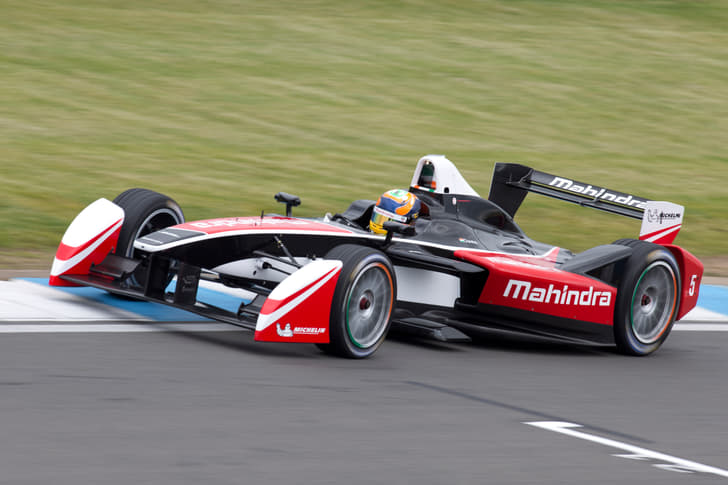
The first 30 seconds in a Formula E car are pretty eerie to be honest. The lack of car sound and just the wind noise makes it a bit strange – sort of like driving a simulator on mute! The torque from the motor in the qualifying mode is really impressive and the car certainly accelerates very quickly. The really tricky bit is the braking and energy recovery stuff. Unlike in F1 or LMP1 cars, we don’t have the electronics to help with the rear wheel energy recovery and brake balance, so you have to work it all out yourself on track and constantly adjust it. Not running on slick tyres is also a new experience as you feel the car sliding around on the tread blocks. I guess this will look good for the fans trackside and on TV.
In terms of pace, the Formula E car is around 9-10 seconds slower per lap compared to an F3 car around Donington. Is it as demanding for a driver in a way that a proper single-seater should be, even considering the fact that it will only see action on street circuits?
First of all, the fact that we’re not running slick tyres means that the deficit is probably 4-5 seconds in reality. Secondly, Donington is a bad circuit for the FE cars with the big undulations and the flowing high speed corners which is really the opposite of what we would expect to have this season. The demands on the driver really come not from the speed, but from trying to extract the maximum performance from the car in the most efficient way. Honestly, the mental challenge in terms of working out the energy usage strategy is huge because don’t forget, we don’t have live telemetry, so can’t rely on the team for information like in F1.
You had a crash during the first test at the temporary chicane. What exactly happened and why was the chicane there in the first place?
The chicane was there to try and break up the flowing nature of the circuit and create another brake-recharge opportunity. I was one of six drivers to clip the hay bales but it wasn’t a big deal. We would have had the car fixed in half an hour but unfortunately, I slightly bent the same wishbone that two others had and Formula E had run out of spares as it was the first test, so missed a lot of running.
Given the extremely strong grid of drivers, especially in the top 10 – what are your expectations for the season?
Honestly at this stage, I feel about half a second behind the game. I lost a lot of time on 3 out of the 4 tests so far with a battery issue on Day 1, the lack of spare suspension bits on Day 2 and then an unrelated suspension failure on Day 3, so I felt like I’ve been playing a bit of catch up. We only have one more day of running before the first race so we’ll see. In the first season, with the reliability issues, we can expect it’s going to be hard to predict but as a team, I would be disappointed if we’re not in the top 3 in the team’s championship.
Bruno has had the edge on you throughout these initial tests – what are the areas you think need work considering that you have the same equipment?
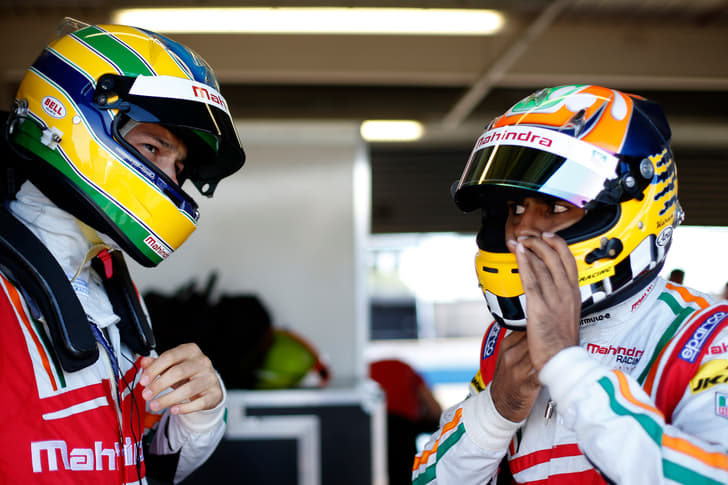
The braking technique and braking stability in these cars is quite different. When we look at the data, where I am today is where Bruno was after the first week. I’m missing out on some track time to get my head around the braking phase of the corner – that’s really where the half a second is.
As a team, what are the areas that you think one squad can have an advantage over the other, considering it is a spec-series and range of adjustments isn’t as wide as say a GP2 or World Series car. Will this make driver ability the most crucial factor contributing to the performance of a team?
It’s a really good question. Honestly, I think that the teams and drivers who have the best simulation tools will be the ones at the front this first season. By this, I don’t mean simulators that the drivers use but actually software that’s developed to tell us the optimum strategy for power usage and recovery across the lap and the race. We have some top quality teams and drivers all trying to make the best of a very new way of going motor racing. The energy recovery and dissipation process is extremely complicated with plenty of variables and maps for the drivers to play with.
We have had Chetan Maini and his engineers from Mahindra Reva in Bangalore at the last tests and they’ve taken home a bunch of information to analyse and hopefully, their support to the Carlin Motorsport engineers in the UK will help us in this area.
 Unnatee Gidithuri

 Stephen Raj Antony