
Car manufacturers love flaunting booking numbers to show how popular their new launches are. However, the true measure of success of any product is how well it can sustain sales after the initial euphoria has died down. Hence, the 10,000 bookings the MG Hector bagged in less than a month since the order books opened was initially met with scepticism by established rivals, but the growing month-on-month sales of this all-new SUV – and that too from an unknown brand – has turned that cynicism into worry and even fear. In fact, once the price was revealed, things only got better for the SAIC-owned British marque because the aggressive introductory prices boosted demand, to a point that it had to stop taking more orders just to clear the backlog.
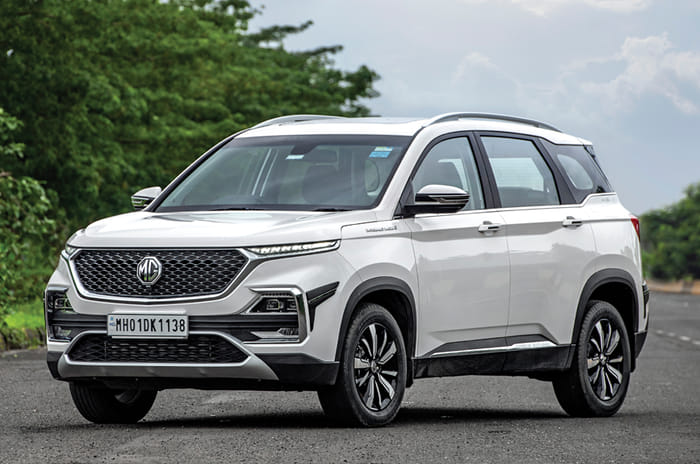
When we first experienced the Hector on the hills of Coimbatore, we knew it had the makings of a winner. No doubt, the distinctive design, exhaustive features list and a hugely spacious cabin are all strong factors in the success of any SUV, but that brief drive was just a sampler and didn’t include the petrol-automatic variant. This variant is the pick of the lot, accounting for over 50 percent sales, and has a waiting period that can stretch to seven months. Hence, in this very exacting road test, we’ve tested all three powertrain variants to, once and for all, answer the torrent of questions flooding our inbox and to tell you just how good the Hector really is.
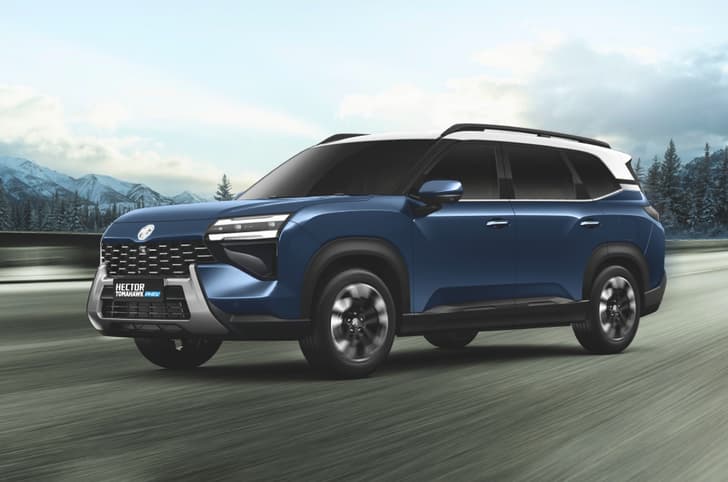
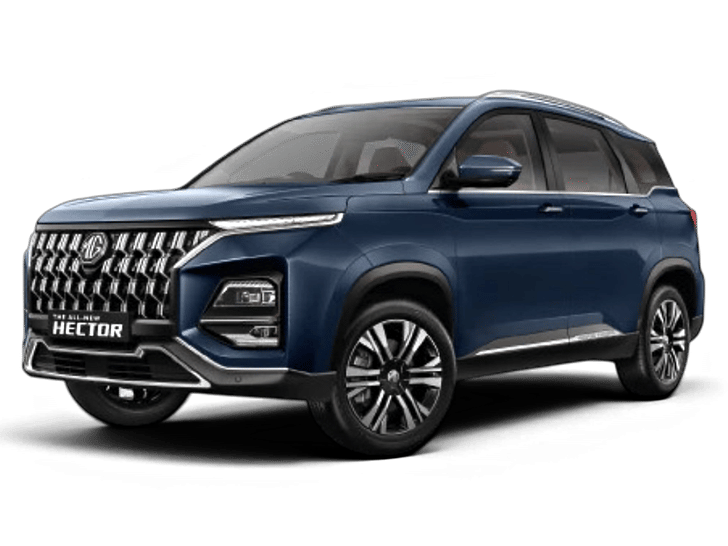
You just can’t miss the Hector; its sheer size hits you before you even start focusing on the design details. In fact, it looks half a size bigger than its rivals and that’s a great start for an SUV whose road presence is intrinsic to its appeal.
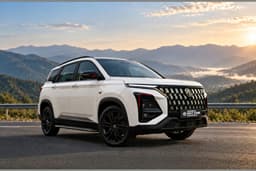
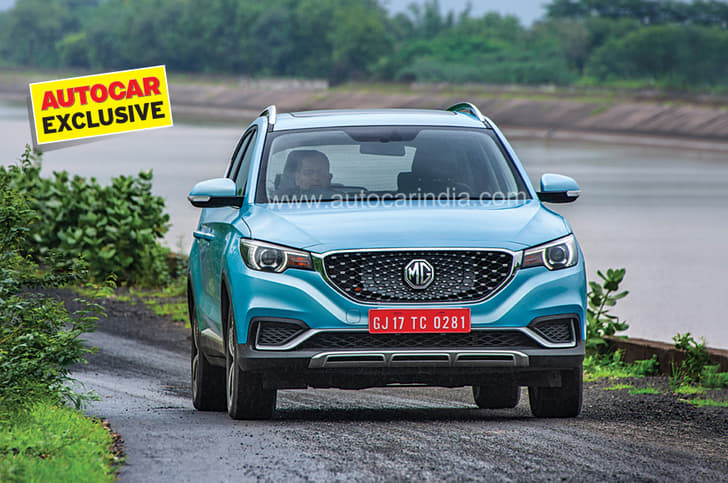
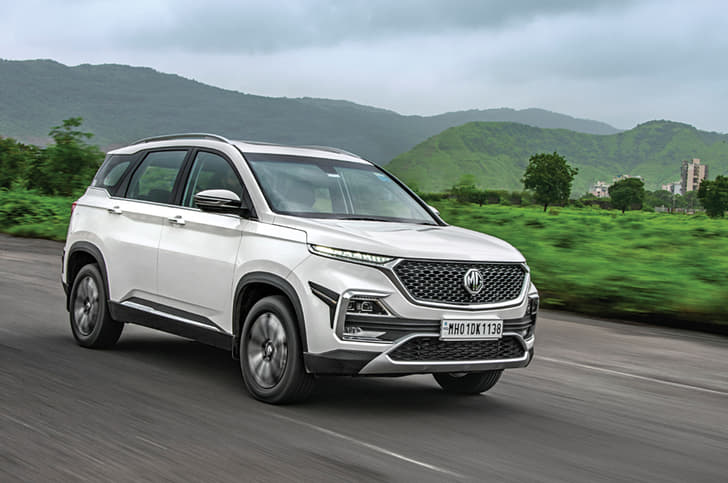
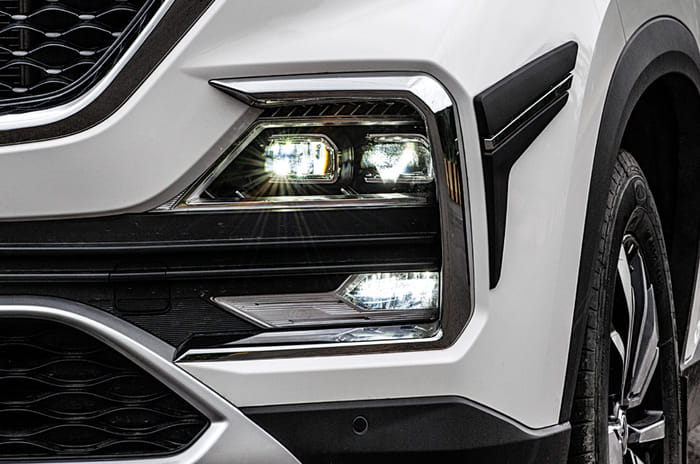
The massive front grille is lined with chrome and proudly flaunts the MG logo, giving the Hector a strong face that won’t go unnoticed. Also standing out is the striking headlight cluster that gets the full DRL treatment. The design, too, is in sync with the latest trend of having DRL strips above the headlights, which are located lower down, close to the bumper. And in the Hector’s case, they are flanked by a chunky L-shaped chrome strip.
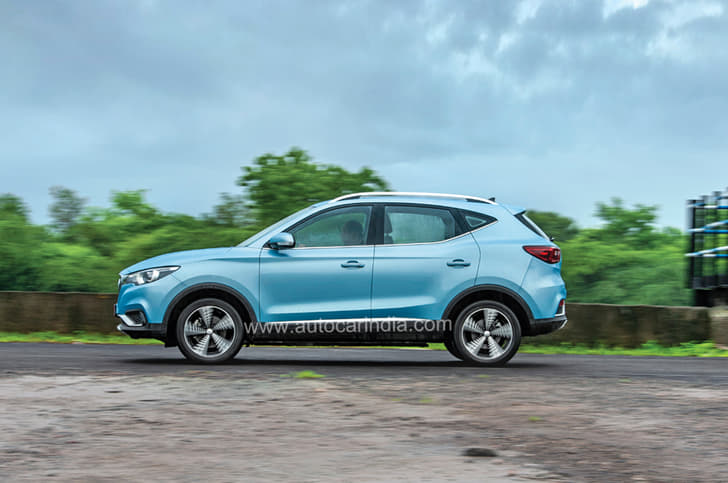
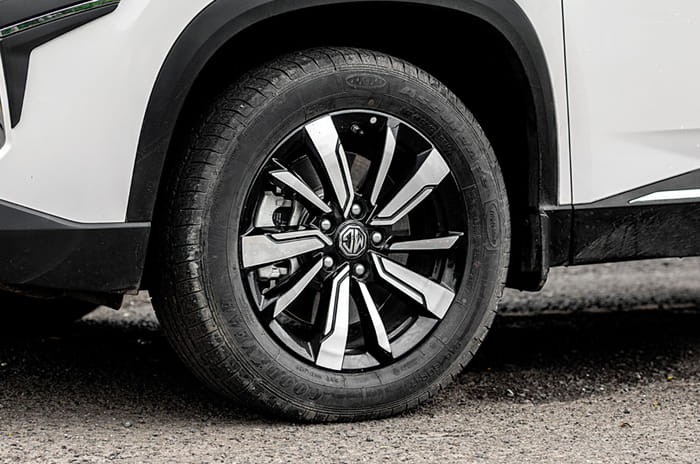
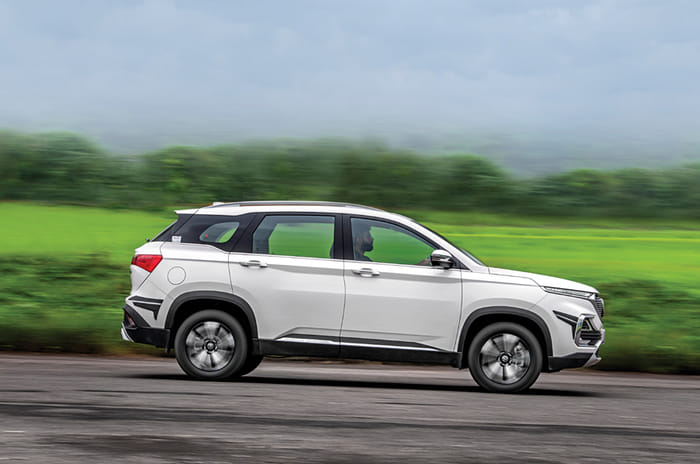
It’s from the side that the Hector looks the most gargantuan, with its 4,655mm length easily making it the longest SUV in its class. In fact, the Hector’s length and long overhangs mask its considerable 2,750mm wheelbase, which is again the best in class. Look at it from the side and you can see how the long wheelbase adds to the Hector’s size. These proportions have served to dwarf the 215/60 R17 tyres that don’t quite fill out the wheel wells and look scrawny for such a bulky-looking SUV. This spoils the Hector’s SUV credibility to some extent, as does the fact that this is an SUV designed with no off-road ambitions. However, it not being a serious off-roader won’t be a concern for a majority of buyers, who will be content with the ground clearance of 183mm, which is sufficient for our roads.
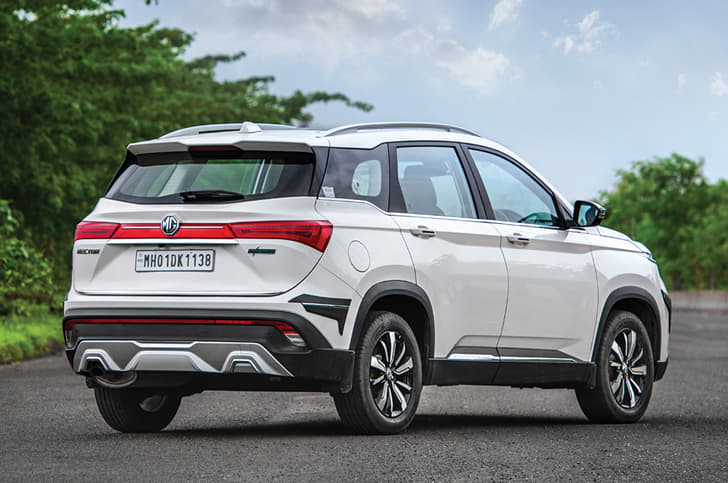
The rear is simple in comparison to the front, but here too the angular and edgy theme has been carried over and the beefy-looking scuff plate adds to the Hector’s visual bulk. The LED tail-lamps are joined by a reflector strip, and the Audi-esque swiping LED indicators are a premium touch.
There are several other nice touches as well, like the tasteful chrome running board that sits at the bottom of the front and rear doors, with ‘Morris Garages’ prominently engraved on it. The pinched rear glass and the blackened glass surrounding the D-pillar add some style and make the Hector look less boxy.
Now, if all this is a bit too plain for your taste, MG also offer a host of accessories like chrome bits for the door handles, tail-lamps and bumpers to give the Hector even more bling.
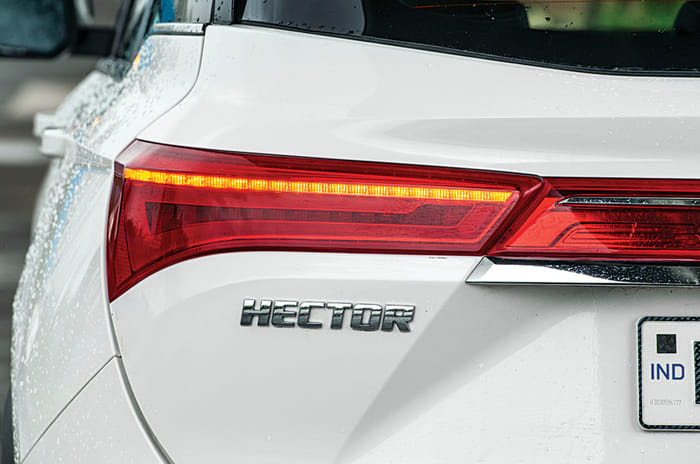
The Hector felt a lot more solid than we expected and the doors shut with a nice, reassuring thud. However, build quality is a bit inconsistent, with large panel gaps around the bonnet and tailgate area.
However, the paint quality is top notch, with no orange peel and a deep gloss, which contributes significantly to the Hector’s rich looks.

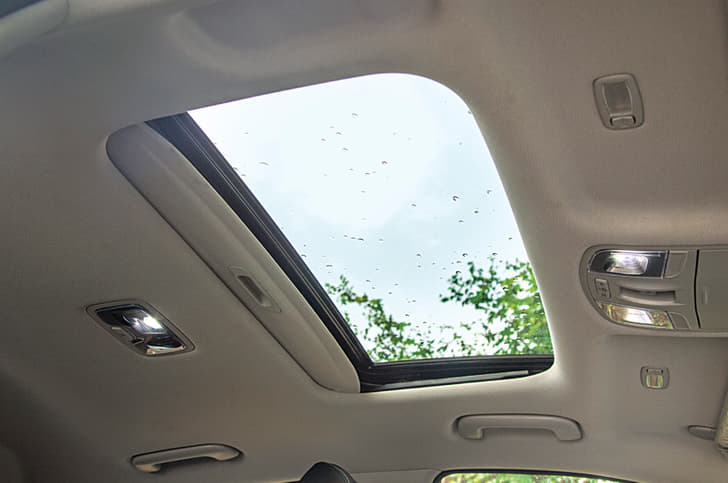
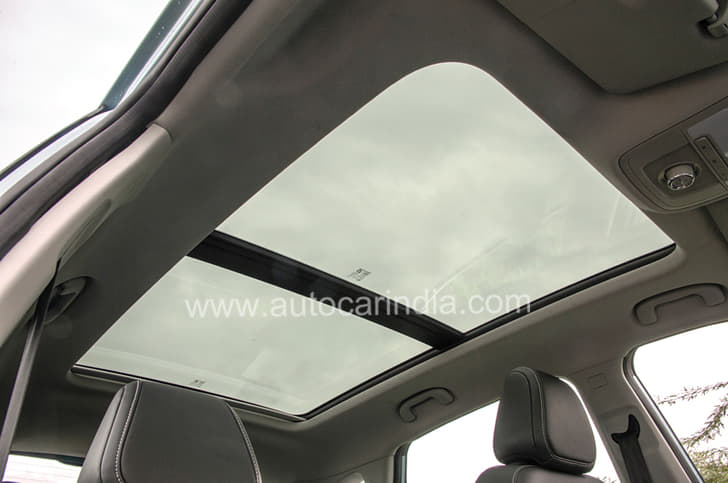
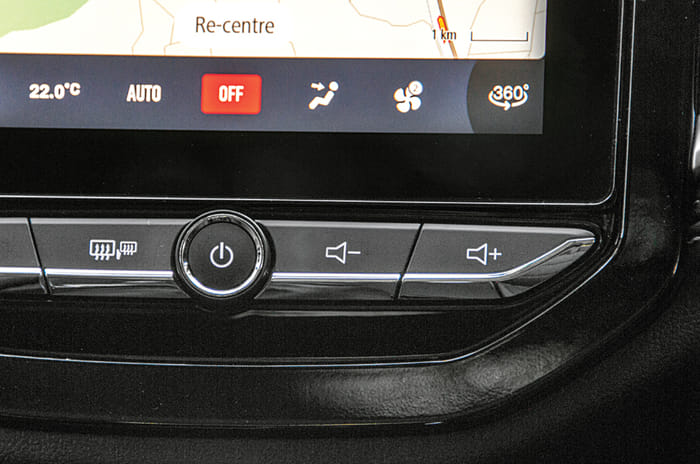
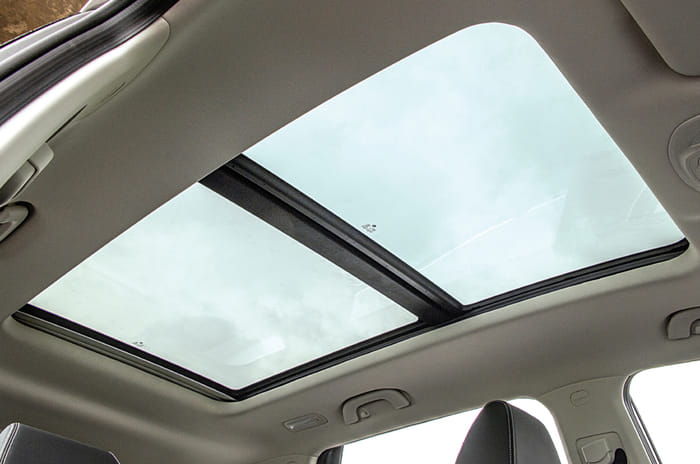
The sense of space inside the Hector is enhanced by the large windows and massive panoramic sunroof. The dashboard has a straightforward, clean design and is dominated by the massive 10.4-inch, portrait-oriented touchscreen. Most of the functions are touch-controlled and the only physical buttons you get are for the volume control, and the front and rear defoggers. The touchscreen itself has a bright and high-contrast display that is easy to read in harsh light, but the touch response is a bit slow. When you rush through the functions, the screen doesn’t hang momentarily like before, thanks to some software upgrades but is still slow.
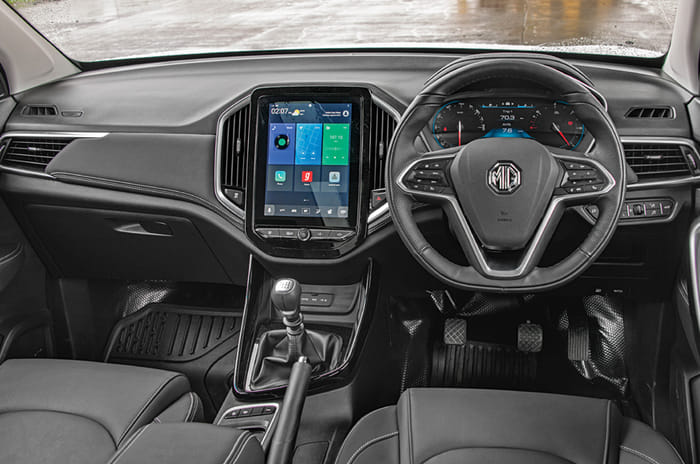
The quality of materials for the most part is good, but look closely and there are a few iffy bits, like the uneven fit on the leather and some hard plastic panels low down. A neat touch is a 5V fast-charging USB port with the traditional AUX port, and multiple storage areas in the armrest, centre console and door pads.
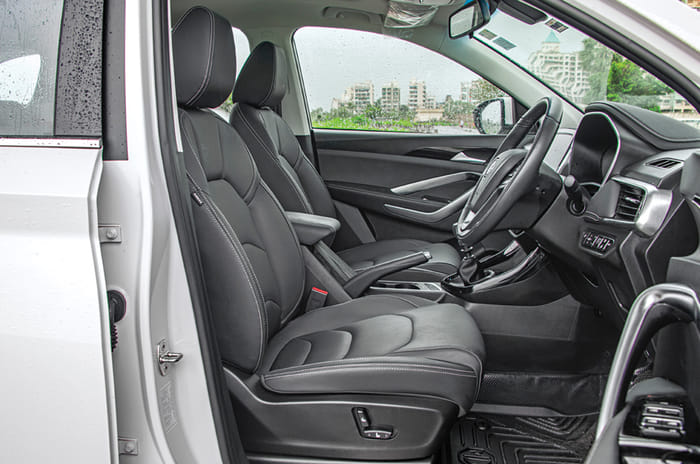
The driver’s seat is very SUV-like and even at its lowest setting, you have a commanding view of the road. The six-way electrically adjustable seat, along with tilt and telescopic adjust for the steering, allows you to find the perfect driving position in a jiffy.
The front seats are huge and very generously cushioned, maybe too generously. The lumbar support is a bit excessive and that can get uncomfortable on long drives. The steering wheel, too, is wrapped in artificial leather but feels quite comfortable to hold, and the steering- mounted buttons have a nice tactile feel. The instrument cluster is simple and has easy-to-read dials, but the rev-counter needle swings anticlockwise and takes a while to get used to. Between the dials, you also get a 7.0-inch colour MID display that shows you just about everything – from infotainment settings to even a tyre pressure monitor. However, a big ergonomic glitch we discovered is that the glare from sunlight makes the instruments difficult to read. It’s no problem at night when the cluster lights up with a cool, blue glow. And to add to the ambience, you also get eight-colour mood lighting for the cabin that changes colour automatically.
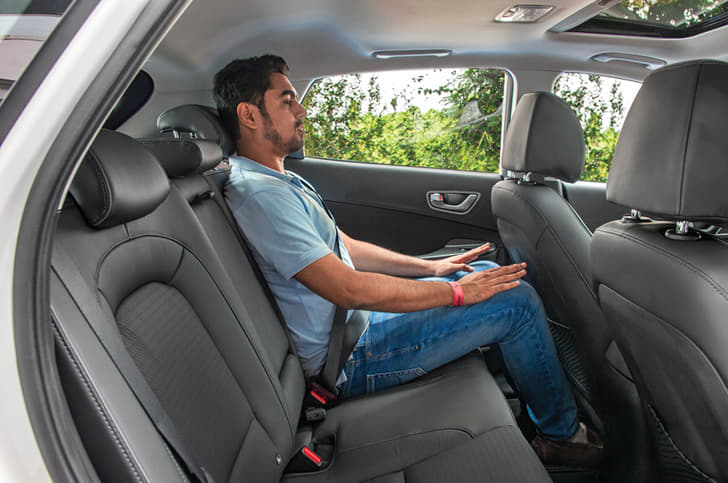
Move over to the back and it is evident that the rear seat is the place to be in the Hector. Thanks to that lengthy wheelbase, you have sumptuous legroom, and the completely flat floor means three can be seated comfortably. The backrest can also be reclined for extra comfort and the low window line, paired to the large panoramic sunroof, makes the cabin cheerfully bright.
Back seat comfort is superlative, thanks to a high H-point, which allows for an optimal sitting posture, a generous squab, which offers good thigh support, and a back rest that reclines quite a bit and comes in handy when you want to grab a quick nap. In short, you won’t find yourself wiggling or shuffling in your seat for a more comfortable position. At the back, too, you have a 5V USB slot along with a small cubbyhole to keep your phone or wallet.
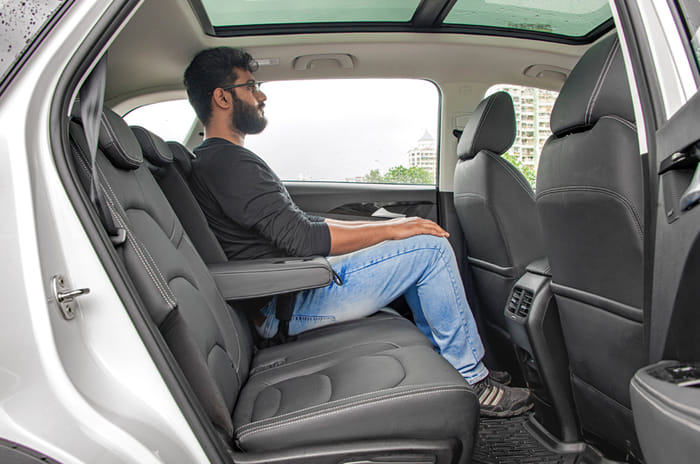
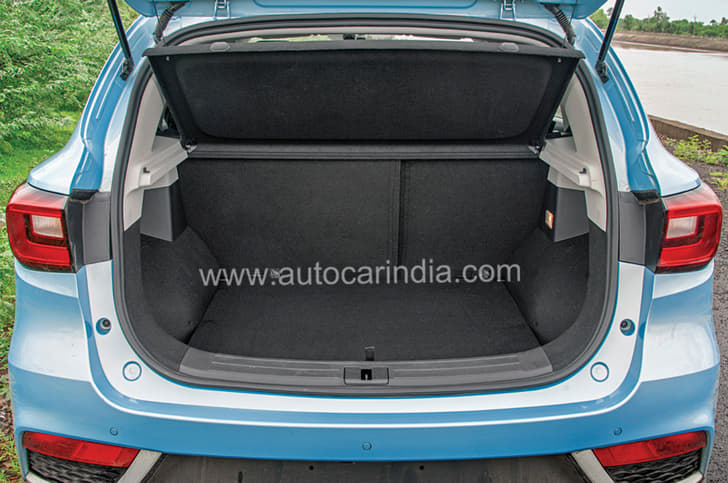
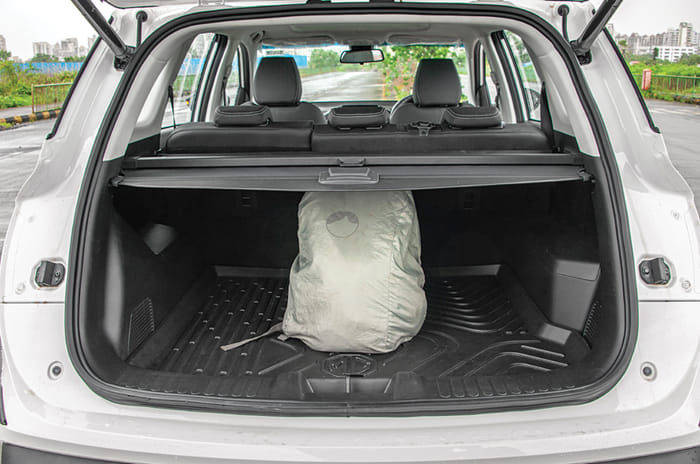
The lavish passenger room hasn’t come at the expense of boot space. The massive rear overhang has allowed 587 litres to be carved out for luggage, and this space can be expanded enormously by flipping the middle seats forward. Access, however, is difficult as the boot lip is high, making loading heavy luggage a bit of a task.
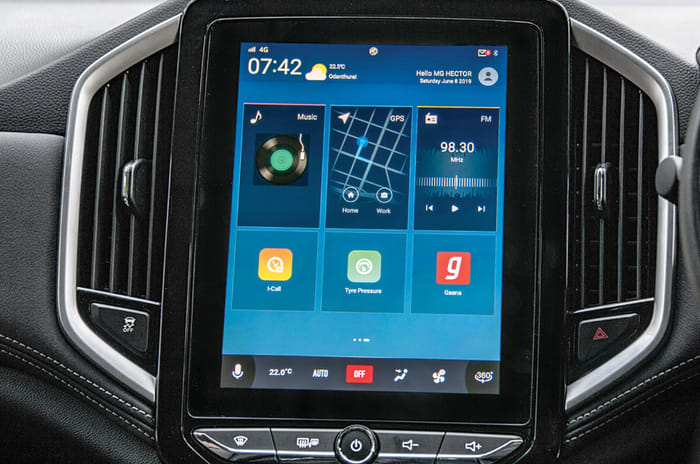
The huge 10.4-inch touchscreen is vibrant and has a good resolution too. And, thanks to some software upgrades by MG, the screen doesn’t hang like before. It, however, is still slow to respond. There is a lot on offer in terms of features. You get an embedded SIM card, access to a premium account of the Gaana app, the TomTom navigation system, TPMS and, of course, Apple and Android Auto connectivity. Then there is the 360-degree camera, which is a boon while parking. However, you will notice the screen’s clarity drops in the dark.
The Hector is offered with two engine options – a 1.5-litre turbo-petrol engine making 143hp and 250Nm of torque, and Fiat’s 2.0-litre turbo-diesel engine that develops 170hp and 350Nm of torque. The petrol engine also gets a hybrid version on all the trims but the base variant, with a 48V battery mounted under the front passenger seat. The hybrid system doesn’t increase power but you do get an additional 20Nm of electric assist for an extra shot of momentum. The diesel Hector gets just one transmission option – a 6-speed manual, while the petrol gets a 6-speed manual and a 6-speed dual-clutch automatic.
Let’s start with the crowd-favourite – the petrol-automatic, which is also the one that’s the easiest to drive. It’s remarkably quiet, too, thanks to the refined 1.5 turbo-petrol, which as you can see from our sound-level tests, is impressively quiet.
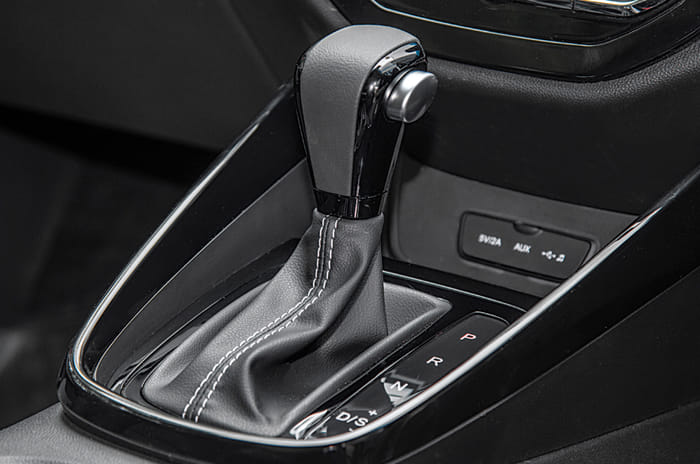
Slot the rather old-fashioned-looking gear lever into D, tap the nicely sprung accelerator pedal and the big Hector smartly eases forward without any delay. With a gentle or part-throttle prod, the engine and gearbox respond quite well and it’s not hard to understand why customers are flocking to this variant of the Hector. It’s pretty effortless to drive in the city, and in stop-start traffic, the engine and gearbox work together quite seamlessly.
It’s when you delve into the bottom-half of the throttle pedal’s travel that you experience the lazy
side of this gearbox. A stomp on the pedal won’t get an instant response and there’s a momentary hesitation before the gearbox shifts down a cog or two. This makes you take a more concerted approach to overtaking, especially on highways with a single carriageway, where passing traffic needs planning.
The performance figures clearly indicate that the Hector automatic is not a very quick car – it does 0-100kph in an unhurried 14.21sec. Though kickdown acceleration times are better, they are slow nonetheless, with 20-80kph and 40-100kph taking 8.04sec and 10.24sec, respectively.
You can also opt to shift manually, but in that mode, too, the gearbox is slow to respond. That said, the shifts themselves are smooth and you barely feel the car swapping the cogs.
So while the automatic variant of the Hector isn’t one you would particularly enjoy driving fast, you will appreciate it most when you’re inching along in dense traffic. It also has an auto-hold function for hill starts, which makes it even more user-friendly.
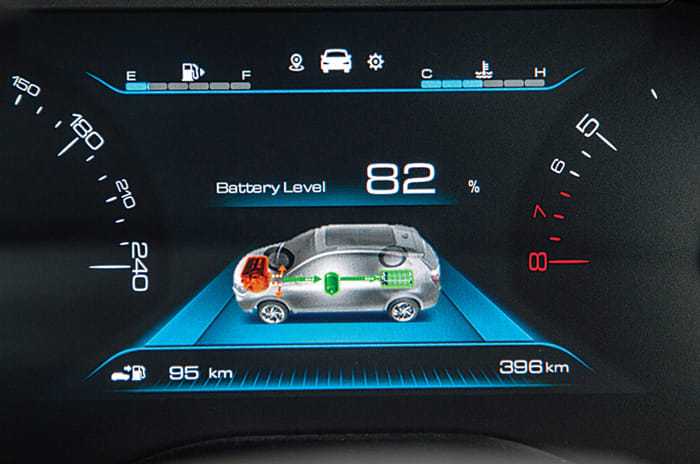
If you prefer to be in the driver’s seat, it is the manual version with the 48V battery that is better. There is still that excellent refinement from this well-insulated 1.5-litre engine, plus you get a good 20Nm extra torque for a quick getaway. A graphic in the MID tells you when the electrical juice is flowing from the motor and there’s also an indication when the battery is charging under braking.
What community is saying on the Hector?
Again, at part throttle, the Hector petrol-manual pulls ahead with enthusiasm and responds quickly to dabs of the right foot.
The gearshift is nice and precise, thanks to a well-defined gate, and helps you enjoy the drive. However, in city traffic, the clutch, with its long travel and high bite point, works your left foot; but it must be said that the pedal effort is quite light.
Flat-out acceleration is pretty good and the 0-100kph dash takes a noteworthy 12.64sec. The Hector isn’t slow or sluggish by any means, it’s just that you have to work the engine and gearbox to extract the most out of it. You will experience a fair bit of turbo lag when you stomp your right foot, and the engine gets into its stride after 4,000rpm, until the conservative 6,000rpm redline. There’s a bit of a gap between the second and third gear ratios, so you’re constantly flicking between these two cogs, especially on a winding uphill road. The overall gearing is on the shorter side and you are left wanting more grunt from the petrol motor, which spins at a high-ish 2,400rpm at 100kph in sixth gear.
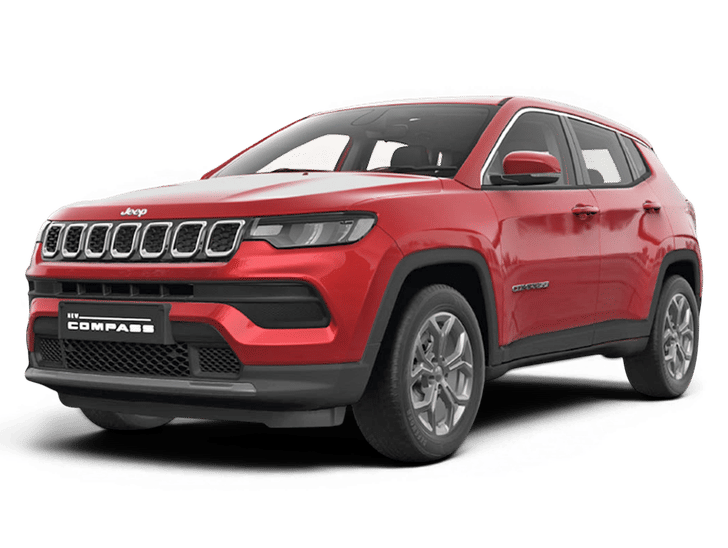
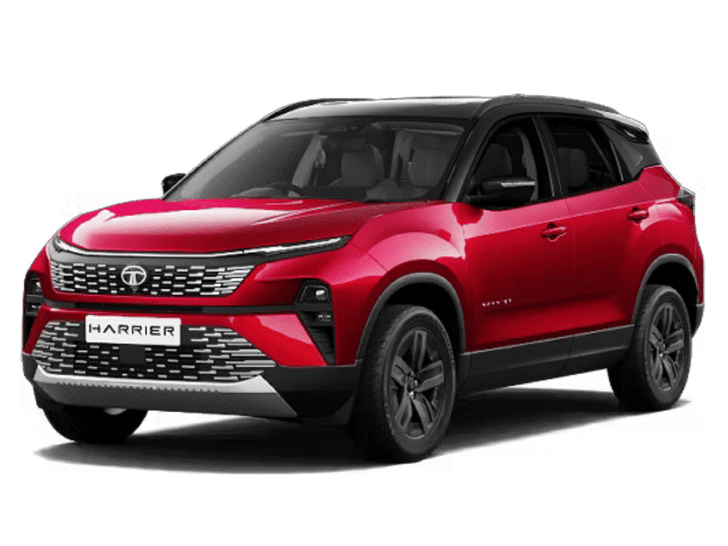
The Fiat-sourced 2.0-litre turbo-diesel is an engine we are familiar with. It powers the Jeep Compass and the Tata Harrier (albeit in a lower state of tune), but interestingly, it feels the best in the MG. For starters, this engine is the most refined in the Hector. It’s impressively quiet and the gruffness you hear in both the Compass and Harrier has been filtered out. It makes a good 170hp in the Hector, which might be slightly less than in the more expensive Compass, but is 30hp more than the equivalent Harrier. Get going and here too the refinement is surprisingly nice, despite having a hint of that distinct clatter that you get on the Compass and Harrier. Performance is pretty decent as well, with 100kph from a standstill arriving in a quick 11.39sec. Like the engine, the 6-speed manual gearbox is also shared with the Compass, albeit in a different tune. The gear ratios are taller here and while that is great for highway cruising, you do tend to shuffle through the gears in the city.
Also, though the power and torque figures are identical to the Compass, the power delivery is quite different. Where the Compass gets that strong punch after 2,000rpm, in the Hector, it is a linear and progressive pull. Also, turbo lag is less prominent than in the Compass, and it’s quite clear that the Hector is the first to benefit from the latest tuning tweaks to the Fiat 2.0 diesel.
The Hector gets independent MacPherson struts with coil springs at the front and a non-independent torsion beam with coil springs at the rear. The suspension isn’t the strongest point of the Hector, which doesn’t feel as settled as its rivals. The small-diameter wheels and tyres do affect the dynamics and allow sharp edges to permeate into the cabin. Also, the Hector has been setup for comfort and the low-speed ride is actually pretty good. The underlying pliancy of the suspension rounds off small bumps quite nicely to deliver a cushy ride.
Up the pace, and the lack of body control is quite evident in the way the Hector pitches and floats on an uneven road. Though the SUV is controllable at high speeds, the body movement and a steering that feels disconnected rob you of a certain surefootedness you expect from it. It is more stable with passengers and luggage, but you still wish it had that flat and consistent ride seen on its peers. On a twisty road, body roll is evident and, when pushed hard, the narrow front tyres run out of grip quickly and it’s easy to make them squeal in protest.
Drive the Hector in a more sedate fashion and it will reward you with effortless manoeuvrability. The light steering doesn’t give you confidence on the highway, but it is something you’ll swear by in the city. You can twirl it with one finger, which makes city driving and parking so easy and convenient.
The Hector also excels at braking. All four disc brakes are good enough to bring the SUV to a complete halt from 80kph in just 26.70m, and there is a strong and confident bite each time you jump on the brake pedal.
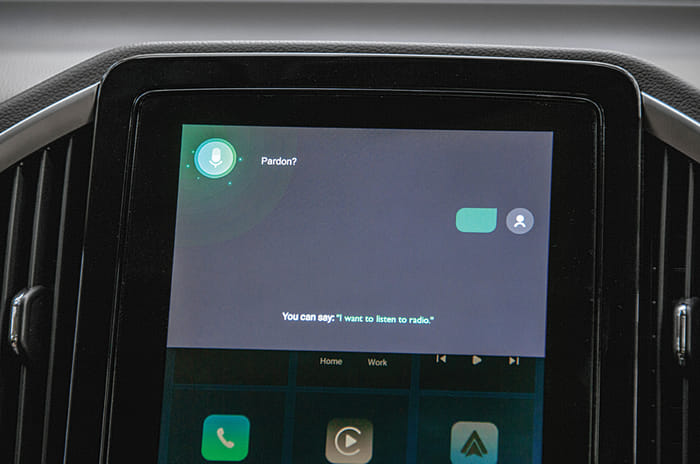
The Hector’s exhaustive features list is one of its strongest points and a key reason why orders for this car keep coming in. The most talked about feature is, well, how you can talk to your Hector. Pressing the voice command button on the steering activates the system, and by saying ‘Hello MG’ you get a prompt for instructions – you have a 100 to choose from and the car does it for you. It’s a bit gimmicky though and, unless you are concentrating hard with both hands on the wheel (a likely situation if you are driving the Hector fast), it easier to do the job yourself manually.
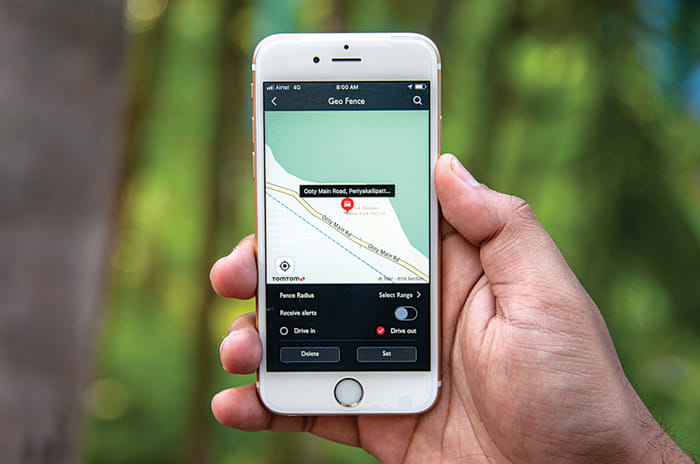
The other big talking point is the connectivity you get from a dedicated SIM card that’s embedded in the infotainment system. This allows your phone to communicate with MG’s iSMART app, which gives you control of a host of functions remotely. The app, available on both Apple and Android platforms, lets you set driver alerts, check the overall health of the car, and find your car in a parking spot by flashing the headlights and activating the horn. And if you’ve parked far off, the app will also guide you to your spot by mapping the route. Then there is the geofencing functionality, which means you can set a perimeter (of up to 100km) for your Hector, and should it go beyond that, it would send you alerts on your smartphone. It also tells you the driving style, speed, and alerts medical services and preset contacts in the unfortunate event of an accident where airbags have been deployed.
There are also other cool features like remote car lock-unlock, opening and closing of the sunroof and tailgate. You can remotely switch on the engine and air conditioning, too, but that’s only available in the automatic variant. Needless to say, for all this to function, your smartphone and the embedded SIM, both need to have connectivity.
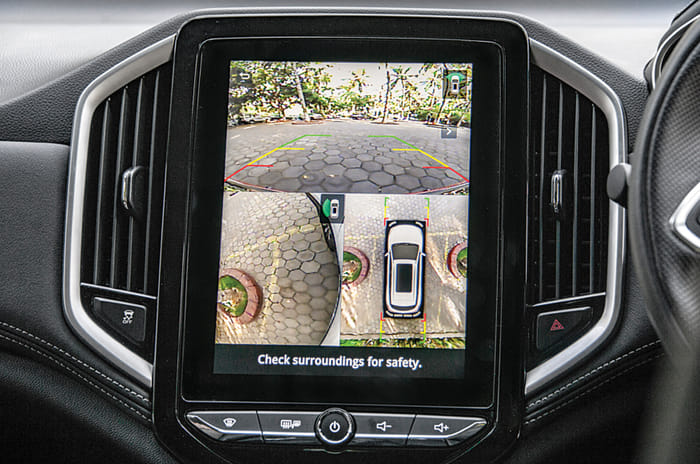
The 10.4-inch touchscreen has its share of functionality, too, with a premium account of the ‘Gaana’ music streaming app, TomTom navigation system with live traffic updates, and a tyre pressure monitoring system. For safety, you have six airbags on the top-spec trims, ABS with EBD, brake assist, traction control, front and rear parking sensors with a 360-degree camera and multiple angle options, and ISOFIX points for child seats.
Expectedly, the diesel Hector is by far the most fuel-efficient, especially on the highway, where the tall gearing doesn’t make the engine work too hard and in our test let it squeeze out a decent 16.5kpl. In the city, the figure naturally dropped but to a respectable 12.6kpl. The petrol motors were naturally thirstier, with the manual version delivering 7.25kpl and 10.27kpl in the city and highway, respectively. The petrol-automatic drinks more, and though we got better consumption figures in this exhaustive test than during our first drive, it’s still a low 6.9kpl and 9kpl in the city and highway cycles, respectively. The combination of an automatic transmission and a turbo-petrol in a big SUV has a big impact on fuel efficiency, and the figures of the Hector petrol-automatic are par for the course and similar to rivals like the Jeep Compass petrol-automatic. Owners need to factor the higher fuel consumption into the price for the added convenience.
The MG Hector is incredible value, right from the word go. Its sheer size, long list of features, and massive cabin and boot allow it to punch not one but two segments above its weight. Yes, you do miss some features found in other rivals and there’s no all-wheel-drive option to give it true SUV credibility, but features like the touchscreen and sunroof – the biggest available on any car – are constant reminders that you’re getting your money’s worth.
The Hector’s loose highway manners are its main weakness and it also doesn’t have the same rugged feel of its more hardcore rivals. The strong, refined and efficient Fiat-sourced 2.0-litre diesel engine goes a long way to establish the Hector as a long-distance cruiser, and this variant is the one to choose if you are constantly on the highway. But the fact is that the Hector feels most comfortable within urban environs, where its light steering, good outside visibility and easy manoeuvrability give it an edge over others. For city use, the refined and capable 1.5 turbo-petrols make the most sense,
even if they are not the most efficient (especially the automatic variant)
Any doubts about the long-term reliability of what is still an unknown product are taken care of by a five-year warranty and a brand-new dealer network. Sure, only time will tell how good or durable the Hector is in the long term, but for now, it’s a compelling buy. And if a spacious and comfortable cabin is your main priority then, quite frankly, the Hector is the best option for the money.
 Saumil Shah
 Soham Thakur
 Sergius Barretto
 Hormazd Sorabjee