There are few cars that changed the supercar world quite like the original Honda NSX. It proved that a mid-engined exotic could be fast, reliable, approachable and, crucially, enjoyable without trying to intimidate its driver. More than three decades later, JAS Motorsport has taken that philosophy and given it a thoroughly modern interpretation.
Meet the JAS Tensei. Tensei translates roughly to “rebirth” in Japanese, and the name neatly captures what JAS is attempting here. This isn't simply an NSX restoration, nor is it a cosmetic restomod. JAS has taken the first-generation NSX as its starting point and re-engineered the car with modern materials, motorsport know-how and a new body designed by Pininfarina. And there will be just 35 examples.
But first, what is JAS?
Launched in 1995, JAS Motorsports was named after its founders, Paolo Jasson, Maurizio Ambrogetti and Giorgio Schon. The company has been the official partner for Honda since 1998 and has since developed race cars for various competitions, with successful results in touring car championships.
JAS Tensei: Exterior design
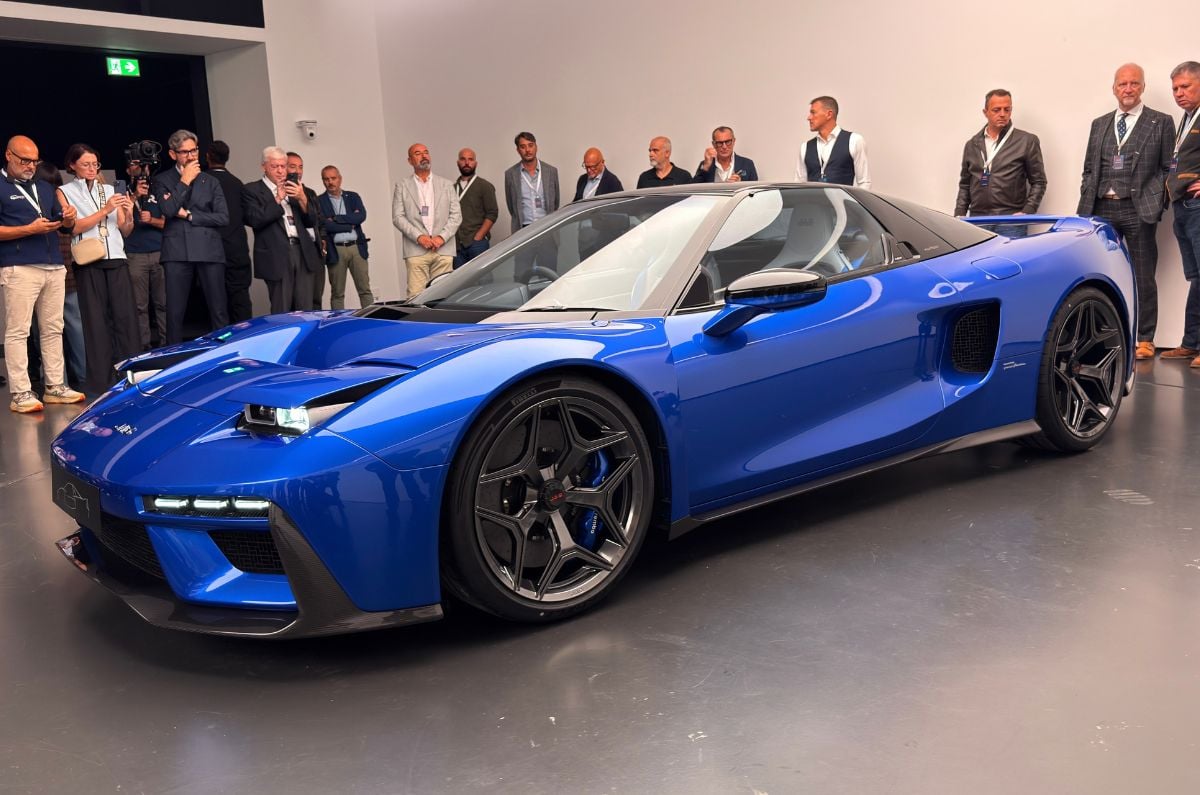
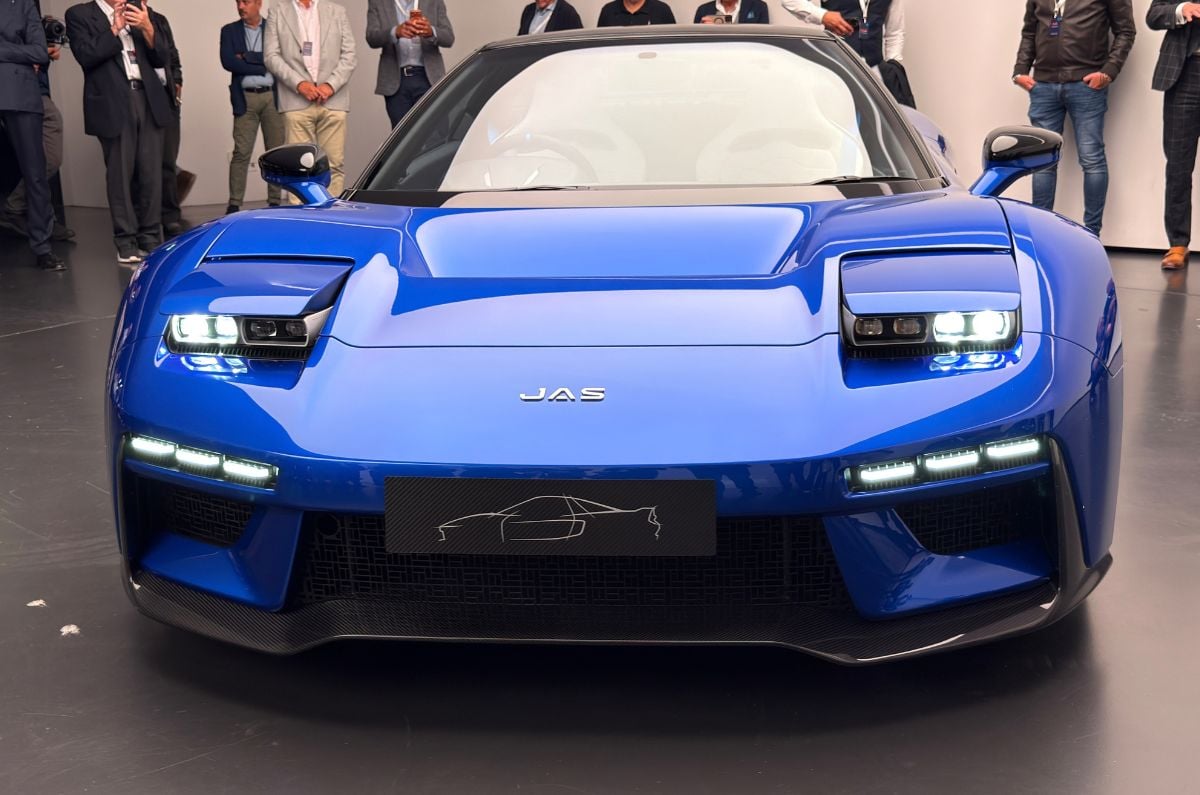
Look at the Tensei from a distance, and the connection to the original NSX is immediately apparent. The proportions remain familiar, as do several of the visual cues that defined Honda’s icon. But the details are considerably more modern.
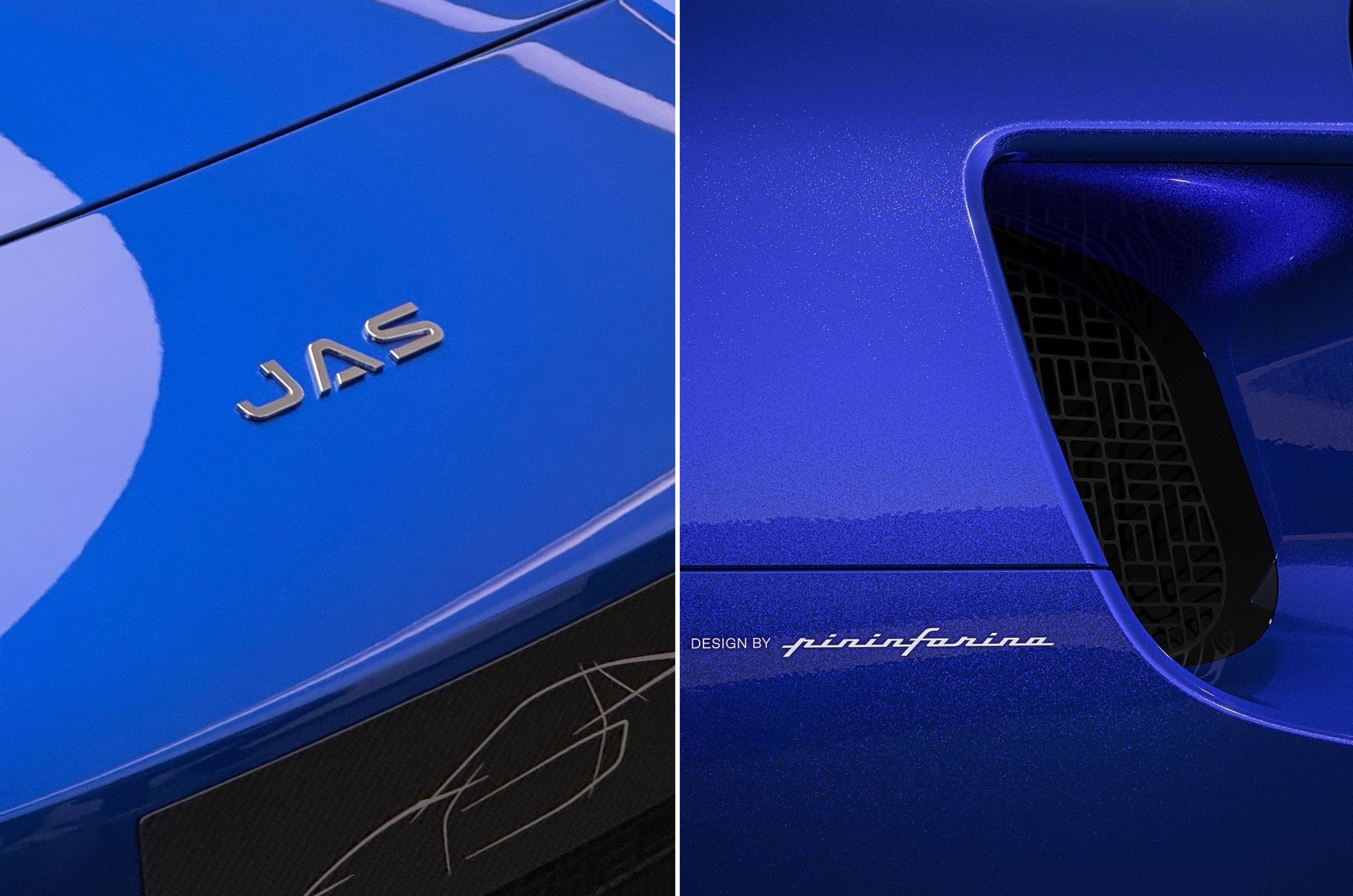
The body is constructed entirely from carbon fibre, allowing JAS to alter the car’s dimensions and surfaces while keeping weight under control. Pininfarina was responsible for the design, bringing an Italian interpretation to a fundamentally Japanese concept. It is an interesting collaboration because Pininfarina already has a history with the NSX story. The company was involved with Honda’s HP-X concept, which preceded the production NSX.
The result is therefore less a replica and more an alternate evolution of the original car – essentially asking what the NSX might have looked like had its development continued into the modern era.
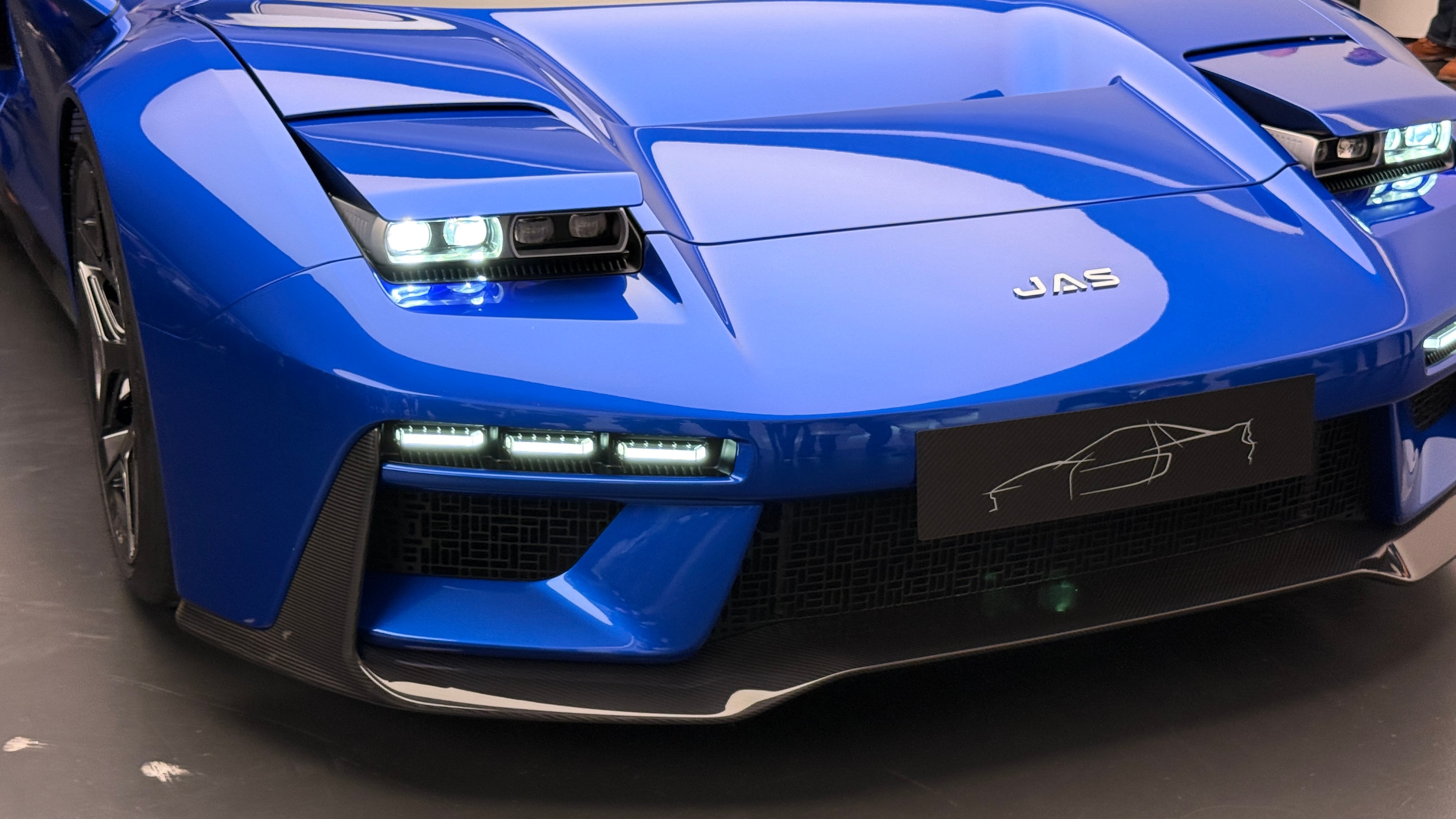
The front bumper is sculpted to guide air under the car and out of the massive duct in the bonnet. The pop-up headlamps have been retained but now feature LED treatment. The wiper covers have also been redesigned and, in fact, the only part untouched is the roof. The A- and B-pillars are more raked, and the wheels have gone up by a massive 4 inches: 15s and 16s on the NSX are now 19s and 20s on the Tensei. Interestingly, the door handle with the NSX badge has also been carried over. Low down, you will spot the iconic Pininfarina badge that we are used to seeing on Ferraris.
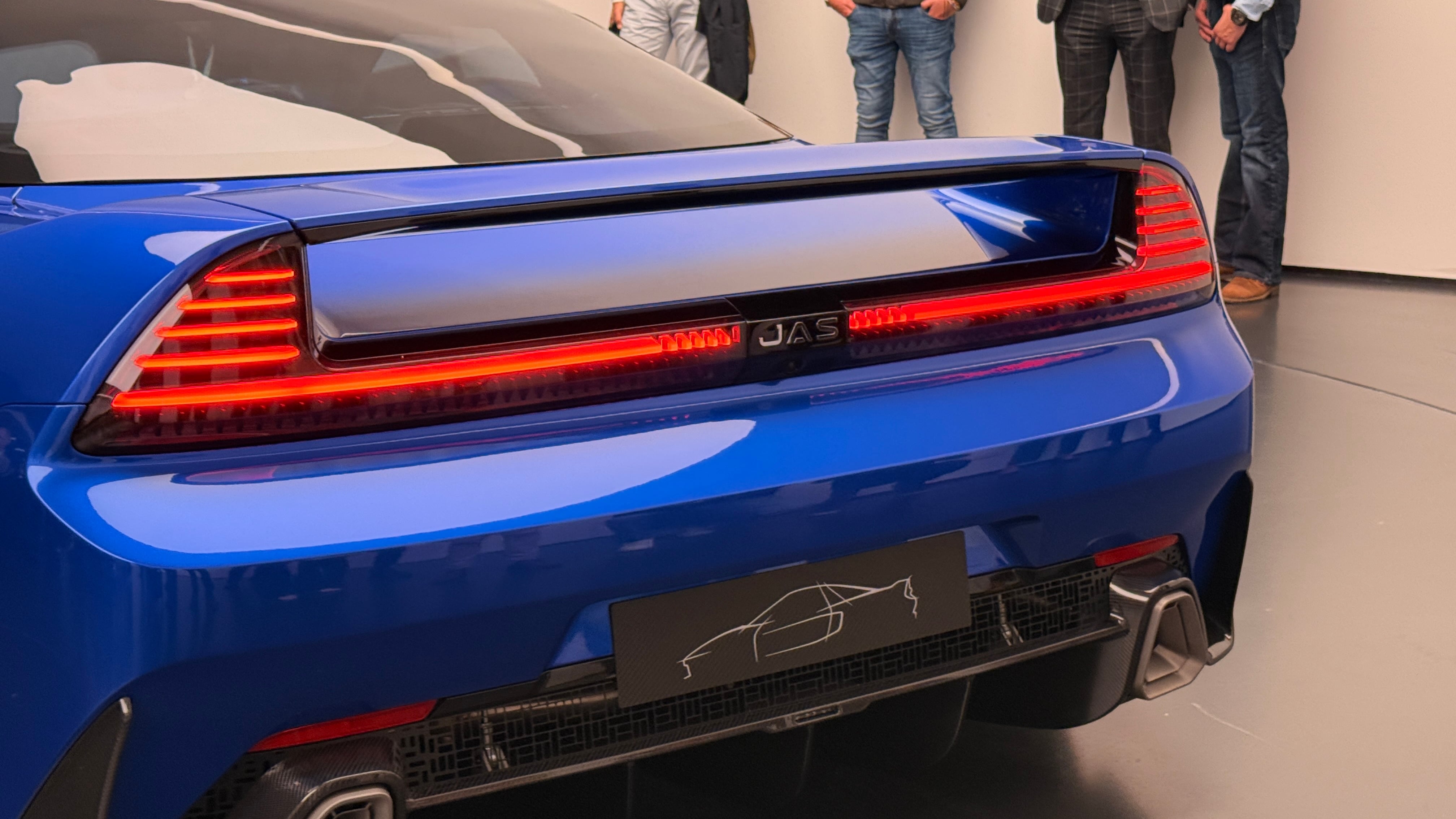
At the rear, the integrated spoiler has been reworked with slight changes to the panels so as to improve airflow. The diffuser is carbon fibre, and the exhausts are massive too. Like the original NSX, the tail-lamps are stretched across the width and now have a 3D effect for the LED strips. Overall, it is a restomod done to perfection – just enough modern touches without skewing it too far from the iconic design.
JAS Tensei: Interior and features
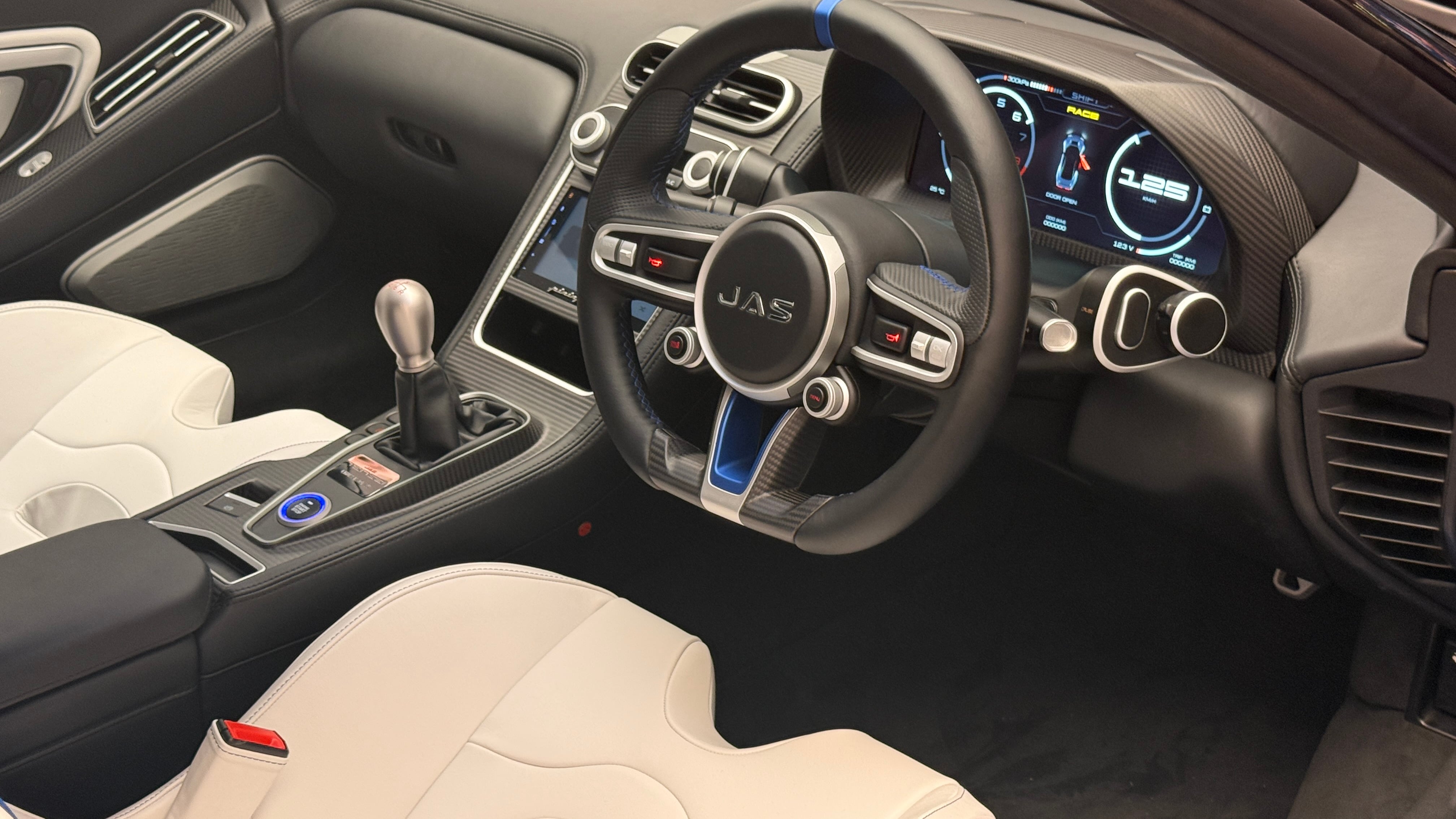
Inside the size of the cabin is identical to the original NSX, although there are updates all around. There’s a new sporty steering wheel, digital drivers display and sports seats. However, there is a full configurator available to spec your Tensei to your liking. The seat upholstery and paints can be customised along with brake calliper colours and wheels. A pleasant surprise is the centre console that does away with a massive tablet as per current trends and instead features a modest touchscreen with the climate control switchgear similar to the NSX. Pininfarina wanted to ensure none of the essence of the NSX was lost in an attempt to modernise the cabin
JAS Tensei: Powertrain and specs
Perhaps the most significant decision sits behind the cabin. The Tensei retains a naturally aspirated V6, rather than adopting the turbocharging or hybrid assistance that has become almost mandatory for modern supercars.
The 3.5-litre V6 has been extensively re-engineered with Judd Power, the British motorsport engineering specialist. The work goes considerably beyond simply increasing displacement or fitting a louder exhaust. The engine gets a billet crankshaft, forged lightweight pistons and connecting rods, individual throttle bodies, upgraded cooling and revised ignition and engine management systems. There are also new headers and an exhaust system designed to give the engine a more immediate and visceral character. The result is 420hp, with the engine capable of revving to 8,500rpm.
Those figures may not sound extraordinary in an era of 1,000hp hybrid hypercars, but that misses the point of Tensei. JAS isn't chasing an enormous power-to-headline ratio. Instead, the emphasis is on response, linearity and the connection between throttle, engine and driver.
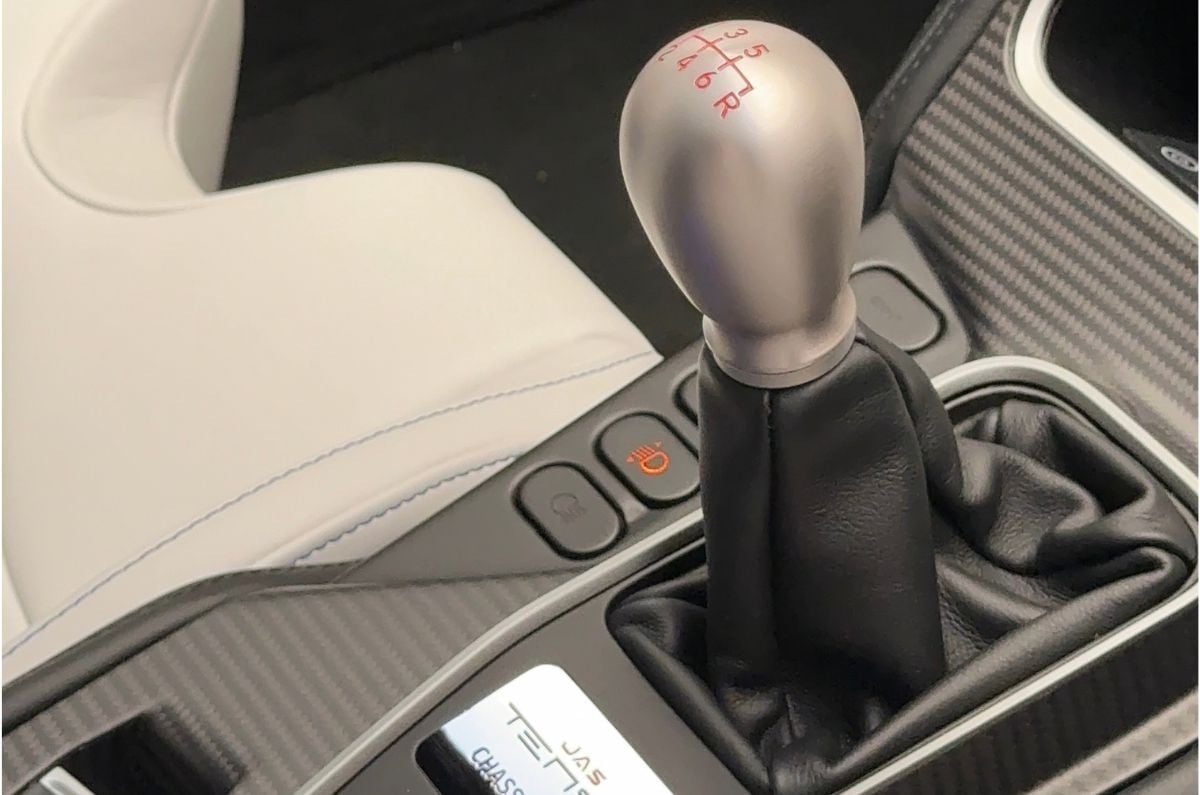
The other big piece of the puzzle is the gearbox. The Tensei uses a six-speed manual transmission and remains rear-wheel drive. That combination, together with the naturally aspirated V6, is perhaps the clearest indication of what JAS wants this car to feel like. The objective isn't to overwhelm the driver with acceleration figures; it is to make every interaction with the car feel mechanical and deliberate.
The chassis has been extensively revised as well, with bespoke suspension components, revised geometry, upgraded bearings and uprights, enhanced anti-roll bars and KW dampers with electronically controlled damping. There is also a hydraulic front-axle lift system, while forged aluminium wheels measure 19 inches at the front and 20 inches at the rear.
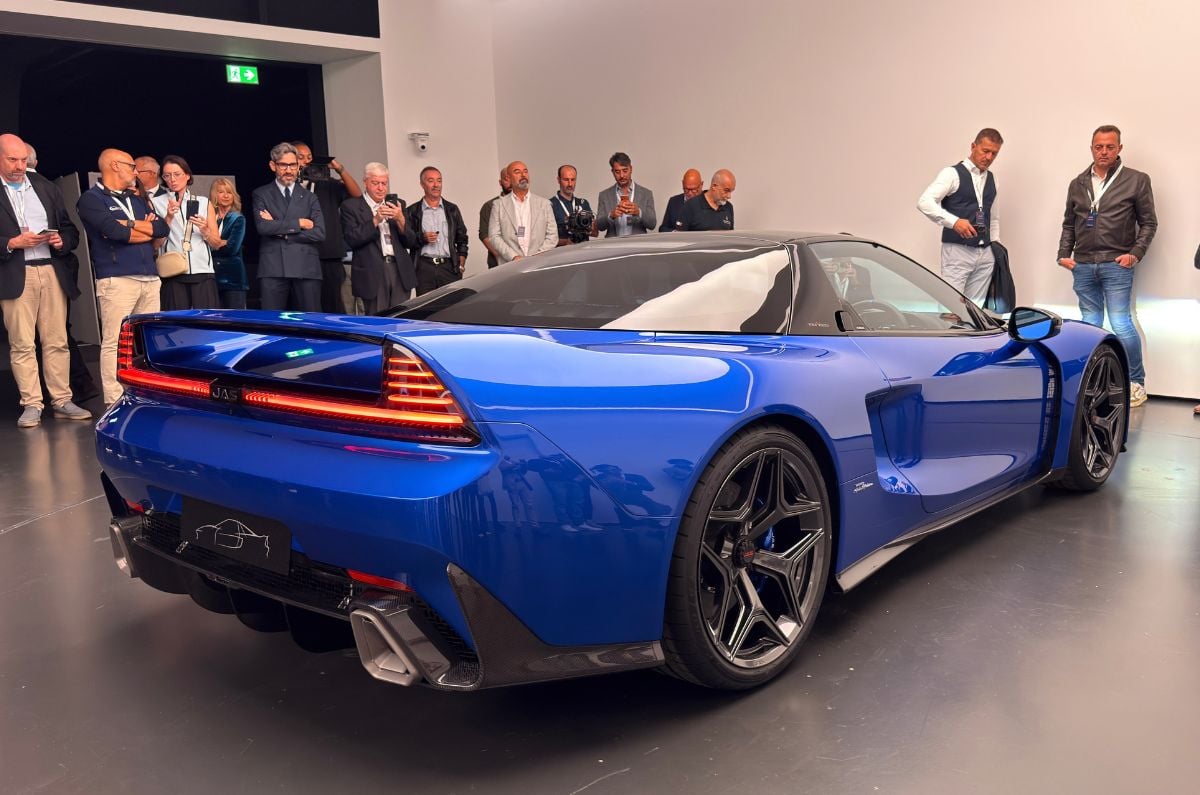
JAS has taken one of the most important analogue supercars ever made and asked how its fundamental qualities could be preserved in 2026. It’s a carbon-bodied, naturally aspirated, manual, rear-wheel-drive supercar with an 8,500rpm redline. And that makes the Tensei interesting for reasons that go far beyond its rarity. It is effectively a reminder that performance isn't necessarily about making a car faster in every measurable way. Sometimes it is about making the driver feel more involved.
Motorsport without turning it into a race car
This is where JAS's background becomes particularly important. JAS Motorsport has spent decades developing Honda competition cars, and that experience forms the foundation of the Tensei programme. But the challenge here is fundamentally different from building a race car. A race car can sacrifice refinement, usability and longevity in pursuit of lap time. A road-going supercar cannot.
Tensei therefore represents an interesting middle ground: motorsport-derived engineering, but applied to a car designed to be driven on the road. The engine is built and tested by Judd Power before returning to JAS in Italy, where each car undergoes further testing and validation.
JAS Tensei: Super exclusive
JAS plans to build only 35 Tenseis, each individually specified by its owner. Production takes place at JAS Motorsport's facility near Milan, with the car bringing together Japanese engineering heritage, British motorsport expertise and Italian design.
It is an unusual combination, but perhaps that's exactly what makes the Tensei so compelling. The original NSX was unusual because Honda approached the supercar formula from a completely different direction.
Three decades later, JAS is doing something remarkably similar. It isn't trying to build the most powerful supercar. It is trying to build the most involving interpretation of an icon. And if the original NSX was Honda's idea of what a supercar should be, the Tensei is JAS Motorsport's answer to what that idea could become today.
 Dipan Sur
 Dhruv Dhaka

 Viraaj Bhatnagar