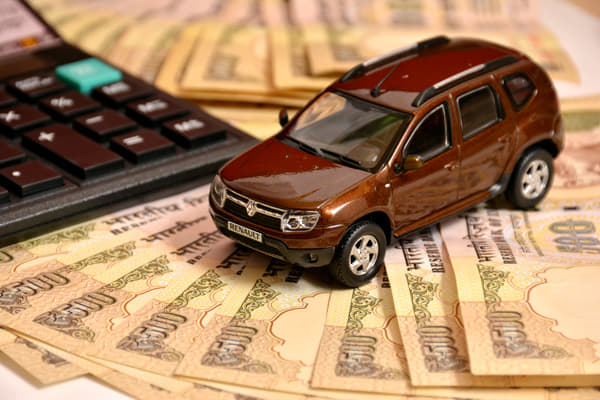
Just when the small petrol car segment in India was showing signs of looking a tad better than its diesel counterpart with the softening of the price differential between the two fuels at around Rs 8-10 per litre, the imposition of the one percent infrastructure cess on small petrol and CNG cars in the Budget 2016-17 threatens to pull the rug from under the feet of both manufacturers and consumers alike.
While carmakers are still working out the nitty-gritties and taking stock of how the additional cess will impact them, car prices are set to rise across the board soon. All this is to fund the investment in the infrastructure sector that is the fifth support pillar of the Budget theme ‘Transform India’. India’s highest ever kilometres of new highways were awarded in the year 2015 and the country also saw its highest ever production of motor vehicles during the year. “This is a sign of growth in the economy, but it presents a challenge also. Therefore, we have speeded up the process of road construction,” elaborated Arun Jaitley finance minister.
With the total infrastructure outlay pegged at Rs 221,246 crore for 2016-17 including State Highways upgradation, 10,000km of national highways as well as development of new road and rail infrastructure, the finance minister has imposed a one percent infrastructures cess on small petrol and CNG cars, 2.5 percent on small diesel cars and four percent on SUVs and luxury cars to fund it besides the Rs 10,000 crore to be raised by the National Highways Authority of India through bonds. This, in a nutshell, effectively means that small petrol cars though higher priced will cost lower than small diesels but larger cars both petrol and diesel will be uniformly taxed. Hence, their price rise will be similar.
The country’s leading small car manufacturer Maruti-Suzuki India is expected to take the biggest hit with this announcement. Chairman RC Bhargava told sister publication Autocar Professional that it will lead to a car price hike which in turn will lead to loss in sales to some extent for the company. According to him, the Ministry’s attempt to reduce pollution by imposing the additional cess on cars is not justified as the total passenger cars portfolio – both diesel and petrol – constitutes just two percent of the PM 2.5 level in Delhi as per the IIT Kanpur study and hence is not a major pollutant. “Already conforming to Euro VI emission norms by 2020 has put a load on the industry in a short span of four years. At this stage, an additional cess on motor vehicles does not seem to be a correct step and it should be rolled back,” added Bhargava.
Some industry experts are of the view that a consumer who wants to buy a four-wheeler will anyway still go ahead and make his purchase irrespective of the price rise. In fact, most carmakers had raised car prices in January 2016 to account for rising input costs. Now, the next round of price hikes will come close on its heels. “The infrastructure cess will form part of the tax structure on the vehicle and will increase the car price to the extent of the cess amount. It will be added to the excise duty of 12.5 percent that is similar for both petrol and diesel cars,” said Vishnu Mathur, director general of apex industry body SIAM. But Mathur is relieved that hybrids, electrics and fuel cell vehicles have been left out of the additional cess regime as the Union Government has been promoting clean and green mobility under the Faster Adoption and Manufacturing of Hybrid and Electric Vehicles (FAME) scheme rolled out last April.
The question then that most industry captains are pondering is why CNG cars have been left out of the clean and green ambit and been slapped with the additional infrastructure cess similar to small petrol cars. CNG cars are limited in volumes and considered to be environment-friendly. The rider is that under the new tax structure, larger CNG cars will attract the same additional tax of four percent that SUVs and luxury cars attract. SIAM, meanwhile, is planning to present a post-Budget memorandum to the government related to the additional cess and along with the industry is hopeful of seeing some dilution of the additional tax on CNG cars to start with.
Interestingly, Hyundai Motor India, the country’s second largest car manufacturer, has a 35 percent diesel portfolio with 65 percent being petrol skewed. The industry equation though is tilted towards 55 percent petrol and 45 percent diesel. Rakesh Srivastava, senior VP (sales and marketing), Hyundai Motor India, said that the additional infrastructure cess will have to be passed onto the consumer almost immediately and will be added at the factory level. It will be billed to the dealer at the higher tax rates on the new consignments. “The finance minister looked towards a rural revival along with an infrastructure push and social welfare to restart the economy. It is an attempt towards fiscal prudence, enhancing demand and policy reform to address the strong headwinds in the global economy,” he said. “The last few months have been challenging in terms of low volumes and growth and there were expectations of a scrappage scheme to revisit vehicles high on emissions and low on mileage. This was in addition to investment incentives to bring in more hybrid and fuel cell vehicles. In light of this, the increase in taxes comes as a dampener and will affect the entire spectrum of petrol and diesel vehicles.” Hyundai is still working out the amount of price hike across its models and maintains it is too early to speculate how car sales will be impacted.
Consultants feel that it is basically a resource mobilisation exercise on the part of the finance ministry. Amit Jain, Partner, M&A, BMR and Associates LLP, is of the opinion that with the price hike of automobiles on the cards, EMIs are all set to escalate for the common man. However, he believes that with the higher cess of 2.5 percent imposed on diesel cars compared to a one percent cess on small petrol and CNG passenger cars, the government is striving to discourage people from buying diesel, which is considered more polluting. He expects some tax rollback in the tax structure for CNG cars in the days to come.
 Viraaj Bhatnagar
 Dipan Sur
 Dhruv Dhaka
 Saptarshi Mondal