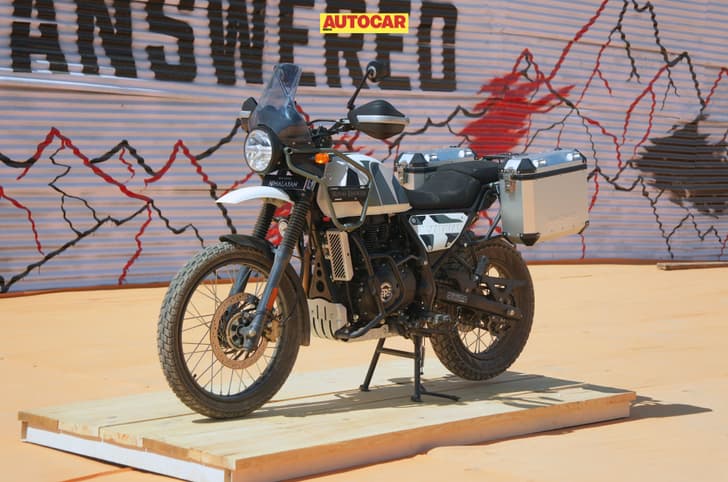

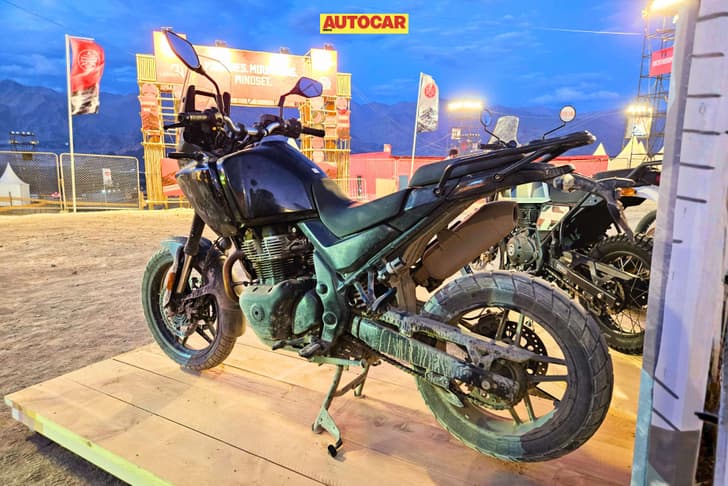
The Himalayan 750 is in the works, as we’ve known for several months now. It was first showcased at EICMA 2025 and has since been spotted being tested multiple times. During the Himalayan 440 event in Leh, we had the opportunity to get closer than ever before to Royal Enfield’s upcoming ADV and we’ve got some interesting details for you to look forward to. And the biggest one might just be that it doesn’t aspire to want to be an off-roader.
- Appears to swap the 21-inch front wheel on the 450 for a 19-inch unit
- Gets cruise control and traction control, both a first for Royal Enfield
- Preload adjustable front and rear suspension could be limited to higher variants
Royal Enfield Himalayan 750: Power and performance
New, close to 750cc twin-cylinder engine
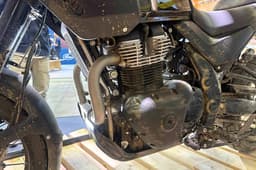
Perhaps the only thing we know regarding the engine is that it will displace close to 750cc, and that the twin-cylinder engine shares the basic architecture with the existing 650cc parallel-twin engine. Exact power and torque details and characteristics are under the wraps for now, but we’d expect it to be a marked improvement over the 650cc's 47.4hp and 56.5Nm of torque in its most powerful form on the Bear 650. The new images give us a closer look at the exhaust routing; which interestingly looks similar to the Bear 650’s 2-in-1 setup, swapping the recognizable twin exhaust system used in all the other Royal Enfield 650s.
Royal Enfield Himalayan 750: Features
So many firsts for the brand
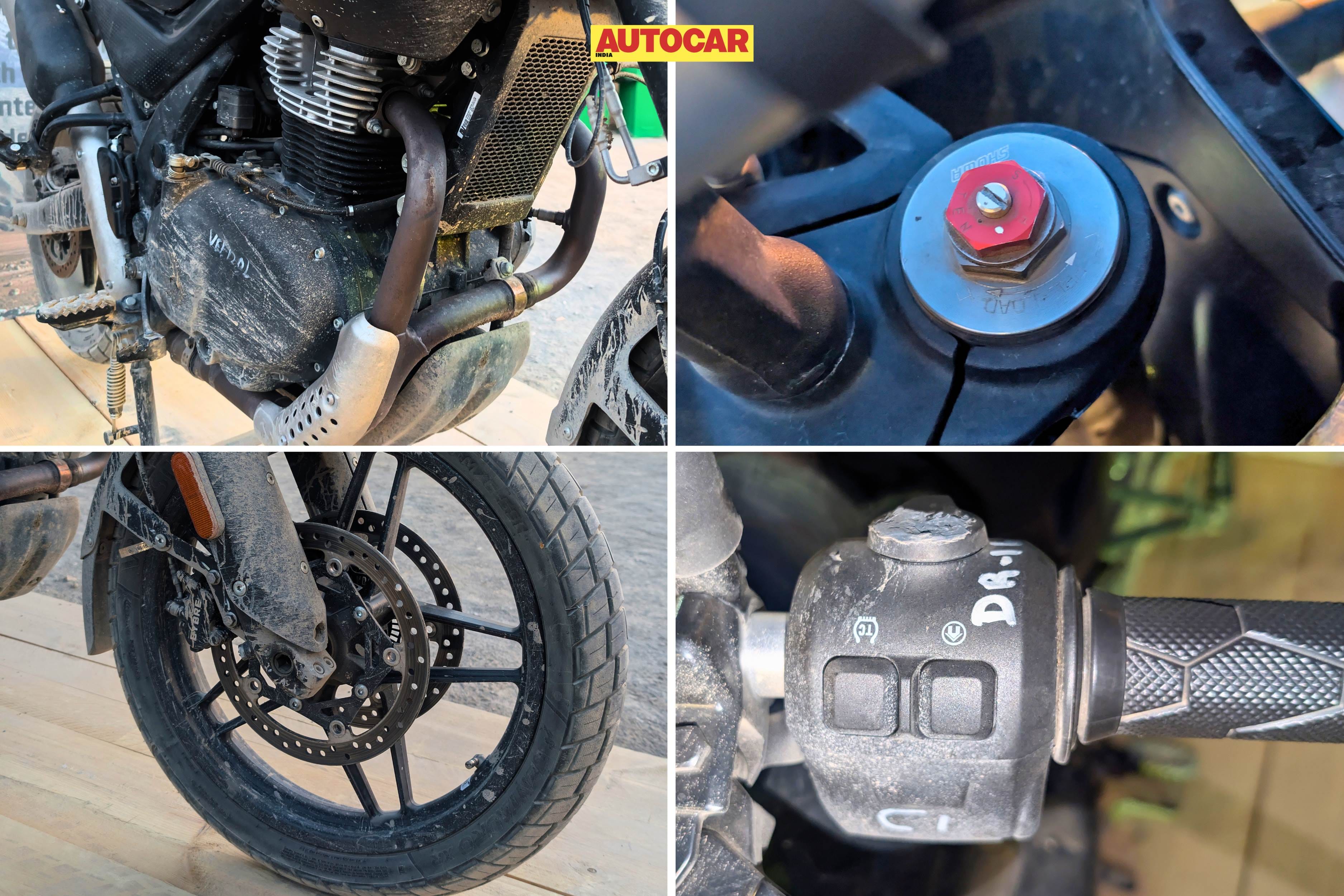
This is perhaps the biggest way the Himalayan 750 stands out from the other Royal Enfield models currently on sale. The prototype appears to have many features that have never been seen before on a production Royal Enfield. Starting alphabetically, we have adjustable front and rear suspension units. The front USD fork is a Showa branded unit and both legs have adjustable preload. The rear monoshock once again appears to be a linkage unit, but adjusting the preload on which seems far easier with a handy rotator knob on the left side.It’s worth noting that we’ll have to wait until the bike is officially launched to see whether this suspension setup makes it to production, and if adjustability will vary based on the variant.
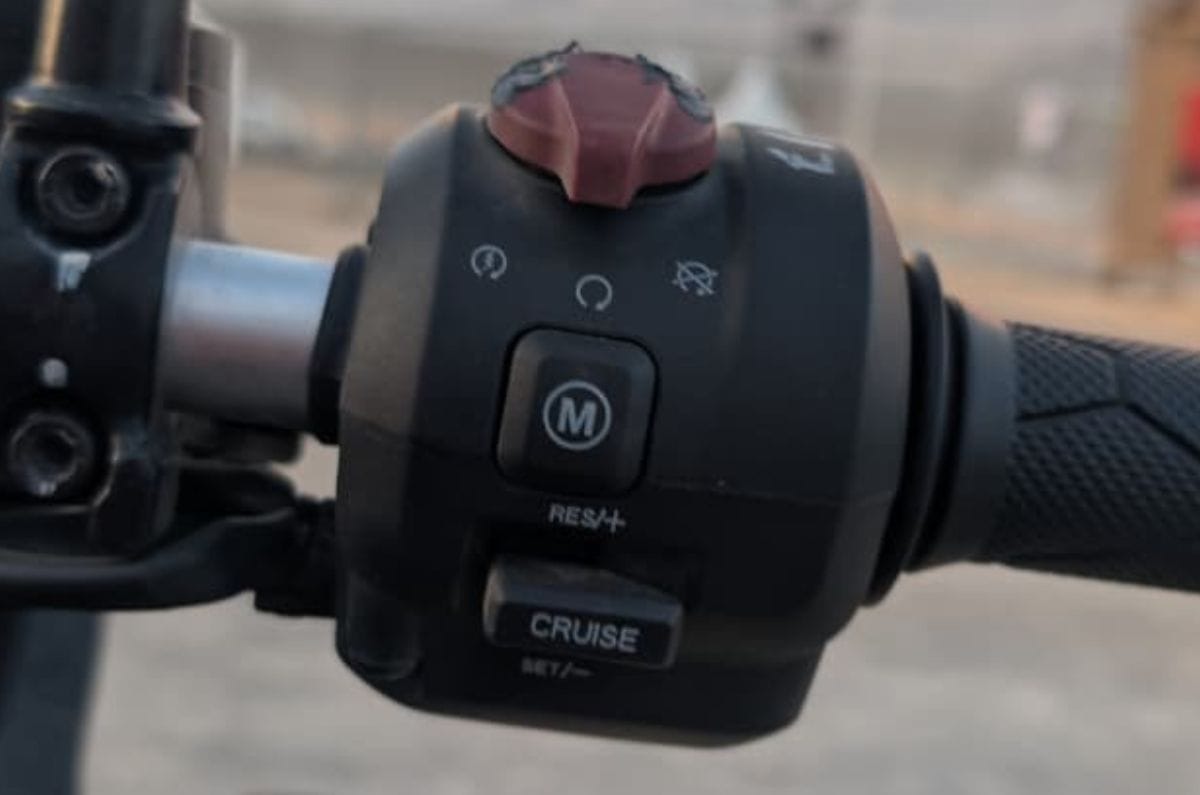
Next up we have features that signal the motorcycle’s intended purpose: long distance touring. Cruise Control, missed sorely on the Himalayan 450, is present on the bigger brother with controls present on the rear right switch cube. It’s likely similar to the ones available on the KTM 390 Adventure and the TVS RTX 300, and not an adaptive one like on higher end motorcycles. And then we have traction control, present on the diametric opposite side, front left of the switch cube. The presence of a dedicated button signals that the system might offer some adjustability, or the option to turn it off altogether.
The list of features is longer still. We see front dual-disc brakes, once again a first for Royal Enfield, with ByBre calipers. The rear brake calipers are also from ByBre, with the swingarm appearing to share the design with the 450. One additional detail that we’ve spotted are the new Centauro XR tyres by Vredestein. The tread pattern appears to reflect some of the popular dual-use tyres, such as the CEAT GRIPP and Apollo Tramplr XR, etc., Currently, the Centauro XR tyres aren’t listed on Apollo/Vredestein’s Indian websites, so further details are still unknown.
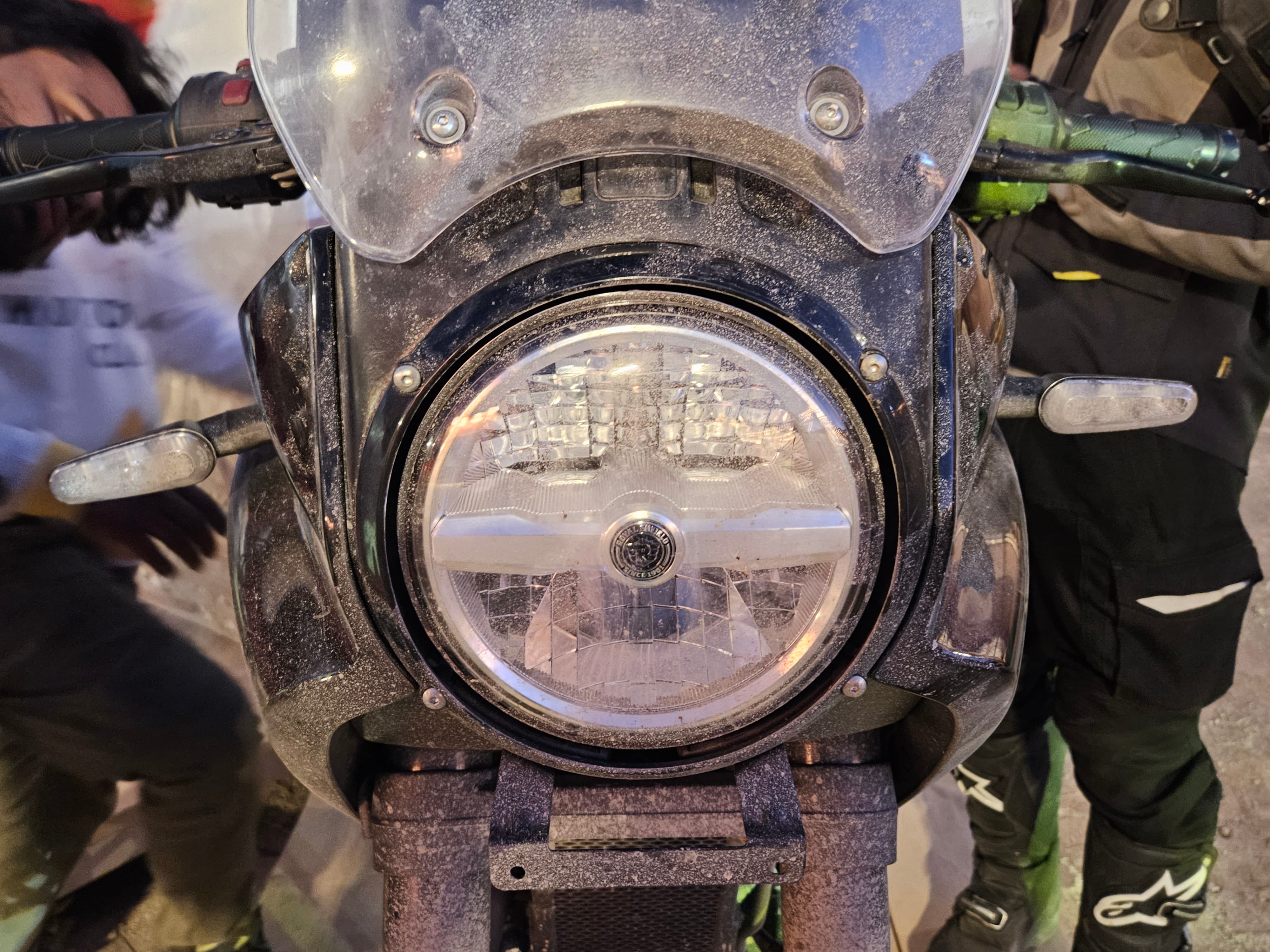
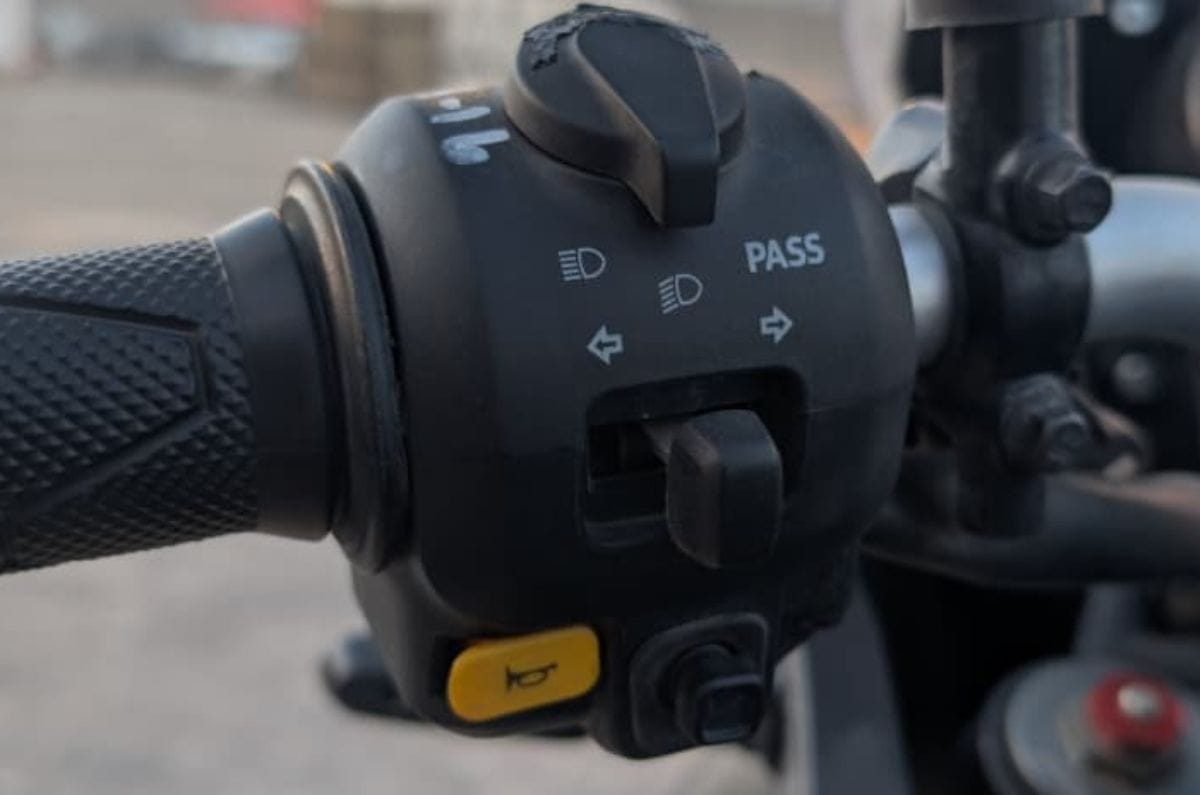
Speaking of shedding light, up front we have a new LED headlight unit, or one that appears to be, based on the assembly. Considering the headlights are one of the—if not the—weakest part of most current Royal Enfields, we hope that this is indeed a new one and that it’s a better unit, making night runs seem less daunting. Behind the headlight stands the TFT instrument cluster that was (unfortunately) turned off for this exhibition. At first glance, it looks similar to the ones on the Himalayan 450/Guerrilla 450, and the Bear 650. However, it’s likely that there will be upgrades to it, considering the new swathe of features expected. That said, we can still expect the overall experience will be better, thanks to the redesigned joystick controller on the left switch cube.
Royal Enfield appears to be positioning the Himalayan 750 as a road-biased tourer with some off-road capabilities and there couldn’t be a more obvious clue than on the wheels. One, the front wheel is a 19-inch unit, unlike the 21-inch wheel we’re used to on the current Himalayans. Two, the prototype sports alloy rims, not spoked, also expected on a motorcycle aimed towards off-roading. However, the model shown off at last year’s EICMA had cross-spoked rims, so it's entirely possible that Royal Enfield might offer a higher variant with off-road centric wheels and tyres; we’ll just have to wait and see. One minor detail that we’ve spotted is that both the gear shifter and the rear brake lever are hinged, meaning they can turn 90 degrees to the sides, ensuring they don’t bend or break away after a fall.
Royal Enfield Himalayan 750: Price
Expected to sit at the top of the range
Pricing details are once again kept under the wraps, similar to the body panels on the motorcycle. However, considering the Super Meteor 650—the most expensive 650—tops out at Rs 4.40 lakh (ex-showroom, Chennai), it’s reasonable to expect the Himalayan 750 to be priced closer to that range, if not over it. And there we go, those are the details we noticed from getting all up close and personal with the Himalayan 750 during the Himalayan Basecamp event. We should learn more about it during the global unveil, expected to happen during EICMA 2026.

 Ved Janve
 Vishal Venugopal
 Dinshaw Magol