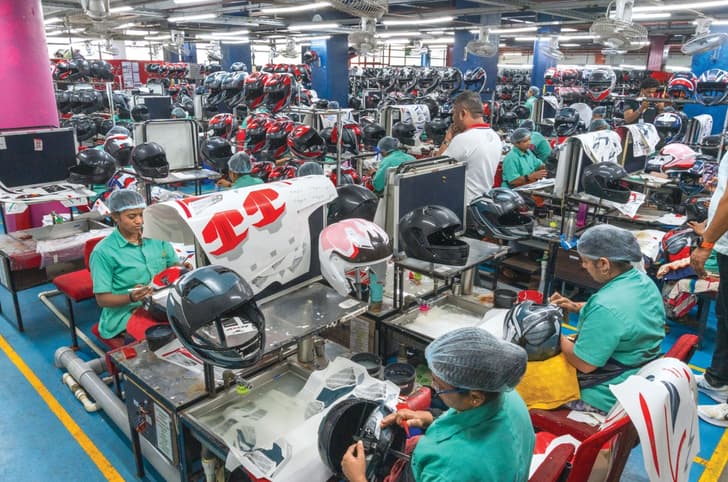
Axor helmets is the premium brand from Belagavi-based motorcycle helmet giant Vega. In existence since the early 1980s, Vega is one of India’s biggest motorcycle helmet manufacturers today, with an annual capacity of 9 million helmets a year across six manufacturing facilities.
That translates to 25,000 units a day, and we got a sense of what an operation of this scale can look like by visiting one of the company’s production facilities in Belagavi, Karnataka. The facility we visited was one of Vega’s older units, which explained why many of the processes were more labour-intensive than I’d expected. What also came as a surprise was just how much of the manufacturing process is now in-house.
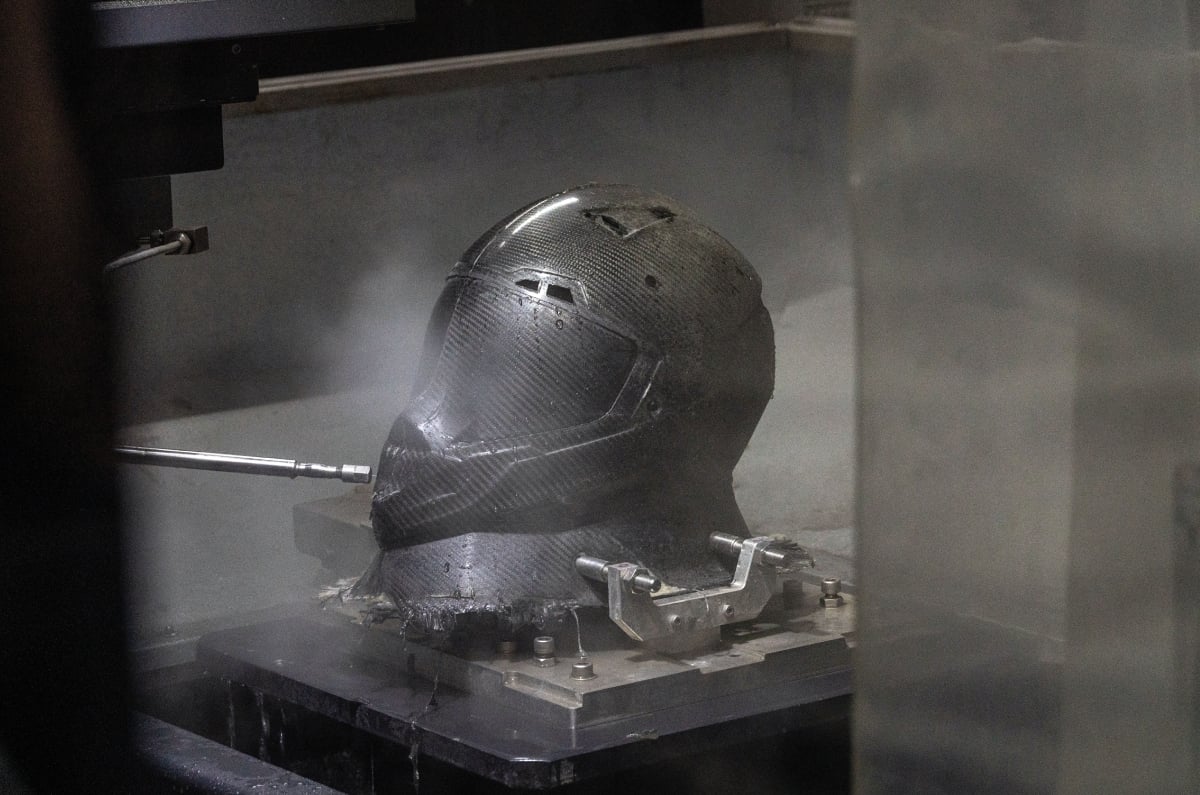
Everything from the plastic components for the vents to the EPS inner liner and even the polycarbonate visors is made by Vega. The company manufactures its own shells too, and the speed with which an ABS plastic shell can be made is what greatly contributes to being able to produce so many helmets in a day. It takes just 90 seconds for a bunch of plastic pellets to be melted and injection-moulded into a shell. The moulding posts are then cut off, and the shell slowly gets transformed into a helmet as it passes through various stages in the factory.
Once the ABS shell is processed, it is prepped for painting. The painting process in this plant was mostly manual, but there was an automated machine applying a clear coat. A separate UV chamber cures the clear-coated helmets (immediately for clear lacquer and about half an hour for matt lacquer). While some helmets stop with solid colours, many of them have complex water-transfer graphics that are applied to the helmet.
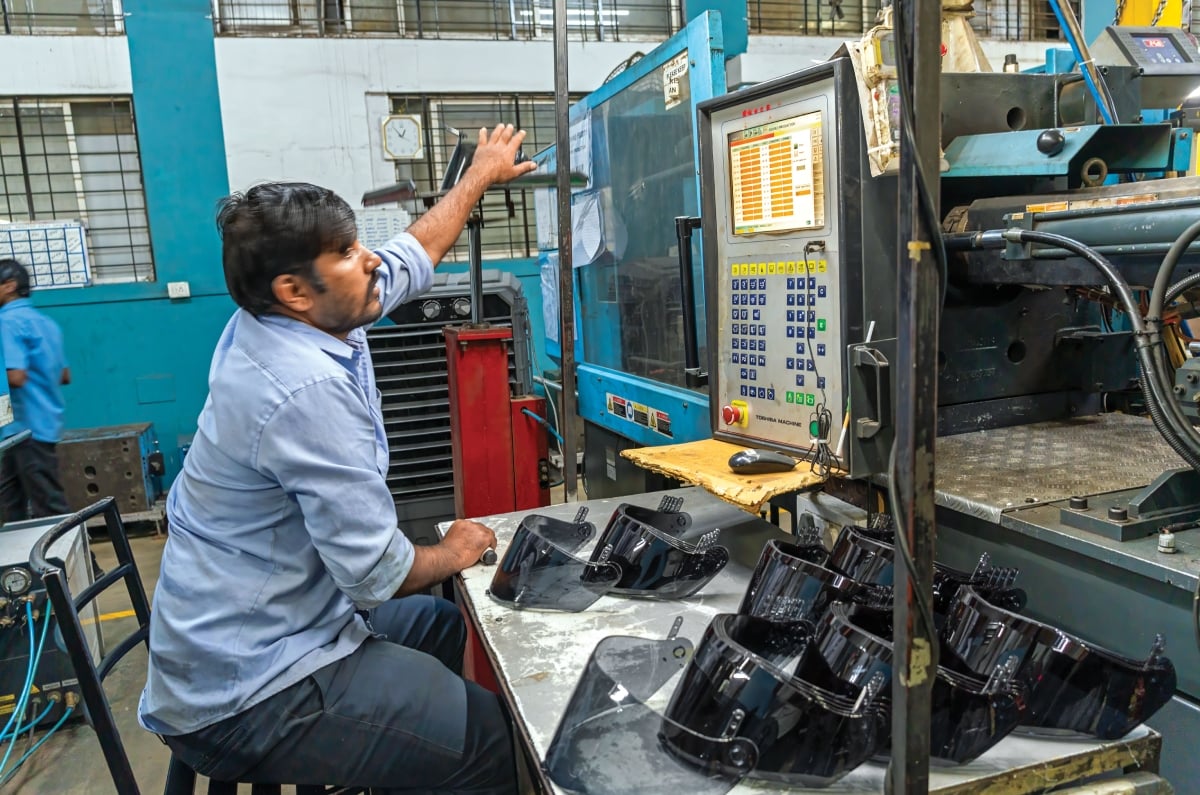
There are literally thousands of painted shells stacked on racks across the factory floor, waiting for assembly. We spotted helmets with KTM, TVS racing, Royal Enfield and Ather branding, which was a reminder of how many of India’s top manufacturers source their helmets from Vega.
With the painting process complete, components like vents, chin straps, EPS liner and comfort liner are all installed before the helmets are boxed and ready to ship. Watching it all come together was quite interesting, but the really fascinating part lay ahead when we were taken to the top floor of the factory.
This is where Vega makes its fibreglass and carbon-fibre shells. Fibreglass helmets are still made today for international clients, and the company also has a long history of making carbon-fibre helmets as well. This goes all the way back to 1999, when it made its first pudding-bowl style carbon-fibre helmet for the American market under the Daytona Helmets brand.
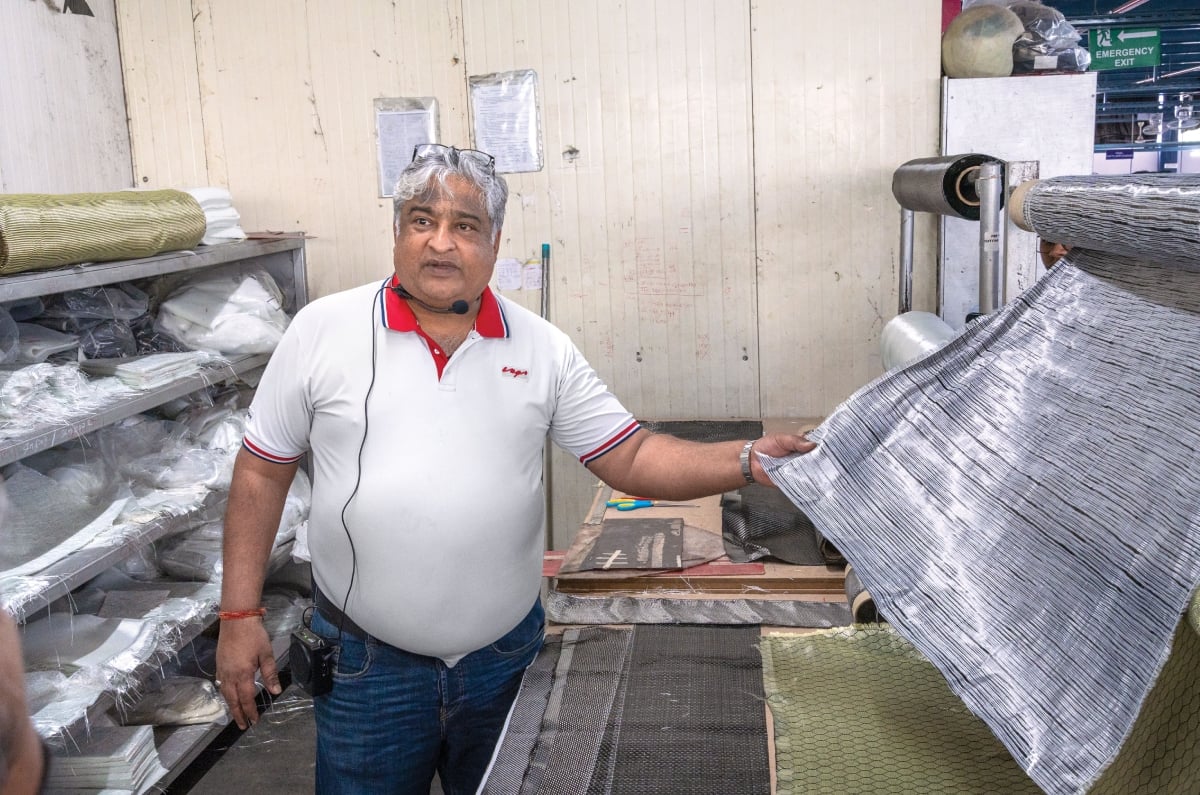
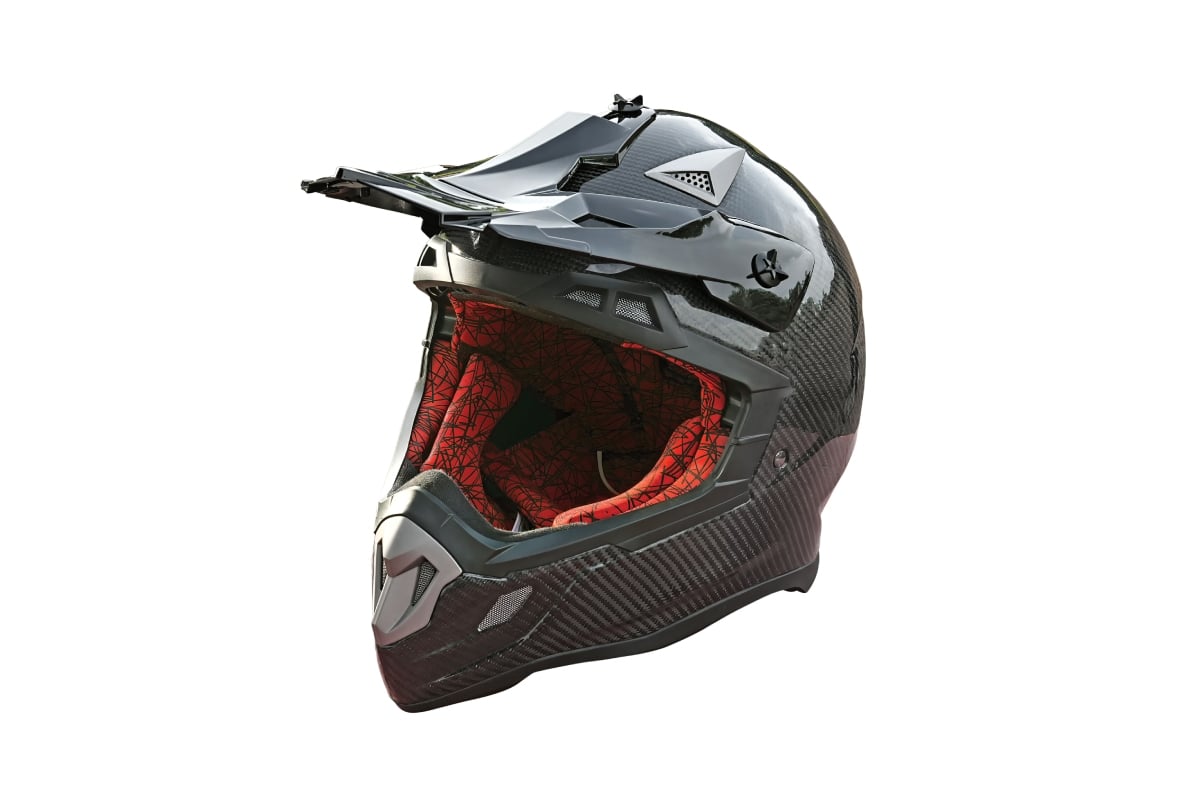
Vega uses balloon moulding technology to make its carbon-fibre shells, and it is based on the same process used for the fibreglass helmets. A tri-composite structure of carbon fibre, aramid and fibreglass enables the critical balance between lightness and impact absorption. The company used to hand cut out the visor aperture and vent holes in the CF shells post-moulding, but has now invested in a CNC water jet machine for the job. This enables much tighter tolerances and will help address customer complaints with excessive wind noise in current Axor carbon-fibre helmets.
The latest MX Carbon helmet uses new materials, which have raised the price to Rs 20,000, compared to its predecessor. The company says another reason behind the high price is the longer manufacturing time, with the company being able to currently produce up to 8 CF helmets a day.
With India’s premium two-wheeler market rapidly evolving, Vega is confident that there will be growing demand for such helmets, and has plans to bring out more models soon, including an ADV-style helmet. The company says it’s even working on making FIM-homologated and Snell-approved performance helmets, but that this could take a couple of years.
Having reasonably priced, fully locally manufactured carbon-fibre helmets isn’t something that many Indian motorcycle enthusiasts would have expected to be possible, but Vega Helmets is making that happen.
Experiencing the MX Carbon helmet
The Axor MX Carbon is certified to DOT, ISI and ECE 22 06 standards. It is available in three different shell sizes and weighs just 1,040g, plus or minus 50g, based on the shell size. We got to briefly try the helmet out at the Track 1 off-road facility in Belagavi on a number of vehicles, including an ATV, a buggy and a KTM 890 Adventure R.
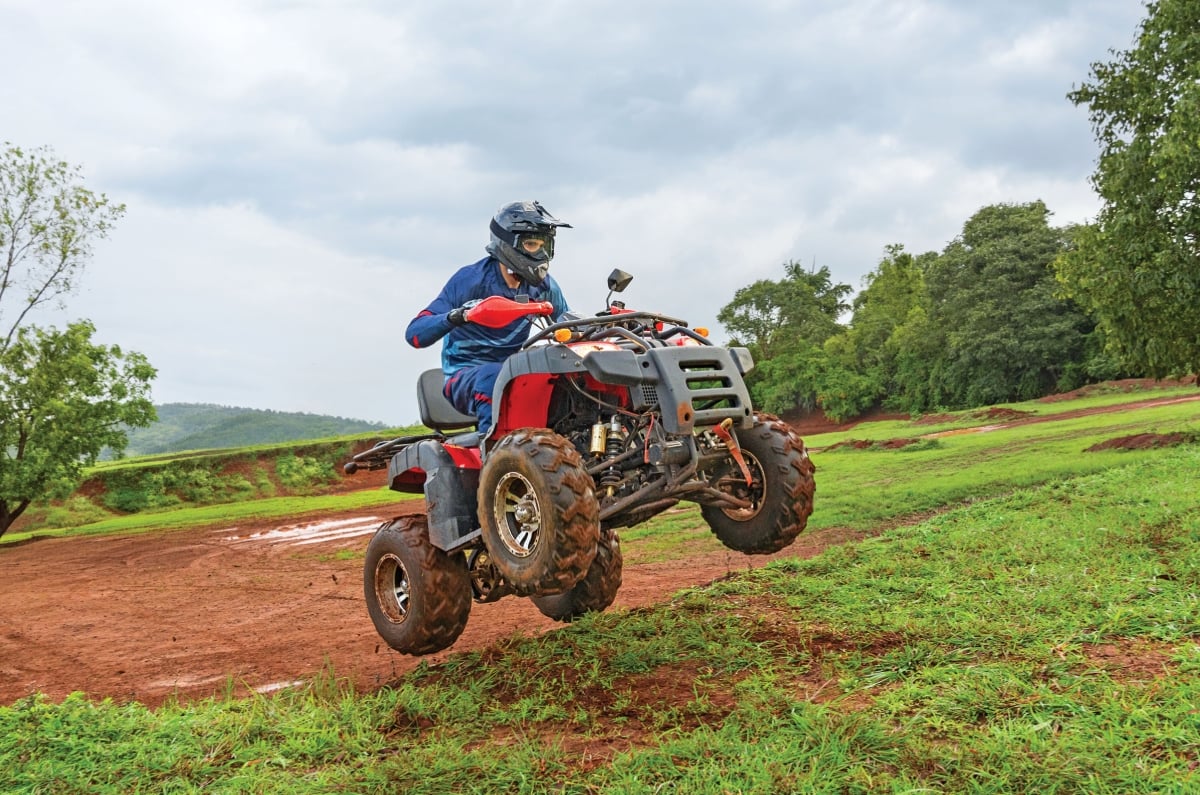
Of course, the lack of weight was highly appreciated, but the helmet also felt nicely balanced. The inner liner material was also softer and more comfortable than expected. I usually wear a size S helmet, and that applies here as well. The fit was mostly very good, without any unusual or uncomfortable pressure points, but I did notice that the tips of my ears made contact with the inner liner.
The double D-ring closure system was easy to use, but the snap button to secure the strap could have had a more positive feedback when engaged. Overall quality is not bad for the price, but the finishing where the carbon-fibre panels join along the centre of the helmet was inconsistent across different units.
 Vishal Venugopal
 Ved Janve
 Stephen Raj Antony