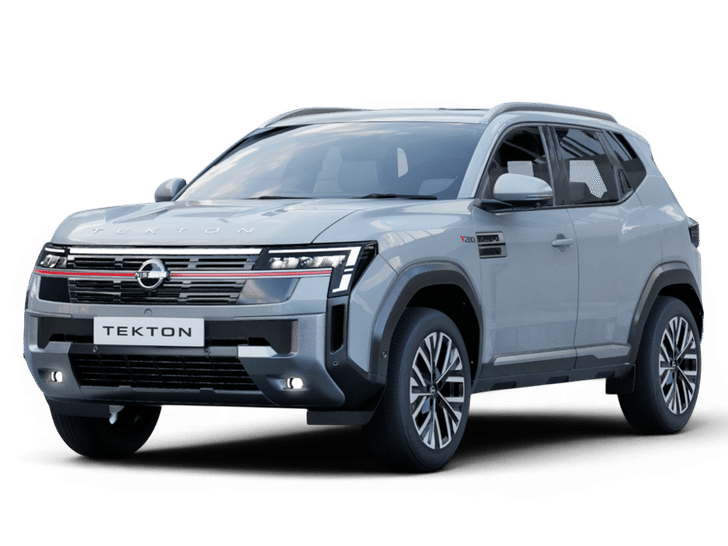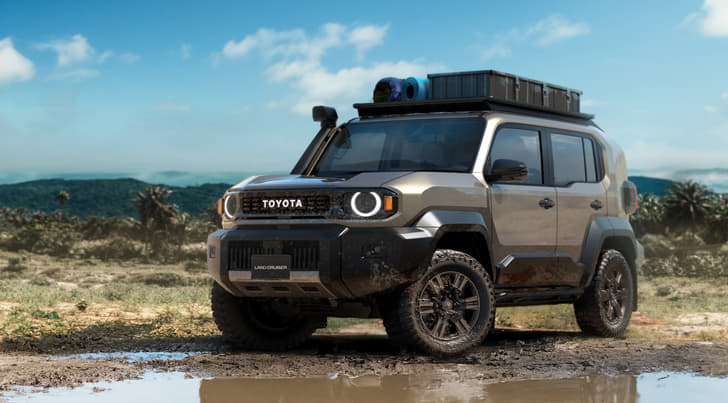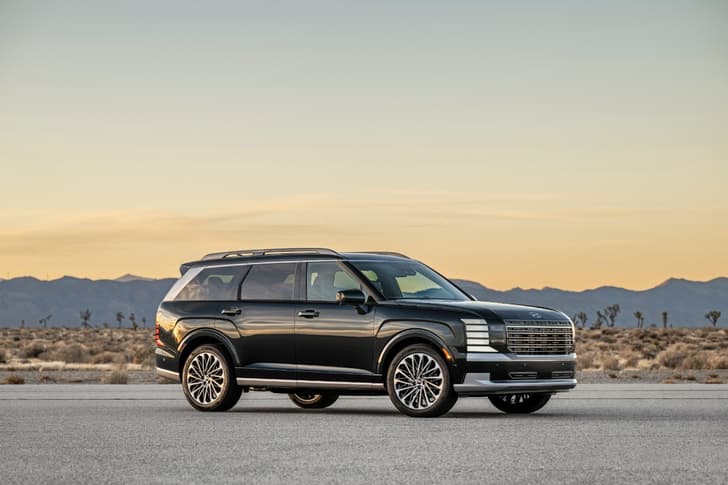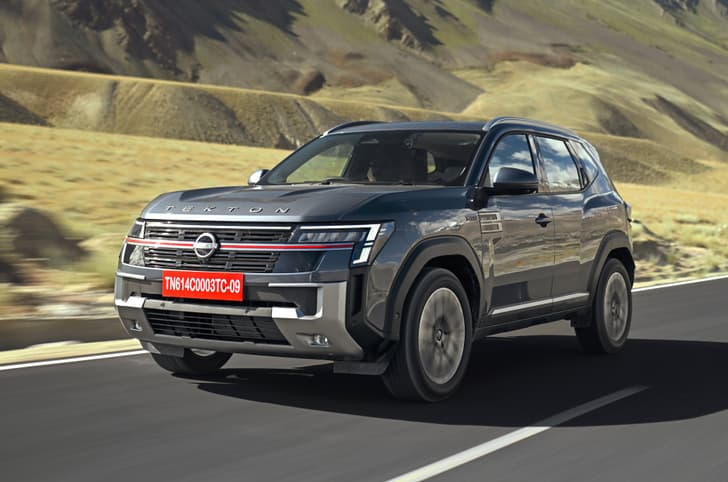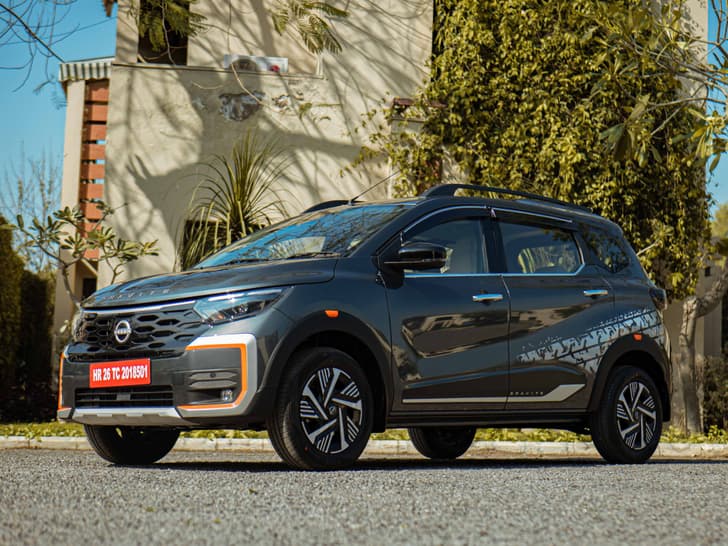
Nissan recently revealed the X-Trail in India ahead of its imminent launch in the country. The three-row SUV will be Nissan’s flagship offering here, and will go up against three-row SUVs such as the Toyota Fortuner, MG Gloster, Skoda Kodiaq and the Jeep Meridian. Here’s a detailed spec comparison of the X-Trail with its potential competitors in India.
Nissan X-Trail vs rivals: dimensions
The Nissan X-Trail measures 4,680mm in length, 1,840mm in width, stands 1,725mm tall and has a 2,705mm-long wheelbase. This makes it slightly smaller than almost all its rivals, despite having a three-row configuration like the others. However, the X-Trail gets the biggest alloy wheels (20-inches).
The Nissan's 210mm ground clearance is the second highest in the segment, same as the MG Gloster, and only behind the Toyota Fortuner's 225mm. The Gloster is the longest, widest, tallest, and has the longest wheelbase and maximum boot space with all three rows up.
Nissan X-Trail vs rivals: engine and gearbox
The Nissan X-Trail gets a sole 163hp, 300Nm 1.5-litre, 3-cylinder turbo-petrol engine mated to a CVT automatic with front-wheel-drive. The X-Trail is the only full-size premium SUV here that does not offer four-wheel-drive even as an option. However, it does get a limited-slip differential.
The MG Gloster’s diesel engine in its higher state of tune is the most powerful one here, while the Toyota Fortuner’s 2.8-litre diesel produces the maximum torque. The Gloster and Jeep Meridian are offered with diesel engine options only, while the Kodiaq gets a sole 190hp, 2.0-litre turbo-petrol.
Nissan X-Trail vs rivals: price
The Jeep Meridian is currently the most affordable SUV offering here, with prices starting from Rs 29.49 lakh. The Toyota Fortuner’s pricing goes up to Rs 51.44 lakh, making it the costliest SUV in this comparison. The X-Trail is available in a single trim, priced at Rs 49.92 lakh (introductory), which makes it the second-most expensive SUV in this comparison. Do note that the Nissan SUV is being brought to the country through as a CBU, which results in a higher price tag.

 Uday Singh
 Dipan Sur


 Glenn Noronha