
Autocar India
RA

Ravi

1w

I want to purchase an EV with strong road presence and a premium look and feel. My driving is approximately 4,000 km per month. Charging is not an issue, as I follow a loop drive every day. My budget is ₹20–22 lakh.

Autocar India team

Autocar India

Verified
20m

For your budget, it’s quite challenging to find an EV that genuinely delivers both a premium feel and strong road presence. Typically, those attributes come with larger electric SUVs that sit in a much higher price bracket.

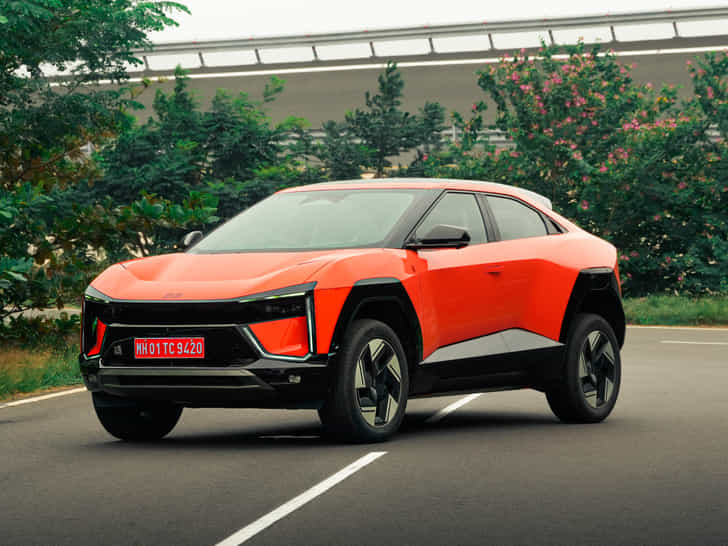
That said, you could consider the Mahindra BE6. It has a very striking, concept-like design that certainly stands out on the road and fits within your budget. In fact, the design is the BE6’s biggest talking point. It’s bold and quite polarising, so while not everyone may like it, it’s impossible to ignore.

The interior follows a similarly radical theme, with a modern, tech-heavy layout that feels fresh compared to more conventional offerings in this price range. However, there are a few compromises to be aware of in this Mahindra car. Rear seat space is a bit tight for regular use, and there are some ergonomic quirks that may take getting used to.

Given your high monthly running and predictable loop drive, the BE6 could still work well as a distinctive, urban-focused EV provided you’re willing to prioritise design and presence over outright practicality.
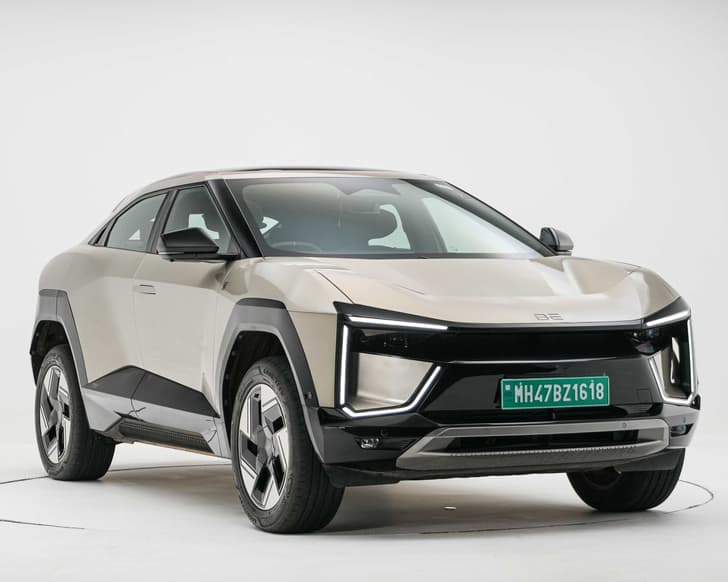
Mahindra BE 6

Mahindra BE 6

Explore cars mentioned
More questions on similar cars

RS

Rahul Singh

1w

Hi, my family is planning to buy a car by the end of the year in December. Our current options are Venue, Kylaq, Punch, and Nexon. We want an automatic and preferably diesel if it fits within the budget of ₹12–14 lakh. I already own a 2021 Creta SX (O) CRDi AT and have driven it for 85,000 km across India without any performance issues, so I am slightly biased towards Hyundai Venue. What would be your advice?

Autocar India team

Autocar India

Verified
50m

Since you are leaning towards a diesel, the only models shortlisted by you, that offer a diesel engine are the Hyundai Venue and Tata Nexon. The Skoda Kushaq and Tata Punch do not come with a diesel option.Between the Hyundai Venue 1.5 diesel and the Tata Nexon 1.5 diesel, the Venue diesel would be my pick. Given your experience with the Creta SX(O) CRDi AT and 85,000 km of trouble‑free running across India, it makes sense to stay with a familiar and proven Hyundai diesel powertrain. In your budget, the Hyundai Venue HX5 Diesel AT is the variant to focus on. It gives you the 1.5‑litre diesel with a proper 6-speed automatic and a sensible balance of features without stretching the budget unnecessarily.The Nexon feels more robust, has a bigger boot, and is a strong product on its own. However, the Venue has more finesse, a higher quality interior, a smoother and more consistent drivetrain, and overall feels better put together. For your usage and preferences, the Venue HX5 Diesel AT is the more confidence‑inspiring choice.

VehicleSkoda Kushaq
VehicleTata Punch
VehicleTata Nexon
VehicleHyundai Venue
VehicleHyundai Creta
RA

Ramesh

5d

I am planning to buy a new EV for both home use and long drives. My budget is around ₹15 lakh. I would appreciate your suggestions to help me decide on a suitable brand.

Autocar India team

Autocar India

Verified
2h

The Nexon EV with the 45kWh battery looks like the best fit within your Rs 15 lakh budget. It’s a well-established product now, having gone through multiple updates since its debut in 2020, and Tata Motors has steadily refined it over time.That said, don’t expect it to be entirely free of minor niggles that are known to still come up occasionally, but overall, it’s a sorted and usable EV. The size works well for city use, while its solid, reassuring build gives it good highway confidence, which is important if you’re planning longer drives.In terms of range, you can realistically expect over 300km in real-world conditions, depending on driving style, traffic, and terrain. Charging infrastructure is also steadily improving, which makes this Tata car easier to live with as a primary car.All things considered, it strikes a good balance between practicality, range, and price, making it one of the safest choices in this segment right now.

VehicleTata Nexon EV
SC

Scientist

1d

I am planning to buy an SUV for myself and my family. My daily driving will be around 80 km, and I plan to do occasional off-roading once a month. My average monthly driving is about 2,000 km. I am looking for a powerful, safe, and secure vehicle with 7 seats that is also economical. I am open to electric, hybrid, petrol, and diesel options, but not CNG. Since I have high running, I am also looking for low running costs. Please suggest, as I plan to make the purchase within the next 2 months.

Autocar India team

Autocar India

Verified
3h

Go for a diesel 7-seater SUV or MPV, and shortlist the Kia Carens Clavis or Toyota Innova HyCross depending on your budget. These are the most practical and economical choices for your usage.The Kia Carens Clavis diesel is the most practical starting point. It is comfortable, easy to drive daily and efficient for long distances. The diesel engine is well suited for your high running, and this Kia car is stable enough on highways while remaining manageable in the city. It is also one of the most sensible family 7-seaters available today.If you can stretch your budget, the Toyota Innova Hycross hybrid is the best overall choice. It offers excellent comfort, much better space across all three rows and very low running cost for a large vehicle thanks to its hybrid system, which delivers high efficiency for city and highway use. It is also among the most reliable long-term ownership options.Now, since you mentioned occasional off-roading, you need to be realistic. Cars like the Carens Clavis and Hycross are not meant for serious off-roading. If your off-road use is mild, like rough roads or trails, they will manage. If you want proper off-road capability, then something like the Mahindra Scorpio N diesel is the better fit. It is rugged, has strong torque and proper SUV capability, while still being usable daily.The trade-off is clear. The Scorpio N is tougher and more capable off-road, but less comfortable and less efficient than the Carens or Hycross.

VehicleKia Carens Clavis
VehicleMahindra Scorpio N
VehicleToyota Innova HyCross

Popular discussions right now

RO

Rohin

2w

I am confused about buying the AMT version of the Skoda Kylaq, Tata Nexon, or Maruti Fronx. My budget is between 11 and 13 lakh. My usage is mostly city driving of about 1,000 km per month, with occasional long highway drives.

Autocar India team

Autocar India

Verified
6d

Between the three, the Skoda Kylaq is the best automatic for the money. It doesn’t use an AMT but a proper 6‑speed torque-converter with the 1.0 TSI, which is smooth, robust and easily the nicest for your occasional highway runs.The Maruti Suzuki Fronx 1.0 turbo also gets the same 6‑speed torque-converter auto, and while it is refined and efficient, it doesn’t have the same solid, European feel or driving dynamics as the Kylaq. However, from an overall cost-of-ownership point of view - price, fuel efficiency and service, the Fronx is likely to work out cheaper.The Tata Nexon in your budget doesn’t get a torque-converter. You mainly have a 6‑speed AMT, which is convenient but nowhere near as smooth or quick as a proper automatic. There is also a 7‑speed DCA dual‑clutch option, which is noticeably better than the AMT, but still not as seamless as the autos in the Kylaq and Fronx, and it can push the price higher.For 11-13 lakh, 1,000km a month in the city and the odd long drive, we would pick the Kylaq auto. If budget discipline and running costs are top priority, go for the Fronx 1.0 turbo automatic.

VehicleSkoda Kylaq
VehicleMaruti Suzuki Fronx
VehicleTata Nexon
YA

Yash

1w

I am confused between the 7XO and Safari. I took the test drive of both and loved the rugged suspension setup of the Safari, but I also liked the easy driving nature and dynamics of the 7XO.

Autocar India team

Autocar India

Verified
3d

Between the two, the Tata Safari does a great job of projecting toughness. It feels solid, has that reassuring heft, and its suspension setup really shines on broken roads and you can carry speed with confidence and it just shrugs off rough patches.That said, the Mahindra XUV 7XO is the more rounded package overall. Its 2.2-litre diesel is not just more modern, but also noticeably smoother and stronger than the older Fiat-sourced 2.0-litre unit in the Safari. It delivers better drivability in everyday conditions, which makes a difference in city use as well as on the highway.Mahindra car has also worked well on the suspension, and the improvements show. The 7XO feels more composed, offers better ride comfort over a wider range of surfaces, and is simply easier to drive. It has lighter controls, better balance, and a more user-friendly nature overall.Where the Safari still holds an edge is in the third row. It’s more usable and accommodating, whereas the 7XO’s last row is quite tight and best reserved for occasional use.So unless third-row space is a priority, the 7XO stands out as the better all-rounder. It’s more refined, easier to live with, and ultimately the more modern SUV.

VehicleTata Safari
VehicleMahindra XUV 7XO
SU

sudip

6d

I am planning to buy either the Tata Sierra or the Kia Seltos turbo-petrol automatic. My usage will be 90% in Bengaluru city traffic, with occasional highway drives. Hence, I am not sure if the Seltos DCT gearbox would become problematic after a few years due to heavy traffic. Would the Sierra’s torque converter be more reliable and a better choice in these conditions?

Autocar India team

Autocar India

Verified
6d

Go for the Tata Sierra torque converter. The key difference lies in how these gearboxes behave in the real-world conditions. The Seltos turbo-petrol DCT is quick and exciting, but in slow, crawling traffic, it can feel hesitant and slightly jerky, as it constantly works the clutch. This is not ideal for long-term ease in heavy city conditions. The Sierra’s torque converter is the opposite. This Tata car is smoother at low speeds, more forgiving in stop-go traffic, and generally better suited to this kind of usage, making daily driving far less tiring.There is a trade-off, though. Torque converter automatics are typically less fuel efficient than DCTs, and in a large, heavy car like the Sierra, you will notice this in real-world mileage. So, you are essentially choosing smoothness and durability over outright efficiency.

VehicleTata Sierra
VehicleKia Seltos

Posted on: 26 Apr 2026