
Autocar India
AR

Arun Rajpara

17w

I have been using a BMW 3 GT for many years and am now planning to buy a new SUV with a budget of around ₹70 to 80 lakh. My daily commute is approximately 70 km. Could you please advise on the best option available today?

Autocar India team

Autocar India

Verified
17w
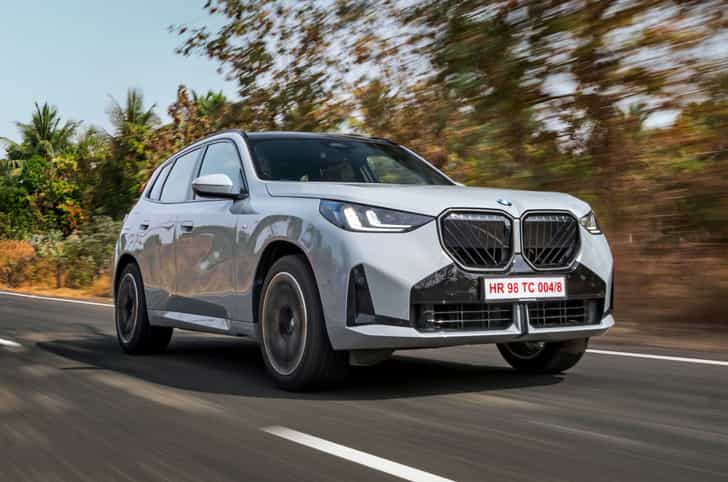
Since your daily commute is as much as 70km, you should consider a diesel luxury SUV, and there are two good options in this price range. The BMW X3 is more engaging to drive, and since you have already owned a BMW car, you will likely be familiar with the brand's aftersales and service ecosystem, and could even talk to your dealership about a loyalty benefit.
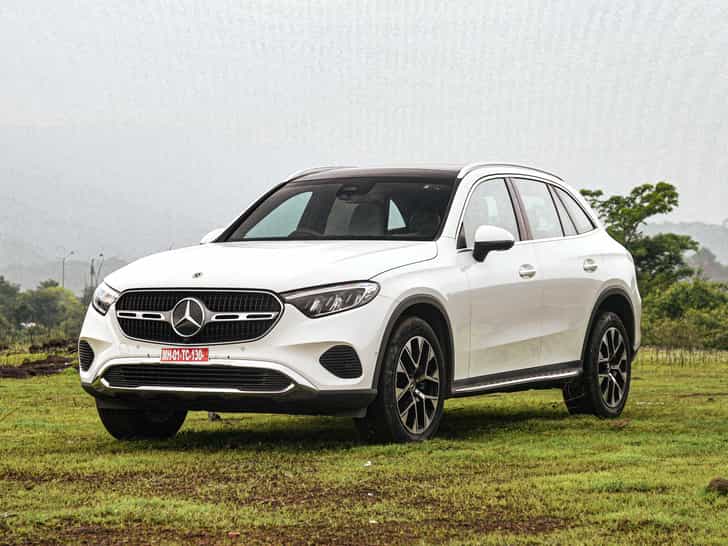
However, overall, the better SUV is the Mercedes-Benz GLC. It offers a more luxurious cabin, rear seat space, and a comfortable ride. Plus, while not quite as engaging to drive as the BMW, it's still a lot of fun from behind the wheel.
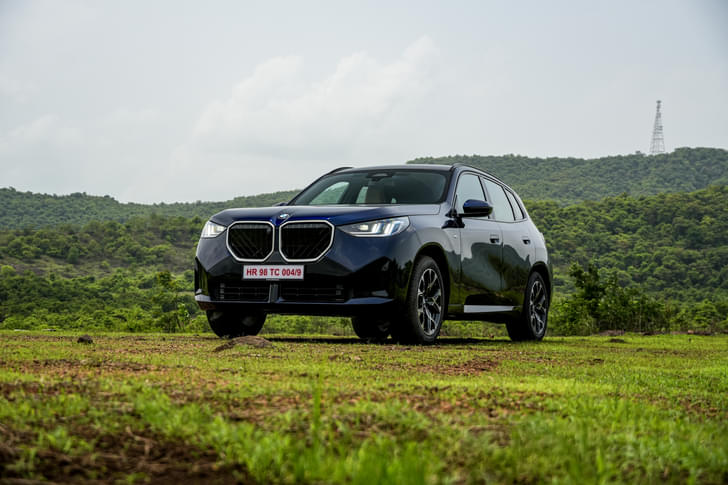
BMW X3

BMW X3

More questions on similar cars

DS

Dr Sheshadri R

2w

I am confused between the BMW X3 30 and the X3 20d. My first concern is about the long-term reliability of E20 petrol and its impact on critical engine components, as well as future compatibility with higher ethanol blends like E30. Diesel, on the other hand, is ethanol-free. Secondly, both variants produce the same 400 Nm of torque, so does the difference between 197 hp (diesel) and 258 hp (petrol) make a significant real-world impact? Which variant would be the smarter choice for hassle-free maintenance, good mileage, and ownership over the next 5-7 years?

Autocar India team

Autocar India

Verified
2d

Your concerns about E20 fuel impacting the BMW X3 30's engine are understandable, but largely overblown. The current BMW X3 xDrive30 with its 2.0-litre petrol engine is fully E20-compliant, and BMW has built in sufficient engineering margins to handle even higher ethanol blends like E27 should they become standard. Any potential wear from ethanol exposure typically manifests only after 5-6 years of use, and replacement of affected components is primarily fuel system seals and sensors, which aren’t prohibitively expensive or complex. So don't let E20 worries push you toward diesel, which brings its own maintenance headaches, particularly DPF regeneration issues that require regular long-distance driving to prevent clogging.Regarding performance, while both variants produce 400Nm of torque, the power difference between the 197hp diesel and 258hp petrol is quite significant. The X3 30 petrol reaches 0 to 100kph in 6.3 seconds, whereas it takes 7.7 seconds for the 20d, making it noticeably quicker in real-world driving. That said, the diesel's torque delivery at lower revs makes it more relaxed for highway cruising and better suited for hill driving, where you need strong pulling power without downshifting.The smart choice boils down to your driving pattern. Choose the X3 xDrive20d if you regularly cover long highway distances or frequently drive in the hills where low-end torque matters. For typical urban-suburban use with occasional highway runs, the X3 30 petrol offers stronger performance, modern mild-hybrid efficiency, and genuinely hassle-free ownership over your 5-7 year horizon. Either way, both are reliable choices when maintained properly.

VehicleBMW X3
AK

Akshay

15h

I am planning to buy the Skoda Kodiaq Lounge. Is it a value-for-money option?

Autocar India team

Autocar India

Verified
8h

Yes, priced at Rs 39.99 lakh, ex-showroom India, the Skoda Kodiaq Lounge represents great value for money. It's a full Rs 4 lakh cheaper than the Kodiaq Sportline and Rs 6.5 lakh cheaper than the L&K variant, and you don't miss out on that much. The main difference, of course, is the lack of a third row, though these seats were quite small to begin with. It misses some features too, but none of them is essential. For instance, the boot is still powered but loses its hands-free-opening function, the touchscreen is slightly smaller, the front passenger seat is not powered, there's just a rear-view camera instead of a 360deg camera, and the 13-speaker Canton audio system is replaced by a simpler one with 9 speakers. What remains unchanged is the powertrain - a 204hp, 2.0-litre turbo-petrol engine with AWD and a 7-speed DSG gearbox. Also unchanged is the well-sorted chassis, high interior quality and solid build, which is really what you're getting a Kodiaq for in the first place.

VehicleSkoda Kodiaq
VS

Viraj Sanghavi

1d

Hi, I am planning to buy a 7-seater, as I need space to install two child seats and also accommodate additional passengers (staff). I have shortlisted the Toyota Innova Hycross, which is costing me around ₹39.8 lakh on-road. Should I go ahead with this purchase, or is it better to wait for the facelift? Also, are there any better alternatives I should consider?

Autocar India team

Autocar India

Verified
11h

You're on the right track with the Toyota Innova Hycross. The good thing about it is that it offers not just space, but also flexibility. If you choose the bench-seat second row - the 8-seater in Toyota parlance - you get more seats overall, but at a small penalty to ease of access. With the captain seats in the middle row, you can fix a child seat on each and still have a clear walkway to the third row, so the staff can get in and out without disturbing the kids. It rides comfortably over bad roads, feels very smooth and quiet in city traffic, and the hybrid makes stop-and-go driving easy. It’s also easy to live with over the years, which matters when the car will be full most days. On the facelift, there is no firm date or detail in the market right now, but a future update is likely to bring small styling and feature tweaks, not a big change to space or the way it drives, and prices usually go up. Another alternative, if you don't mind an EV, is the BYD eMax 7. Its on-road price could actually work out cheaper than the Innova Hycross with subsidies. It's not quite as spacious, but it comes close; it's well equipped, and it also offers 6- and 7-seat options. It is also even lower on running costs, but then you'll have to tailor your usage to suit an EV. Overall, however, the Innova Hycross appears to be the best bet for you.

VehicleToyota Innova HyCross
VehicleBYD eMax 7

Popular discussions right now

YA

Yash

2w

I am confused between the 7XO and Safari. I took the test drive of both and loved the rugged suspension setup of the Safari, but I also liked the easy driving nature and dynamics of the 7XO.

Autocar India team

Autocar India

Verified
6d

Between the two, the Tata Safari does a great job of projecting toughness. It feels solid, has that reassuring heft, and its suspension setup really shines on broken roads and you can carry speed with confidence and it just shrugs off rough patches.That said, the Mahindra XUV 7XO is the more rounded package overall. Its 2.2-litre diesel is not just more modern, but also noticeably smoother and stronger than the older Fiat-sourced 2.0-litre unit in the Safari. It delivers better drivability in everyday conditions, which makes a difference in city use as well as on the highway.Mahindra car has also worked well on the suspension, and the improvements show. The 7XO feels more composed, offers better ride comfort over a wider range of surfaces, and is simply easier to drive. It has lighter controls, better balance, and a more user-friendly nature overall.Where the Safari still holds an edge is in the third row. It’s more usable and accommodating, whereas the 7XO’s last row is quite tight and best reserved for occasional use.So unless third-row space is a priority, the 7XO stands out as the better all-rounder. It’s more refined, easier to live with, and ultimately the more modern SUV.

VehicleTata Safari
VehicleMahindra XUV 7XO
MA

Mahesh

6d

Could you please help me choose the most suitable car within a ₹14 lakh on-road budget? I am currently confused between the Skoda Kushaq facelift, Tata Nexon Creative Plus, and Mahindra XUV 3XO AX5, considering my usage of around 1,000 km per month and the need for a safe, comfortable, and reliable family car for use with two young children?

Autocar India team

Autocar India

Verified
5d

With around 1,000 km a month, two young kids and a cap of ₹14 lakh on-road, the Mahindra XUV 3XO AX5 is the one that fits your brief best. It rides comfortably over broken city roads and speed breakers, and the rear seat is more than spacious enough for your kids. Safety is a strong point too, with a solid feel, good driver aids for this price, and mounts to fix child seats in the back. It also fits your budget in a well-equipped trim, so you are not forced into a bare-bones version. A trade-off to note: The boot is not the biggest in this price range, so if you often carry a full-size stroller plus luggage, do a quick fit check. If you prefer a more contemporary looking cabin, the Tata Nexon Creative Plus is your alternative from your list. It offers a slightly roomier boot and a very nice interior, and is easy to drive in the city, but the petrol engine feels a bit less smooth at low speeds and Tata service quality can vary by city. The Skoda Kushaq facelift would be a good pick, but only if you can stretch your budget, as within ₹14 lakh you’ll only get the base manual model, and Skoda’s service reach is smaller. Overall, for your family use and budget, the XUV 3XO AX5 lines up best.

VehicleMahindra XUV 3XO
VehicleTata Nexon
VehicleSkoda Kushaq

Posted on: 31 Dec 2025