Autocar India
DS

Dr Sheshadri R

1w

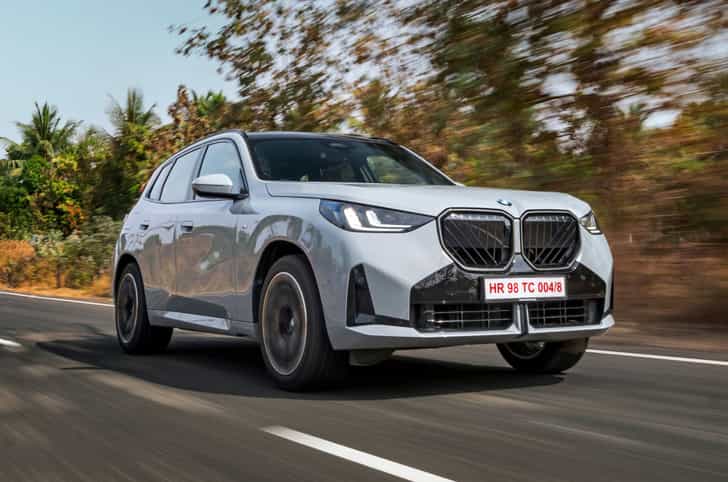
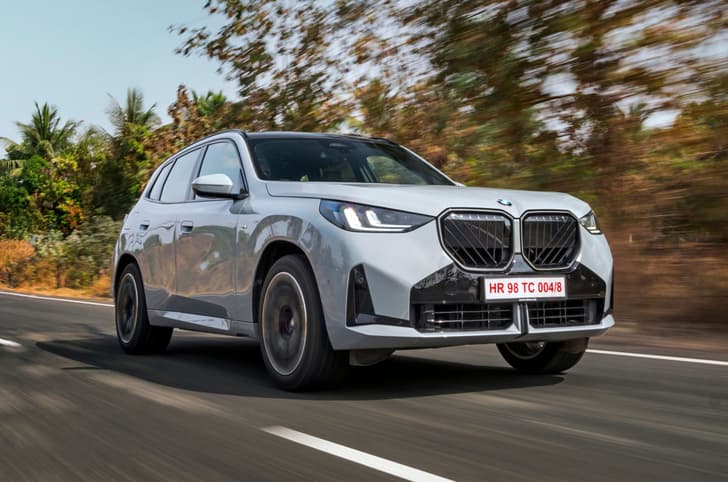
I am confused between the BMW X3 30 and the X3 20d. My first concern is about the long-term reliability of E20 petrol and its impact on critical engine components, as well as future compatibility with higher ethanol blends like E30. Diesel, on the other hand, is ethanol-free. Secondly, both variants produce the same 400 Nm of torque, so does the difference between 197 hp (diesel) and 258 hp (petrol) make a significant real-world impact? Which variant would be the smarter choice for hassle-free maintenance, good mileage, and ownership over the next 5-7 years?

Autocar India team

Autocar India

Verified
3m
Your concerns about E20 fuel impacting the BMW X3 30's engine are understandable, but largely overblown. The current BMW X3 xDrive30 with its 2.0-litre petrol engine is fully E20-compliant, and BMW has built in sufficient engineering margins to handle even higher ethanol blends like E27 should they become standard. Any potential wear from ethanol exposure typically manifests only after 5-6 years of use, and replacement of affected components is primarily fuel system seals and sensors, which aren’t prohibitively expensive or complex. So don't let E20 worries push you toward diesel, which brings its own maintenance headaches, particularly DPF regeneration issues that require regular long-distance driving to prevent clogging.
Regarding performance, while both variants produce 400Nm of torque, the power difference between the 197hp diesel and 258hp petrol is quite significant. The X3 30 petrol reaches 0 to 100kph in 6.3 seconds, whereas it takes 7.7 seconds for the 20d, making it noticeably quicker in real-world driving. That said, the diesel's torque delivery at lower revs makes it more relaxed for highway cruising and better suited for hill driving, where you need strong pulling power without downshifting.
The smart choice boils down to your driving pattern. Choose the X3 xDrive20d if you regularly cover long highway distances or frequently drive in the hills where low-end torque matters. For typical urban-suburban use with occasional highway runs, the X3 30 petrol offers stronger performance, modern mild-hybrid efficiency, and genuinely hassle-free ownership over your 5-7 year horizon. Either way, both are reliable choices when maintained properly.
BMW X3

BMW X3

Explore cars mentioned

More questions on similar cars

NA

Narayan

1w

Hi Autocar team, I am planning to upgrade my vehicle. I currently own a Nissan Terrano, which has done over 3.5 lakh km and still runs very well. However, due to its age, its parts are wearing out, and Nissan service takes a long time (often 15 days to a month) to replace parts, sometimes even suggesting unnecessary replacements. I am confused between the Victor's Strong Hybrid and the GV Strong Hybrid. I am getting a good discount on the GV. My main concern is that the GV does not have a crash test rating, whereas the Victor's has a 5-star rating. Plus, can you tell me how much I'll pay in tolls for ride quality? Since Terrano has excellent suspension, is that acceptable, or should I avoid Maruti Duo & Toyota? After-sales service is very important to me, so if you suggest any other vehicles, please recommend from well-established brands.

Autocar India team

Autocar India

Verified
13h

The Maruti Suzuki Grand Vitara and Maruti Suzuki Victoris share the same Global C platform and are structurally as well as mechanically identical, so the crash structure and safety levels should be very similar. However, since you're concerned about having a certified 5-star rating, the Victoris is the safer bet as it has been officially crash-tested by Bharat NCAP and awarded a 5-star rating for both adult and child occupant protection. The rating applies to all Victoris variants, including the strong hybrid models. The Victoris is also the newer model with additional features like a larger 10.1-inch infotainment system, ADAS, and improved tech over the Grand Vitara.Regarding everyday use, the strong hybrid powertrain is exceptionally well-suited for city driving with long daily commutes. The system operates in near-silent EV mode for extended periods in city traffic, switches seamlessly between electric and petrol modes, and delivers excellent fuel efficiency. This Toyota-based strong hybrid technology is both smooth and refined in operation.As for ride quality, you will need to adjust your expectations coming from the Terrano. This Nissan car suspension setup was indeed exceptional on broken roads and offered a plush ride. The Grand Vitara and Victoris, while comfortable, have a slightly firmer setup that may not quite match the Terrano's ability to absorb bad road surfaces. However, the ride is still acceptable for most conditions.

VehicleMaruti Suzuki Victoris
VehicleMaruti Suzuki Grand Vitara
RK

Rajan Khurana

2d

I have booked the Hyundai Venue HX10 DCT, but I am confused about the transmission. At lower speeds, it feels like there is a noticeable gear shift, which can feel jerky. On the other hand, I really like the interior. I am unsure whether I should go ahead with the Venue or consider the 3XO. My only concern with the 3XO is that the interior feels very traditional and not as premium. I am quite confused. Please advise, as the car delivery is planned within the next 15 days and I want to make the right decision.

Autocar India team

Autocar India

Verified
16h

From what you’ve said, most of your worry is low-speed city use and how smooth the automatic feels, with cabin look a close second. For that use, I would lean to the XUV 3XO petrol automatic, because its regular automatic gearbox is smoother when you are moving slowly in traffic. The Venue DCT (a dual-clutch automatic that changes gears very quickly) can feel like a small pause or a light jerk at 10-20 kph as it shifts, which is exactly what you noticed. The 3XO’s automatic does not do that, and it also handles long, crawling jams without any worry about clutch heat.The catch is what you already feel: the 3XO’s cabin design looks more simple and not as flashy as the Venue. If the cabin look matters to you every single day, the Venue still makes sense. You can also drive the DCT more gently in the first two gears and let the car roll on its own to smoothen that low-speed feel. Once above 20-25 kph, the Venue DCT feels quick and easy.So the call is this: pick the XUV 3XO petrol automatic if your priority is a smooth, calm drive in heavy city traffic. Stick with your Venue DCT booking if the premium cabin is what you love and you can live with a little shift feel at very low speeds. For your brief, I’d pick the 3XO for the smoother city drive.

VehicleMahindra XUV 3XO
VehicleHyundai Venue
SG

Shubhadeep Ghosh

3d

I am confused about choosing between the New Sonet and New Venue. The Sonet has proven itself for more than a year, while the Venue comes with exquisite features. Since both are based on the same platform and I am new to driving, please suggest the value-for-money option with a DCT.

Autocar India team

Autocar India

Verified
22h

The Kia Sonet is an excellent, polished compact SUV. It has got a great interior, and it makes you feel like you've spent your money well. This iteration of the Sonet is due for a generation change, that's slated for a 2027 launch in India. The next-gen Sonet will be based on the new Hyundai Venue's platform, and is likely to share a lot of similarities.Between the two cars you've listed, the Venue is the one to go for. As of today, this Hyundai car, feels more modern, has a brighter interior which adds to its cabin's sense of space, and it is also well-equipped. While both cars share their turbo-petrol engine and dual-clutch automatic transmission, the Venue has a lighter steering, a (relatively) softer suspension setup, which makes it a touch more user-friendly and comfortable.

VehicleHyundai Venue
VehicleKia Sonet

Posted on: 27 Apr 2026