
Autocar India
SU

Subash

6w

I am confused about whether to buy the petrol or diesel variant of the Kia Seltos. I always prefer to drive a manual transmission and am not interested in an automatic at all. I was owning a Kia Carens 1.5 Petrol MT previously and am now looking for a new SUV. Suggest which one to take, either petrol or diesel in the Seltos MT. Also considering the Skoda Kushaq, but afraid of the high maintenance cost in Skoda.

Autocar India team

Autocar India

Verified
6w
Since you have not mentioned your monthly running, the choice between petrol and diesel mainly depends on how much you drive and the kind of driving you do. As a general rule, if your running is more than about 1,300 to 1,400 km per month, then the diesel version of the Kia Seltos can make sense. You should also have regular highway drives so that the diesel engine can operate properly and avoid potential DPF related issues.
If your running is lower than that or largely city-focused, the petrol Seltos will suit you very well. Since you prefer a proper manual gearbox, you should know that the turbo petrol engine is only available with the clutchless iMT. The conventional manual gearbox comes with the 1.5-litre naturally aspirated petrol engine.
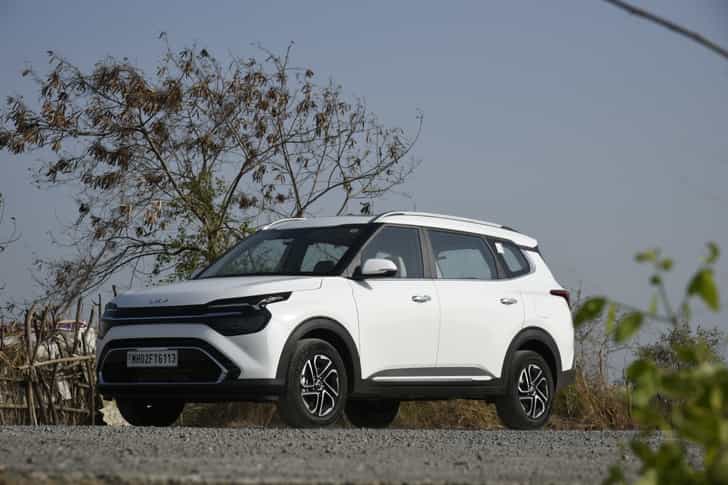
While it is not as punchy as the turbo petrol, it is smooth and perfectly adequate for everyday driving, especially in the city. In fact, you are already familiar with this engine because your Kia Carens uses the same powertrain and transmission combination.
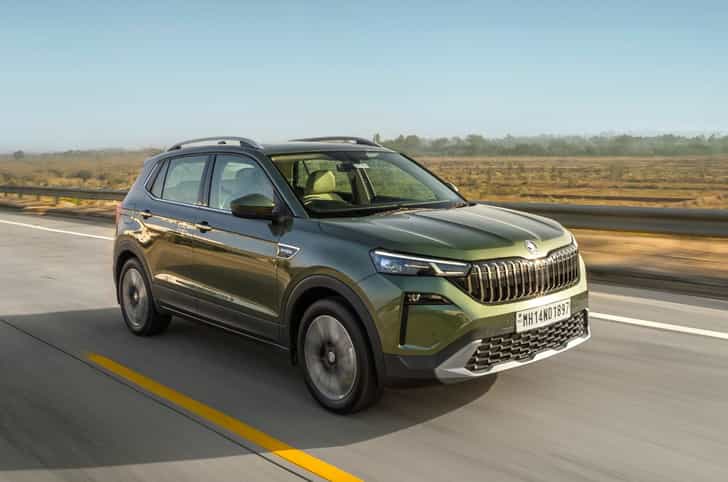
Regarding the Skoda Kushaq, the brand has improved a lot over the past few years, and the earlier reliability concerns are largely sorted. However, since you already own a Kia car and are satisfied with the ownership experience, sticking with the Seltos would be the safer and more comfortable choice for you.
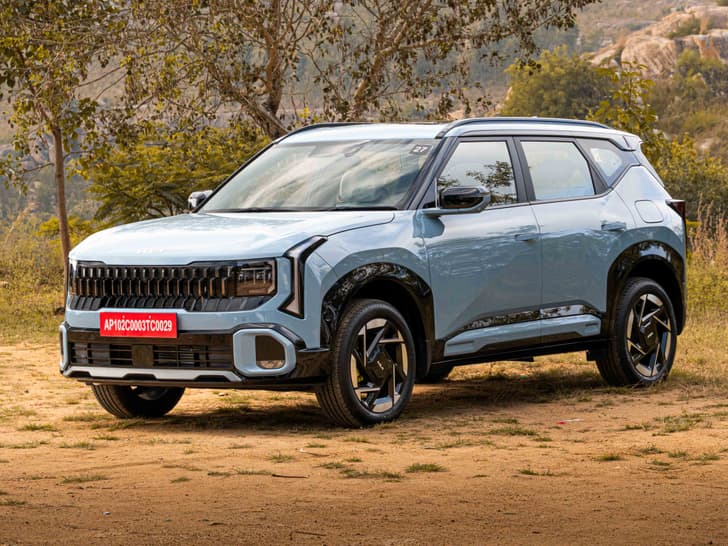
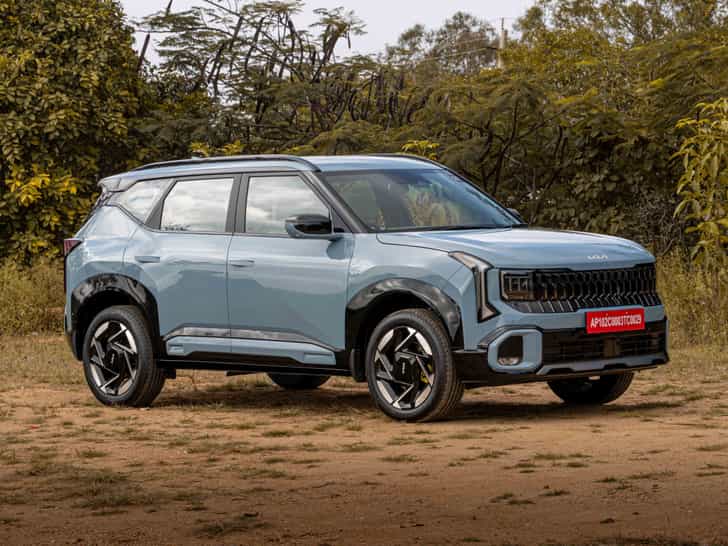
Kia Seltos

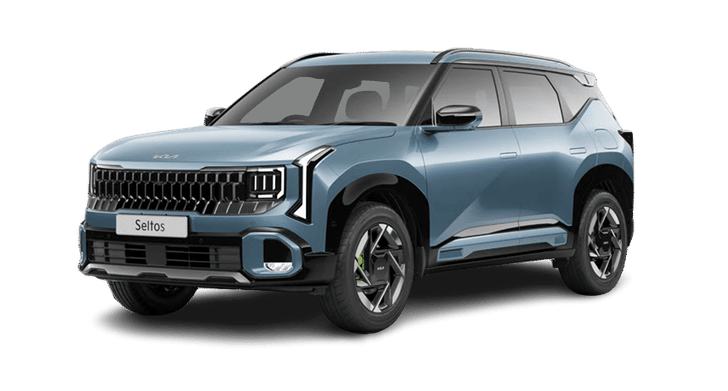
Kia Seltos

More questions on similar cars

NI

Nitesh

2d

I’m planning to buy a new car, and I’m currently confused between the Mahindra XUV 3XO AX5 (Petrol Manual), Hyundai Venue HX5 Turbo Petrol, and Kia Seltos 2026 base petrol variant. My usage: 60% city, 25% highway, 15% mountains (3 trips every year). Other requirements: annual running: ~8,000–10,000 km, primary use: family car, but I do enjoy driving occasionally, good ground clearance is important (roads in my hometown in the mountains are quite bad). I am planning to keep the car for 10+ years. Budget: ₹12 lakh (can stretch to ₹13 lakh if it’s truly worth it). My question is: Which of these would be the best fit for my usage? Is it worth stretching for the Seltos base model over the other two? Are there better alternatives in this budget that I should consider? Would really appreciate your suggestions. Thanks in advance!

Autocar India team

Autocar India

Verified
2d

With mostly city use, a few highway runs, and some mountain trips on broken roads, the Mahindra XUV 3XO AX5 petrol manual fits your brief best. It rides tough over bad patches, has good ground clearance, and its turbo petrol pulls well at low speeds, which helps on steep hill sections and in slow city traffic. It is also one of the nicer cars to drive in this price range, so when you want to enjoy a winding road, it will put a smile on your face, and the AX5 gives you a good mix of safety and comfort features without blowing the budget.Two trade-offs to note. If you often carry a full load of luggage, the boot is not very large, and at low speeds, the steering is not as light as most other SUVs in the class. Is it worth stretching to the base Seltos? Only if you really need the extra space. The base Kia Seltos skimps on features, and its non-turbo petrol will feel weaker on mountain climbs with a full family. Also check on-road pricing in your city, as it may push past Rs 13 lakh.The Hyundai Venue HX5 Turbo Petrol is also a good option and a great all-rounder, with a bigger boot, but given your needs, the better-riding, more enjoyable to drive XUV will suit you better. If you want another option to check out, look at the Maruti Suzuki Brezza, which is unexciting but offers hassle-free long-term ownership.

VehicleMahindra XUV 3XO
VehicleHyundai Venue
VehicleKia Seltos
VehicleMaruti Suzuki Brezza
TK

Tarun Kumar

4d

Hi, I booked the new Seltos HTK (O) IVT variant last week. However, today the official ARAI mileage figures were released, and they show that the DCT has higher mileage than the IVT. How is that possible? The showroom salesperson had told me that the IVT would give around 11kpl in city driving, while the DCT would give around 6-7kpl. My usage is 95% city driving, with around 15 km daily running, so I do not really need the extra power. My question is: should I switch my booking to the DCT variant if the test results are so good? I do not mind spending ₹70-80k more for those 5% drives on the highways if the city mileage is similar. If real-world mileage is the same, I would prefer the DCT. I am not sure how to interpret these mileage numbers, so I would appreciate your guidance.

Autocar India team

Autocar India

Verified
2d

Stick with the Kia Seltos IVT. It is still the better choice for your usage, and those ARAI numbers do not reflect real-world city driving.The key point is how these gearboxes behave in traffic. The IVT is tuned for smooth, steady driving and low-speed efficiency, which is exactly what your 95% city usage demands. It keeps the engine relaxed, avoids unnecessary revs and delivers consistent mileage in stop-and-go conditions. The DCT, on the other hand, is designed for performance. Even though the official numbers may look better, in real-world city traffic, it tends to run hotter, shift more frequently and can drop efficiency, especially in slow-moving conditions.This is where your salesman’s input was directionally correct. In dense city use, the IVT will usually return better and more consistent mileage, while the DCT can dip significantly if you are crawling or constantly accelerating and braking.Also, turbo-petrol engines like the one paired with the DCT are very sensitive to accelerator inputs. Drive gently, and they can be efficient, but even slightly aggressive inputs cause the turbo to spool up, fuel consumption rises quickly and mileage drops. In daily city driving, it is hard to maintain that discipline all the time.Compared to the IVT, the DCT will feel quicker and more responsive, especially on highways, and is more enjoyable to drive when you push it. But that advantage matters only for your occasional highway runs, not your everyday usage.

VehicleKia Seltos
AC

Annesha Chakraborty

2d

I am looking to buy an automatic petrol car within a budget of ₹18 lakh. My requirements are: 5-star safety, comfort for family use, mostly city driving, and occasional trips outside the city. I have explored the Skoda Kushaq, Slavia, and Tata Nexon, but I do not want to go with Tata as I already own a Tiago. I am open to options from Toyota, Hyundai, and Kia, provided they meet my safety requirements. Please advise.

Autocar India team

Autocar India

Verified
1d

On a Rs 18 lakh budget, for your requirements, the Hyundai Verna HX6+ IVT automatic is a good pick because it meets your 5-star safety needs and feels the most relaxed in traffic. The IVT, a CVT by another name, is a type of automatic that does not shift in steps, so it feels very smooth at low speeds, which makes stop-and-go driving easy. The back seat is roomy, the ride is comfortable over rough patches, and Hyundai’s wide service network adds peace of mind on those occasional trips out of town. The latest Verna has a 5-star Global NCAP crash test rating in India, so you are not compromising on your main ask. You could stretch to the HX8 variant if you want more features and your budget is flexible.Two things to keep in mind with the Verna: it sits lower than a taller car like the Skoda Kushaq, so you need a bit more care on big speed breakers, and the rear seat is set a little low, so elderly family members who prefer a higher seat may not love it. If you want a higher seating position and more ground clearance without giving up 5-star safety, go for the Kia Seltos HTK(O) Petrol CVT, which recently got a 5-star Bharat NCAP rating. Though you might sacrifice some features in this variant on your budget.

VehicleHyundai Verna
VehicleSkoda Kushaq
VehicleKia Seltos

Popular discussions right now

RO

Rohin

2w

I am confused about buying the AMT version of the Skoda Kylaq, Tata Nexon, or Maruti Fronx. My budget is between 11 and 13 lakh. My usage is mostly city driving of about 1,000 km per month, with occasional long highway drives.

Autocar India team

Autocar India

Verified
6d

Between the three, the Skoda Kylaq is the best automatic for the money. It doesn’t use an AMT but a proper 6‑speed torque-converter with the 1.0 TSI, which is smooth, robust and easily the nicest for your occasional highway runs.The Maruti Suzuki Fronx 1.0 turbo also gets the same 6‑speed torque-converter auto, and while it is refined and efficient, it doesn’t have the same solid, European feel or driving dynamics as the Kylaq. However, from an overall cost-of-ownership point of view - price, fuel efficiency and service, the Fronx is likely to work out cheaper.The Tata Nexon in your budget doesn’t get a torque-converter. You mainly have a 6‑speed AMT, which is convenient but nowhere near as smooth or quick as a proper automatic. There is also a 7‑speed DCA dual‑clutch option, which is noticeably better than the AMT, but still not as seamless as the autos in the Kylaq and Fronx, and it can push the price higher.For 11-13 lakh, 1,000km a month in the city and the odd long drive, we would pick the Kylaq auto. If budget discipline and running costs are top priority, go for the Fronx 1.0 turbo automatic.

VehicleSkoda Kylaq
VehicleMaruti Suzuki Fronx
VehicleTata Nexon
YA

Yash

1w

I am confused between the 7XO and Safari. I took the test drive of both and loved the rugged suspension setup of the Safari, but I also liked the easy driving nature and dynamics of the 7XO.

Autocar India team

Autocar India

Verified
3d

Between the two, the Tata Safari does a great job of projecting toughness. It feels solid, has that reassuring heft, and its suspension setup really shines on broken roads and you can carry speed with confidence and it just shrugs off rough patches.That said, the Mahindra XUV 7XO is the more rounded package overall. Its 2.2-litre diesel is not just more modern, but also noticeably smoother and stronger than the older Fiat-sourced 2.0-litre unit in the Safari. It delivers better drivability in everyday conditions, which makes a difference in city use as well as on the highway.Mahindra car has also worked well on the suspension, and the improvements show. The 7XO feels more composed, offers better ride comfort over a wider range of surfaces, and is simply easier to drive. It has lighter controls, better balance, and a more user-friendly nature overall.Where the Safari still holds an edge is in the third row. It’s more usable and accommodating, whereas the 7XO’s last row is quite tight and best reserved for occasional use.So unless third-row space is a priority, the 7XO stands out as the better all-rounder. It’s more refined, easier to live with, and ultimately the more modern SUV.

VehicleTata Safari
VehicleMahindra XUV 7XO
SU

sudip

1w

I am planning to buy either the Tata Sierra or the Kia Seltos turbo-petrol automatic. My usage will be 90% in Bengaluru city traffic, with occasional highway drives. Hence, I am not sure if the Seltos DCT gearbox would become problematic after a few years due to heavy traffic. Would the Sierra’s torque converter be more reliable and a better choice in these conditions?

Autocar India team

Autocar India

Verified
6d

Go for the Tata Sierra torque converter. The key difference lies in how these gearboxes behave in the real-world conditions. The Seltos turbo-petrol DCT is quick and exciting, but in slow, crawling traffic, it can feel hesitant and slightly jerky, as it constantly works the clutch. This is not ideal for long-term ease in heavy city conditions. The Sierra’s torque converter is the opposite. This Tata car is smoother at low speeds, more forgiving in stop-go traffic, and generally better suited to this kind of usage, making daily driving far less tiring.There is a trade-off, though. Torque converter automatics are typically less fuel efficient than DCTs, and in a large, heavy car like the Sierra, you will notice this in real-world mileage. So, you are essentially choosing smoothness and durability over outright efficiency.

VehicleTata Sierra
VehicleKia Seltos

Posted on: 13 Mar 2026