Autocar India
40w

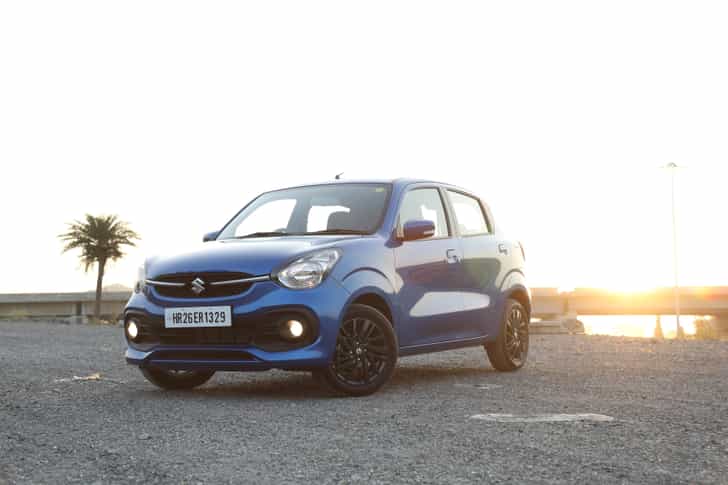
I have been driving a manual Celerio for the past 10 years. The biggest benefit has been its very low maintenance, and I have never faced any electrical or mechanical issues. I am now planning to buy a new car next year, but I am confused about the budget. Initially, I was considering up to Rs 10 lakh, but now I feel I can stretch it to Rs 12 lakh. My main requirements are good city mileage, decent performance, and very low maintenance. Around 90% of my driving will be in the city, with a daily running of 30 to 40 km, and I also plan to do mountain trips about three times a year.

Verified
39w
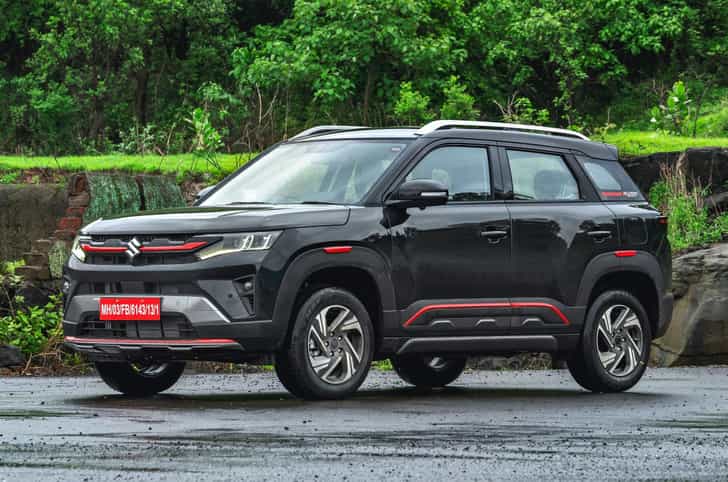
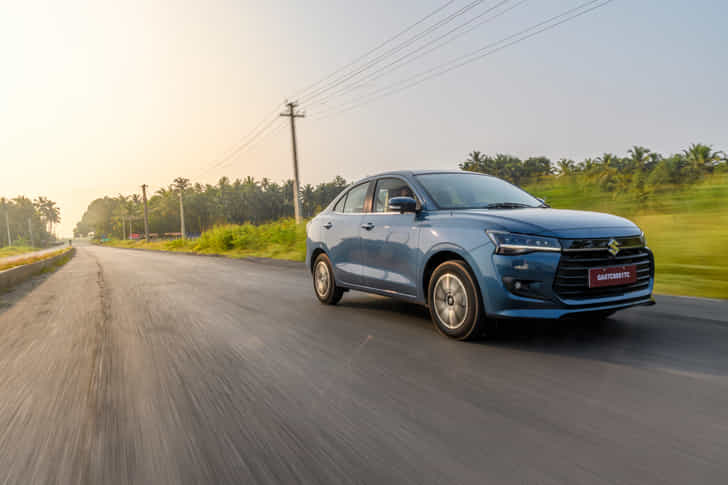
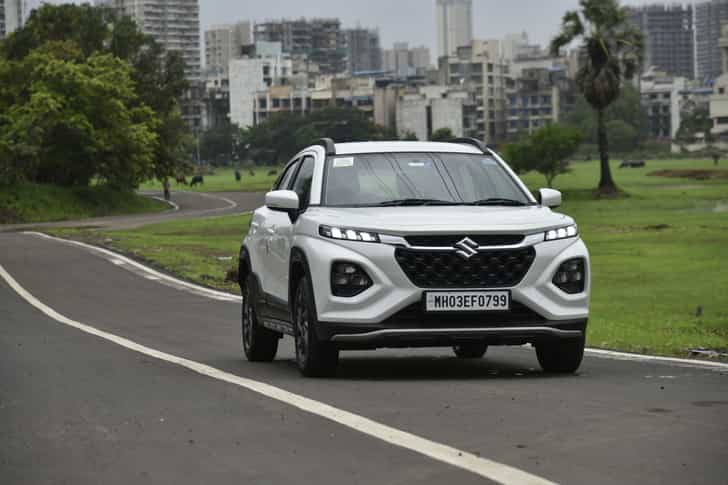
With a Rs 12 lakh budget you can get multiple body styles, including hatchbacks, compact sedans, or even SUVs. Since you've had a pleasant ownership experience, you could consider sticking to the Maruti brand itself, and shortlist Maruti Brezza, Dzire and Fronx.
If you're open to the sedan body style, get the Dzire for its space, comfort, efficiency and overall premium feel. For your mountain trips, though, the Fronx turbo will feel the most effortless to drive. That said, all the listed cars will fall within your budget, are likely to be efficient and low maintenance, and will feel like a big upgrade over your Maruti Suzuki Celerio.
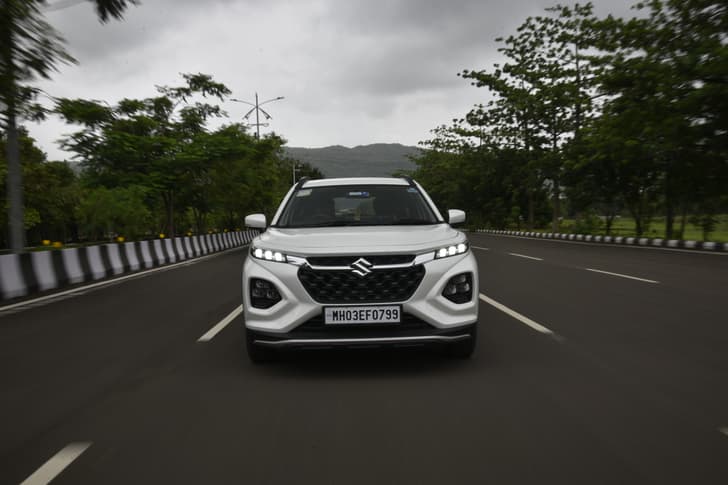
Maruti Suzuki Fronx

Maruti Suzuki Fronx

More posts on similar cars

1w

I am considering the Jimny Automatic and would like to understand how it performs on highways, particularly how stable and confidence-inspiring it feels while cruising at around 100kmph. I have heard some owners mention that it can feel a little wobbly at this speed. I am not expecting sporty performance, but highway stability and confidence are important to me. The Jimny’s narrower width is actually a positive for me because of tighter parking spaces. I currently drive an Ertiga ZXi+ Petrol Manual and cover around 6,000km a year. Jimny owners and drivers, please share your real-world experiences, especially on long drives and expressways.

Verified
13h

The Maruti Suzuki Jimny is a very different proposition from your Ertiga. It is a proper off-road SUV with a narrow body, tall stance and a short wheelbase, and that fundamentally shapes its highway behaviour. At 100 km/h it is stable enough, but it does not feel as planted or as confidence-inspiring as a wider, lower SUV like the Brezza. The Jimny is light and tall, so crosswinds and passing trucks can be felt more, and the steering is not as precise at higher speeds. What some people describe as a “wobble” is really the car’s natural tendency to feel a bit more lively on the road at speed, especially on uneven surfaces.That said, it is not unsafe or unstable – it is just a different kind of vehicle. The Jimny is happiest at a relaxed cruise, and it rewards you with its compact size, excellent visibility and genuine off-road ability. If your priority is highway stability and long-distance comfort, the Jimny is not the best choice. If you value its compact dimensions and off-road capability, and you are willing to drive at a more relaxed pace, it can be a very satisfying car to own.

VehicleMaruti Suzuki Jimny
VehicleMaruti Suzuki Ertiga
VehicleMaruti Suzuki Brezza
1w

For someone planning to keep the car for 10+ years, would the 1.5-litre naturally aspirated engine or the 1.0-litre turbo be the better choice? How reliable are small turbocharged engines in the long run? I’m considering the Brezza VXi with the 1.0-litre turbo versus the VXi with the 1.5-litre engine, and I’d like to know whether a turbocharged car can realistically last 10+ years with proper maintenance.

Verified
12h

Go for the Maruti Suzuki Brezza 1.5 naturally aspirated petrol. For a 10+ year ownership plan, it is the safer and more sensible choice. The 1.5 NA engine is a simple, proven unit with a long track record of reliability and low maintenance. It is also well suited to the Brezza's character as a practical, fuss-free family SUV.Turbo petrol engines are not inherently unreliable and can easily last 10+ years if maintained properly. However, they are more complex, with additional components like the turbocharger, intercooler and higher-stress cooling systems. Over a very long ownership period, that can translate into slightly higher maintenance costs and a greater likelihood of age-related repairs.The 1.5 NA is also better suited to the Brezza's relaxed, easy-going nature. It delivers smooth, linear power and is more forgiving in stop-start city driving. The turbo petrol is more fun and punchy, but it is not necessarily the better long-term ownership proposition.If you are planning to keep the car for a decade or more, simplicity and proven reliability matter more than outright performance. The 1.5 NA is the better choice for that kind of ownership horizon.

VehicleMaruti Suzuki Brezza
1d

Dear Autocar India experts, I am planning to buy a new car for my daily commute. I live in a hilly area and want my next car to be spacious enough for taking my three kids to school and for family functions. I have been waiting for the Skoda Superb for almost a year. Now that it is finally coming to India, I have heard that it may not be offered with a petrol engine, which is what I was hoping for. I am a fan of diesel cars, but I have had a bad experience with DPF issues in my Velar, so I am now hesitant to go down that route again. As an alternative, I am considering an electric car and have been looking at the Hyundai Ioniq 5 and BYD Sealion 7. I would like to know your expert opinion on these two EVs, particularly when it comes to after-sales service and ownership experience. Which one would you recommend for my requirements, or should I wait and go for the Skoda Superb anyway? I currently use a Brezza diesel for my daily commute and also have a Zen for fun drives. Kindly help me make the right choice. Thank you for your expert advice.

Verified
1d

Given your requirements, the Hyundai Ioniq 5 is the better fit. You live in a hilly area, have three kids and need a car for school runs and family functions, so space, comfort and practicality are key. The Ioniq 5 is a large, spacious EV with a flat floor, excellent rear seat space and a big boot, making it well suited to family use. Hyundai also has a far stronger service network and EV support infrastructure than BYD, which is important for long-term ownership confidence.The BYD Sealion 7 is a very impressive EV with a larger battery and longer claimed range, but BYD's service network is still relatively limited compared to Hyundai. In a hilly area where you may need support, that matters. The Ioniq 5's range is already very strong and more than adequate for daily use, so the difference is not worth the trade-off in service confidence.As for the Skoda Superb, it is a fantastic car, but it is coming only as a diesel. Given your bad experience with DPF issues on your Velar and your preference for petrol, it is not the right choice. Modern diesels are cleaner, but DPF issues can still occur in hilly, stop-start conditions if the car is not regularly driven on longer runs.You already have a Maruti Suzuki Brezza diesel for daily use and a Zen for fun drives, so the Ioniq 5 adds a spacious, comfortable and reliable family car to your garage without the DPF concerns. It is the most sensible and future-proof choice for your needs.

VehicleHyundai Ioniq 5
VehicleBYD Sealion 7
VehicleSkoda Superb
VehicleMaruti Suzuki Brezza

Popular discussions right now

2d

Help me choose the right car for my usage. Please be practical and challenge my assumptions. My situation: I am 31 and work as a software developer. I currently work from home in Balsane, Dhule, but I am moving to Mumbai around March. My wife and I are expecting a baby in February. My parents live in a village where local transport is poor. My Mumbai office is near Powai, but parking is difficult. I prefer a manual car. Usage: My current running is around 10,000 km per year, but it may increase. I travel between Mumbai and Balsane, which is around 400 km one way, around 5-7 times a year, along with Dhule/Sakri and local trips. I also drive around Mumbai on weekends. The AC is usually on, and on long trips, the car will have my wife, baby, and luggage. Budget: Rs. 6-9 lakh on-road. I am willing to spend more only if it is genuinely worth it. Shortlist: - Tiago XE Petrol - Punch Pure+/Smart Petrol - Punch Pure+/Smart CNG - Brezza LXi turbo-petrol Please tell me: 1. Which one should I buy and why? 2. Petrol vs CNG for my usage? The CNG premium is around Rs. 1 lakh, and the nearby village pump may open around Diwali, but this is not guaranteed. 3. What real-world mileage can I expect with the AC on? 4. Please consider loan interest, fuel costs, maintenance, depreciation, and resale value. 5. Is the Brezza worth the extra money? 6. Give me one final choice and tell me what I should avoid.

Verified
2d

The Brezza LXI Turbo is far superior to the Punch and Tiago as far as smoothness, performance, and cabin space are concerned. It is also backed by Maruti's widespread support network, and the ownership experience is likely to be fuss-free. The on-road cost of the Brezza LXI will fall within your Rs 9 lakh budget, and even though you might miss a few features, it still feels worth opting for. Alternatively, you could also consider the Maruti Dzire VXI MT for its large boot, comfy ride and strong fuel efficiency.

VehicleMaruti Suzuki Brezza
VehicleTata Punch
VehicleTata Tiago
VehicleMaruti Suzuki Dzire

Want to sell your car?

Sell your car at the right price, without the stress.

Posted on: 16 Dec 2025