Autocar India
Introducing Badges

Every helpful action can earn a badge.

•7h

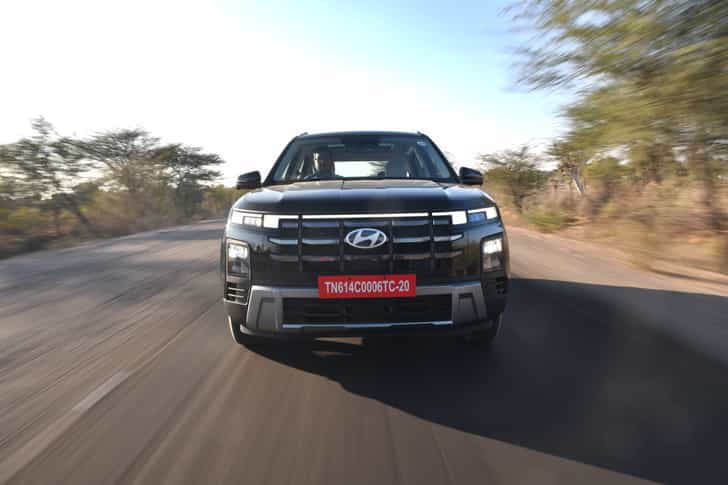
Hi Autocar Team, I am interested in buying a Hyundai Creta, but I am confused between the petrol and diesel variants. I drive around 10,000 km per year, with a mix of short trips, long trips, and city driving. I am concerned about DPF issues with the diesel engine and the mileage of the petrol engine. Q1. How often do we need to drive a diesel car? Is there any rule that we need to start and drive it daily? Q2. If we don't drive the car, will soot still form in the DPF? Q3. If I don't drive the car for two weeks and then drive it only in the city for the next two weeks, how would DPF clogging occur? Basically, how should we maintain these diesel engines? Please guide me in understanding this.

Verified
•5m

At 10,000km a year, buy the Hyundai Creta petrol. A diesel only pays off at much higher mileage, and its higher price would take many years to recover. The petrol’s fuel bill will be higher, but at your running, the difference is only around Rs 2,000-2,500 a month.

To answer your DPF questions: 
No, you don’t have to drive a diesel every day. Soot only forms while the engine is running, so a car parked for two weeks builds up nothing. The bigger risk then is a flat battery. The filter cleans itself by burning off the soot, but it needs heat to do it. That takes 15-20 minutes of steady driving at highway speeds. Short city trips never get it hot enough, so the soot keeps building until a warning light comes on.
Your pattern is the risk. Two weeks parked does no harm, but two weeks of only city driving is exactly what fills the filter. A diesel car owner in your position would need a proper highway run every couple of weeks and avoid switching off midway through a cleaning cycle.

None of this is difficult, but it’s a routine you have to keep up, and with a petrol car you don’t have to think about it. 
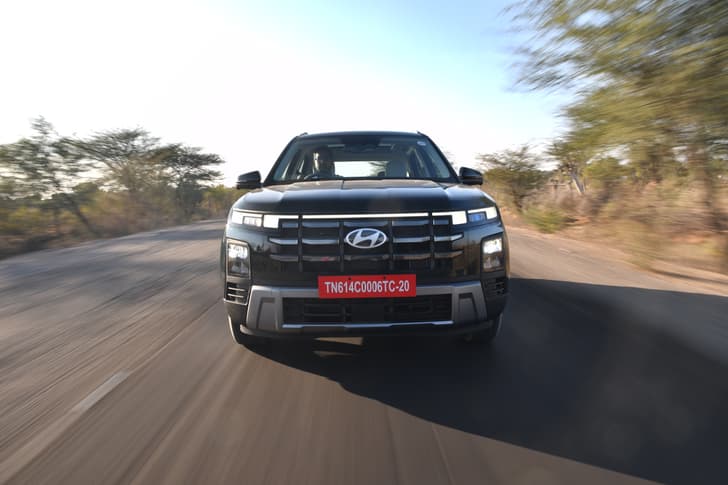
Hyundai Creta

Hyundai Creta

Explore cars mentioned

More posts on similar cars

•3d

Hi, I am planning to buy a car around Rs. 11.5 lakh (on-road) for monthly running of around 700-800 Km with a trip in 3-4 months of around 1000 km on hilly terrain and highways. My requirements include sunroof for children, 60:40 seats, rear AC, good torque for hills and rear camera. I feel that push button or automatic will be advantageous. Please suggest.

Verified
•1h

With a budget of around Rs 11.5 lakh on-road, your requirements are quite clear: a sunroof, 60:40 split rear seats, rear AC vents, good torque for hills, a rear camera, and ideally push-button start or an automatic transmission. Your monthly running of 700-800 km with occasional 1000 km hill trips points towards a petrol car, as a diesel would not justify itself at this usage level.The Mahindra XUV 3XO is the best fit here. It offers a strong turbo petrol engine with good low-end torque, which will help on hilly roads, and it comes with a sunroof, rear AC vents, 60:40 split rear seats and a rear camera in the mid variants. The automatic gearbox is also available within your budget, and the car is well equipped for the price.The Maruti Suzuki Brezza is another solid choice. You have the choice of a naturally aspirated or a turbo petrol, but only the former comes with an automatic. It also offers a sunroof, rear AC vents and a rear camera, and Maruti's service network is a big advantage.The Hyundai Venue is another option, but the turbo petrol automatic variants are likely to stretch your budget. The naturally aspirated petrol is available within your budget, but it will not feel as strong on hills.Overall, the XUV 3XO is the best fit for your requirements. It offers the right combination of features, performance and value for money. The Brezza is the more sensible alternative if you prioritise reliability and ease of ownership over performance.

VehicleMaruti Suzuki Brezza
VehicleHyundai Venue
VehicleMahindra XUV 3XO
•6d

I have pre-booked the electric Mercedes-Benz GLC, but the India-spec version does not get air suspension or rear-axle steering, despite being advertised as the fully loaded, top-spec AMG 400 4Matic. This is disappointing, especially since EVs need to manage their added weight. However, the extra weight could also help the car handle undulations and potholes on Indian roads, much like how the Kia Syros EV reportedly rides better than the ICE Syros. Is this reasoning sound? Also, what do you think of Mercedes-Benz leaving out these features despite the high price? I understand that a final verdict should wait until a test drive, but could Autocar India question Mercedes-Benz India CEO Santosh Iyer about this at the launch? The two features reportedly cost only Rs 2.5 lakh together, and it seems disappointing that they might have been omitted to compete with the upcoming BMW iX3.

Verified
•7h

Your logic is partially sound, but it doesn't tell the whole story. The extra weight of an electric car does help the suspension settle over small undulations and broken patches, which is why cars like the Kia Syros EV can feel more planted than their ICE counterparts. However, that same weight also puts more strain on the suspension over larger bumps and potholes, which is where a more sophisticated setup like air suspension and rear axle steering really makes a difference. Air suspension can better manage the weight and provide a more consistent ride, while rear axle steering improves agility and stability, especially in a heavy EV.As for Mercedes-Benz not offering these features on the India-spec car, it is disappointing, especially at this price point. The decision is likely driven by cost and positioning relative to the BMW iX3, but it does feel like a compromise on what should be a flagship product. We will certainly raise this with Mercedes-Benz India at the launch.Ultimately, the best way to judge the car will be to drive it on Indian roads. If the suspension tuning is well sorted, the absence of air suspension may not be a deal-breaker, but it is something to be aware of given the price.

VehicleKia Syros EV
VehicleBMW iX3

Has E20 fuel affected your mileage?

Curated collections
Is ADAS worth paying extra for in a car?

Popular discussions right now

•5d

I am a 6 ft driver who loves driving. I've driven the Swift 2013 petrol, Creta 1.6 Diesel Auto and the XUV500 the most on long trips. Now that I am planning to buy a car with a strict budget, do you think the 3XO AX5 TCMPFI petrol variant will be a wise decision to make, as I will be travelling once a month for short trips from Bangalore to Coorg, Pondicherry, GOA, and Mangalore? Which other car can be a perfect match for me, keeping a budget of 12 lakhs max? Also, the 3XO AX5 I'm getting from a friend who has hardly driven 6k km for 10 lakhs.

Verified
•4d

Go for the Mahindra XUV 3XO AX5 TCMPFI petrol from your friend for Rs 10 lakh. At that price, it is a very good deal and a sensible upgrade from your Creta 1.6 diesel automatic. The 3XO is one of the most spacious compact SUVs in the segment, with a wide cabin and good rear seat comfort, which will make your long drives to Coorg, Pondicherry, Goa and Mangalore more comfortable. The turbo petrol engine is smooth and is well suited to both city driving and highway cruising. At Rs 10 lakh for a car with only 6,000 km on the clock, you are getting a nearly new car at a significant discount, which makes it a far better value proposition than buying new.If you are looking for alternatives under Rs 12 lakh, the Skoda Kylaq 1.0 TSI manual is the best option for an enthusiast driver. The new Brezza turbo-petrol could also be a good choice. Overall, the 3XO from your friend is the most sensible choice. It offers a good balance of comfort, reliability and value, and will serve you well on your monthly road trips.

VehicleMahindra XUV 3XO
VehicleHyundai Creta
VehicleSkoda Kylaq
VehicleMaruti Suzuki Brezza
•3d

I currently own a Jeep Compass and want to get an additional car for my father, with good reliability, unlike the Jeep. My father still drives a 2008 Honda City, and I am torn between a few choices: the Honda City, Skoda Slavia, Nissan Tekton and Toyota Hyryder. Or should I wait for the Virtus facelift or the new-generation Creta? His usage is low, at almost 500 km per month. Please suggest.

Verified
•21h

With just 500km a month, petrol is the clear choice, and reliability and ease of ownership become the most important factors. The Honda City is the safest recommendation here. It is a proven product with a strong reliability record, a comfortable ride and a familiar ownership experience that your father will appreciate, especially coming from a 2008 City. The Skoda Slavia and Volkswagen Virtus are both excellent to drive, but the 1.0 TSI engine can feel a bit laggy at low speeds, and the 1.5 TSI is overkill for this kind of usage. The Nissan Tekton is a good value proposition, but engines are not responsive at low speeds and Nissan's service network is not as strong as Honda's, which matters more for a low-running, long-term ownership scenario. The Toyota Urban Cruiser Hyryder is a solid option if you specifically want an SUV, but the hybrid premium does not make financial sense at this running, and the naturally aspirated petrol is not as refined as the City's engine. The new-generation Hyundai Creta is worth waiting for only if your father specifically wants an SUV; otherwise, the City remains the more sensible choice. Overall, the Honda City is the most reliable, comfortable and hassle-free option for your father's usage.

VehicleHonda City
VehicleSkoda Slavia
VehicleVolkswagen Virtus
VehicleToyota Urban Cruiser Hyryder
VehicleNissan Tekton
•5d

I recently bought a Tata Safari Stealth Black Accomplished+ and am very happy with its performance. It returns around 13kpl in the city and 14-15kpl on the highway. I also own a Maruti Suzuki Ritz diesel VDi, which I have used for 10 years and driven 2.3 lakh km with regular servicing and genuine synthetic oil. Is it time to replace the Ritz? If so, what would be a good diesel or petrol car around Rs 15 lakh? My usage is a mix of city and highway driving, around 75-100 km a day. I also have three older family members above 60 who will use the car occasionally. I am considering the 1.0-litre Skoda, the new Thar 1.5-litre and other options. I am not interested in a sunroof or other fancy features. I do track racing, so strong performance, suspension, stability and an engaging driving experience are important to me.

Verified
•3d

Yes, it's time to retire the Ritz. Of the two cars you're considering, the Skoda 1.0 TSI is the right one. Both the Kylaq and the Kushaq use it, and either suits an enthusiast far better than the Thar. The engine is eager, the steering is sharp, and the chassis feels planted when you push it. Those are the things you'll value as someone who drives on track.The catch is your mileage. At 75-100 km a day, you'll cover close to 30,000km a year, and the petrol Skoda will cost noticeably more to run than a diesel. If that bothers you, test-drive the Mahindra XUV 3XO diesel. Its 1.5 diesel is one of the punchiest in its class; it has a roomy rear seat for your parents, and it'll be much cheaper to run, though it isn't as sharp to drive as the Skoda.The new Mahindra Thar isn't a good fit. It's tall to climb into for older passengers, the rear is cramped, and it isn't as settled as a regular SUV over 100km a day.Your Ritz has done well. Its 1.3 diesel runs a timing chain rather than a belt, which is why it's lasted. Drive the Skoda car and the 3XO back to back, and decide how much the extra fun is worth to you.

VehicleSkoda Kylaq
VehicleSkoda Kushaq
VehicleMahindra Thar OG
VehicleMahindra XUV 3XO

Upcoming launch buzz

Community discussions on upcoming launches
Add a photo of your Creta

First sightings, real road conditions, delivery buzz

Posted on: 12 Oct 2026