
Autocar India
9h

I own a Verna 1.6 petrol manual 2012 due for a phase-out in May 2027. Need to buy a DCT petrol for very limited use, as I am retired. But it should be good for hill driving as well. Not underpowered. The budget is around 20 lakh.

Verified
20m

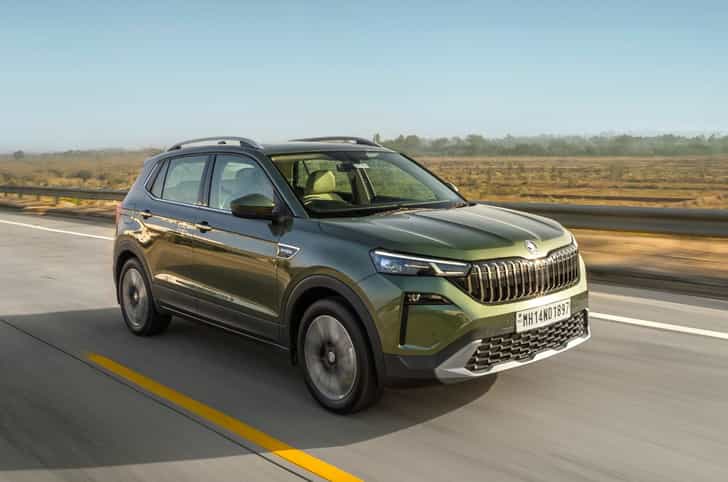
Pick the Skoda Kushaq 1.5 TSI with the dual-clutch automatic gearbox. It suits hill driving thanks to the strong mid-range pull, so hairpin bends and steep climbs feel easy. It is compact, light and has useful ground clearance, which helps on broken hill roads and tight village lanes. Coming from a Verna 1.6, this will not feel weak at all; in fact, it will feel like a proper upgrade.

For your limited use, this turbo-petrol and DCT automatic keeps life easy, and the 1.5’s efficiency on gentle cruises is decent if you ever do longer trips. Lower variants with this engine-gearbox sit close to your budget. One thing to be aware of, the dual-clutch auto can feel a bit jerky and may get hot in very slow, stop-and-go hill traffic.
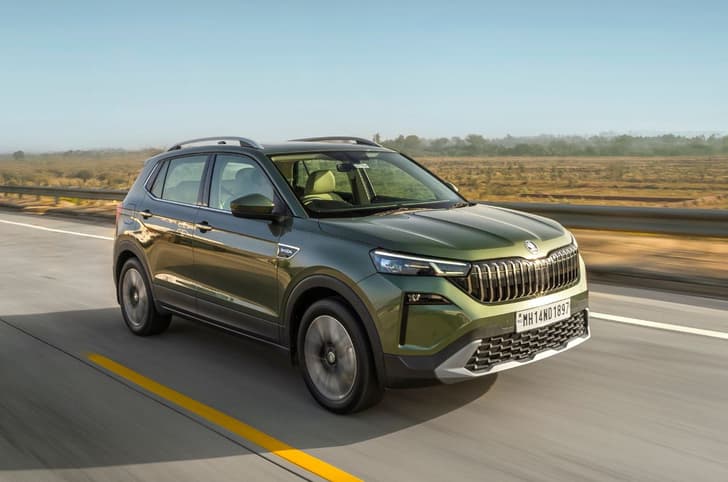
Skoda Kushaq

Skoda Kushaq

Explore cars mentioned

Was this helpful? Ask a follow-up

Want to sell your car?

Sell your car at the right price, without the stress.

More questions on similar cars

2d

I'm looking for an automatic car. I've been using a Ford EcoSport diesel manual, but I think it's time to replace it. My driving pattern involves driving 2-3km and stopping the car, and these short trips happen four times a day. I also make occasional trips around Delhi NCR and one or two mountain trips each year, with an annual running of around 10,000-12,000km, split 60% city and 40% highway. I've always preferred diesel cars, but I'm not sure whether the DPF will survive this kind of usage. My priority is a stress-free ownership experience over a few extra kilometres per litre. I like diesel torque, but don't want to deal with DPF or AdBlue injector issues. Please suggest suitable options in both the sub-4m segment under 12 lakh and the 4.3m segment under 16 lakh.

Verified
6h

Skip diesel for your short hops and get a turbo petrol automatic. Your 2-3 km stop-start runs are exactly what clog DPFs. A turbo-petrol will get you the torque you like while avoiding DPF issues.Under Rs 12 lakh, the Maruti Suzuki Fronx and Nissan Magnite are good picks. Both turbo-petrols have good low- and mid-range, and smooth automatics (torque converter in the Fronx and CVT in the Magnite). They are light to drive in the city, stable enough on Delhi-NCR runs, and will handle an annual hill trip without fuss.Under Rs 16 lakh, consider the Skoda Kushaq 1.0 and the Honda Elevate. The Kushaq 1.0 with the 6-speed automatic feels torquey, cruises all day, and climbs hills confidently. It’s compact outside but feels tight and secure at speed, which makes highway stints less tiring. One caveat: service reach and costs are higher than the mass brands.If you want an absolute zero-hassle over punch in the bigger bracket, the Honda Elevate automatic is calmer and super easy to live with, just not as eager as the Kushaq.

VehicleMaruti Suzuki Fronx
VehicleNissan Magnite
VehicleSkoda Kushaq
VehicleHonda Elevate
1w

Dear Editor, I currently own a Ford Aspire Petrol (top-end but one variant) and am planning to upgrade to a more spacious car in around Rs. 20 lakh (ex-showroom). My daily city commute is between 10 to 20 km with an additional 50-60 km once a week. I also take occasional long drives of around 500-700 km. I travel with 3 passengers, but occassionally my parents join us. I have a dedicated parking slot with home charging setup capability. Coming from a Ford, I deeply value sharp handling, tight body control, and steering feedback. I am highly intrigued by the MG Windsor EV Pro through corporate car lease due to its incredible tax benefits, low running costs, and lounge-like rear seats for my parents. However, I am worried about its soft suspension and light steering that will feel too disconnected as compared to my Aspire. Does the MG Windsor EV Pro offer enough driving engagement, and are its drive modes sporty enough for a driving enthusiast? Please suggest some other option if I buy a car myself or choose a corporate car lease. Also, between turbo petrol or EV, which one will be fun-to-drive?

Verified
3d

Go for the Volkswagen Virtus 1.5 TSI or Skoda Slavia 1.5 TSI. They're the closest to your Aspire’s feel for Rs. 20 lakh - quick turbo punch, crisp steering, and tight body control that stays clean at highway speeds. They're exciting enough to keep you connected, yet are easy in the city. They're spacious, have big boots for trips, and the rear benches will keep your parents happy, though they're not “lounge-like”. Do note, both sedans are due for updates soon, so its best to wait for the latest versions. If you'd prefer higher seating, the VW Taigun 1.5 TSI and Skoda Kushaq 1.5 TSI SUVs are good alternatives.About the MG Windsor EV Pro: it's got an airy cabin, being an EV runs quiet, and your parents will love the sofa-like rear. But if driver feel matters, you will miss your Ford. The steering stays light and a bit numb, and the soft suspension brings float over bumps. Drive modes mostly tweak weight and throttle, not real feedback. Lease it only if rear comfort and ultra-low running cost beat driving fun for you.

VehicleVolkswagen Virtus
VehicleVolkswagen Taigun
VehicleMG Windsor
VehicleSkoda Kushaq
VehicleSkoda Slavia

Popular discussions right now

1w

My annual running is below 7,000 km, and I plan to keep my next car for 12-15 years. I am confused between Grand Vitara, Hyryder, Elevate, Creta, Seltos and Victoris. My priorities are reliability, a good balance of power and fuel efficiency, family comfort, low maintenance and long-term ownership. I am also concerned about India's future ethanol-blending policy (E20 and higher blends). Which of these would be the best long-term choice and why?

Verified
6d

With an annual running of less than 7,000km, fuel efficiency should not be the deciding factor. Instead, you should focus on comfort, reliability, ownership experience and how well the car will age over the next 12-15 years. That's why we wouldn't prioritise the Grand Vitara, Hyryder or Victoris Hybrid. Their hybrid systems command a price premium that you'll struggle to recover with such low annual usage.Between the remaining options, the Kia Seltos strikes the best balance. It offers a refined and proven naturally aspirated petrol engine, a smooth IVT automatic, a spacious and premium cabin, excellent comfort and a strong ownership experience. It also feels newer and more upmarket than the Elevate, while the Creta is due for a generational update sooner.The Honda Elevate deserves a mention for its simplicity and reliability. If absolute mechanical simplicity is your priority, it is arguably the safest long-term bet. However, it doesn't feel as premium as the Seltos. The engine and CVT combination isn't quite as refined, and Honda's dealer network is smaller.As for ethanol blending, we wouldn't let it influence your purchase decision. While there is plenty of discussion around E25, E27 and E30 fuels, there is currently no confirmed roadmap for such a transition. More importantly, all of these cars are E20-compliant, and manufacturers have engineered a degree of tolerance beyond that. The most likely effect of higher ethanol blends would be a small reduction in fuel efficiency and slightly accelerated wear of certain fuel-system components over a very long period, not a major reliability issue.

VehicleKia Seltos
VehicleHonda Elevate
VehicleMaruti Suzuki Grand Vitara
VehicleMaruti Suzuki Victoris
VehicleToyota Urban Cruiser Hyryder

Posted on: 1 Jul 2026