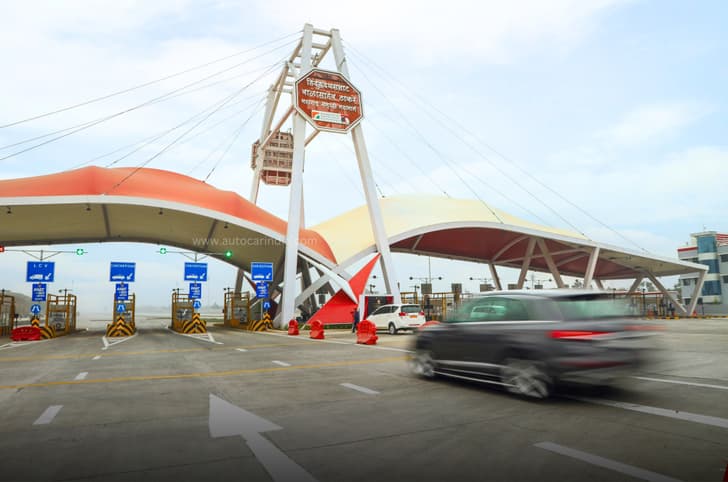
The Indian government has released a new set of rules for the highway toll collection system. The new setup uses a Global Navigation Satellite System (GNSS) to track vehicle movements.
- GNSS Toll collection would require a device installed in the vehicle
- GNSS device fitted vehicles will have special lanes at toll booths
- GNSS system will operate on current FASTag setup
New GNSS toll collection system: how does it work?
This new system changes the way drivers pay tolls on national highways. The new GNSS setup is being used to track vehicles and will allow them to travel up to 20 kilometres on national highways without incurring any charges. This setup does not include vehicles with a National Permit.
According to the new rules, drivers, owners or individuals that are in-charge of vehicles will now be assessed a “zero user fee” for trips of upto 20km in either direction on toll roads. Motorists will then be charged for each additional km after the initial 20km, so you pay for the exact distance travelled. This rule will include National highways, permanent bridges, bypasses and for tunnels.
The new GNSS device will use Automatic Number Plate recognition (ANPR) and the existing FASTag systems for collecting tolls. A GNSS device will be non-transferable and firmly fitted technology in vehicles to connect the GNSS for toll fee collection.
The rules also require a designated lane for vehicles equipped with GNSS device for faster operation. However, vehicles entering this lane without a functioning device will be required to pay a fee which could be twice the standard user fee applicable at that particular toll plaza. As the adoption of GNSS based toll collection grows, all lanes are expected to gradually convert to GNSS-enabled ones.
New GNSS toll collection: how does it differ from FASTag
The existing FASTag setup relies on physical toll booths for toll collection. The new GNSS tech will have virtual toll booths along the highways. These virtual toll booths monitor vehicle location and distance covered exclusively for GNSS enabled vehicles. The GNSS device fitted in these vehicles will provide details like vehicle registration, vehicle type and bank account details of the user.
This new GNSS setup will operate with the current FASTag system which means transition for users from GNSS to FASTag wont have any hiccups, according to the announcement.
Benefits of GNSS-Based Toll Collection
With the new GNSS based toll collection setup, the government aims to further reduce waiting times at toll booths that average currently at 714 seconds to a mere 47 seconds for each user. This will reduce traffic congestion and allow steady flow of vehicles. In future, this will also help in elimination of physical toll booths and enabling the user to pay only for the distance travelled.
 Autocar India News Desk
 Dhruv Dhaka
 Dipan Sur