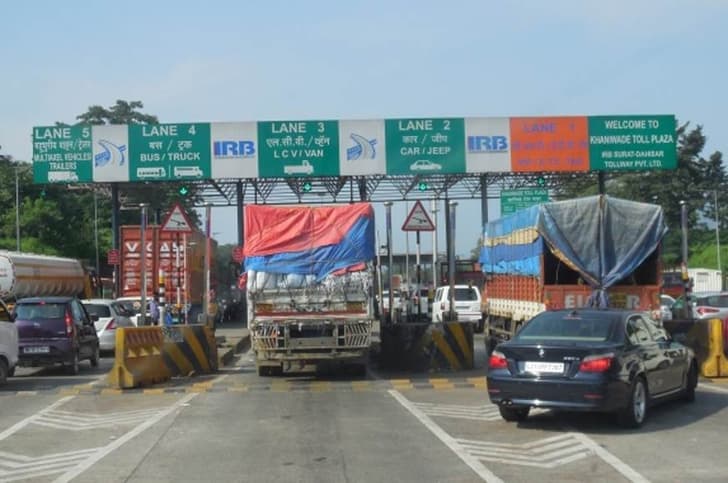
Toll collection from motorists on National Highways has been temporarily suspended to facilitate speedy movement to emergency services as India fights the coronavirus outbreak.
In a tweet yesterday, Nitin Gadkari, Minister of Road Transport & Highways, Micro, Small and Medium Enterprises, Government of India, said, "In view of COVID-19, it has been ordered to temporarily suspend the collection of toll at all toll plazas across India. This will not only reduce inconvenience to the supply of emergency services but also save critical time. Maintenance of roads and availability of emergency resources at toll plaza will continue as usual."
On February 12, in an effort to increase digital collection of user fee via FASTag at NH fee plazas, the National Highways Authority of India (NHAI) had waived off the Rs 100 fee for FASTags between February 15-29. During that fortnight, road users could visit any authorised physical point-of-sale locations with a valid Registration Certificate (RC) of the vehicle and get an NHAI FASTag free of cost. Prior to that, from November 22 to December 15, 2019, a free NHAI FASTag was announced to encourage users.
What is a FASTag?
FASTag is a passive device that is fixed to a car’s windscreen, and it uses radio frequency identification (RFID) to make cashless toll payments, without requiring the vehicle to wait in a queue. Dedicated readers positioned in toll plazas detect the FASTag while the vehicle is still in motion, and the appropriate amount is charged from the account or virtual wallet linked to the device.
FASTag has a validity of 5 years, and after purchasing it, you only need to recharge it as per your requirement. It offers a near non-stop movement of vehicles through toll plazas and the convenience of cashless payment of the fee with nation-wide interoperable Electronic Toll Collection Services.
In January 2020, the NHAI initiated a drive for removal of all sorts of speed breakers on National Highways. This was announced to ensure smooth and hassle-free traffic movement, especially at toll plazas. Now with the effective implementation of FASTag on toll plazas and conversion of cash lanes to FASTag lanes, the speed breakers/ rumble strips constructed at toll plazas are being removed for smooth vehicular movement.
An NHAI FASTag can be purchased from all NH fee plazas, RTOs, Common Service Centres, transport hubs and fuel stations.

 Dipan Sur
 Viraaj Bhatnagar