Mercedes-Benz have revealed a slew of new technologies focused on meeting long and short term European emission legislation, the company's technical chiefs have revealed. For this, the company will focus on more efficient engines, electric vehicles, plug-in hybrids and fuel cells in the next ten years.
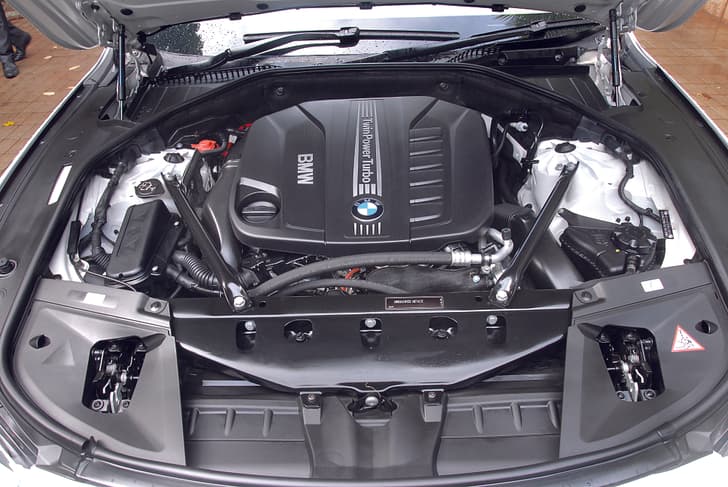
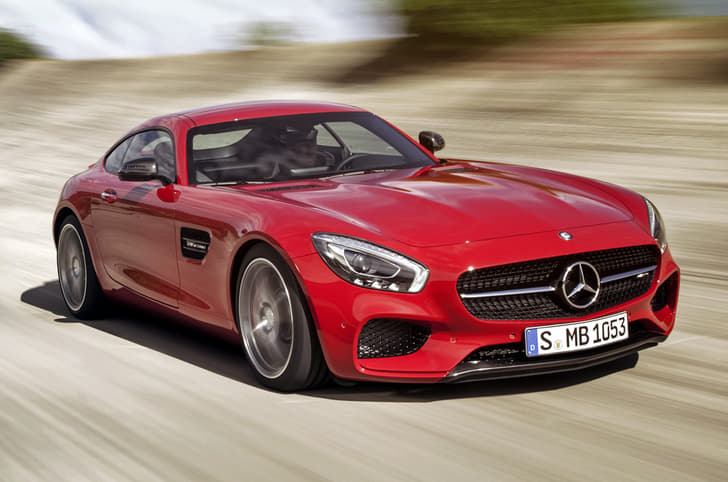
In engine development, the focus is on improved efficiency and performance. Downsizing engine capacity combats friction and the pumping losses caused by the effort of drawing air into the engine. The new V8 engine of the Mercedes-AMG GT and C63 is a classic example of this approach.
The capacity has been reduced from 6.3-litres to 4.0-litres by adding twin-turbocharging to maintain or increase power. Friction-reducing 'Nanoslide' technology has been carried over in the cylinder bores allowing pistons to slide with less resistance. The result is an efficiency improvement of 30 percent compared to its naturally aspirated predecessor. Turbocharging can generate high torque at low engine speeds on both petrol and diesel engines, so downspeeding is also on the agenda at Mercedes. If the engine turns more slowly, friction is reduced and so are heat and wear. That’s one of the reasons, despite the downsizing regime, Mercedes still favours four-cylinders over three. Engineers argue that a slower-turning four-cylinder gives the same frictional benefits as a three-pot, but is smoother.
Thomas Weber, group board member responsible for research and car development at Mercedes, predicts a future where all vehicles will be electrified, but there won't be a 'one size fits all' solution: “Even in lane one, we will see mild hybrids using belt-driven starter-generators or crankshaft integrated starter-generators. In lane two we will have the premium plug-in hybrids and by 2017 we will launch 10 plug-in hybrids. The third lane will be zero-emissions vehicles powered by batteries or fuel cells.
“By 2020, we expect the energy density of battery technology to have doubled and the cost halved,” he continues. “Without any other changes being made, the range of the B-Class Electric Drive could increase to 185 or 250 miles.”
Beyond that, Weber believes there’s more to come with new battery chemistry: “Lithium sulphur will be the next step after lithium ion, followed perhaps by lithium air. Lithium sulphur is comparable to lithium ion but lithium air will be a completely different world.”
With lithium ion batteries, the oxygen needed for the chemical reaction which generates electricity is stored internally. Lithium air batteries ‘borrow’ airborne oxygen from the air and then release it again when the battery is recharged. As a result, they theoretically have a large energy storage capacity – some sources estimate it could be close to that of petrol.
Looking ahead further still, Weber believes the hydrogen fuel cell is still a strong contender: “With a fuel cell car you can fill up with hydrogen in three minutes, but even our fastest chargers take half an hour to charge a battery, so 20 to 30 minutes will probably remain the limit.”
However, Harald Kroger, vice president of electronics and e-drive for Mercedes, thinks the limited range of an electric vehicle is an overstated problem: “These questions often evaporate if you use an EV on a daily basis. A lot of customers realise their regular driving is covered by a 95-mile range.”
Kroger concedes that on-street parking is a problem if drivers are not guaranteed a charging point at work or when shopping, but under-street wireless inductive charging is technically possible. Mercedes recently demonstrated a system comprising a pad which can be placed on a driveway or in a garage and plugged into a household wall socket. The rapidly cycling electromagnetic field in the pad induces a current in an electrical coil pack on board the car to generate electricity and charge the battery.
The system is being developed in collaboration with BMW, and the same system is capable of charging either brand’s cars. “The cost should be similar to that of an electric door opener,” says Kroger. The system is technically ready but a date for its introduction has yet to be set.
The technology could also make kerbside charging more practical. “My belief is that if electric charging gets into every household owning an electric BMW or Mercedes, then a technical standard could be established. If other manufacturers join that standard it may be possible to put the technology under the road as well, but that’s a little further away," says Kroger.
 Viraaj Bhatnagar
 Dipan Sur
 Dhruv Dhaka
 Saptarshi Mondal